Encyclopaedia

FishMarineEasy
©AI Generated·Proprietary

Whitetail Damselfish

Pomacentrus chrysurus

A golden-tailed damselfish from silty lagoons in the Western Indo-Pacific. It requires a 100L tank with a sandy bottom and rock crevices for hiding and safety.

Taxonomy
Class:Actinopteri
Order:Perciformes
Family:Pomacentridae
Genus:Pomacentrus
Species:Pomacentrus chrysurus

Share

Check out Whitetail Damselfish on Atlarium

PracticeRecognition quizzesPhotos, names, origins, and puzzles to review Atlas species.Open quizzes
Water Temperature

23 - 28 °C

pH Value

8.1 - 8.4

Water type

Marine

Tank level

Bottom and middle

Adult size

9 cm

Minimum tank volume

>= 100 L

Minimum group

>= 1

Species description

Geographical Origin and Habitat: Western Indo-Pacific, distributed from the Maldives and Sri Lanka to the Solomon Islands, north to southern Japan, and south to northern Australia. Inhabits shallow coastal reefs and silty sandy lagoons.
Taxonomy and Morphology: Classified within the family Pomacentridae, subfamily Pomacentrinae. The specific name 'chrysurus' translates to golden tail, though the caudal fin is stark white in most regional populations.
Social Behavior: Territorial species that lives solitarily or in loose, small groups. Remains near shelter and defends a small feeding and breeding territory against intruders.
Coloration and Sexual Dimorphism: Adults feature a dark brownish-grey to velvety black body. The most distinctive feature is the stark white caudal fin. Juveniles may show thin blue lines on the head.

Care, breeding and tankmates

Aquarium Setup: Needs a tank of at least 100 liters with a layout of live rock providing various crevices and caves, set above a sandy substrate to simulate its natural habitat.
Diet and Feeding: Omnivorous. Feeds on algae and microinvertebrates in nature. Readily accepts flakes, pellets, frozen brine shrimp, mysis, and spirulina-based foods.
Water Quality: Standard marine parameters: temperature 23-28 °C, pH 8.1-8.4, and salinity 1.020-1.025 with standard filtration and moderate water movement.
Compatibility and Cohabitation: Semi-aggressive. Territorial towards other damselfishes and similarly sized fish. Best kept in a community aquarium with robust and active tankmates.
Aquarium Breeding: Oviparous. The male cleans a flat rock or cave ceiling, courts the female to spawn, and defends the adhesive egg clutch until hatching.
Risks and Diseases: Very hardy and highly resilient, making it suitable for beginner marine aquarists. Territorial behavior must be managed by avoiding cramped conditions.

Geographic Origin and Distribution

Western Indo-Pacific, distributed from the Maldives and Sri Lanka to the Solomon Islands, north to southern Japan, and south to northern Australia. Inhabits shallow coastal reefs and silty sandy lagoons.

Origin

Tropical oceans and reefsSouth and Southeast AsiaEast AsiaAustralia, New Guinea, and Oceania

Fish profile

Temperament
Semi-aggressive
This fish is best described as spunky, bold, and highly territorial. Once the Pomacentrus chrysurus claims a specific cave or rock, it will vigorously defend it against fish much larger than itself. Despite its small size, its attitude commands respect from other tank inhabitants. Careful planning of tank mate introduction is required to manage its assertive personality.
Diet
Omnivore
This species is a highly adaptable omnivore that will aggressively consume almost any food offered. Its diet should consist of a varied mix of high-quality marine flakes, pellets, frozen mysis, and brine shrimp. It also benefits from the inclusion of algae-based foods or spirulina to round out its nutritional needs. In a mature reef, it will supplement its diet by picking at microfauna and algae on the rocks.
Sex ratio
Solitary
Due to its territorial nature, it is strongly advised to keep only a single specimen per tank. Housing multiple individuals of the Pomacentrus chrysurus usually results in relentless fighting until only one remains. If a male-female pair naturally forms, they may tolerate each other, but this is difficult to guarantee. Only very large aquariums with massive amounts of rockwork can safely support more than one.
Feeding frequency
Twice daily
Feeding the Pomacentrus chrysurus once or twice a day is perfectly sufficient for maintaining its health and vigor. It is an opportunistic feeder that will quickly rush to the surface at feeding time. Care should be taken to ensure that shyer tank mates receive their share, as this fish is very fast and competitive. Overfeeding is rarely necessary due to its rugged metabolism.
Bioload
Medium
The Pomacentrus chrysurus has a relatively low to moderate bioload, making it suitable for a wide range of aquarium sizes. It is incredibly hardy and its waste output is easily managed by standard biological filtration. Even in smaller tanks, it rarely causes significant spikes in nitrates or phosphates. This resilience makes it a popular choice for both new setups and established reef systems.
Flow
Strong
It is highly adaptable to various flow conditions, thriving in both moderate and strong currents. The Pomacentrus chrysurus will often use areas of moderate flow to forage while retreating to calmer spots within the rockwork to rest. Variable wave patterns help simulate its natural coastal or reef environments. Ensuring there are flow-sheltered zones is just as important as providing strong water movement.
Jump risk
No
Reproduction
Oviparous
In its natural habitat, the Pomacentrus chrysurus is a demersal spawner, laying adhesive eggs on hard substrates. The male takes on the responsibility of fiercely guarding the nest, becoming highly aggressive toward any approaching animals. Spawning in the home aquarium is somewhat common, though raising the microscopic fry is rarely successful without dedicated rearing tanks. The male's enhanced aggression during this period can cause temporary unrest in the aquarium.
Compatibility & tankmates
Semi-aggressive
While generally considered reef-safe, the Pomacentrus chrysurus can exhibit semi-aggressive behavior towards its tank mates. It will not harm corals or mobile invertebrates, but it fiercely protects its chosen territory from other fish. It is best housed with fish of similar or slightly larger size and temperament. Avoid keeping it with overly timid species that could be easily stressed by its territorial displays.
Tank level
Middle/Bottom
The Pomacentrus chrysurus generally hovers in the lower to middle levels of the water column, staying relatively close to its claimed territory. It uses the rockwork as a central base of operations, darting out to feed or chase away intruders. It rarely swims extensively in the open upper water, preferring the security of nearby crevices. Its strong association with the substrate defines its daily behavior.

Window to the official scientific data of the species

Data synced on: 06/15/2026

Scientific Parameters & Models

Trophic level
2.6 ± 0.21 se
Resilience
High (less than 15 months)
Phylogenetic uniqueness (PD50)
0.5
Bayesian Length-Weight
a = 0.02692, b = 3.04
VulnerabilityLow vulnerability (10 / 100)

Image gallery

Licensed images linked to the species or, when marked, to the closest representative taxon.

Related species

Recommendations grouped by close relatives, companion choices, and similar care.

Variants and close relatives

Same atlas type, nearby scientific identity, genus, or family.

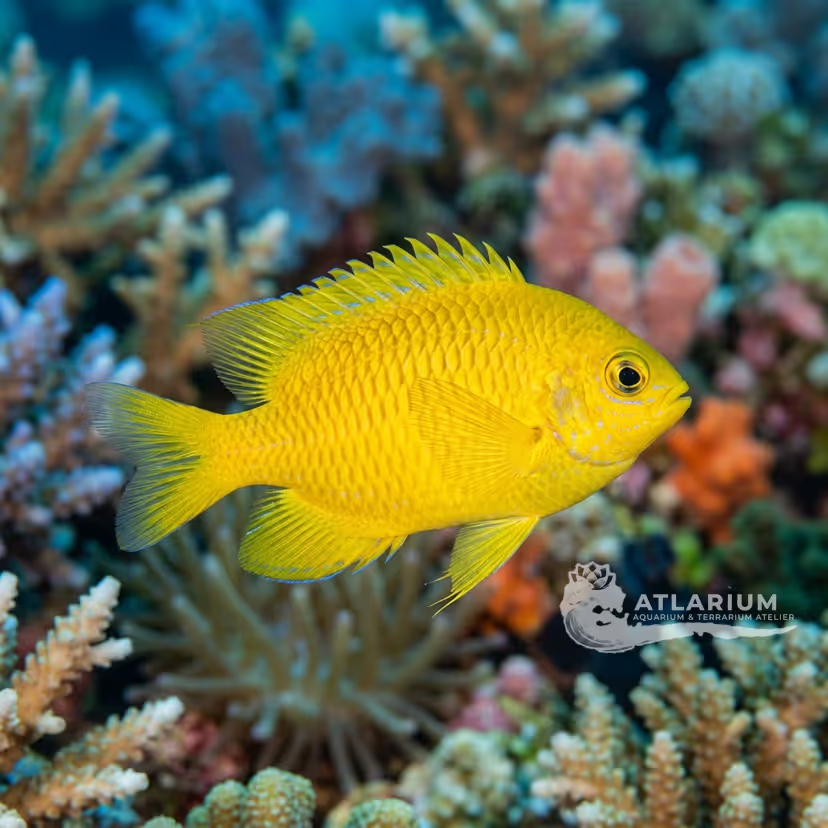
Ambon Damselfish

Ambon Damselfish

Pomacentrus amboinensis
View details->
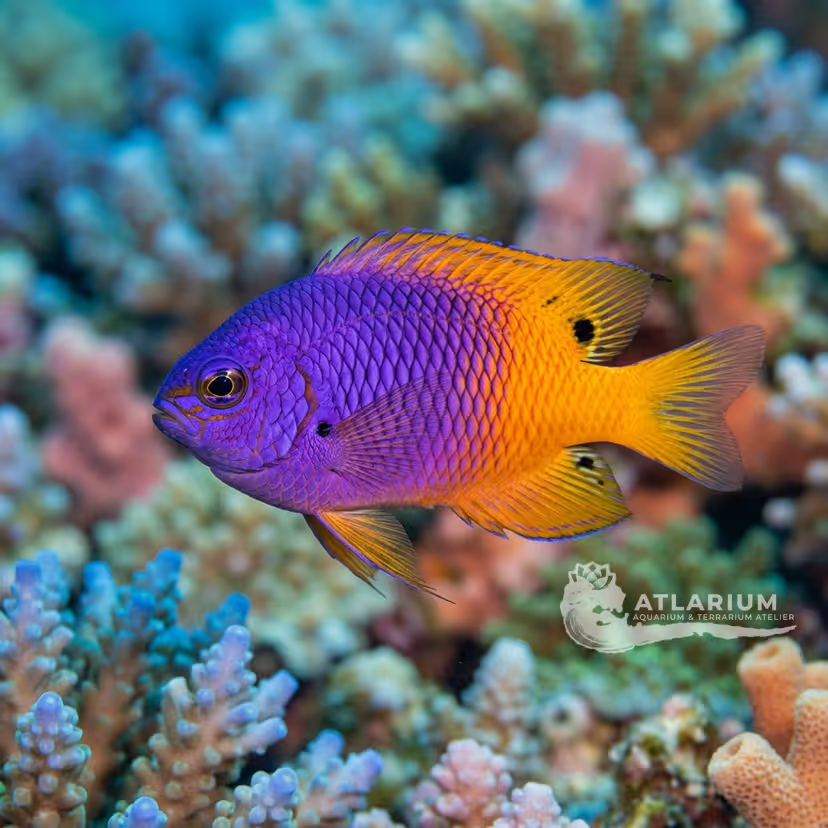
Lemon damselfish

Lemon damselfish

Pomacentrus moluccensis
View details->
Ocellate damselfish

Ocellate damselfish

Pomacentrus vaiuli
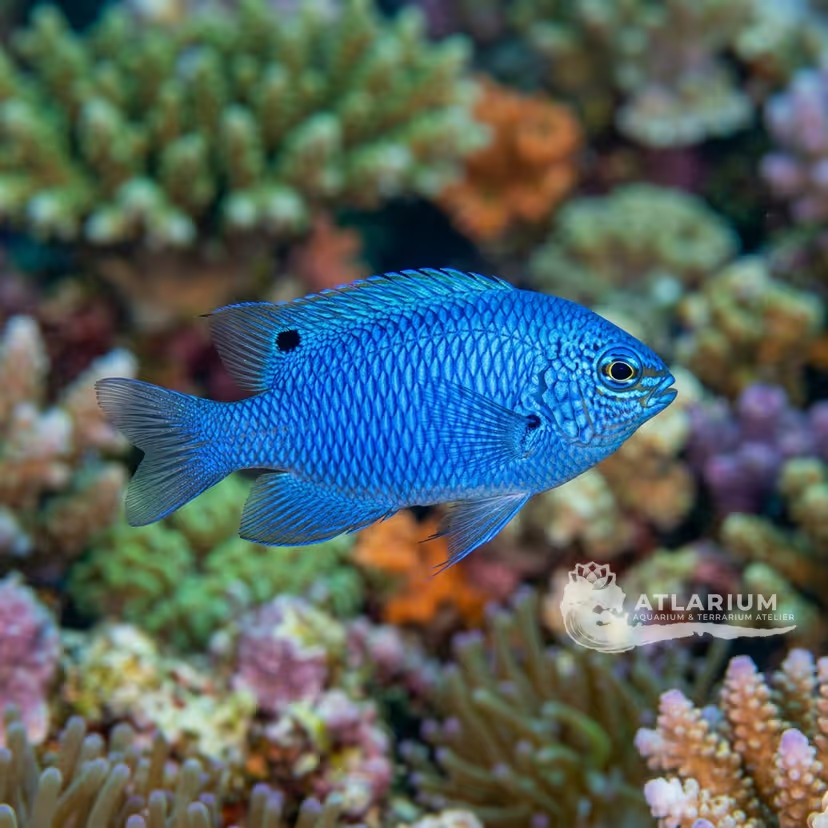
View details->
Sapphire Damselfish

Sapphire Damselfish

Pomacentrus pavo

View details->
Scaly-cheek Damselfish

Scaly-cheek Damselfish

Pomacentrus lepidogenys

View details->
Allen's Damselfish

Allen's Damselfish

Pomacentrus alleni

View details->
Goldbelly damselfish

Goldbelly damselfish

Pomacentrus auriventris

View details->
Neon damselfish

Neon damselfish

Pomacentrus coelestis

View details->
Speckled damselfish

Speckled damselfish

Pomacentrus bankanensis

View details->
Bicolor Chromis

Bicolor Chromis

Chromis margaritifer

View details->
Black Bow Damselfish

Black Bow Damselfish

Neoglyphidodon melas

View details->
Black-and-gold Chromis

Black-and-gold Chromis

Neoglyphidodon nigroris

View details->
Neon damselfish

Neon damselfish

Neoglyphidodon oxyodon
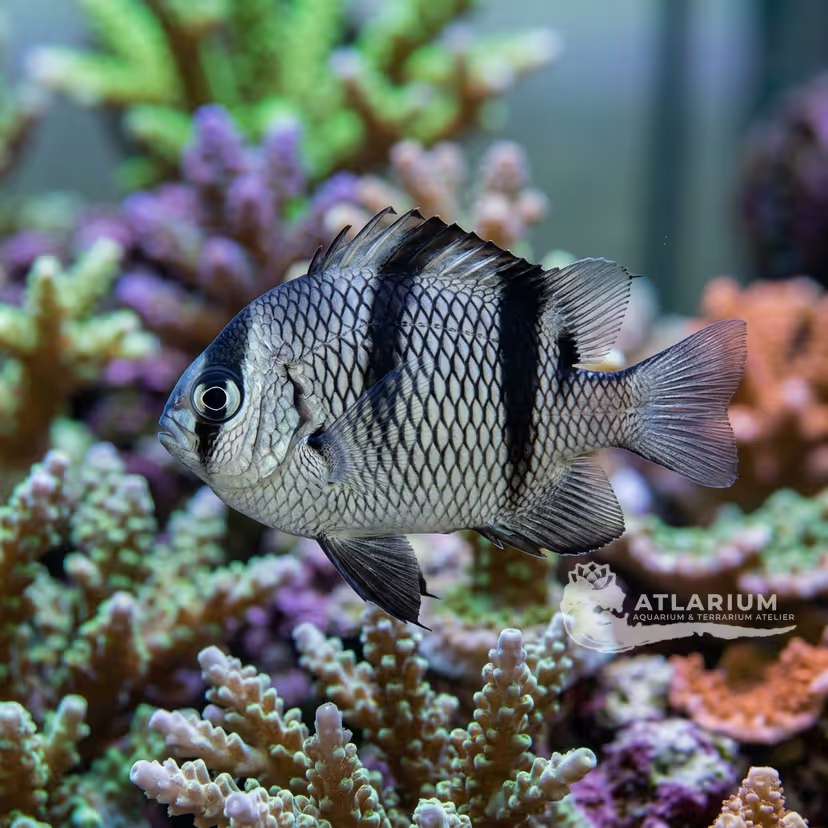
View details->
Reticulated Damselfish

Reticulated Damselfish

Dascyllus reticulatus

View details->
Rolland's damselfish

Rolland's damselfish

Chrysiptera rollandi
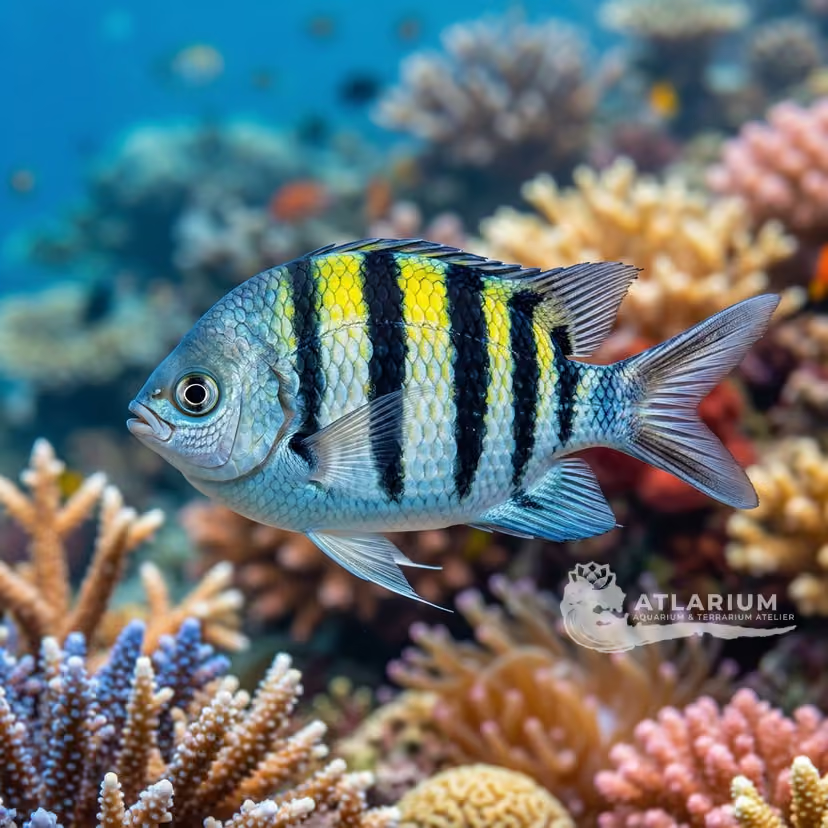
View details->
Indo-Pacific Sergeant

Indo-Pacific Sergeant

Abudefduf vaigiensis

View details->

Recommended companions

Compatible cards from coherent ecosystems with matching parameters.

Caulerpa prolifera
Plant

Caulerpa prolifera

Caulerpa prolifera
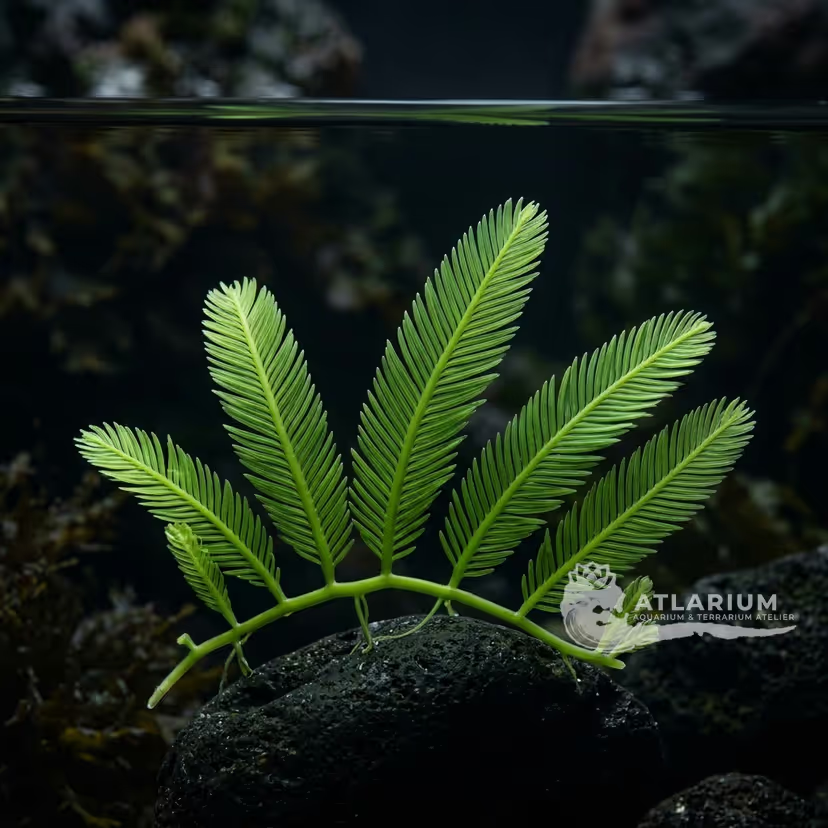
View details->
Caulerpa taxifolia
Plant

Caulerpa taxifolia

Caulerpa taxifolia
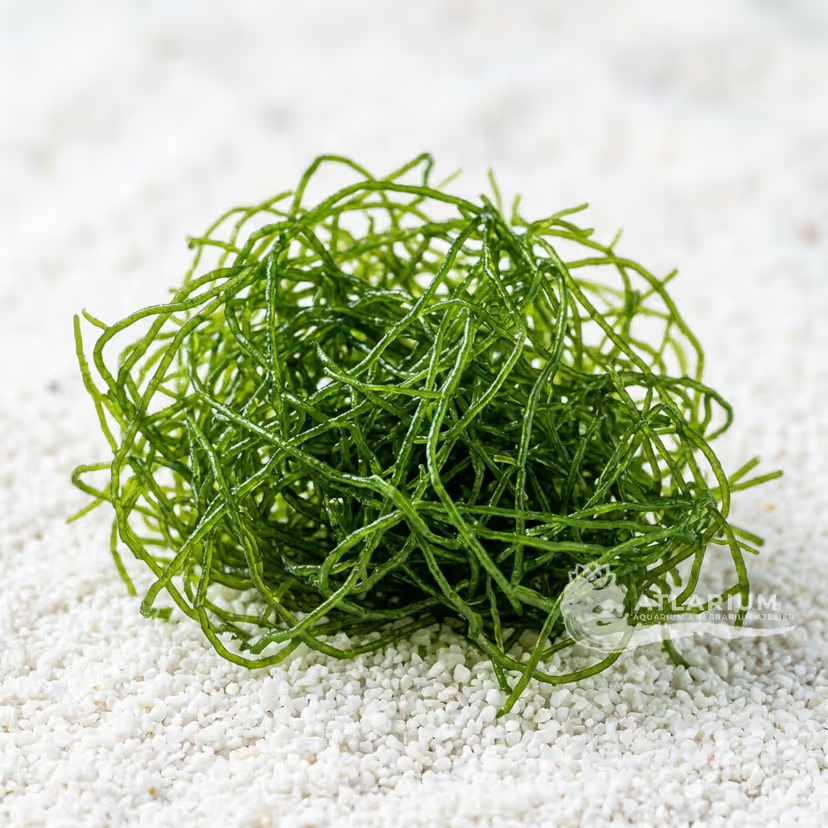
View details->
Chaetomorpha macroalgae
Plant

Chaetomorpha macroalgae

Chaetomorpha linum

View details->
Dead man fingers algae
Plant

Dead man fingers algae

Codium fragile

View details->
Grape caulerpa
Plant

Grape caulerpa

Caulerpa racemosa

View details->
Halimeda macroalgae
Plant

Halimeda macroalgae

Halimeda opuntia

View details->
Peacock tail algae
Plant

Peacock tail algae

Padina pavonica

View details->
Red gracilaria
Plant

Red gracilaria

Gracilaria parvispora

View details->
Red grape algae
Plant

Red grape algae

Botryocladia uvaria

View details->
Sea lettuce
Plant

Sea lettuce

Ulva lactuca

View details->
Red Mangrove
Plant

Red Mangrove

Rhizophora mangle

View details->

Similar care

Cards with similar requirements, difficulty, habitat, and husbandry profile.
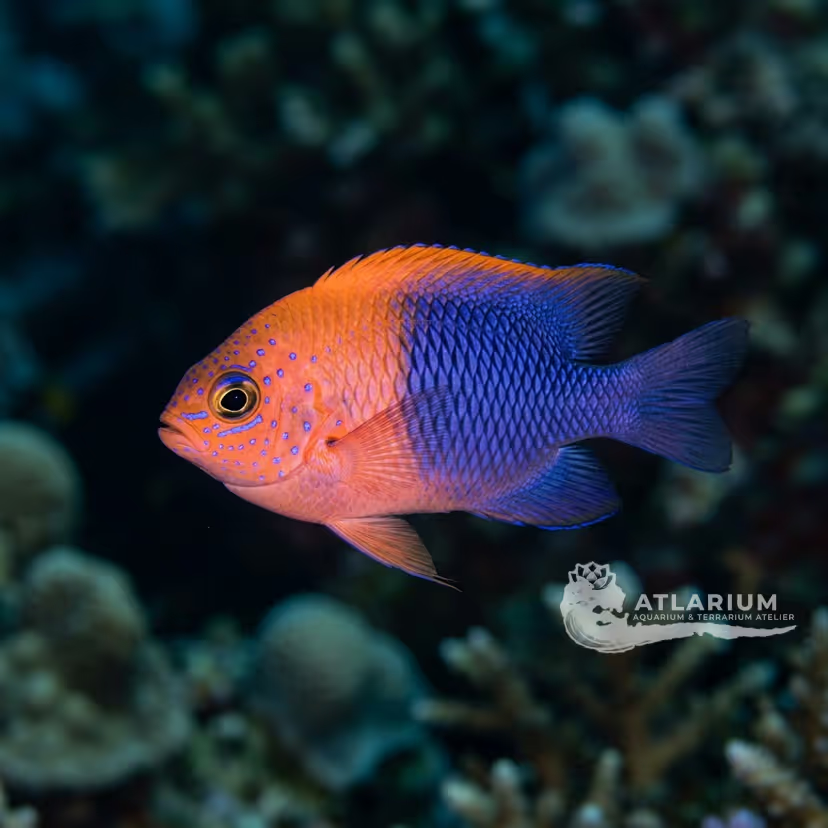
King Damselfish

King Damselfish

Chrysiptera rex

View details->
Yellowtail damselfish

Yellowtail damselfish

Chrysiptera parasema

View details->
Ocellaris clownfish

Ocellaris clownfish

Amphiprion ocellaris
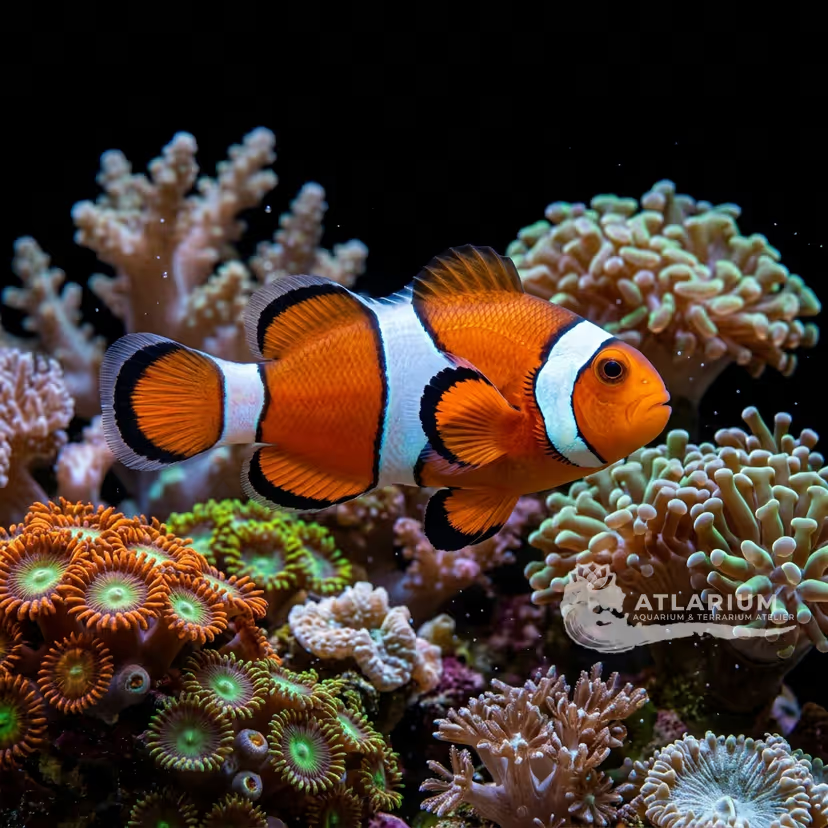
View details->
Percula clownfish

Percula clownfish

Amphiprion percula

View details->
Pink Skunk Clownfish

Pink Skunk Clownfish

Amphiprion perideraion
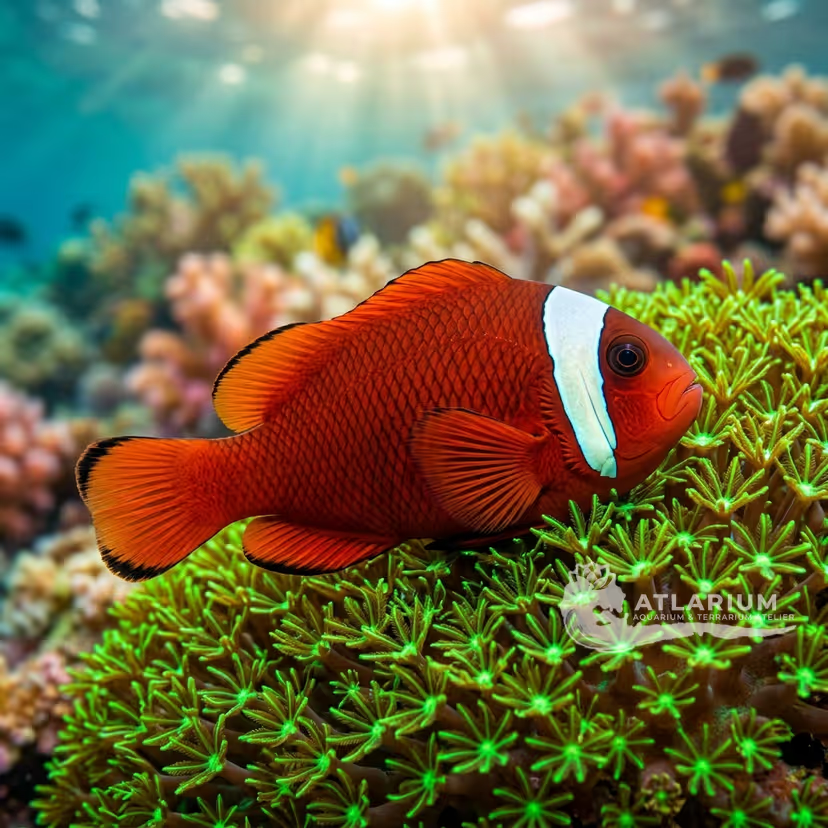
View details->
Tomato clownfish

Tomato clownfish

Amphiprion frenatus

View details->
Azure damselfish

Azure damselfish

Chrysiptera hemicyanea
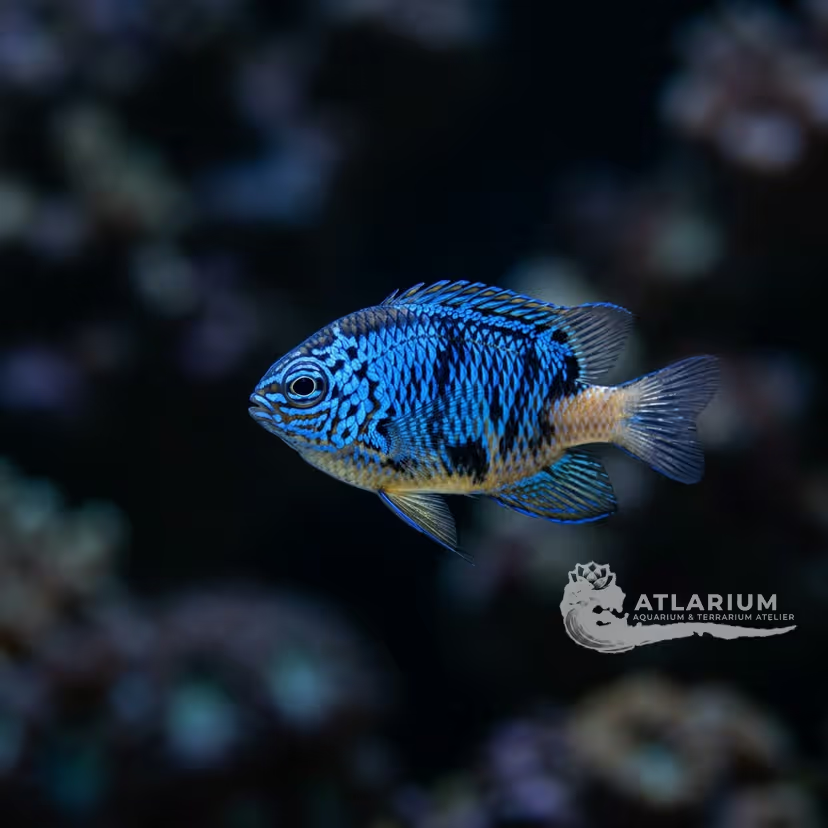
View details->
Springer's Damselfish

Springer's Damselfish

Chrysiptera springeri

View details->
Canary damselfish

Canary damselfish

Chrysiptera galba

View details->
Skunk clownfish

Skunk clownfish

Amphiprion akallopisos

View details->
Blue Damselfish

Blue Damselfish

Chrysiptera cyanea

View details->
Cinnamon Clownfish

Cinnamon Clownfish

Amphiprion melanopus
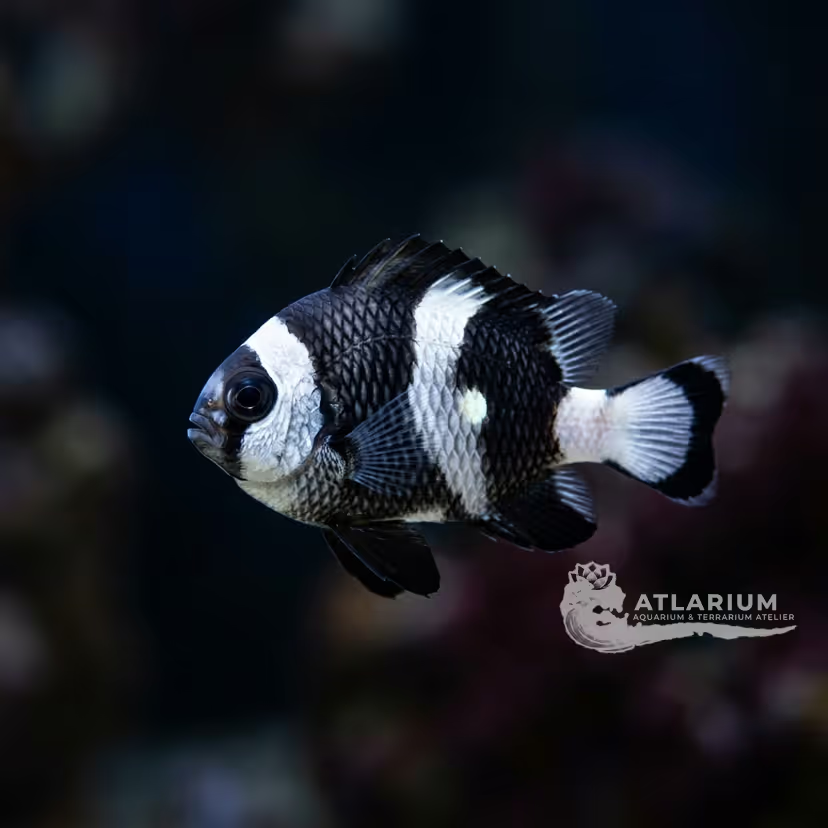
View details->
Four-stripe Damselfish / Blacktail Humbug

Four-stripe Damselfish / Blacktail Humbug

Dascyllus melanurus
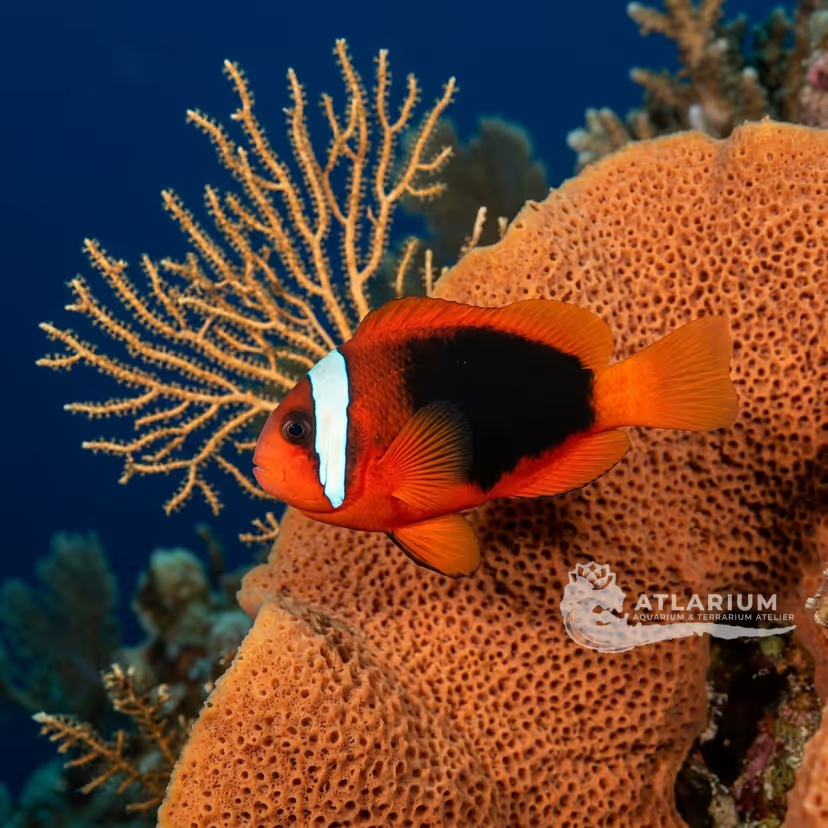
View details->
Red saddleback clownfish

Red saddleback clownfish

Amphiprion ephippium

View details->
Talbot's Damselfish

Talbot's Damselfish

Chrysiptera talboti
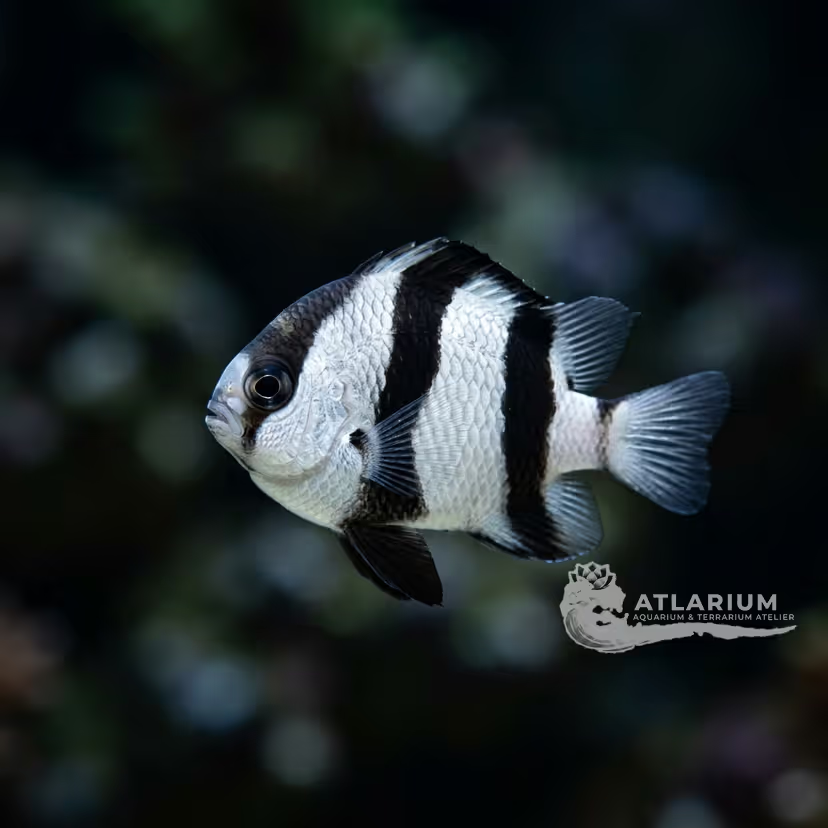
View details->
Whitetail Dascyllus

Whitetail Dascyllus

Dascyllus aruanus

View details->
Last updated: 06/30/2026
Whitetail Damselfish (Pomacentrus chrysurus) Care Guide & Tank Setup | Atlarium