Skunk clownfish
Amphiprion akallopisos
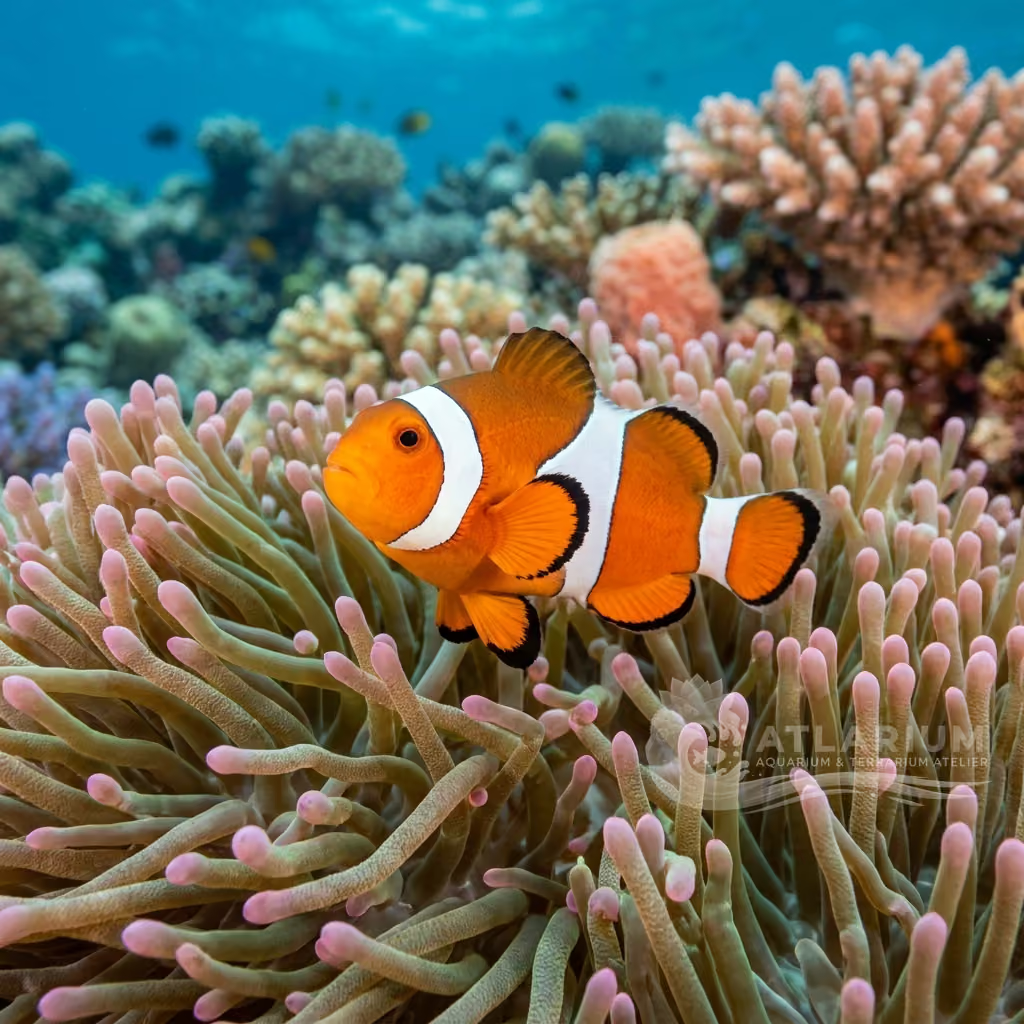
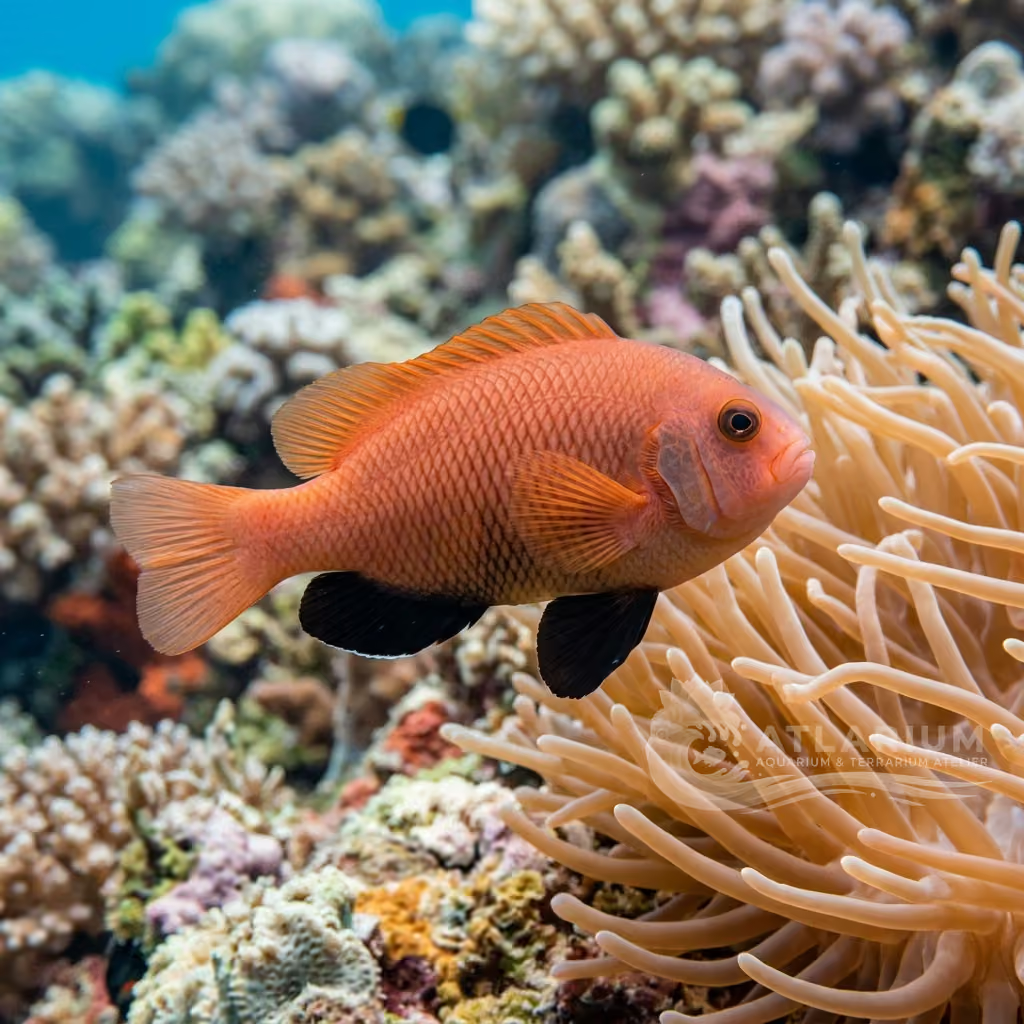
The Skunk Clownfish is a delicate, pinkish-peach marine fish featuring a distinctive white dorsal stripe. It is a peaceful species that heavily relies on its host anemone.
Water Temperature
24 - 27 °C
pH Value
8.1 - 8.4
Water type
Marine
Tank level
Bottom and middle
Adult size
11 cm
Minimum tank volume
>= 100 L
Minimum group
>= 1
KH
8 - 12 dKH

Species description
Geographical Origin and Habitat: Distributed throughout the Indian Ocean, from East Africa and Madagascar to the Andaman Islands and Sumatra. Inhabits shallow seaward reefs, hosting in Heteractis magnifica. They inhabit coral reefs, usually associating with sea anemones on shallow reef flats.
Taxonomy and Morphology: Member of the Pomacentridae family. Possesses a slender, compressed body. Grows up to 11 cm (4.3 inches) in length. Closely resembles A. sandaracinos but is pinker. Their body shape is elongated and compressed, allowing them to swim gracefully.
Social Behavior: Peaceful and relatively shy compared to most other clownfishes. Relies heavily on its host anemone for protection, rarely swimming far from the tentacles. They exhibit a complex social structure with a dominant breeding female at the top.
Coloration and Sexual Dimorphism: Soft pinkish-peach body with a thin, narrow white stripe starting between the eyes and running along the dorsal ridge to the tail. Females are larger than males. The narrow white stripe along their back serves as a recognition mark for conspecifics.

Care, breeding and tankmates
Aquarium Setup: Minimum tank volume of 100 liters (25 gallons) with plenty of hiding places. Highly benefits from hosting anemones such as Heteractis magnifica or Stichodactyla mertensii. A mature reef tank with a healthy host anemone is crucial for their long-term care.
Diet and Feeding: Planktivorous. Feed a variety of small frozen foods like copepods, cyclops, daphnia, finely chopped mysis, and high-quality marine flakes or small pellets. Feed a varied diet of frozen plankton, mysis shrimp, and high-quality dry foods.
Water Quality: Demands high water quality with low nitrates. Keep temperature at 24-27°C (75-81°F), pH 8.1-8.4, specific gravity 1.020-1.025, and KH 8-12. Keep water parameters stable, focusing on correct salinity and high dissolved oxygen.
Compatibility and Cohabitation: Peaceful. Keep with other non-aggressive reef inhabitants. Avoid keeping with larger or more aggressive clownfish species like Tomato or Maroon clownfish. They are peaceful and should not be housed with large, aggressive predators.
Aquarium Breeding: Possible. Spawns on flat surfaces at the base of the host anemone. Larvae are delicate and require live rotifers for successful rearing. They can be bred in captivity, where the male will guard the nest diligently.
Risks and Diseases: Highly susceptible to Brooklynella hostilis and skin parasites. A strict quarantine protocol is vital to prevent outbreak and loss. Monitor for signs of skin infections or stress-induced diseases during initial introduction.

Geographic origin and distribution
Distributed throughout the Indian Ocean, from East Africa and Madagascar to the Andaman Islands and Sumatra. Inhabits shallow seaward reefs, hosting in Heteractis magnifica. They inhabit coral reefs, usually associating with sea anemones on shallow reef flats.
Origin
Tropical oceans and reefsAfrica and MadagascarSouth and Southeast Asia

Fish profile
- Temperament
- Semi-aggressive
- Amphiprion akallopisos displays a semi-aggressive and highly territorial temperament, especially in the immediate vicinity of its host. While generally more timid and reserved than larger anemonefish species, they will bravely defend their home against intruders of any size. Intraspecific aggression can be intense, so keeping them in pairs or small natural groups is vital. Once a hierarchy is established, the bonded pair will peacefully cohabitate and guard their territory together.
- Diet
- Omnivore
- As omnivores with a carnivorous lean, these fish require a varied diet to thrive in captivity. They will readily accept high-quality marine flakes and pellets enriched with spirulina and vitamins. However, their diet should be regularly supplemented with frozen or live foods such as mysis shrimp, brine shrimp, and finely chopped seafood. This balanced nutritional approach supports their immune system and maintains their vibrant orange coloration.
- Life expectancy
- 8-15 years
- Adult size
- 11 cm
- Sex ratio
- Harem
- This species is a protandrous sequential hermaphrodite that forms a strict social hierarchy. It is best to purchase a small group of juveniles so they can naturally establish their social structure, with the largest transitioning into the dominant breeding female and the second largest becoming the functional male. The remaining individuals will remain submissive, sexually immature males. Introducing two mature females together must be avoided, as it will lead to severe territorial conflict and potential death.
- Feeding frequency
- Twice daily
- It is recommended to feed this species two to three times daily in small amounts that they can consume within two minutes. Frequent small feedings mimic their natural grazing habits in wild coral reef environments. Overfeeding should be avoided to prevent waste accumulation and spikes in phosphate or nitrate levels. Utilizing a consistent feeding schedule helps maintain active behavior and overall digestive health.
- Bioload
- Low to Medium
- Amphiprion akallopisos produces a low to moderate biological waste load, which is typical for small-sized anemonefish. To accommodate their varied diet and the biological demands of a reef environment, an efficient filtration system and a reliable protein skimmer are recommended. Regular partial water changes are essential to keep nitrate levels low and ensure optimal health. A mature, biologically stable aquarium is key to absorbing waste spikes and maintaining pristine water chemistry.
- Flow
- Moderate
- The skunk clownfish prefers moderate to strong water flow, replicating the conditions of their native outer reef slopes. The current should be strong enough to keep the water highly oxygenated but not so powerful that it exhausts the fish or prevents the host anemone from expanding. Directional powerheads should be adjusted to create a gentle, varied circulation throughout their territory. Proper water movement also assists in keeping their immediate environment free of detritus.
- Jump risk
- Yes
- The risk of jumping for Amphiprion akallopisos is moderate, particularly during acclimation or when startled. Startling external movements, sudden light changes, or harassment by aggressive tankmates can prompt them to leap from the water. Consequently, a tight-fitting aquarium lid or a fine mesh cover is highly recommended. Taking these precautionary steps prevents unfortunate accidents and ensures the safety of the pair.
- Reproduction
- Oviparous
- Breeding Amphiprion akallopisos in a home aquarium is achievable but requires a mature, bonded pair and proper environmental cues. The male will clean a flat rock surface near the host anemone in preparation for the female to deposit her eggs. After spawning, the male assumes the role of guarding and fanning the nest to keep the eggs oxygenated until they hatch, which usually occurs after seven to eight days. Raising the resulting fry is challenging and requires live rotifer cultures followed by baby brine shrimp.
- Compatibility & tankmates
- Peaceful
- This species is compatible with a wide range of peaceful reef fish such as gobies, blennies, firefish, and peaceful dwarf angels. However, large predatory fish or highly aggressive species should be avoided as they may bully or consume the clownfish. Introducing them to the aquarium early on allows them to claim a territory before larger, more active fish are present. The presence of a host anemone provides them with a safe haven, reducing stress and improving community compatibility.
- Tank level
- Middle/Bottom
- The skunk clownfish primarily occupies the middle to lower levels of the water column, staying close to its home territory. Its vertical distribution is heavily dependent on the placement of its host sea anemone or a selected coral substitute. They rarely venture far from this sanctuary, only leaving briefly to feed or deter minor intruders. Providing plenty of rockwork in the lower sections of the tank will encourage secure territorial establishment.

Scientific Parameters & Models
FishBase
Window to the official scientific data of the species
FishBase v25.04Data synced on: 06/15/2026
- Trophic level
- 2.7 ± 0.31 se
- Resilience
- High (less than 15 months)
- Phylogenetic uniqueness (PD50)
- 0.5
- Bayesian Length-Weight
- a = 0.01445, b = 3
- VulnerabilityLow vulnerability (10 / 100)

Related species
Recommendations grouped by close relatives, companion choices, and similar care.