Encyclopaedia

FishMarineIntermediate
©AI Generated·Proprietary

Maldive Anemonefish

Amphiprion nigripes

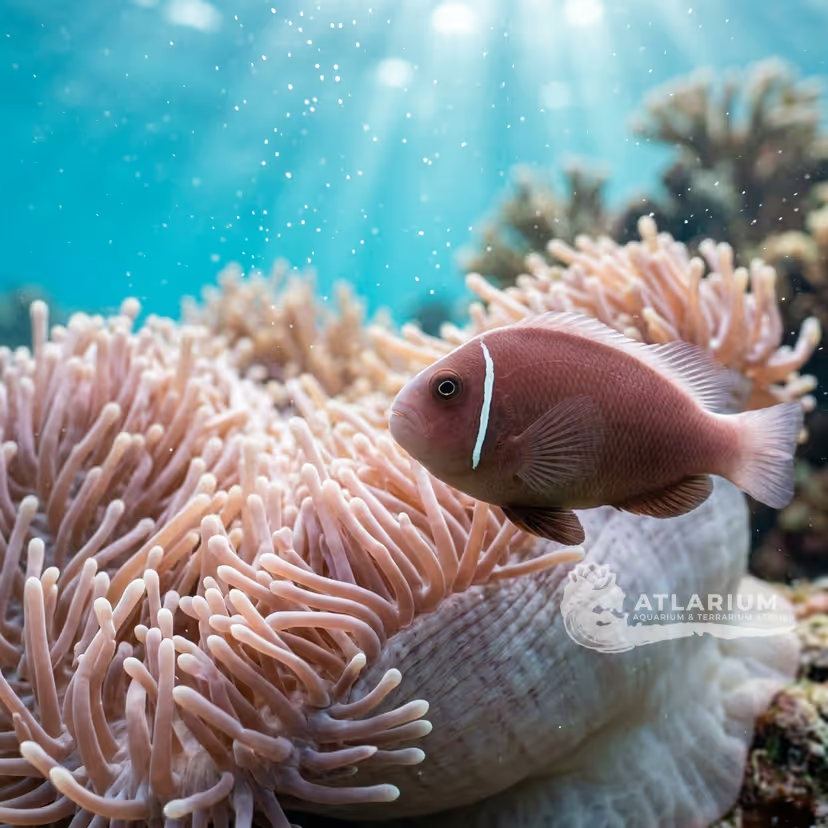
An elegant clownfish distinguished by its yellow-orange hue, black belly, and single vertical white bar. It forms strict mutualistic bonds with the Magnificent Anemone in established reef setups.

Taxonomy
Class:Actinopteri
Order:Perciformes
Family:Pomacentridae
Subfamily:Amphiprioninae
Genus:Amphiprion
Species:Amphiprion nigripes

Share

Check out Maldive Anemonefish on Atlarium

PracticeRecognition quizzesPhotos, names, origins, and puzzles to review Atlas species.Open quizzes
Water Temperature

24 - 28 °C

pH Value

8.1 - 8.4

Water type

Marine

Tank level

Middle

Adult size

10 cm

Minimum tank volume

>= 100 L

Minimum group

>= 2

Species description

Geographical Origin and Habitat: Native to the Western Indian Ocean, primarily found in the Maldives, Laccadive Islands, and Sri Lanka. Inhabits shallow coral reefs at depths of 2 to 25 meters.
Taxonomy and Morphology: Member of the family Pomacentridae. Features a slightly elongated, compressed body. Reaches a maximum size of 10 cm. Adapted to swim within the sting of anemone tentacles.
Social Behavior: Lives in a strict mutualistic relationship, most frequently with the Magnificent Anemone (Heteractis magnifica). Strongly defends its host anemone against potential threats.
Coloration and Sexual Dimorphism: Yellow-orange base color. The belly, pelvic fins, and anal fin are deep black. Features a single white vertical bar behind the eye. Females are larger than males.

Care, breeding and tankmates

Aquarium Setup: Requires a minimum tank size of 100 liters with plenty of rock caves. Keeping its preferred host anemone (Heteractis magnifica) is highly recommended.
Diet and Feeding: Omnivorous. Provide a varied diet of frozen foods like brine shrimp and mysis, high-quality dry foods, and preparations containing marine algae.
Water Quality: Maintain stable marine conditions: temperature 24-28 °C, pH 8.1-8.4, and salinity 1.020-1.025 with moderate water circulation.
Compatibility and Cohabitation: Good for community reef aquariums. Do not house with other clownfish species to prevent severe territory disputes. Keep with peaceful tankmates.
Aquarium Breeding: Oviparous, protandrous hermaphrodite. Spawns adhesive eggs on clean rock surfaces near the host anemone. The male guards and fans the nest.
Risks and Diseases: Vulnerable to common marine external parasites like Brooklynella and velvet. Ensuring high water quality and quarantine is essential.

Geographic Origin and Distribution

Native to the Western Indian Ocean, primarily found in the Maldives, Laccadive Islands, and Sri Lanka. Inhabits shallow coral reefs at depths of 2 to 25 meters.

Origin

Tropical oceans and reefsSouth and Southeast Asia

Fish profile

Temperament
Semi-aggressive
While generally peaceful when young, the Maldive Anemonefish develops a semi-aggressive and highly territorial temperament as it matures. The female, in particular, will vigorously defend her mate, anemone, and eggs against any perceived threats, sometimes even biting the aquarist's hand. This territoriality is confined to a specific area rather than the entire tank. Providing ample space and choosing compatible tank mates minimizes potential conflicts.
Diet
Omnivore
The Maldive Anemonefish is an omnivore that requires a varied diet to thrive and maintain its vibrant colors. In the wild, they feed on zooplankton, copepods, and various types of algae. In the home aquarium, they eagerly accept high-quality marine flakes, pellets, and frozen foods like mysis and brine shrimp. Supplementing their diet with spirulina or other algae-based foods is highly beneficial for their overall health.
Sex ratio
Pair
A pair of Amphiprion nigripes consists of a larger, dominant female and a smaller male. If a group of juveniles is introduced to an aquarium, the largest and most dominant individual will become the female, while the next in line becomes the breeding male. The remaining fish will stay as sexually immature males, often relegated to the outskirts of the territory. It is highly recommended to keep them individually or in bonded pairs to avoid severe aggression.
Feeding frequency
Twice daily
To mimic their natural foraging habits, it is best to feed the Maldive Anemonefish small amounts of food 1 to 2 times a day. Overfeeding should be avoided to prevent uneaten food from degrading water quality. They are generally enthusiastic eaters and will quickly swim to the surface during feeding time. Target feeding their host anemone is also an important practice to ensure both fish and host are nourished.
Bioload
The Maldive Anemonefish (Amphiprion nigripes) has a moderate bioload that is easily managed in most standard marine aquariums. While not overly messy eaters, they do consume hearty meals and produce a proportional amount of waste. A properly sized protein skimmer and regular mechanical filtration maintenance will keep water parameters in check. Consistent bi-weekly water changes are recommended to dilute dissolved organics.
Flow
Moderate
Amphiprion nigripes adapts well to a variety of flow conditions, but generally prefers moderate water movement. In the wild, they rely on the flow to bring planktonic food to their host anemone. While they can handle stronger currents, they need slower-moving areas to rest, usually within the tentacles of their host. Providing a mix of flow zones ensures they can swim actively and retreat when needed.
Jump risk
No
Reproduction
Oviparous
The Maldive Anemonefish is a protandrous hermaphrodite, meaning all individuals are born male and the most dominant fish transitions into a female. They are substrate spawners, laying hundreds of eggs on a flat surface near their host anemone. The male meticulously cleans the spawning site, fertilizes the eggs, and aggressively defends the nest until they hatch. Captive breeding is very common and forms the backbone of the marine ornamental aquaculture industry.
Compatibility & tankmates
Peaceful
This species is generally reef-safe and can be kept with a wide variety of peaceful to semi-aggressive tank mates. However, once paired and established, they become fiercely territorial around their chosen host anemone or territory. They may aggressively chase away fish that venture too close to their home. It is best to avoid housing them with highly aggressive predators or other clownfish species.
Tank level
Middle
The Maldive Anemonefish typically occupies the middle to lower levels of the aquarium, closely associating with its host anemone or chosen territory. It rarely strays far from its home base, preferring to stay within a protective radius. While it will swim to the surface to feed, it immediately returns to its secure location. Their strong site fidelity makes them an excellent focal point in a reef tank.

Window to the official scientific data of the species

Data synced on: 06/15/2026

Scientific Parameters & Models

Trophic level
2.7 ± 0.3 se
Resilience
High (less than 15 months)
Phylogenetic uniqueness (PD50)
0.5
Bayesian Length-Weight
a = 0.01445, b = 3
VulnerabilityLow vulnerability (10 / 100)

Image gallery

Licensed images linked to the species or, when marked, to the closest representative taxon.

Related species

Recommendations grouped by close relatives, companion choices, and similar care.

Variants and close relatives

Same atlas type, nearby scientific identity, genus, or family.
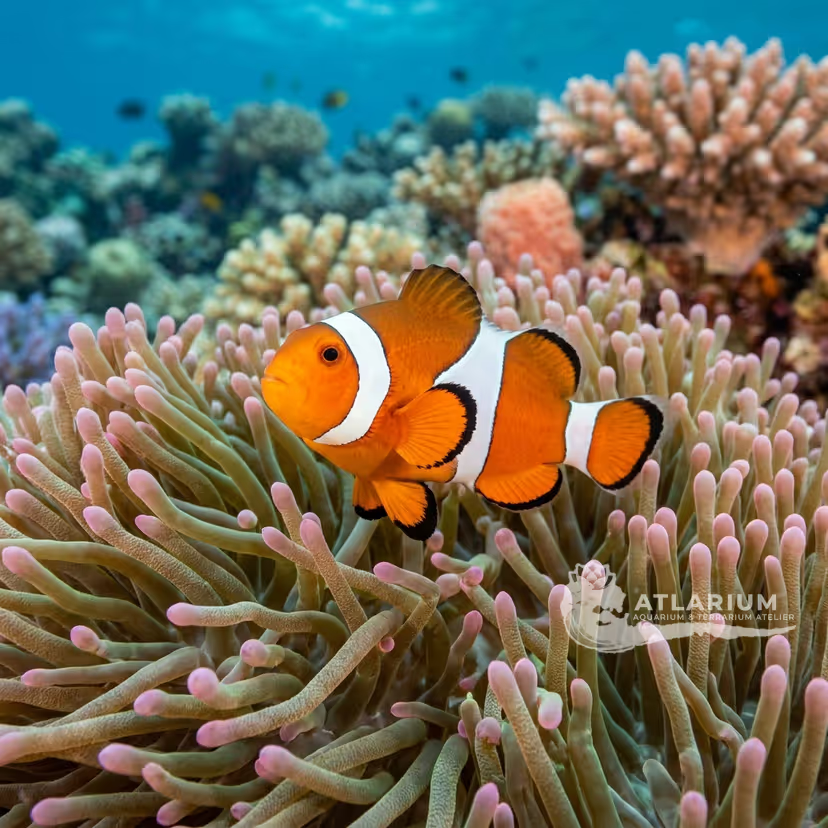
Barrier Reef Clownfish

Barrier Reef Clownfish

Amphiprion akindynos

View details->
Chagos Anemonefish

Chagos Anemonefish

Amphiprion chagosensis

View details->
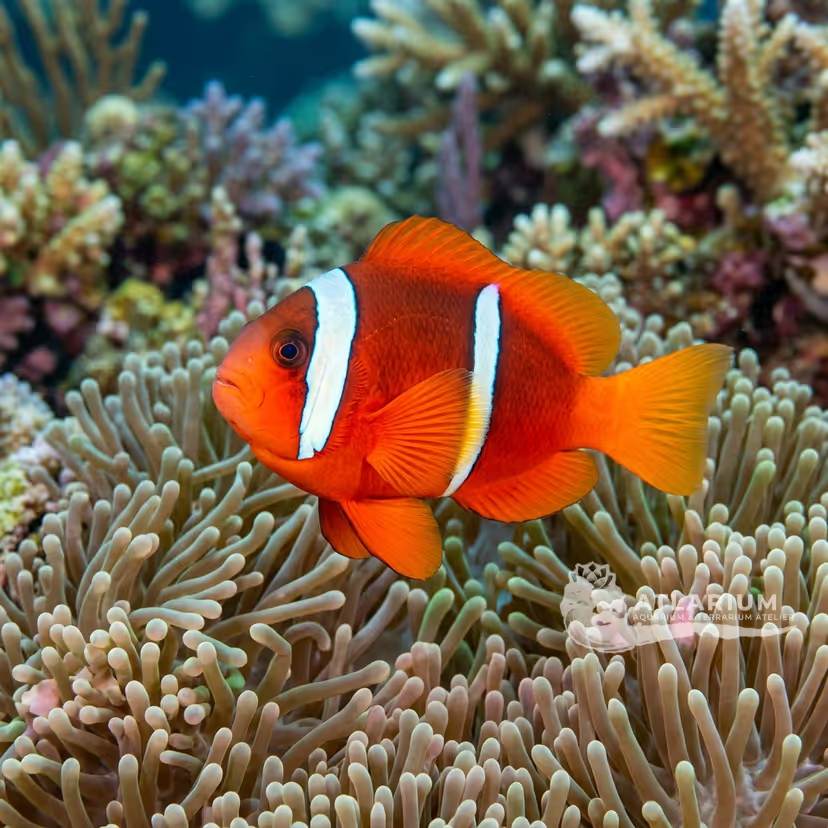
Ocellaris clownfish

Ocellaris clownfish

Amphiprion ocellaris
View details->
Orange-fin Clownfish

Orange-fin Clownfish

Amphiprion chrysopterus
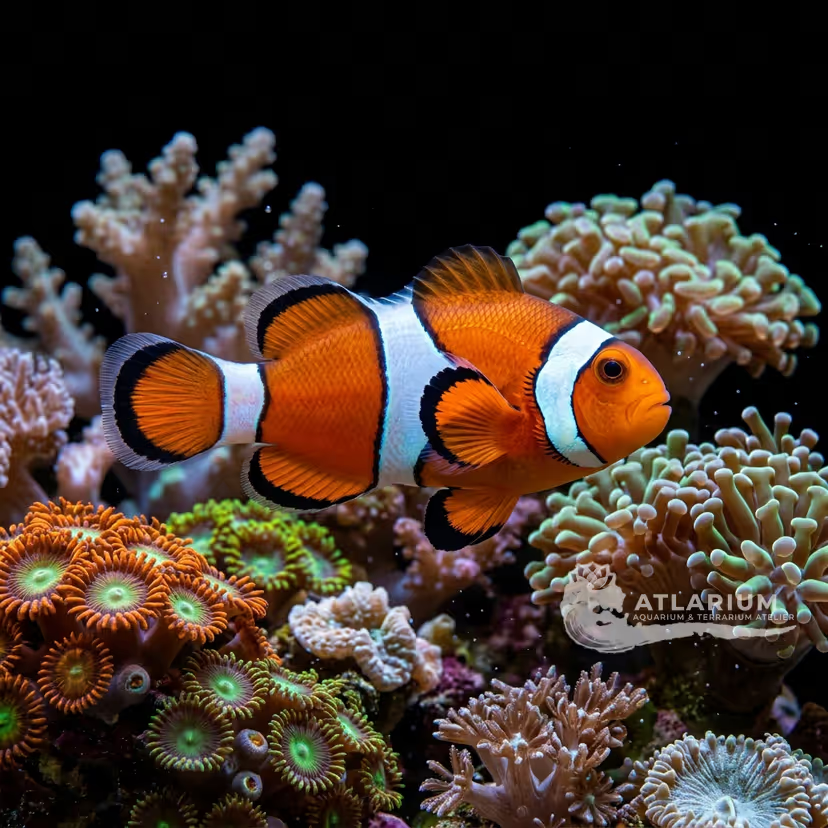
View details->
Percula clownfish

Percula clownfish

Amphiprion percula

View details->
Pink Skunk Clownfish

Pink Skunk Clownfish

Amphiprion perideraion
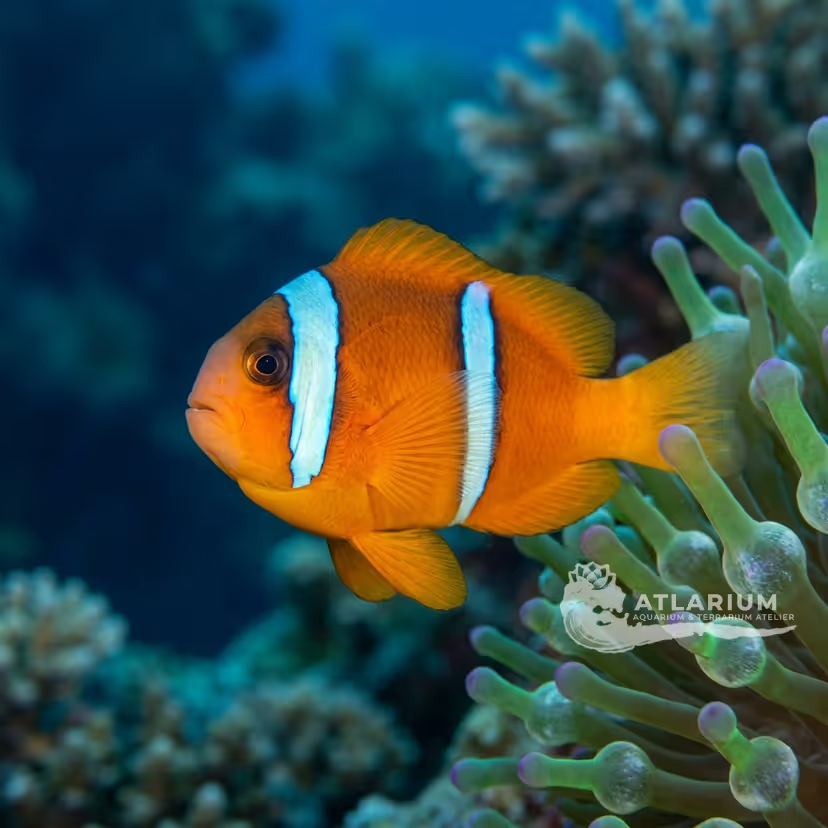
View details->
Two-band Anemonefish

Two-band Anemonefish

Amphiprion bicinctus

View details->
Cinnamon Clownfish

Cinnamon Clownfish

Amphiprion melanopus

View details->
Clark's anemonefish

Clark's anemonefish

Amphiprion clarkii
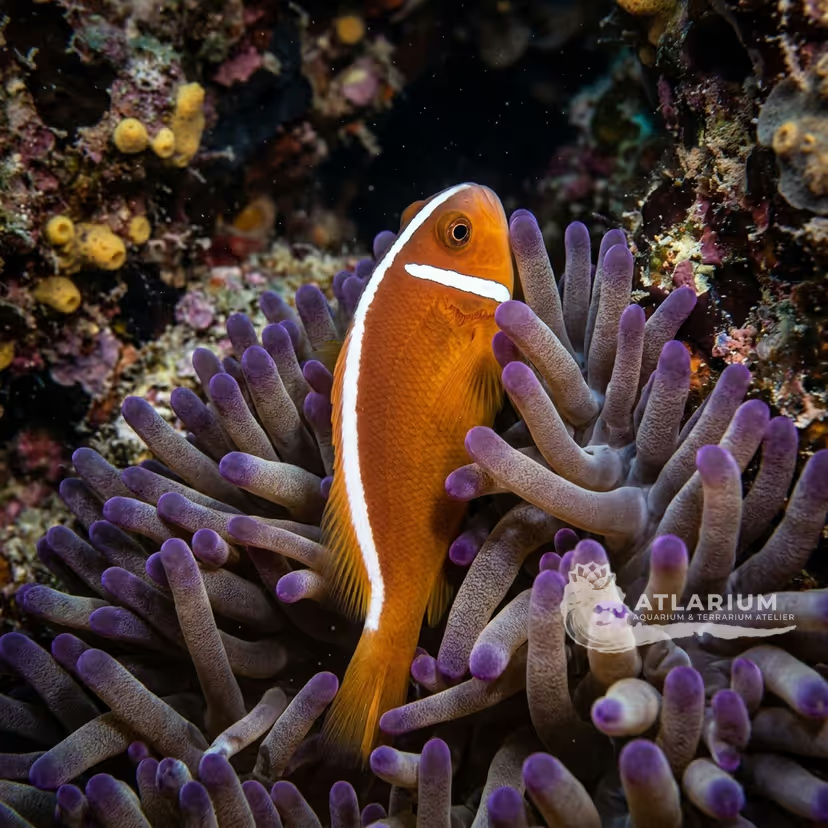
View details->
Orange Skunk Clownfish

Orange Skunk Clownfish

Amphiprion sandaracinos
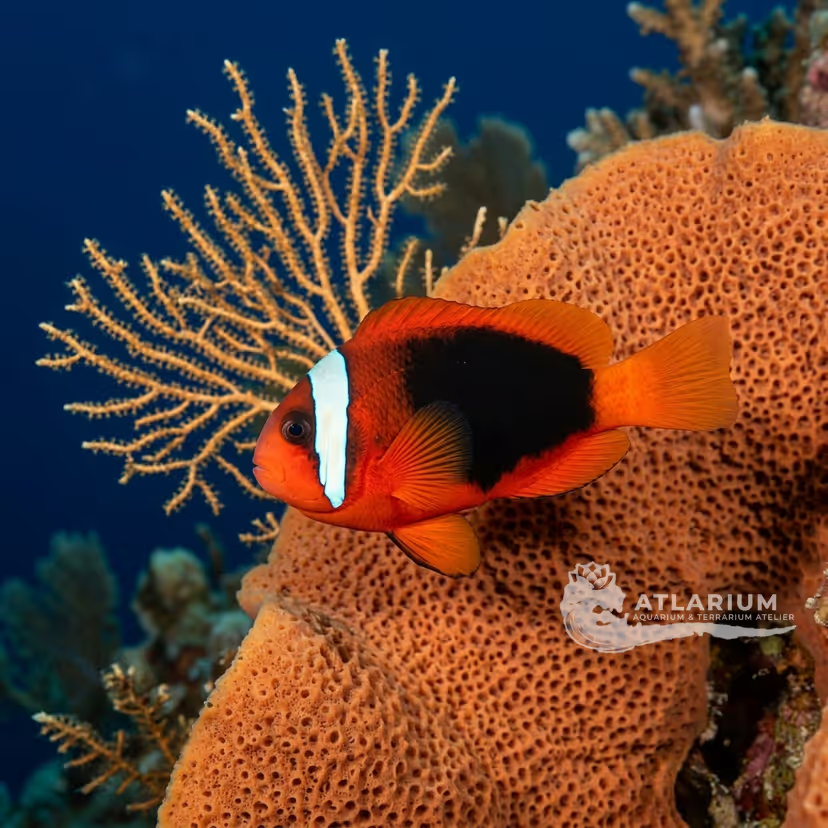
View details->
Red saddleback clownfish

Red saddleback clownfish

Amphiprion ephippium
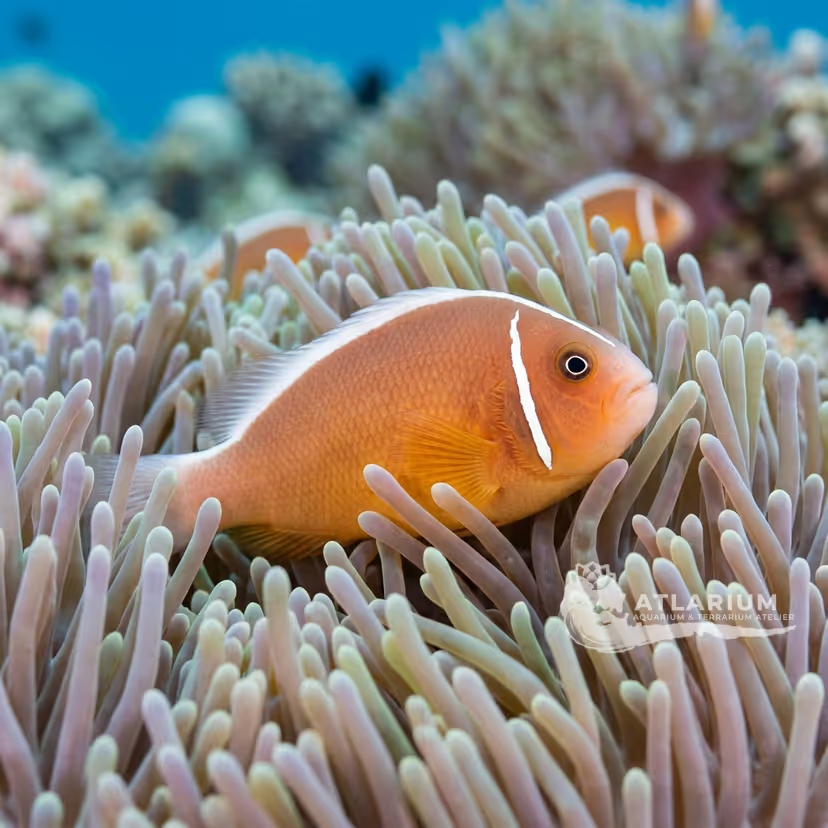
View details->
Skunk clownfish

Skunk clownfish

Amphiprion akallopisos
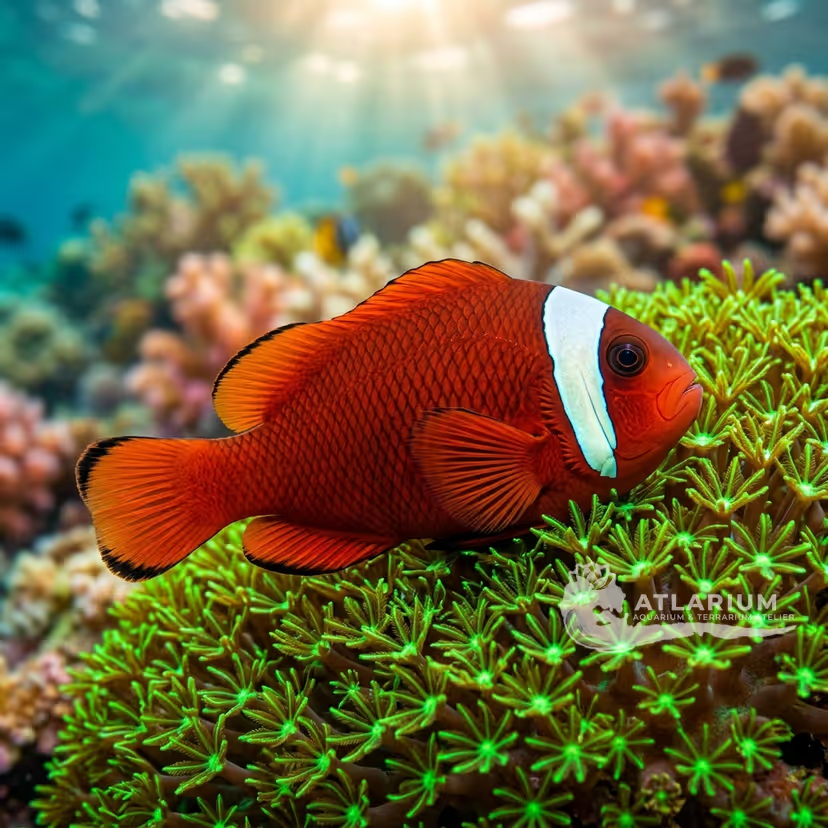
View details->
Tomato clownfish

Tomato clownfish

Amphiprion frenatus

View details->
Oman Anemonefish

Oman Anemonefish

Amphiprion omanensis
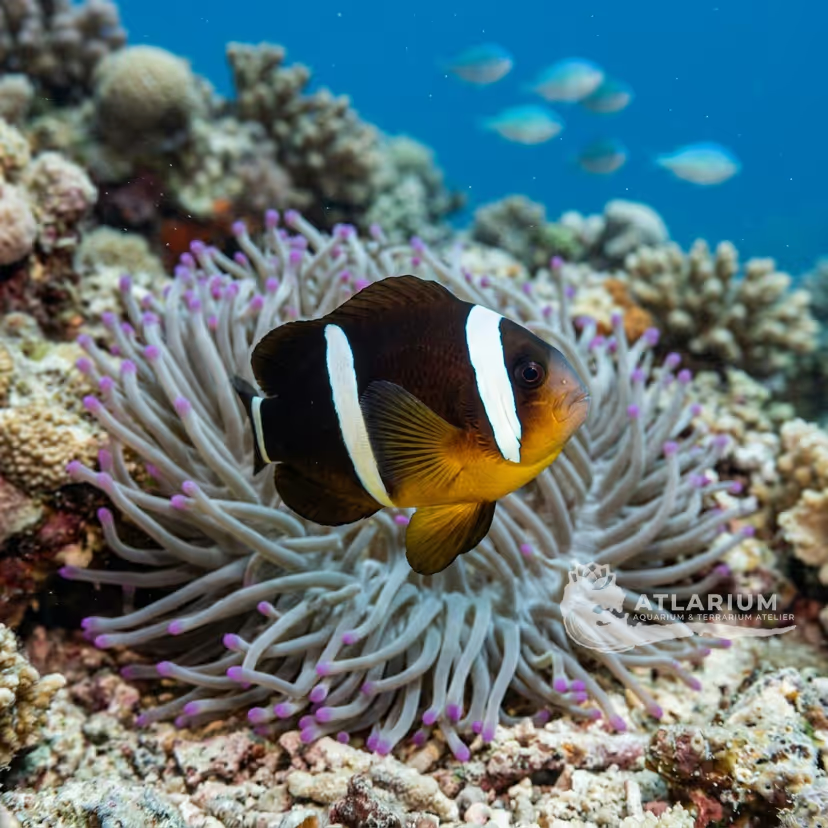
View details->
Sebae clownfish

Sebae clownfish

Amphiprion sebae

View details->
Saddleback Clownfish

Saddleback Clownfish

Amphiprion polymnus

View details->

Recommended companions

Compatible cards from coherent ecosystems with matching parameters.

Caulerpa prolifera
Plant

Caulerpa prolifera

Caulerpa prolifera
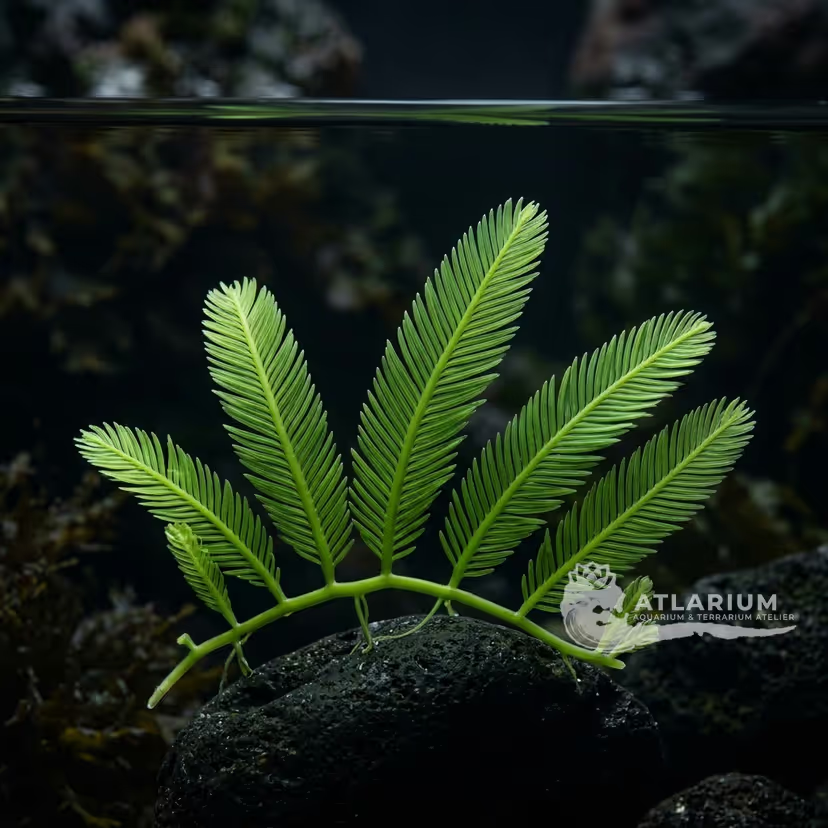
View details->
Caulerpa taxifolia
Plant

Caulerpa taxifolia

Caulerpa taxifolia
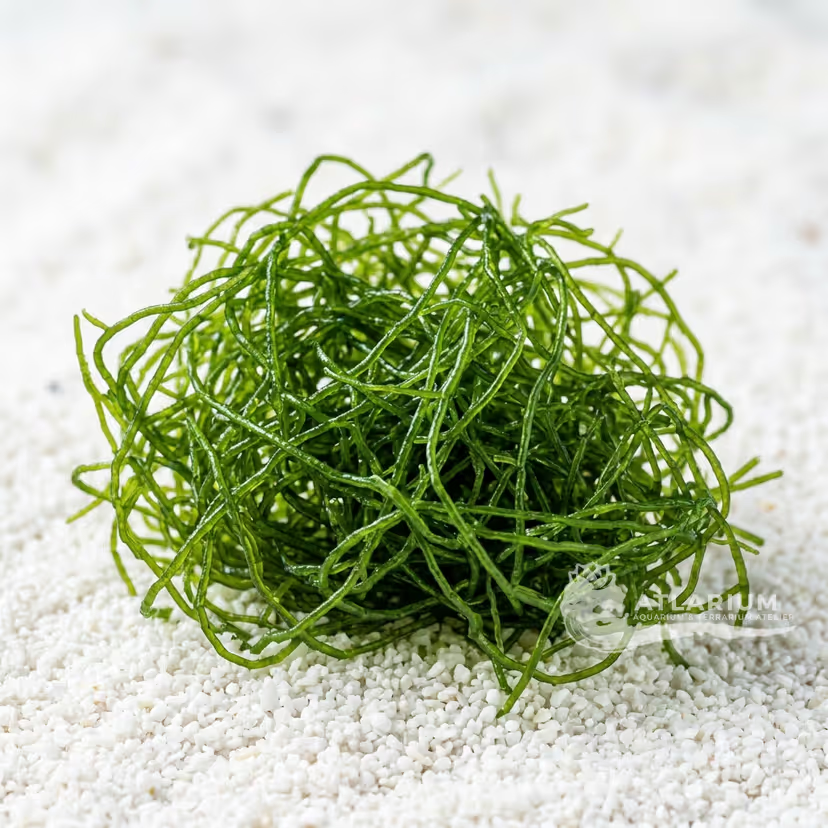
View details->
Chaetomorpha macroalgae
Plant

Chaetomorpha macroalgae

Chaetomorpha linum

View details->
Dead man fingers algae
Plant

Dead man fingers algae

Codium fragile

View details->
Grape caulerpa
Plant

Grape caulerpa

Caulerpa racemosa

View details->
Halimeda macroalgae
Plant

Halimeda macroalgae

Halimeda opuntia

View details->
Peacock tail algae
Plant

Peacock tail algae

Padina pavonica

View details->
Red gracilaria
Plant

Red gracilaria

Gracilaria parvispora

View details->
Red grape algae
Plant

Red grape algae

Botryocladia uvaria

View details->
Sea lettuce
Plant

Sea lettuce

Ulva lactuca

View details->
Red Mangrove
Plant

Red Mangrove

Rhizophora mangle

View details->

Similar care

Cards with similar requirements, difficulty, habitat, and husbandry profile.

Ambon Damselfish

Ambon Damselfish

Pomacentrus amboinensis

View details->
Bicolor Chromis

Bicolor Chromis

Chromis margaritifer
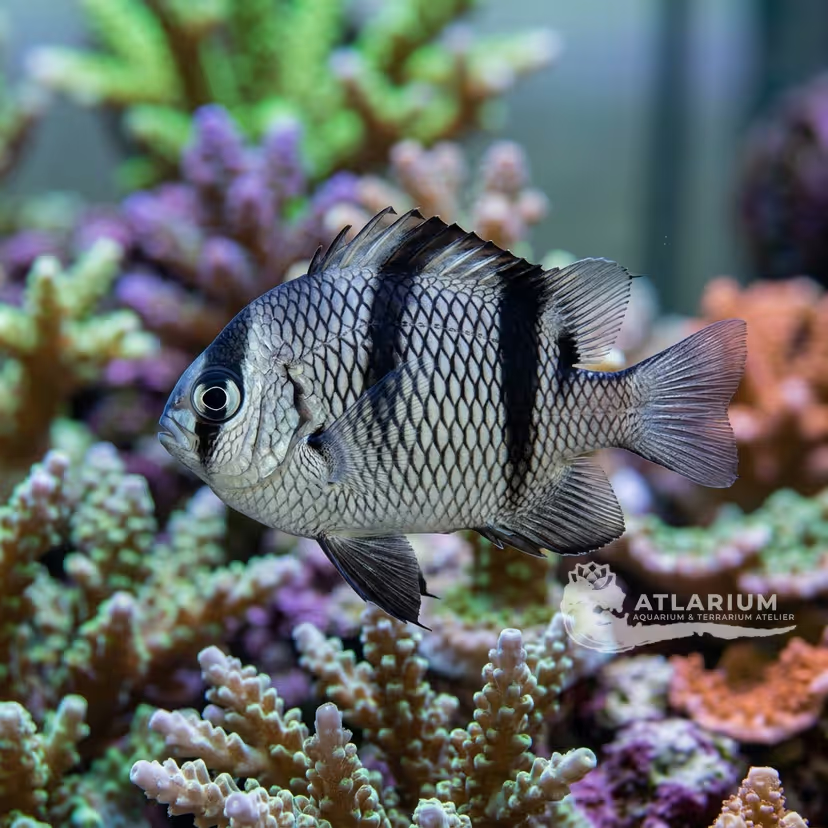
View details->
Reticulated Damselfish

Reticulated Damselfish

Dascyllus reticulatus

View details->
Rolland's damselfish

Rolland's damselfish

Chrysiptera rollandi

View details->
Whitetail Damselfish

Whitetail Damselfish

Pomacentrus chrysurus

View details->
Allen's Damselfish

Allen's Damselfish

Pomacentrus alleni

View details->
Blue-spot Dascyllus

Blue-spot Dascyllus

Dascyllus carneus

View details->
Goldbelly damselfish

Goldbelly damselfish

Pomacentrus auriventris

View details->
Azure damselfish

Azure damselfish

Chrysiptera hemicyanea

View details->
Talbot's Damselfish

Talbot's Damselfish

Chrysiptera talboti

View details->
Blue-green chromis

Blue-green chromis

Chromis viridis

View details->
Yellowtail damselfish

Yellowtail damselfish

Chrysiptera parasema
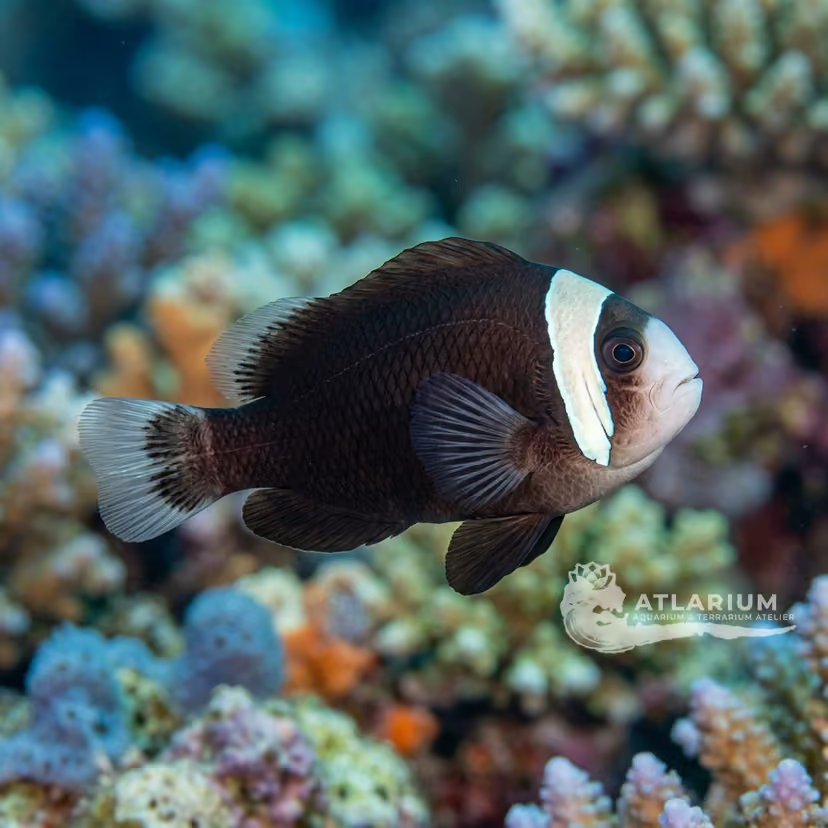
View details->
McCulloch's Clownfish

McCulloch's Clownfish

Amphiprion mccullochi
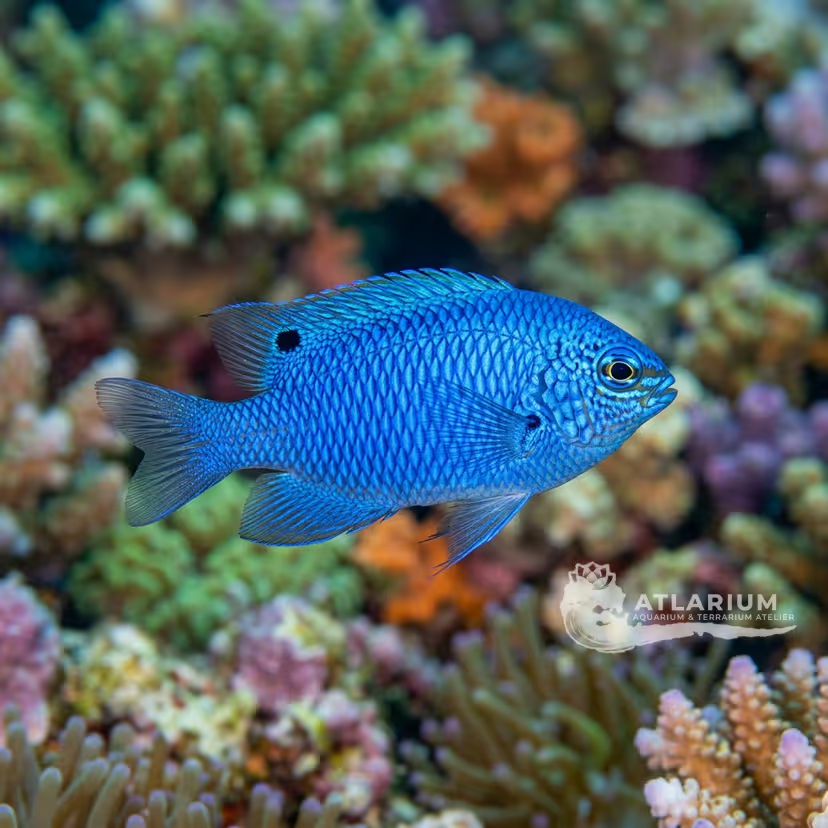
View details->
Sapphire Damselfish

Sapphire Damselfish

Pomacentrus pavo

View details->
Scaly-cheek Damselfish

Scaly-cheek Damselfish

Pomacentrus lepidogenys

View details->
Ambon Chromis

Ambon Chromis

Chromis amboinensis

View details->
Last updated: 06/30/2026
Maldive Anemonefish (Amphiprion nigripes) Care Guide & Tank Setup | Atlarium