Encyclopaedia

FishMarineIntermediate
©AI Generated·Proprietary

Maroon clownfish

Premnas biaculeatus

A maroon clownfish with extreme territoriality, known for its deep red coloration and prominent cheek spines. Ideal for large aquariums.

Taxonomy
Class:Actinopteri
Order:Perciformes
Family:Pomacentridae
Subfamily:Amphiprioninae
Genus:Premnas
Species:Premnas biaculeatus

Share

Check out Maroon clownfish on Atlarium

PracticeRecognition quizzesPhotos, names, origins, and puzzles to review Atlas species.Open quizzes
Water Temperature

24 - 28 °C

pH Value

8.1 - 8.4

Water type

Marine

Tank level

All levels

Adult size

17 cm

Minimum tank volume

>= 250 L

Minimum group

>= 1

Species description

Geographical Origin and Habitat: Endemic exclusively to the warm, shallow tropical coral reefs of the Indo-Pacific Ocean, natively colonizing the coastal waters from the Indo-Malaysian archipelago down to the Great Barrier Reef in Australia. Premnas biaculeatus (the Maroon Clownfish, or Spine-Cheeked Anemonefish) is an obligate marine reef-dweller. It uniquely inhabits highly sheltered coastal lagoons and pristine inner reefs (typically 1-15 meters deep). These environments are strictly defined by the absolute required presence of their sole natural host anemone, the massive Bubble-Tip Anemone (Entacmaea quadricolor).
Taxonomy and Morphology: Scientifically classified within the Pomacentridae family (damselfishes), it is the sole member of the genus Premnas, definitively separated from all other Clownfish (genus Amphiprion). Morphologically, it is the absolute largest, most heavily built, and most physically intimidating of all clownfish, with massive, ancient females reaching a staggering 15-17 centimeters (6-6.5 inches). Its universally defining physical feature, completely absent in all other clownfish, is a pair of massive, razor-sharp, backward-pointing preopercular spines projecting outward from both cheeks.
Social Behavior: They are unequivocally the most violently territorial, lethally aggressive, and deeply hierarchical of all clownfish species. Maroon Clownfish exist in a brutal matriarchal society. The largest fish is the dominant female; she rules her anemone with absolute, terror-inducing aggression. If the female dies, the smaller breeding male undergoes a slow biological sex change to become the new female. A mature female Maroon Clownfish will violently and fearlessly attack any fish, invert, or human hand that dares to enter the immediate perimeter of her anemone.
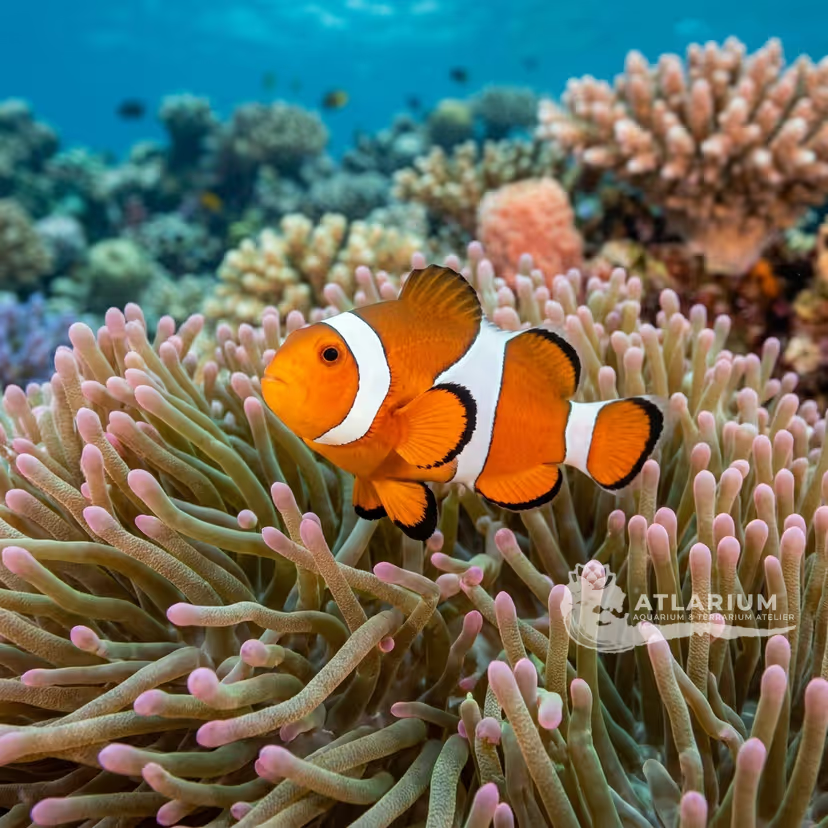
Coloration and Sexual Dimorphism: Sexual dimorphism is the most extreme of any clownfish, dictated by both massive size differences and drastic color shifts. Breeding males are tiny (4-6 cm) and retain a blazing, vibrant neon-red coloration with crisp white stripes. The dominant female, however, grows massive (15+ cm) and her color heavily deepens into a profound, dark maroon, blood-red, or almost blackish-purple. Both sexes are bisected by three striking vertical stripes (one behind the eye, mid-body, and tail base). In the famous "Gold Stripe" variant, these stripes mature from white to brilliant yellow-gold.

Care, breeding and tankmates

Aquarium Setup: The aquarium architecture must accommodate their massive adult size and lethal territoriality. A minimum 120-liter (30-gallon) saltwater tank is strictly required for a bonded pair, but 200L+ is far safer for community tanks. The absolute, non-negotiable requirement is pristine marine water chemistry and massive biological filtration (live rock). The layout MUST feature massive, porous live rock structures. While they naturally host exclusively in the Bubble-Tip Anemone (Entacmaea quadricolor), providing one is NOT required in captivity and should only be attempted by advanced reefers under intense, specialized lighting.
Diet and Feeding: In their Indo-Pacific reefs, they are continuous, highly aggressive omnivorous planktivores. They violently dart from their anemone to snatch pelagic crustaceans, zooplankton, and drifting algae. In captivity, they are ravenous, unstoppable eaters that will aggressively outcompete all other fish. Their staple diet MUST be high-quality, large marine carnivore pellets. To maintain their dark maroon coloration and breeding vigor, this MUST be heavily supplemented with massive daily amounts of frozen meaty foods: enriched mysis shrimp, chopped krill, chopped squid, and fresh clams.
Water Quality: Originating from pristine coral reefs, they absolutely demand flawless marine water chemistry and possess zero tolerance for poor conditions. They thrive in warm tropical saltwater (24-27°C / 75-80°F). Crucially, they strictly require a stable specific gravity (salinity) of 1.023 - 1.026, and high alkalinity (pH 8.1 - 8.4). Because female Maroons generate a massive bioload and marine environments are highly stable, extreme protein skimming, heavy biological filtration, and religious weekly water changes with RO/DI (Reverse Osmosis) water are absolutely mandatory. Zero tolerance for ammonia.
Compatibility and Cohabitation: Compatibility is the absolute greatest challenge in keeping this species; they are holy terrors. They MUST NEVER be housed with peaceful, timid fish, or any other clownfish species; the female Maroon will violently hunt and kill them. They MUST NEVER be housed with small gobies or blennies, which will be battered to death. Excellent tankmates are exclusively large, aggressive, robust marine fish that can defend themselves: large Tangs, Angelfish, aggressive Wrasses, and tough Damselfish. Always add the Maroon Clownfish to the tank LAST to prevent them from claiming the entire aquarium.
Aquarium Breeding: Breeding in captivity is common but pairing them is notoriously lethal. You CANNOT simply put two adult Maroons together; the female will instantly kill the male. To form a pair, you must introduce a massive adult female and a tiny, sub-adult juvenile. The female will brutally batter the juvenile to establish dominance; if he submits and survives, they bond. They are substrate spawners. The female deposits hundreds of bright red eggs near the anemone base. The male fiercely fans and guards the eggs for 7-10 days until hatching.
Risks and Diseases: The absolute greatest physical risk is lethal territorial violence; female Maroons are notorious for killing their own mates during pairing, and will violently eradicate any other clownfish placed in the same tank. The second major risk is severe physical trauma to the aquarist; their cheek spines are razor-sharp, and they will bite and slice hands placed in the tank, drawing blood. Medically, they are highly susceptible to "Clownfish Disease" (Brooklynella), a lethal marine parasite requiring immediate copper or formalin quarantine treatment.

Geographic Origin and Distribution

Endemic exclusively to the warm, shallow tropical coral reefs of the Indo-Pacific Ocean, natively colonizing the coastal waters from the Indo-Malaysian archipelago down to the Great Barrier Reef in Australia. Premnas biaculeatus (the Maroon Clownfish, or Spine-Cheeked Anemonefish) is an obligate marine reef-dweller. It uniquely inhabits highly sheltered coastal lagoons and pristine inner reefs (typically 1-15 meters deep). These environments are strictly defined by the absolute required presence of their sole natural host anemone, the massive Bubble-Tip Anemone (Entacmaea quadricolor).

Origin

Tropical oceans and reefsAfrica and MadagascarAustralia, New Guinea, and Oceania

Fish profile

Temperament
Aggressive
The Maroon Clownfish is notoriously bold, fearless, and exceptionally aggressive, often attacking the aquarist's hand during maintenance. It will boldly charge and bite any fish, regardless of size, that encroaches upon its heavily guarded territory. Due to this formidable temperament, they should be introduced last into an established, semi-aggressive community.
Diet
Omnivore
In their natural reef environment, Maroon Clownfish are highly adaptable omnivores feeding on zooplankton and benthic algae. In the aquarium, they eagerly accept a diverse diet of high-quality marine flakes, pellets, and frozen mysis shrimp. Supplementing with spirulina or other marine algae preparations ensures strong coloration and immune health.
Sex ratio
Group
Because of their extreme conspecific aggression, they must only be kept as a single specimen or a bonded male-female pair. Introducing two females or attempting to form a harem will immediately trigger lethal aggression. A pair should be formed by purchasing a significantly larger female and a much smaller male simultaneously.
Feeding frequency
Twice daily
To support their high energy levels, it is highly recommended to feed them small amounts two times daily. Providing regular, balanced meals helps reduce extreme territorial aggression towards other tank mates. Overfeeding should be avoided to maintain pristine water quality and prevent unnecessary algae outbreaks.
Bioload
Medium
The Maroon Clownfish produces a moderate bioload that is easily managed by standard marine filtration systems. While robust, they require stable water parameters and benefit from regular, routine water changes. Employing a good quality protein skimmer ensures their environment remains clean and free of dissolved organics.
Flow
Strong
They prefer moderate, varied water flow that simulates the dynamic currents found around natural anemone habitats. While they are strong swimmers, excessively harsh, unidirectional flow can make it difficult for them to comfortably hover near their host. A wavemaker providing broad, gentle, yet robust circulation is ideal.
Jump risk
No
Reproduction
Oviparous
Maroon Clownfish are readily bred in captivity, strongly adhering to a structured monogamous pairing. They are protandrous hermaphrodites; the largest, most dominant fish becomes female, while the subordinate remains male. The pair diligently cleans a rock surface near their anemone to deposit hundreds of eggs, aggressively guarding them until hatching.
Compatibility & tankmates
Territorial
This is widely considered the most aggressively territorial of all clownfish species, fiercely defending its host anemone and surrounding area. They must be kept with other highly robust, assertive fish like large damsels, tangs, or dottybacks. Mixing them with peaceful, timid species or other clownfish species almost always results in severe injury or death.
Tank level
All levels
Maroon Clownfish primarily occupy the middle to lower levels of the aquarium, strongly anchoring themselves to a chosen host anemone or rock structure. They rarely stray far from their established territory, vigorously defending it against all intruders. Providing a large Entacmaea quadricolor (Bubble Tip Anemone) highly satisfies their natural instinct for shelter.

Window to the official scientific data of the species

Data synced on: 06/15/2026

Scientific Parameters & Models

Trophic level
2.8 ± 0.31 se
Resilience
Medium (1.4 - 4.4 years)
Phylogenetic uniqueness (PD50)
0.5
Bayesian Length-Weight
a = 0.02818, b = 3.01
VulnerabilityLow vulnerability (10 / 100)

Image gallery

Licensed images linked to the species or, when marked, to the closest representative taxon.

Related species

Recommendations grouped by close relatives, companion choices, and similar care.

Variants and close relatives

Same atlas type, nearby scientific identity, genus, or family.

Allen's Damselfish

Allen's Damselfish

Pomacentrus alleni

View details->
Ambon Chromis

Ambon Chromis

Chromis amboinensis

View details->
Barrier Reef Clownfish

Barrier Reef Clownfish

Amphiprion akindynos

View details->
Black-bar chromis

Black-bar chromis

Chromis retrofasciata

View details->
Blue-green chromis

Blue-green chromis

Chromis viridis

View details->
Blue-spot Dascyllus

Blue-spot Dascyllus

Dascyllus carneus

View details->
Chagos Anemonefish

Chagos Anemonefish

Amphiprion chagosensis

View details->
Goldbelly damselfish

Goldbelly damselfish

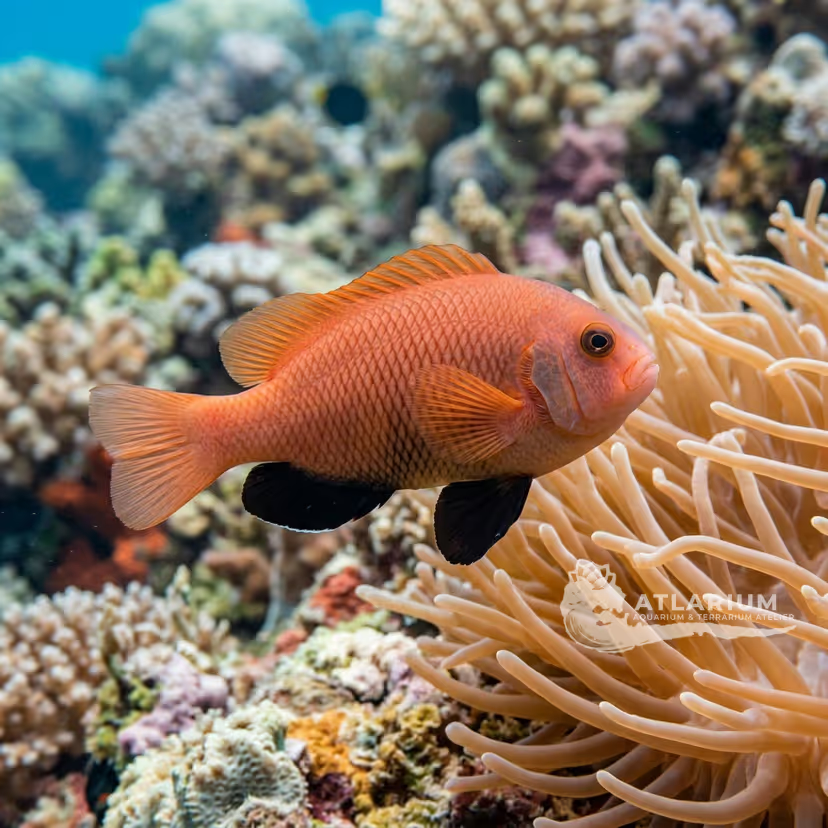
Pomacentrus auriventris
View details->
Maldive Anemonefish

Maldive Anemonefish

Amphiprion nigripes

View details->
Neon damselfish

Neon damselfish

Pomacentrus coelestis

View details->
Ocellaris clownfish

Ocellaris clownfish

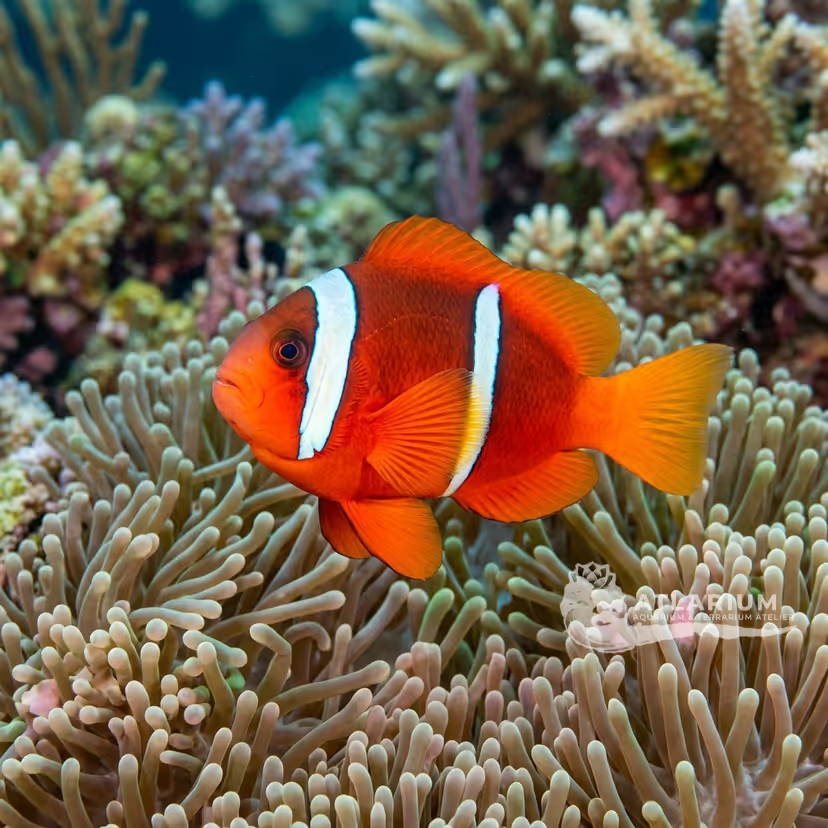
Amphiprion ocellaris
View details->
Orange-fin Clownfish

Orange-fin Clownfish

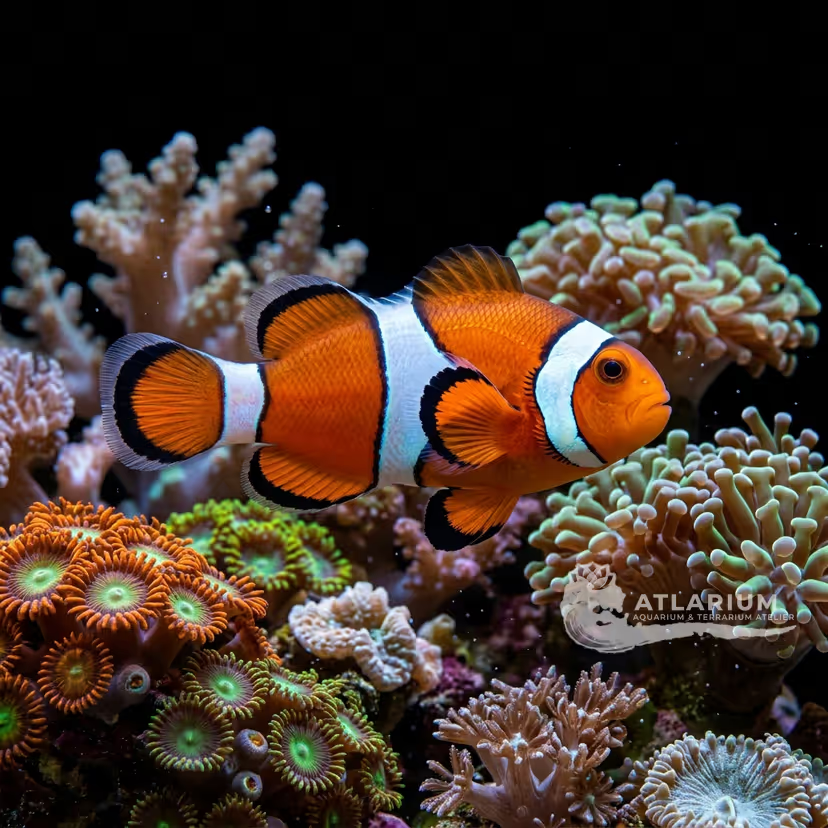
Amphiprion chrysopterus
View details->
Percula clownfish

Percula clownfish

Amphiprion percula

View details->
Pink Skunk Clownfish

Pink Skunk Clownfish

Amphiprion perideraion

View details->
Speckled damselfish

Speckled damselfish

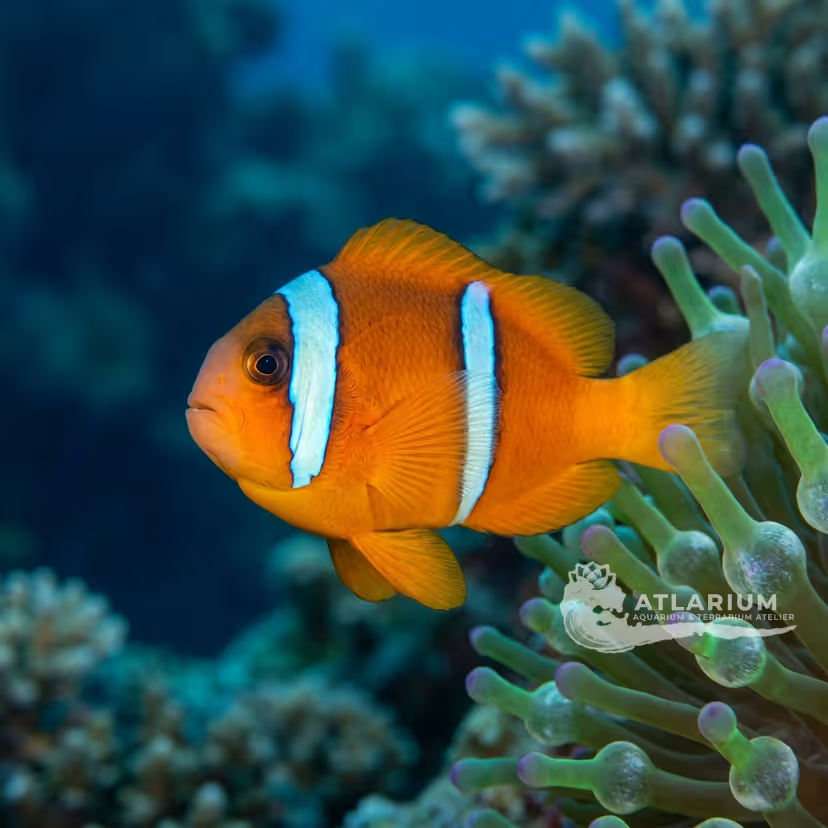
Pomacentrus bankanensis
View details->
Two-band Anemonefish

Two-band Anemonefish

Amphiprion bicinctus

View details->

Recommended companions

Compatible cards from coherent ecosystems with matching parameters.

Caulerpa prolifera
Plant

Caulerpa prolifera

Caulerpa prolifera
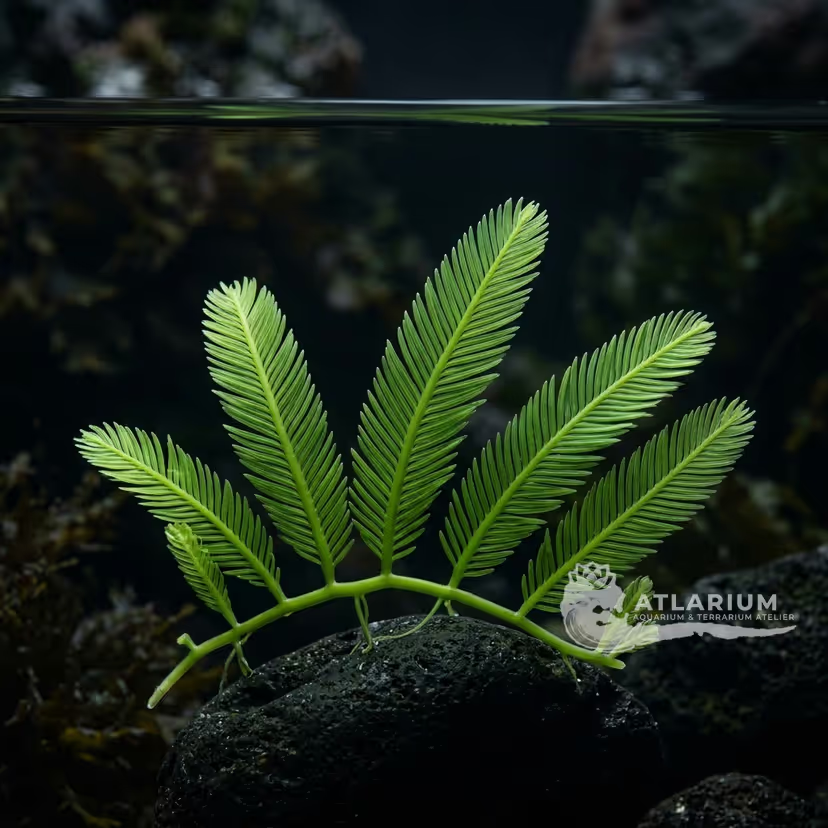
View details->
Caulerpa taxifolia
Plant

Caulerpa taxifolia

Caulerpa taxifolia
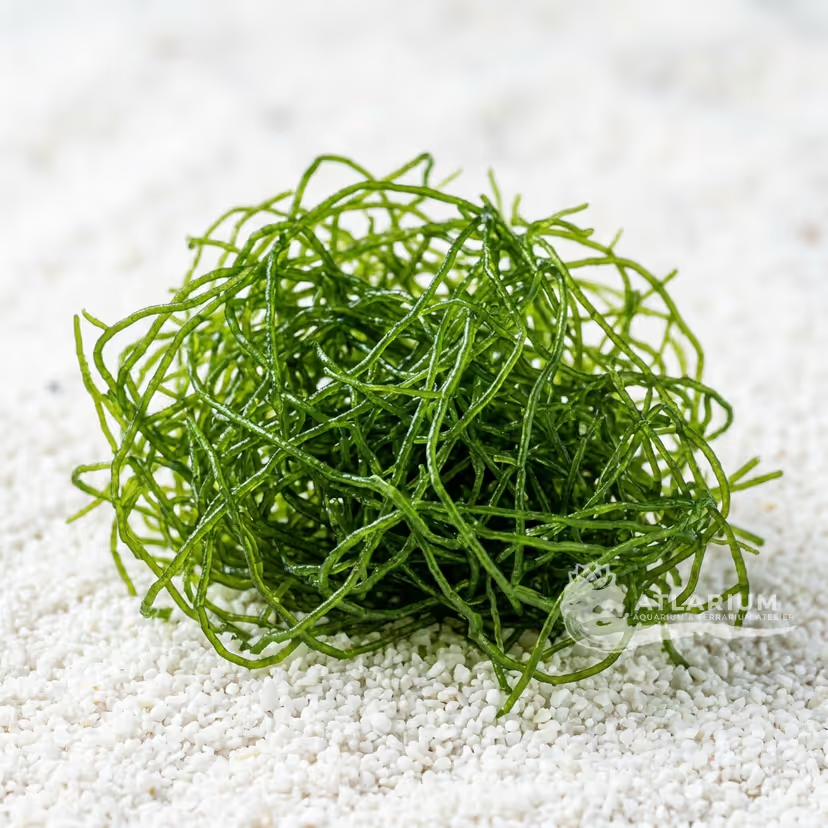
View details->
Chaetomorpha macroalgae
Plant

Chaetomorpha macroalgae

Chaetomorpha linum

View details->
Dead man fingers algae
Plant

Dead man fingers algae

Codium fragile

View details->
Grape caulerpa
Plant

Grape caulerpa

Caulerpa racemosa

View details->
Halimeda macroalgae
Plant

Halimeda macroalgae

Halimeda opuntia

View details->
Peacock tail algae
Plant

Peacock tail algae

Padina pavonica

View details->
Red gracilaria
Plant

Red gracilaria

Gracilaria parvispora

View details->
Red grape algae
Plant

Red grape algae

Botryocladia uvaria

View details->
Sea lettuce
Plant

Sea lettuce

Ulva lactuca

View details->
Red Mangrove
Plant

Red Mangrove

Rhizophora mangle

View details->

Similar care

Cards with similar requirements, difficulty, habitat, and husbandry profile.

Black Bow Damselfish

Black Bow Damselfish

Neoglyphidodon melas

View details->
Clark's anemonefish

Clark's anemonefish

Amphiprion clarkii

View details->
Neon damselfish

Neon damselfish

Neoglyphidodon oxyodon
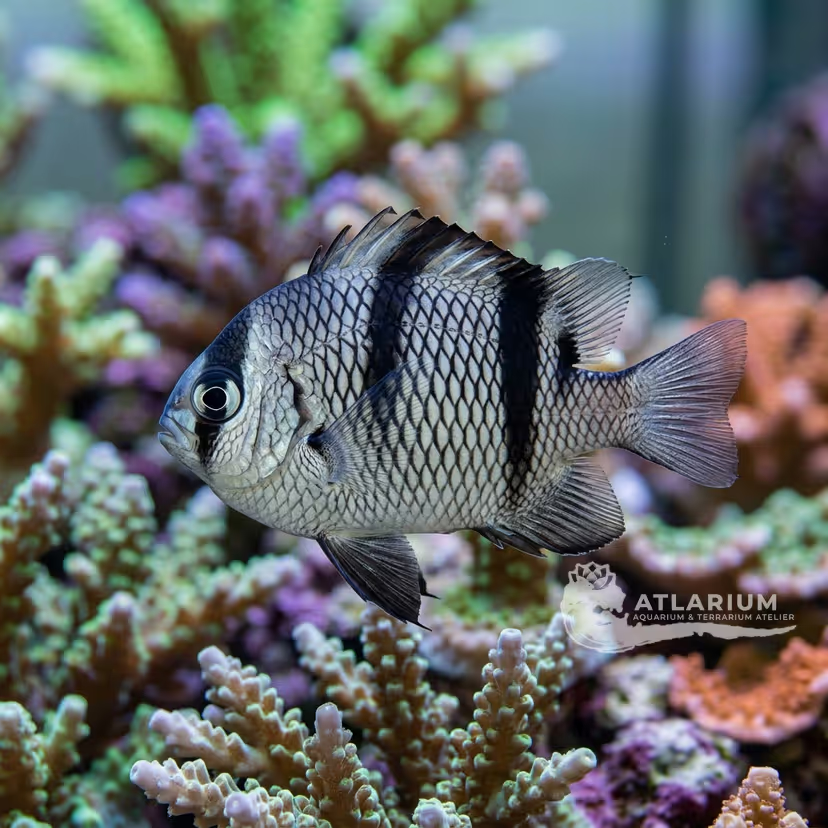
View details->
Reticulated Damselfish

Reticulated Damselfish

Dascyllus reticulatus

View details->
Black-and-gold Chromis

Black-and-gold Chromis

Neoglyphidodon nigroris
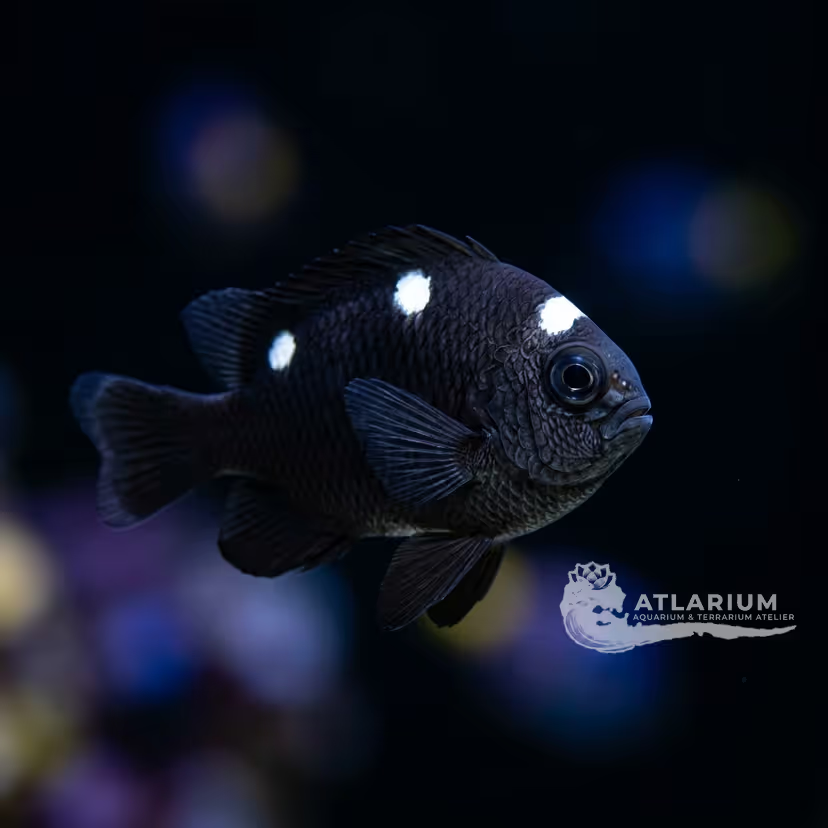
View details->
Threespot dascyllus

Threespot dascyllus

Dascyllus trimaculatus
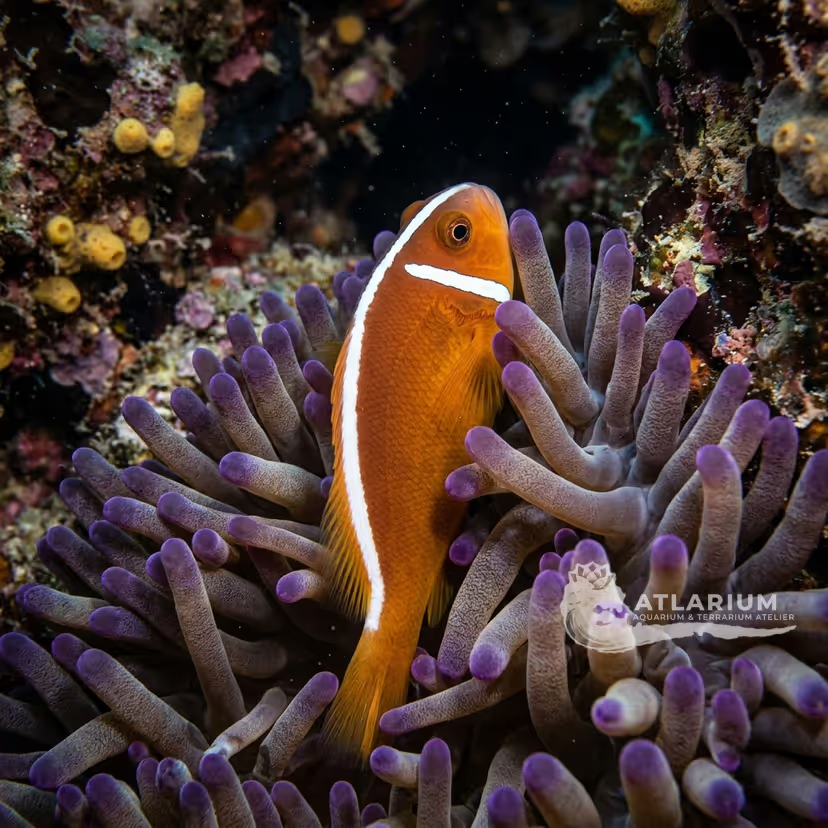
View details->
Orange Skunk Clownfish

Orange Skunk Clownfish

Amphiprion sandaracinos

View details->
Blue Damselfish

Blue Damselfish

Chrysiptera cyanea

View details->
Four-stripe Damselfish / Blacktail Humbug

Four-stripe Damselfish / Blacktail Humbug

Dascyllus melanurus
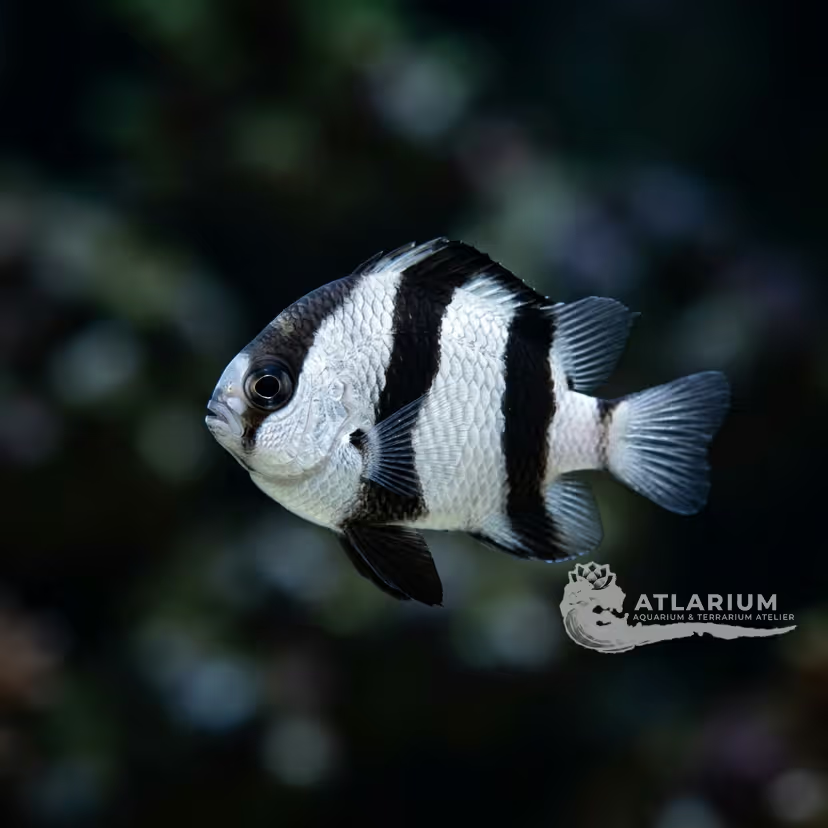
View details->
Whitetail Dascyllus

Whitetail Dascyllus

Dascyllus aruanus

View details->
Yellowtail damselfish

Yellowtail damselfish

Chrysiptera parasema

View details->
Green damselfish

Green damselfish

Abudefduf abdominalis

View details->
Marginate damselfish

Marginate damselfish

Dascyllus marginatus

View details->
Whitetail Damselfish

Whitetail Damselfish

Pomacentrus chrysurus

View details->
One-spot Damselfish

One-spot Damselfish

Chrysiptera unimaculata
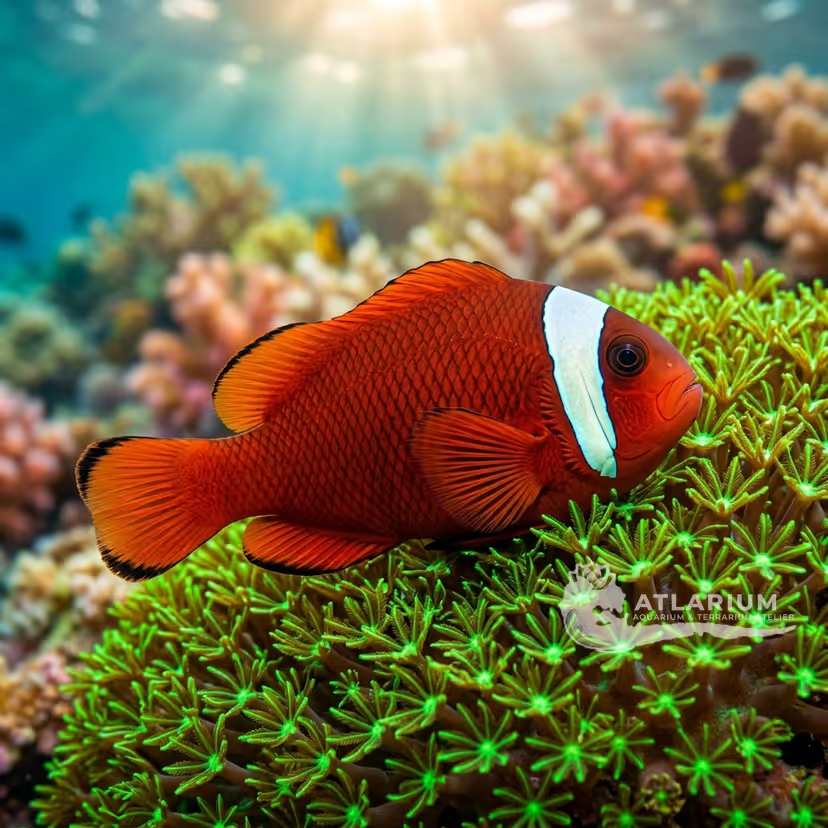
View details->
Tomato clownfish

Tomato clownfish

Amphiprion frenatus

View details->
Last updated: 06/30/2026