Encyclopaedia

FishMarineEasy
©AI Generated·Proprietary

Sunrise Dottyback

Pseudochromis flavivertex

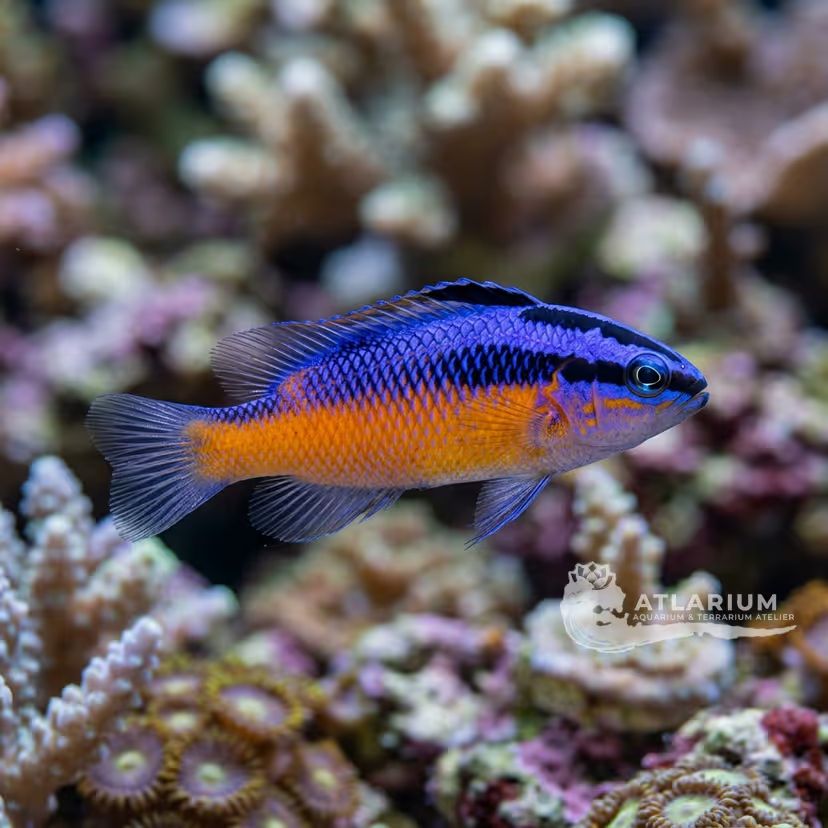
The sunrise dottyback (Pseudochromis flavivertex) is a beautiful marine fish endemic to the Red Sea, featuring a striking blue body with a golden-yellow dorsal stripe.

Taxonomy
Class:Actinopteri
Order:Perciformes
Family:Pseudochromidae
Subfamily:Pseudochrominae
Genus:Pseudochromis
Species:Pseudochromis flavivertex

Share

Check out Sunrise Dottyback on Atlarium

PracticeRecognition quizzesPhotos, names, origins, and puzzles to review Atlas species.Open quizzes
Water Temperature

22 - 27 °C

pH Value

8.1 - 8.4

Water type

Marine

Tank level

Bottom

Adult size

7 cm

Minimum tank volume

>= 100 L

Minimum group

>= 1

KH

8 - 12 dKH

Species description

Geographical Origin and Habitat: This marine species is endemic to the tropical waters of the Red Sea and the Gulf of Aden. It inhabits shallow coastal reefs, rocky drop-offs, and sheltered lagoons at depths ranging from 2 to 30 meters. It is always found close to small caves, crevices, and branching corals, which it uses as shelter.
Taxonomy and Morphology: Pseudochromis flavivertex is a member of the Pseudochromidae family (dottybacks), genus Pseudochromis. It displays a slender, elongated, and moderately compressed body shape. It has large, expressive eyes and a mouth equipped with small conical teeth suitable for carnivora feeding. Adults reach a maximum length of 7-8 cm.
Social Behavior: It is a solitary, highly territorial, and active fish. It fiercely defends its chosen territory (usually a specific cave or rock pile) from intruders, especially other dottybacks or similarly shaped species. It is a bold, curious predator that spends its day patrolling live rock for small crustaceans.
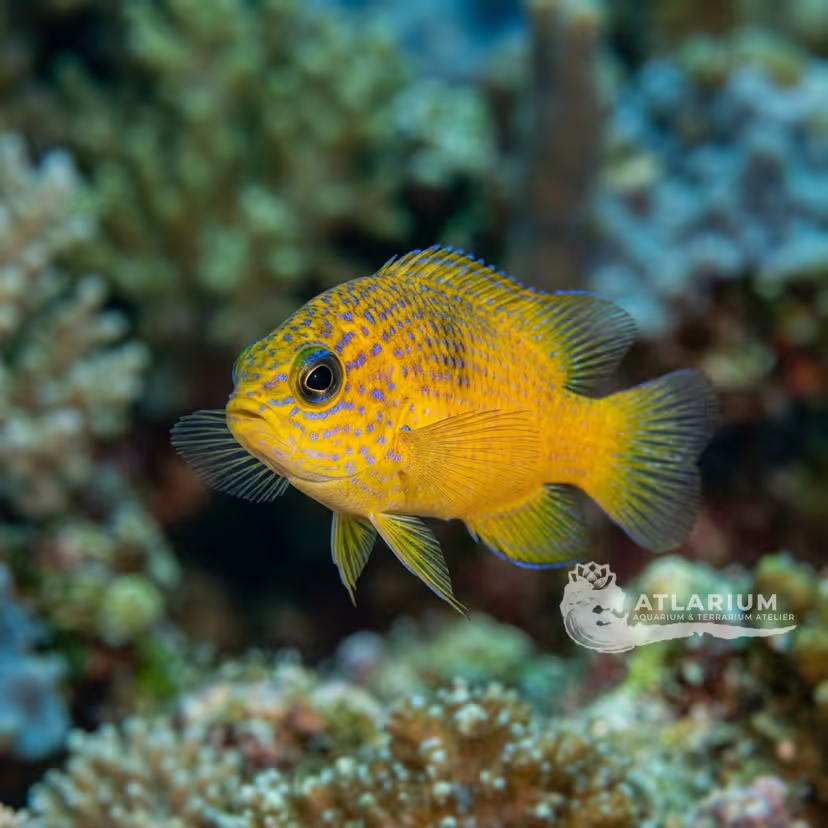
Coloration and Sexual Dimorphism: The color pattern is striking and highly contrasting: the body is a brilliant electric blue, highlighted by a broad golden-yellow stripe that starts at the snout, runs along the entire back, and extends onto the dorsal fin and upper tail. Males are slightly larger and exhibit brighter colors than females.

Care, breeding and tankmates

Aquarium Setup: Requires a mature reef aquarium of at least 100 liters (25 gallons). The tank must feature plenty of live rock arranged to create numerous small caves, cracks, and swim-throughs, allowing the fish to establish a secure territory. A fine sand substrate is recommended. A secure lid is necessary, as they can jump when startled.
Diet and Feeding: Carnivorous. In the wild, it feeds on small crustaceans and zooplankton. In captivity, it readily accepts frozen foods such as mysis shrimp, brine shrimp, copepods, and finely chopped krill. High-quality marine flakes and pellets are also accepted. Feed small amounts once or twice daily.
Water Quality: Requires stable marine parameters: water temperature between 23°C and 27°C, pH between 8.1 and 8.4, specific gravity of 1.020 to 1.025, and KH between 8 and 12. Robust biological filtration is recommended to keep ammonia and nitrates low. Moderate to strong water movement is preferred.
Compatibility and Cohabitation: 100% reef-safe with corals, but it may hunt and eat small ornamental shrimps. It can be territorial and aggressive toward similarly shaped or colored fish (such as other dottybacks or small gobies). Suitable tankmates include larger peaceful species like tangs, clownfish, and wrasses. House only one per tank.
Aquarium Breeding: Spawns in caves, laying a ball of adhesive eggs. The male guards and aerates the egg mass until they hatch, which takes about 3-4 days. Raising the larvae in captivity is highly challenging, requiring specialized rearing tanks and live micro-foods like rotifers and dense phytoplankton.
Risks and Diseases: Very hardy and resistant to most common marine parasitic infections. The main risk is physical injury resulting from territorial fights with incompatible tankmates. If treatment is required, they tolerate standard medications well, but copper-based products should not be used in reef setups.

Geographic Origin and Distribution

This marine species is endemic to the tropical waters of the Red Sea and the Gulf of Aden. It inhabits shallow coastal reefs, rocky drop-offs, and sheltered lagoons at depths ranging from 2 to 30 meters. It is always found close to small caves, crevices, and branching corals, which it uses as shelter.

Origin

Tropical oceans and reefsNorth America

Fish profile

Temperament
Territorial
They are bold, intelligent, and highly territorial despite their small size. They will fearlessly defend their chosen cave against fish many times their size. While aggressive, their striking personality and vibrant colors make them a captivating addition.
Diet
Carnivore
They are strict carnivores that aggressively hunt for small crustaceans and bristleworms. Feed them a rich diet of frozen mysis, chopped squid, and high-quality carnivore pellets. They are excellent for natural pest control, as they readily consume small nuisance worms.
Sex ratio
Solitary
It is strongly advised to keep only one specimen per tank unless a bonded pair is acquired. Conspecific aggression is extreme, and two males will fight to the death. In a large enough tank, a male and female pair can establish a shared territory.
Feeding frequency
Twice daily
Feed them one to two times daily to maintain their vibrant coloration and energy. Consistent feeding helps mitigate their natural aggression by keeping them satiated. They are quick eaters and will aggressively snatch food from the water column.
Bioload
The Sunrise Dottyback produces a low to moderate bioload, perfect for standard marine setups. Because of its small size, it does not tax the aquarium's filtration heavily. Regular water changes are sufficient to maintain an excellent environment for this species.
Flow
Strong
They prefer moderate water flow that mimics the reef environments they inhabit. Good circulation helps keep the water highly oxygenated and disperses their food. They use the currents to dart rapidly between rock crevices while hunting.
Jump risk
Yes
They are notorious jumpers and will quickly exploit any opening in the aquarium lid. A completely secure, tight-fitting mesh or glass cover is absolutely essential. Ensure that all gaps around heaters and filter pipes are securely blocked.
Reproduction
Oviparous
They are demersal spawners where the male constructs a nest in a hidden cave. The male fiercely guards the egg mass until the larvae hatch a few days later. Raising the fry in captivity is possible but requires dedicated rearing tanks and rotifers.
Compatibility & tankmates
Highly aggressive
They are semi-aggressive and can be highly territorial toward similar-looking or bottom-dwelling fish. They are best kept with slightly larger, robust fish that swim in the upper water column. Small, timid fish or ornamental shrimp may be harassed or eaten.
Tank level
Bottom
They are primarily bottom and middle dwellers, constantly weaving through the rockwork. They claim a specific cave or crevice as their central territory and rarely stray far from it. They are highly active and provide excellent movement in the lower sections of the tank.

Window to the official scientific data of the species

Data synced on: 06/15/2026

Scientific Parameters & Models

Trophic level
3.5 ± 0.5 se
Phylogenetic uniqueness (PD50)
0.5
Bayesian Length-Weight
a = 0.01, b = 2.92
VulnerabilityLow vulnerability (10 / 100)

Image gallery

Licensed images linked to the species or, when marked, to the closest representative taxon.

Related species

Recommendations grouped by close relatives, companion choices, and similar care.

Variants and close relatives

Same atlas type, nearby scientific identity, genus, or family.

Blue Dottyback

Blue Dottyback

Pseudochromis

View details->
Springer's Dottyback

Springer's Dottyback

Pseudochromis springeri

View details->
Ammer's dottyback

Ammer's dottyback

Pseudochromis ammeri

View details->
Cole's Dottyback

Cole's Dottyback

Pseudochromis colei

View details->
Comet dottyback

Comet dottyback

Pseudochromis cometes

View details->
Erdmann's dottyback

Erdmann's dottyback

Pseudochromis erdmanni

View details->
Gold-lined dottyback

Gold-lined dottyback

Pseudochromis aurulentus

View details->
Red-tail dottyback

Red-tail dottyback

Pseudochromis coccinicauda

View details->
Neon dottyback

Neon dottyback

Pseudochromis aldabraensis

View details->
Blueback Dottyback

Blueback Dottyback

Pseudochromis cyanotaenia

View details->
Elongate dottyback

Elongate dottyback

Pseudochromis elongatus

View details->
Goldline Dottyback

Goldline Dottyback

Pseudochromis aureolineatus
View details->
Sankey's Dottyback

Sankey's Dottyback

Pseudochromis sankeyi
View details->
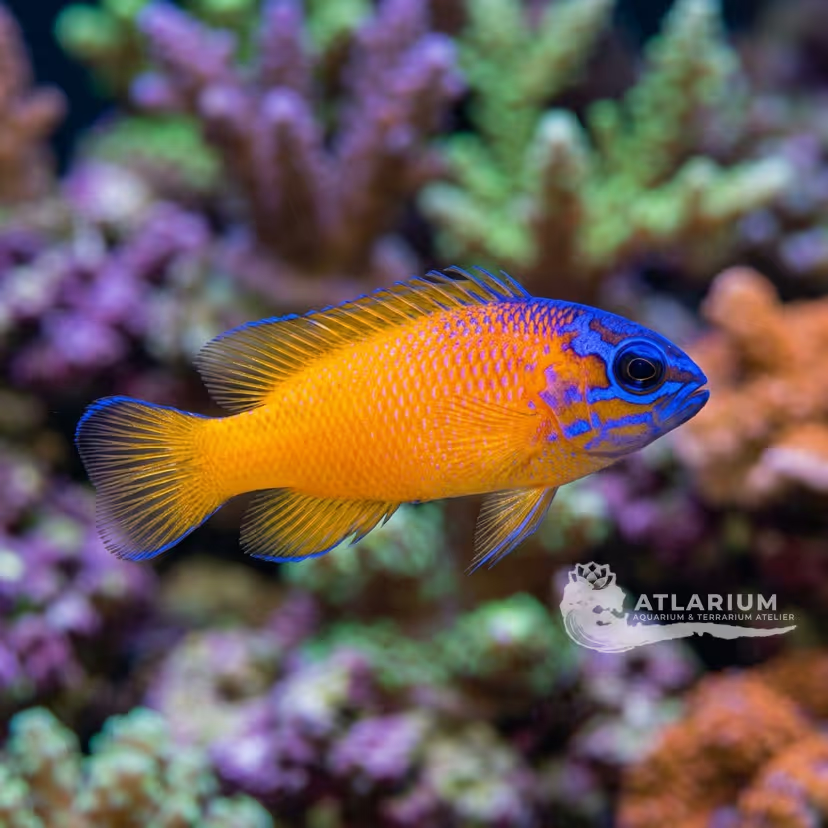
Steene's Dottyback

Steene's Dottyback

Pseudochromis steenei
View details->
Tono's Dottyback

Tono's Dottyback

Pseudochromis tonozukai

View details->
Andaman Dottyback

Andaman Dottyback

Pseudochromis andamanensis

View details->

Recommended companions

Compatible cards from coherent ecosystems with matching parameters.

Grape caulerpa
Plant

Grape caulerpa

Caulerpa racemosa

View details->
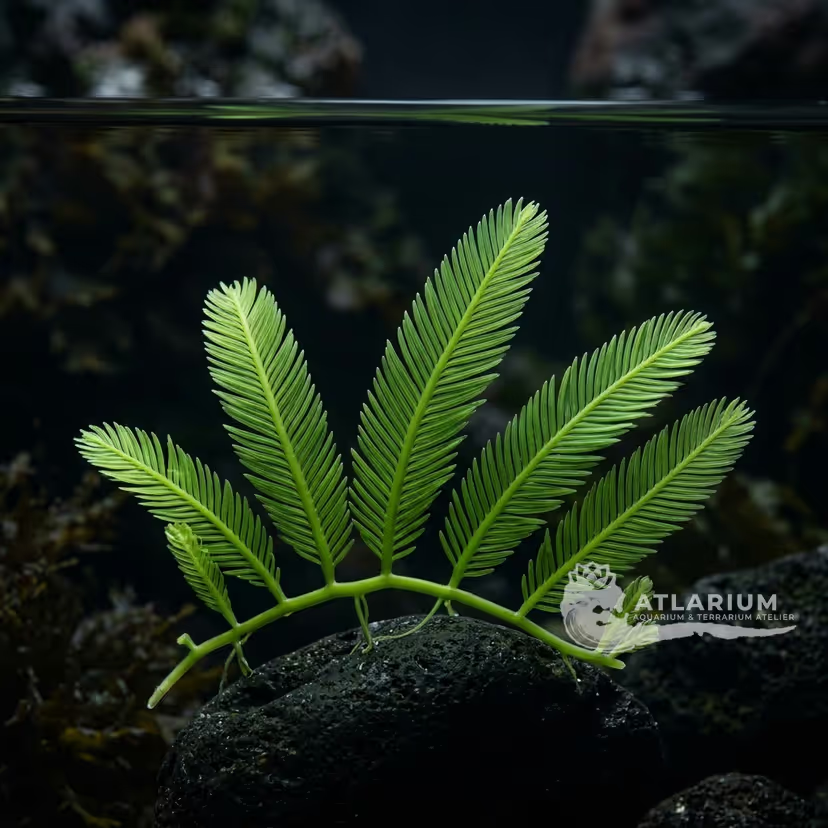
Caulerpa prolifera
Plant

Caulerpa prolifera

Caulerpa prolifera
View details->
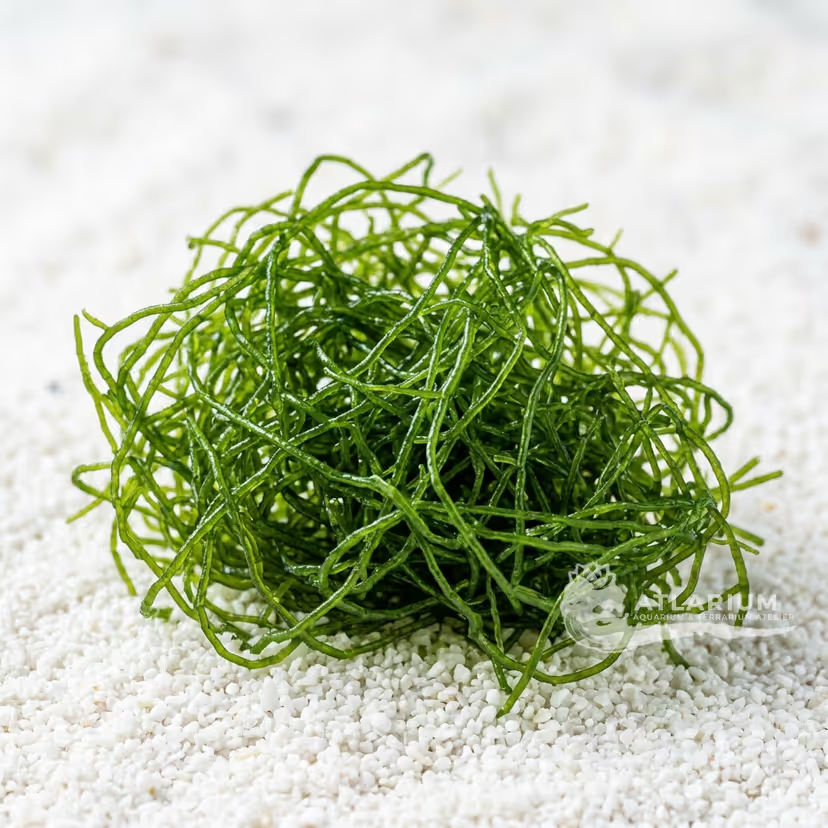
Caulerpa taxifolia
Plant

Caulerpa taxifolia

Caulerpa taxifolia
View details->
Chaetomorpha macroalgae
Plant

Chaetomorpha macroalgae

Chaetomorpha linum

View details->
Dead man fingers algae
Plant

Dead man fingers algae

Codium fragile

View details->
Halimeda macroalgae
Plant

Halimeda macroalgae

Halimeda opuntia

View details->
Peacock tail algae
Plant

Peacock tail algae

Padina pavonica

View details->
Red gracilaria
Plant

Red gracilaria

Gracilaria parvispora

View details->
Red grape algae
Plant

Red grape algae

Botryocladia uvaria

View details->
Sea lettuce
Plant

Sea lettuce

Ulva lactuca

View details->
Red Mangrove
Plant

Red Mangrove

Rhizophora mangle

View details->

Similar care

Cards with similar requirements, difficulty, habitat, and husbandry profile.

Spot-breast Dottyback

Spot-breast Dottyback

Pseudochromis alticaudex

View details->
Beautiful-cheek shrimpgoby

Beautiful-cheek shrimpgoby

Amblyeleotris callopareia

View details->
Blackstripe Dottyback

Blackstripe Dottyback

Pseudochromis nigrovittatus

View details->
Dilectus dottyback

Dilectus dottyback

Pseudochromis dilectus

View details->
Firetail dottyback

Firetail dottyback

Pseudochromis flammicauda

View details->
Oblique-lined Dottyback

Oblique-lined Dottyback

Cypho purpurascens

View details->
Banded-head Shrimpgoby

Banded-head Shrimpgoby

Amblyeleotris cephalotaenius

View details->
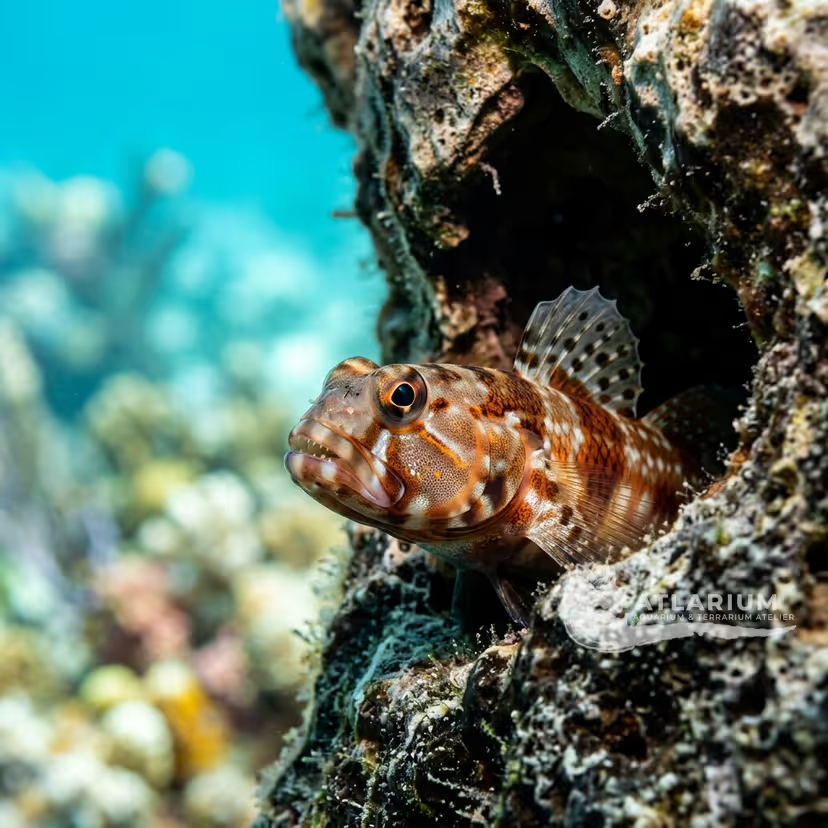
Barsnout goby

Barsnout goby

Elacatinus illecebrosus
View details->
Ellipse shrimpgoby

Ellipse shrimpgoby

Amblyeleotris ellipse
View details->
Gold-spotted dottyback

Gold-spotted dottyback

Pseudochromis chrysospilus

View details->
Doublebar dottyback

Doublebar dottyback

Pseudochromis bitaeniatus

View details->
Dusky Dottyback

Dusky Dottyback

Pseudochromis fuscus

View details->
Eichler's Dottyback

Eichler's Dottyback

Pseudochromis eichleri

View details->
Forktail dottyback

Forktail dottyback

Pseudochromis dixurus

View details->
Royal Dottyback

Royal Dottyback

Pictichromis paccagnellae

View details->
Arch-fin shrimpgoby

Arch-fin shrimpgoby

Amblyeleotris arcupinna

View details->
Last updated: 06/30/2026
Sunrise Dottyback (Pseudochromis flavivertex) Care Guide & Tank Setup | Atlarium