Encyclopaedia

FishMarineIntermediate
©AI Generated·Proprietary

Doublebar dottyback

Pseudochromis bitaeniatus

This small, elongated marine fish is exceptionally hardy and can be easily distinguished by the two prominent dark longitudinal stripes running across its sleek body.

Taxonomy
Class:Actinopteri
Order:Perciformes
Family:Pseudochromidae
Subfamily:Pseudochrominae
Genus:Pseudochromis
Species:Pseudochromis bitaeniatus

Share

Check out Doublebar dottyback on Atlarium

PracticeRecognition quizzesPhotos, names, origins, and puzzles to review Atlas species.Open quizzes
Water Temperature

22 - 26 °C

pH Value

8.1 - 8.4

Water type

Marine

Tank level

Bottom and middle

Adult size

8 cm

Minimum tank volume

>= 120 L

Minimum group

>= 1

Species description

Geographical Origin and Habitat:
Pseudochromis bitaeniatus is native to the Western Indo-Pacific, recorded in Indonesia, the Philippines, and to the Great Barrier Reef. It inhabits outer coral reefs between 2 and 25 meters.
Taxonomy and Morphology:
Belongs to the Pseudochromidae family. Features a slender, elongated, and slightly compressed body. Adults reach a maximum length of about 6-7 cm. The mouth has small canine teeth.
Social Behavior:
A solitary, active, and territorial species. It fiercely defends its rocky cave against similar fish or benthic tankmates. It spends the day exploring the substrate.
Coloration and Sexual Dimorphism:
The body color is golden-beige or yellow-orange. Displays two distinct dark longitudinal stripes: one along the back and one central running through the eye to the tail.

Care, breeding and tankmates

Aquarium Setup:
Requires an aquarium of at least 80-100 liters. The setup must include plenty of live rock arranged to form caves, crevices, and arches to establish its territory.
Diet and Feeding:
Carnivorous. Feeds on small crustaceans, worms, and zooplankton. In the aquarium, it accepts mysis, brine shrimp, and high-quality dry granules. Helpful for preying on flatworms.
Water Quality:
Maintain stable parameters: temperature 22-28 °C, pH 8.1-8.4, and specific gravity 1.020-1.025. Requires efficient filtration and partial water changes.
Compatibility and Cohabitation:
Reef safe with corals, but can harass peaceful benthic fish like gobies and pipefish. May prey on small ornamental shrimp. Introduce as the last fish to the tank.
Aquarium Breeding:
Breeding is oviparous. The couple deposits a mass of adhesive eggs inside the male's cave, who fertilizes and actively guards them until hatching.
Risks and Diseases:
The major risk is territorial disputes with other benthic fish. Ensure sufficient hiding places and cover the tank to prevent jumping out of the water.

Geographic Origin and Distribution

Pseudochromis bitaeniatus is native to the Western Indo-Pacific, recorded in Indonesia, the Philippines, and to the Great Barrier Reef. It inhabits outer coral reefs between 2 and 25 meters.

Origin

Tropical oceans and reefsSouth and Southeast AsiaAustralia, New Guinea, and Oceania

Fish profile

Temperament
Aggressive
Known for their bold, feisty, and often pugnacious personalities, they are not easily intimidated despite their small size. They will aggressively defend their chosen cave from intruders of almost any size. Because of their territorial nature, it is highly recommended to add them as one of the last fish in a community setup. Once established, they are very active and visible, providing dynamic movement.
Diet
Carnivore
These fish are obligate carnivores that require a diet rich in meaty marine foods to thrive. They should be offered a varied menu including finely chopped seafood, mysis shrimp, vitamin-enriched brine shrimp, and high-quality carnivore pellets. Providing a diverse diet is crucial for maintaining their vibrant coloration and overall health. They will also scavenge for small benthic copepods and amphipods within the live rock.
Sex ratio
Solitary
Dottybacks are typically protogynous hermaphrodites, meaning females can transition into males if needed. Because of their severe intra-species aggression, it is strongly recommended to keep only one individual per tank unless a bonded pair is acquired. Introducing two unsexed individuals often results in relentless fighting until only one survives. In very large systems with intricate rockwork, a male and female pair might coexist.
Feeding frequency
Twice daily
To keep their metabolism healthy and mitigate potential aggression, they should be fed small portions one to two times per day. Overfeeding should be avoided to prevent excess waste accumulation in the tank. A well-fed dottyback is generally less prone to harassing its tank mates out of hunger. Target feeding can be utilized if they are reluctant to come out during the initial acclimation period.
Bioload
Dottybacks have a low to moderate bioload depending on their adult size and their heavily carnivorous diet. Their meaty food intake produces slightly more nitrogenous waste compared to similar-sized herbivores. Standard protein skimming and regular water changes will easily accommodate them. They are generally robust and add minimal strain to an established aquarium's filtration system.
Flow
Strong
They prefer a moderate water flow that provides gentle circulation without overwhelming their swimming capabilities. Adequate flow helps transport food particles through the water column, stimulating their natural feeding responses. They appreciate areas of calmer water behind rock structures where they can rest out of the main current. Wavemakers simulating natural reef surges can provide an engaging environment.
Jump risk
Yes
Dottybacks have a very high propensity for jumping when startled, threatened, or chasing prey near the surface. A tight-fitting aquarium lid or a sturdy mesh screen is absolutely mandatory to prevent tragic losses. Even a slight gap near the filtration returns or overflow box can be enough for them to leap through. Extra care must be taken during tank maintenance or when the lights suddenly turn off.
Reproduction
Cave spawner
They are demersal spawners and have been known to breed in captivity under optimal conditions. The male will entice a female into a secluded cave where she lays a spherical egg mass, which the male then fertilizes and diligently guards. The eggs typically hatch in a few days, releasing pelagic larvae. Rearing the larvae requires specialized setups with rotifers and newly hatched artemia nauplii.
Compatibility & tankmates
Reef safe
Pseudochromis bitaeniatus can be fiercely territorial and highly aggressive toward small, docile fish, as well as species with similar body shapes like grammas and other dottybacks. They pose a significant threat to small ornamental shrimp, which they will actively hunt and consume. It is best to house them with larger, more robust tank mates that can hold their own. They are considered safe for corals and sessile invertebrates.
Tank level
Middle/Bottom
They predominantly inhabit the middle to lower regions of the aquarium, closely associating themselves with the rockwork. They rely heavily on caves, crevices, and overhangs for security and will rarely venture far from these hiding spots. They are adept at darting quickly between rocks to patrol their territory. You will often see them poking their heads out of holes to monitor the tank's activity.

Window to the official scientific data of the species

Data synced on: 06/15/2026

Scientific Parameters & Models

Trophic level
3.6 ± 0.5 se
Resilience
High (less than 15 months)
Phylogenetic uniqueness (PD50)
0.5
Bayesian Length-Weight
a = 0.00501, b = 3.1
VulnerabilityLow vulnerability (10 / 100)

Image gallery

Licensed images linked to the species or, when marked, to the closest representative taxon.

Related species

Recommendations grouped by close relatives, companion choices, and similar care.

Variants and close relatives

Same atlas type, nearby scientific identity, genus, or family.

Ammer's dottyback

Ammer's dottyback

Pseudochromis ammeri

View details->
Andaman Dottyback

Andaman Dottyback

Pseudochromis andamanensis

View details->
Blackstripe Dottyback

Blackstripe Dottyback

Pseudochromis nigrovittatus

View details->
Cole's Dottyback

Cole's Dottyback

Pseudochromis colei

View details->
Comet dottyback

Comet dottyback

Pseudochromis cometes

View details->
Dusky Dottyback

Dusky Dottyback

Pseudochromis fuscus

View details->
Eichler's Dottyback

Eichler's Dottyback

Pseudochromis eichleri

View details->
Firetail dottyback

Firetail dottyback

Pseudochromis flammicauda

View details->
Forktail dottyback

Forktail dottyback

Pseudochromis dixurus

View details->
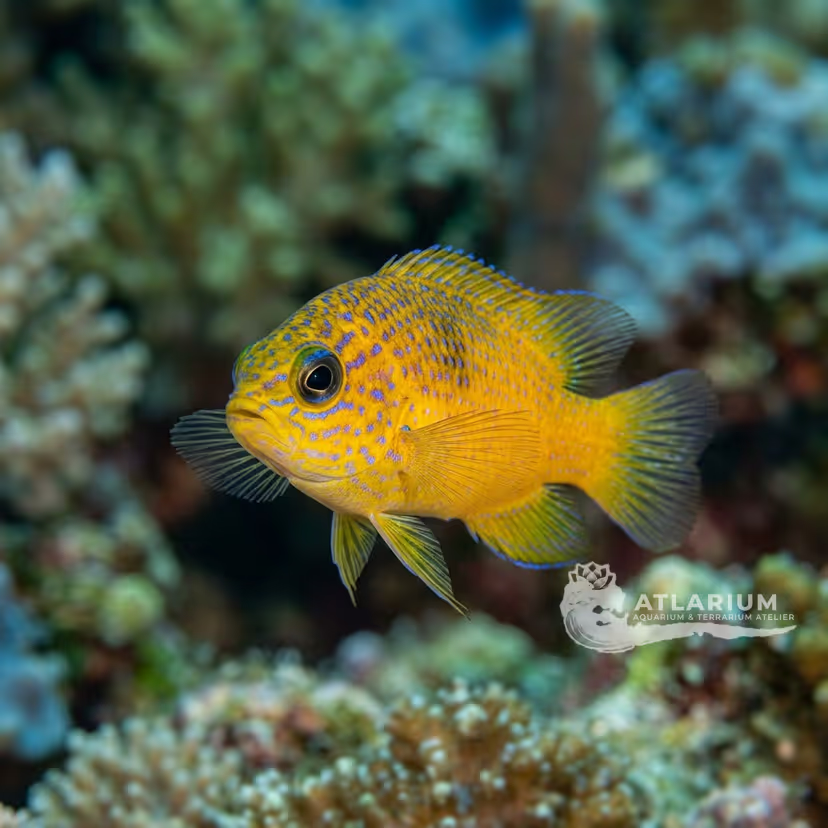
Gold-lined dottyback

Gold-lined dottyback

Pseudochromis aurulentus
View details->
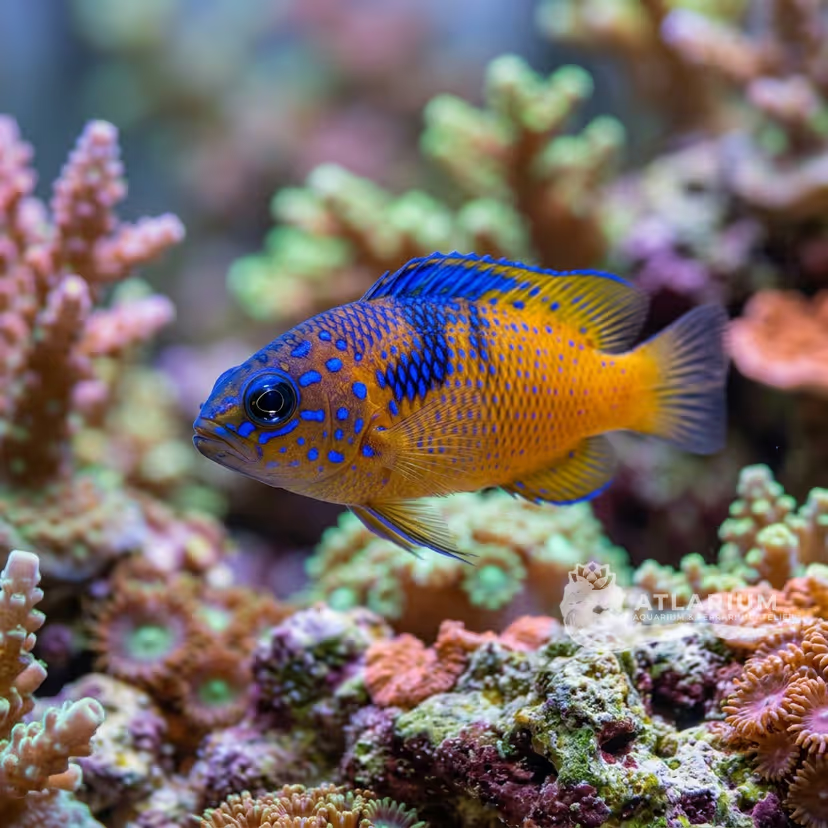
Gold-spotted dottyback

Gold-spotted dottyback

Pseudochromis chrysospilus
View details->
Spotted-tail dottyback

Spotted-tail dottyback

Pseudochromis caudalis

View details->
Blueback Dottyback

Blueback Dottyback

Pseudochromis cyanotaenia

View details->
Elongate dottyback

Elongate dottyback

Pseudochromis elongatus

View details->
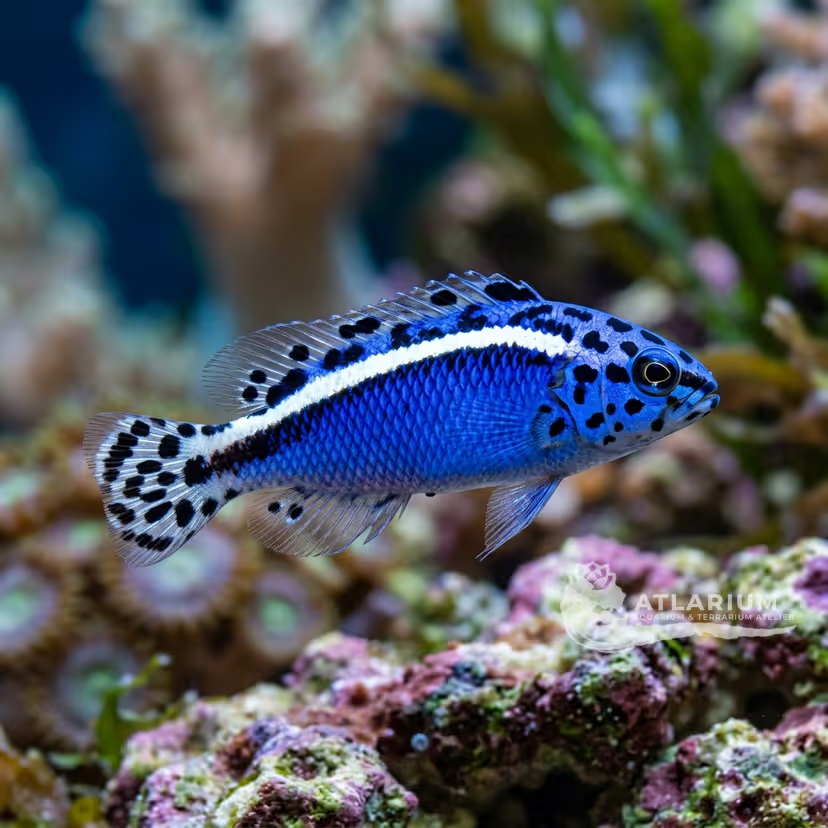
Goldline Dottyback

Goldline Dottyback

Pseudochromis aureolineatus
View details->
Sankey's Dottyback

Sankey's Dottyback

Pseudochromis sankeyi

View details->

Recommended companions

Compatible cards from coherent ecosystems with matching parameters.

Caulerpa prolifera
Plant

Caulerpa prolifera

Caulerpa prolifera
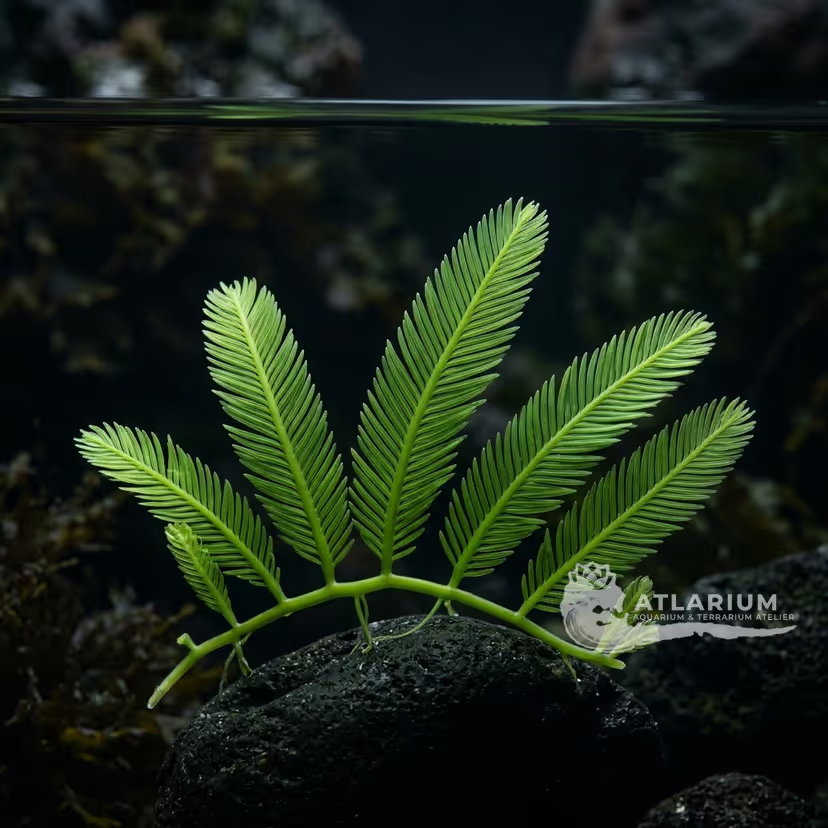
View details->
Caulerpa taxifolia
Plant

Caulerpa taxifolia

Caulerpa taxifolia
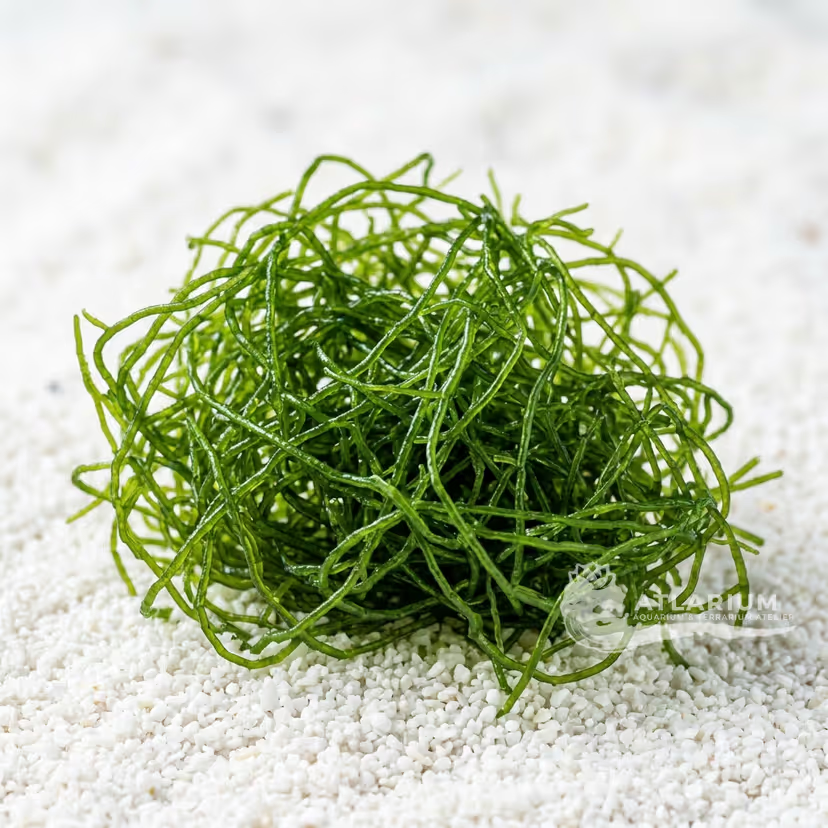
View details->
Chaetomorpha macroalgae
Plant

Chaetomorpha macroalgae

Chaetomorpha linum

View details->
Dead man fingers algae
Plant

Dead man fingers algae

Codium fragile

View details->
Grape caulerpa
Plant

Grape caulerpa

Caulerpa racemosa

View details->
Halimeda macroalgae
Plant

Halimeda macroalgae

Halimeda opuntia

View details->
Peacock tail algae
Plant

Peacock tail algae

Padina pavonica

View details->
Red gracilaria
Plant

Red gracilaria

Gracilaria parvispora

View details->
Red grape algae
Plant

Red grape algae

Botryocladia uvaria

View details->
Sea lettuce
Plant

Sea lettuce

Ulva lactuca

View details->
Red Mangrove
Plant

Red Mangrove

Rhizophora mangle

View details->

Similar care

Cards with similar requirements, difficulty, habitat, and husbandry profile.

Blue Dottyback

Blue Dottyback

Pseudochromis

View details->
Neon dottyback

Neon dottyback

Pseudochromis aldabraensis

View details->
Oblique-lined Dottyback

Oblique-lined Dottyback

Cypho purpurascens

View details->
Erdmann's dottyback

Erdmann's dottyback

Pseudochromis erdmanni
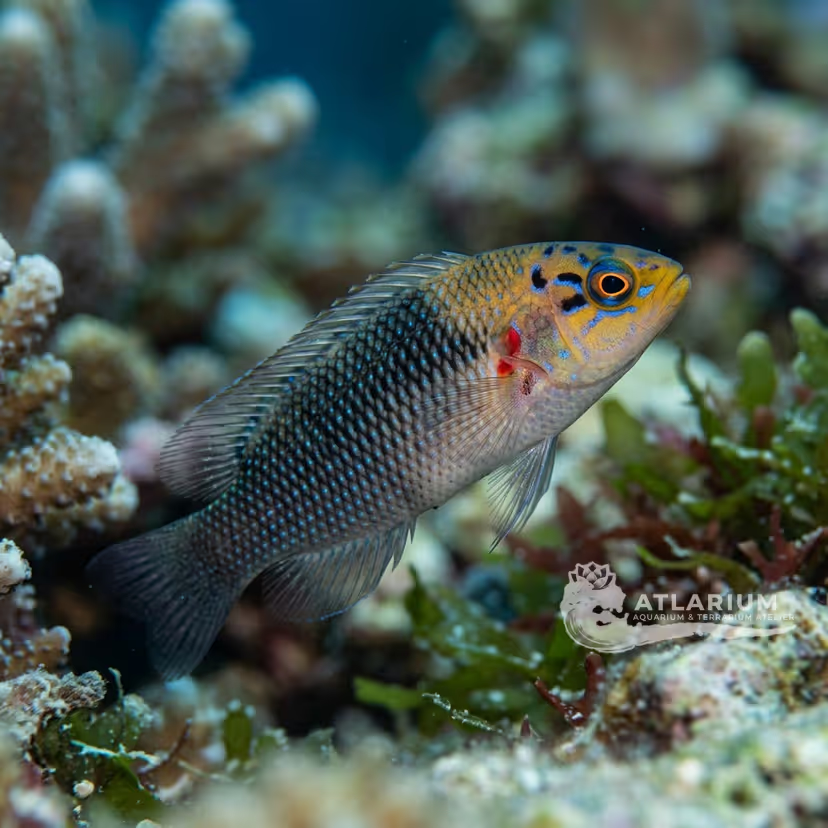
View details->
Steene's Dottyback

Steene's Dottyback

Pseudochromis steenei
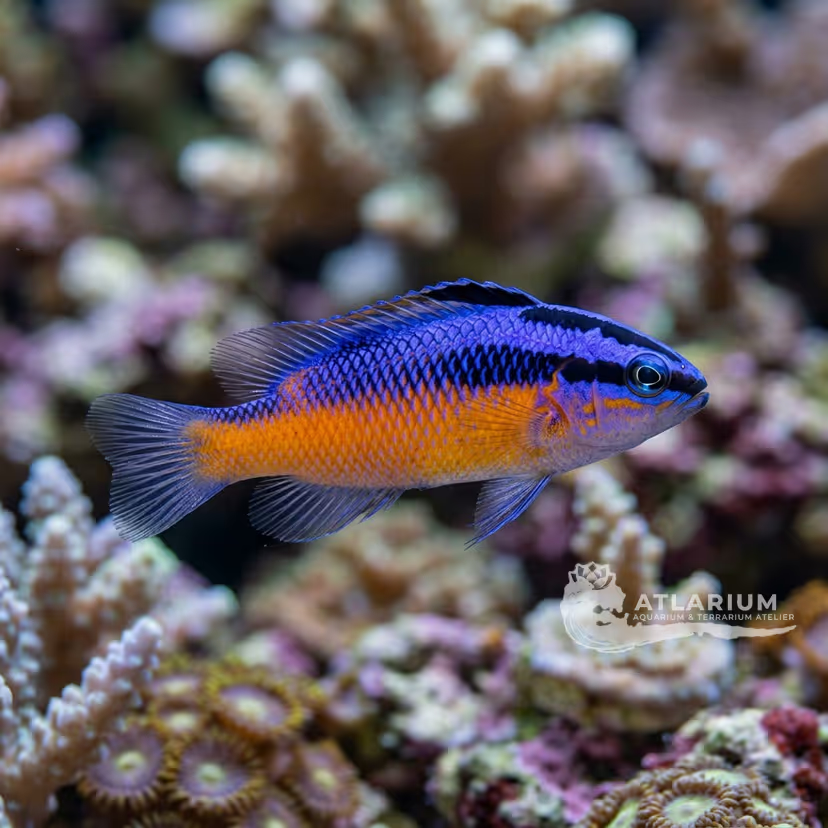
View details->
Springer's Dottyback

Springer's Dottyback

Pseudochromis springeri

View details->
Dilectus dottyback

Dilectus dottyback

Pseudochromis dilectus
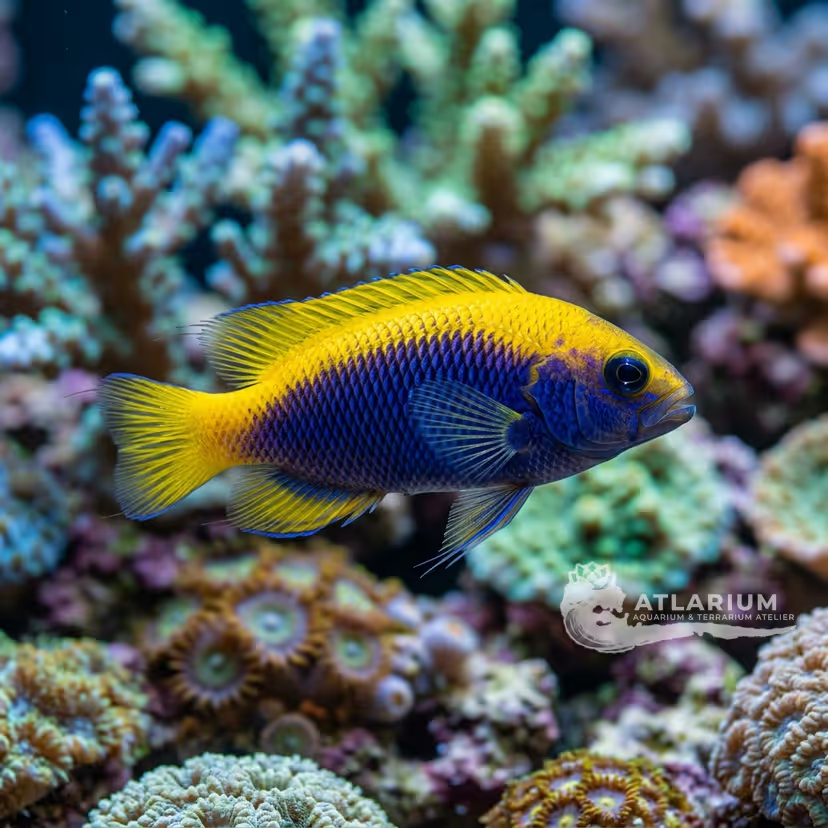
View details->
Sunrise Dottyback

Sunrise Dottyback

Pseudochromis flavivertex

View details->
Orchid dottyback

Orchid dottyback

Pseudochromis fridmani
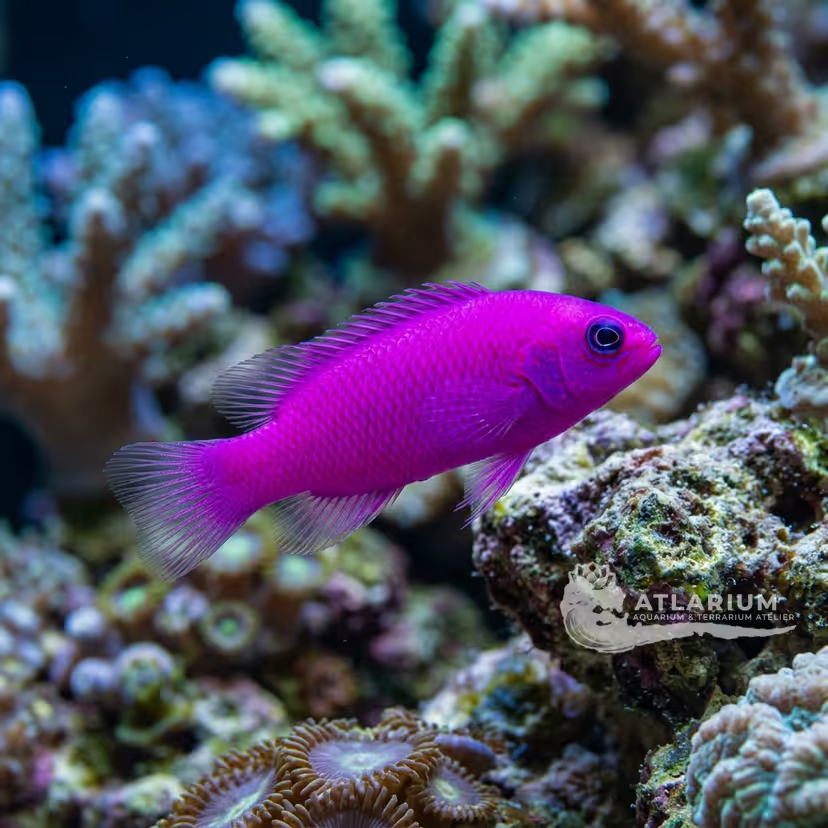
View details->
Strawberry Dottyback

Strawberry Dottyback

Pictichromis porphyrea
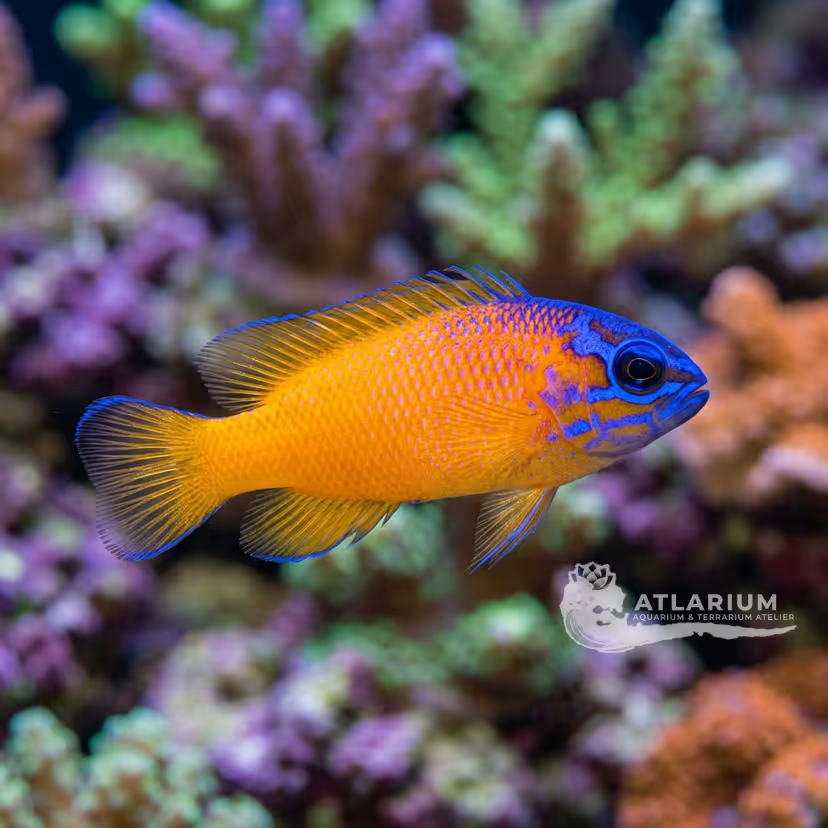
View details->
Tono's Dottyback

Tono's Dottyback

Pseudochromis tonozukai

View details->
Royal Dottyback

Royal Dottyback

Pictichromis paccagnellae
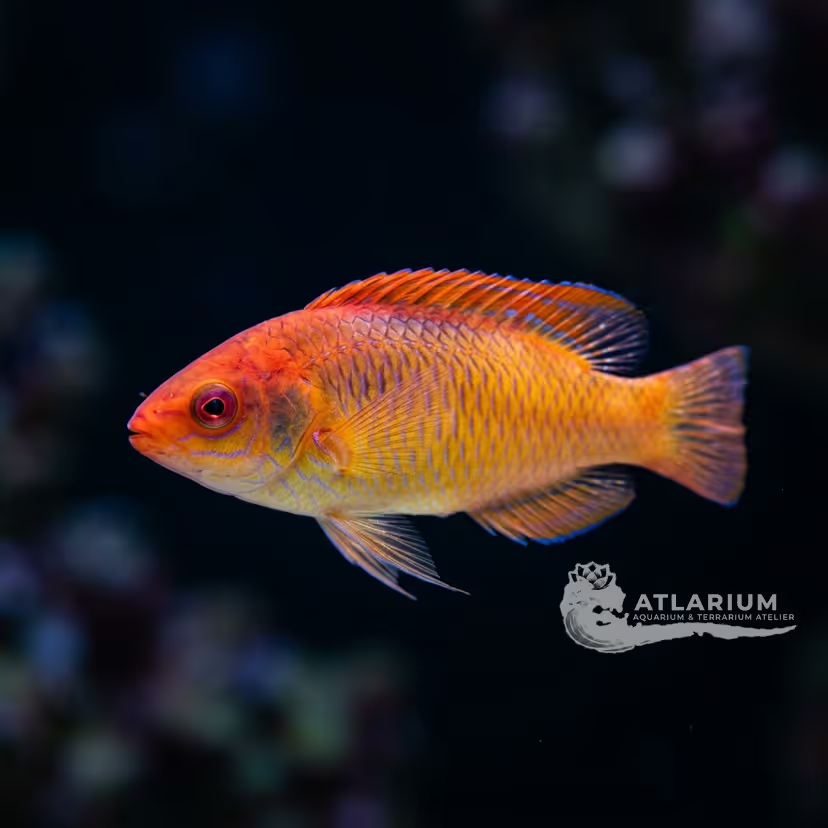
View details->
Flame wrasse

Flame wrasse

Cirrhilabrus jordani

View details->
Lined Dottyback

Lined Dottyback

Labracinus lineatus

View details->
Red-tail dottyback

Red-tail dottyback

Pseudochromis coccinicauda

View details->
Blackear Wrasse

Blackear Wrasse

Halichoeres poeyi

View details->
Last updated: 06/30/2026
Doublebar dottyback (Pseudochromis bitaeniatus) Care Guide & Tank Setup | Atlarium