Encyclopaedia

FishMarineEasy
©AI Generated·Proprietary

Blackstripe Dottyback

Pseudochromis nigrovittatus

A small, hardy marine fish native to the Western Indian Ocean, characterized by a bold black lateral stripe and a highly territorial temperament among rocky crevices.

Taxonomy
Class:Actinopteri
Order:Perciformes
Family:Pseudochromidae
Subfamily:Pseudochrominae
Genus:Pseudochromis
Species:Pseudochromis nigrovittatus

Share

Check out Blackstripe Dottyback on Atlarium

PracticeRecognition quizzesPhotos, names, origins, and puzzles to review Atlas species.Open quizzes
Water Temperature

22 - 26 °C

pH Value

8.1 - 8.4

Water type

Marine

Tank level

Bottom and middle

Adult size

8 cm

Minimum tank volume

>= 100 L

Minimum group

>= 1

Species description

Geographical Origin and Habitat: This marine species is native to the Western Indian Ocean, particularly concentrated in the Red Sea and the Persian Gulf. It primarily inhabits shallow coral reefs, rocky crevices, and rubble zones where it can easily seek shelter.
Taxonomy and Morphology: Belonging to the family Pseudochromidae under the genus Pseudochromis. This species features a slender, elongated, and compressed body shape, reaching a maximum adult size of approximately 8 centimeters.
Social Behavior: It is highly territorial and displays active aggression, especially toward conspecifics or tankmates with similar shapes and colors. They dominate small caves and guard their territories fiercely.
Coloration and Sexual Dimorphism: The body displays a pale cream to light grey background color, highlighted by a prominent dark black stripe running horizontally from the snout, through the eye, to the caudal fin. Sexual dimorphism is minimal, though adult males may be slightly larger.

Care, breeding and tankmates

Aquarium Setup: An aquarium of at least 100 liters is recommended. Provide extensive live rock structures with plenty of caves, holes, and hiding spots to allow this fish to establish its preferred territory.
Diet and Feeding: Carnivorous by nature. In captivity, it readily accepts high-quality frozen foods such as mysis shrimp, brine shrimp, chopped krill, and premium marine pellets or flakes.
Water Quality: Keep standard marine parameters stable: temperature range of 22.0 to 26.0 °C, pH values of 8.1 to 8.4, and a specific gravity of 1.020 to 1.025. A good skimmer and filtration are highly recommended.
Compatibility and Cohabitation: Best housed with larger or semi-aggressive fish like damselfish, wrasses, and tangs. Avoid keeping them with small, peaceful gobies or passive bottom-dwellers that could be bullied.
Aquarium Breeding: Extremely challenging in home aquariums. They are cave spawners where the male protects the egg mass. Rearing the tiny pelagic larvae requires specialized live food cultures.
Risks and Diseases: Known to be an active jumper, especially when startled or chased by tankmates. A tightly fitting lid or screen cover is an absolute necessity to prevent fatal jumps.

Geographic Origin and Distribution

This marine species is native to the Western Indian Ocean, particularly concentrated in the Red Sea and the Persian Gulf. It primarily inhabits shallow coral reefs, rocky crevices, and rubble zones where it can easily seek shelter.

Origin

Tropical oceans and reefsSouth and Southeast Asia

Fish profile

Temperament
Territorial
They exhibit a bold, aggressive, and highly territorial temperament. They act much larger than their physical size and are not afraid to challenge bigger intruders. Their feisty personality requires careful selection of tank mates but makes them a lively addition to the right setup.
Diet
Carnivore
A varied, meaty diet is essential to keep this active predator healthy and colorful. They should be fed a mix of frozen mysis shrimp, enriched brine shrimp, and chopped marine meats. High-quality carnivore pellets are a good supplement but should not replace frozen or live foods.
Sex ratio
Solitary
They should strictly be kept individually due to severe, often lethal, conspecific aggression. Two males or unsexed individuals will fight relentlessly until one is killed. Only confirmed, bonded pairs should be kept together, and only in a sufficiently large aquarium.
Feeding frequency
Twice daily
To support their high metabolism, feed them small portions two to three times a day. Frequent feedings help keep their energy levels up and can slightly reduce their aggressive tendencies. Ensure all food is consumed within a few minutes to prevent it from fouling the water.
Bioload
This fish has a moderate bioload that is straightforward to manage in an established aquarium. Their carnivorous diet means they produce protein-rich waste, requiring effective skimming and biological filtration. Regular maintenance and water changes will easily mitigate their impact on water quality.
Flow
Stagnant
They prefer moderate to strong water movement, which simulates the dynamic reef environments they come from. Good flow keeps the water well-oxygenated and encourages their natural darting swimming style. They will use the rockwork to find calmer areas when they need to rest.
Jump risk
Yes
Like all dottybacks, they are excellent jumpers and represent a significant escape risk. A tight-fitting lid or fine mesh screen is an absolute necessity to keep them safely in the tank. Jumping is often triggered by startling movements or aggression from other fish.
Reproduction
Oviparous
Captive breeding is possible but represents a significant challenge for the aquarist. The male will prepare a nesting cave and aggressively guard the eggs until the larvae hatch. Raising the microscopic fry is the hardest part, requiring specialized live foods like rotifers.
Compatibility & tankmates
Verify
They are semi-aggressive and will vigorously defend their chosen territory in the live rock. They should not be kept with peaceful, timid, or slow-moving fish, which they will inevitably harass. They fare best when housed with robust tank mates like dwarf angelfish, tangs, and larger wrasses.
Tank level
Middle/Bottom
They are predominantly bottom to mid-level dwellers, relying heavily on the live rock structure. They establish a specific cave or crevice as their home base and patrol the surrounding area. They rarely venture into the open, upper regions of the water column.

Window to the official scientific data of the species

Data synced on: 06/15/2026

Scientific Parameters & Models

Trophic level
3.5 ± 0.5 se
Phylogenetic uniqueness (PD50)
0.5
Bayesian Length-Weight
a = 0.00501, b = 3.1
VulnerabilityLow vulnerability (10 / 100)

Image gallery

Licensed images linked to the species or, when marked, to the closest representative taxon.

Related species

Recommendations grouped by close relatives, companion choices, and similar care.

Variants and close relatives

Same atlas type, nearby scientific identity, genus, or family.

Ammer's dottyback

Ammer's dottyback

Pseudochromis ammeri

View details->
Andaman Dottyback

Andaman Dottyback

Pseudochromis andamanensis

View details->
Cole's Dottyback

Cole's Dottyback

Pseudochromis colei

View details->
Comet dottyback

Comet dottyback

Pseudochromis cometes

View details->
Doublebar dottyback

Doublebar dottyback

Pseudochromis bitaeniatus

View details->
Dusky Dottyback

Dusky Dottyback

Pseudochromis fuscus

View details->
Eichler's Dottyback

Eichler's Dottyback

Pseudochromis eichleri

View details->
Firetail dottyback

Firetail dottyback

Pseudochromis flammicauda

View details->
Forktail dottyback

Forktail dottyback

Pseudochromis dixurus

View details->
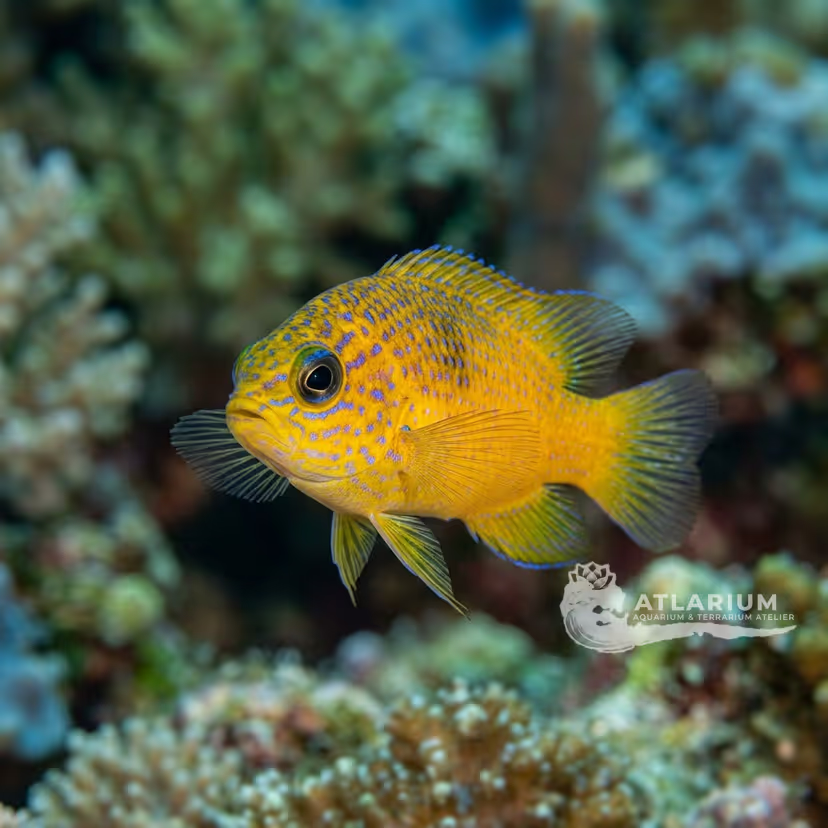
Gold-lined dottyback

Gold-lined dottyback

Pseudochromis aurulentus
View details->
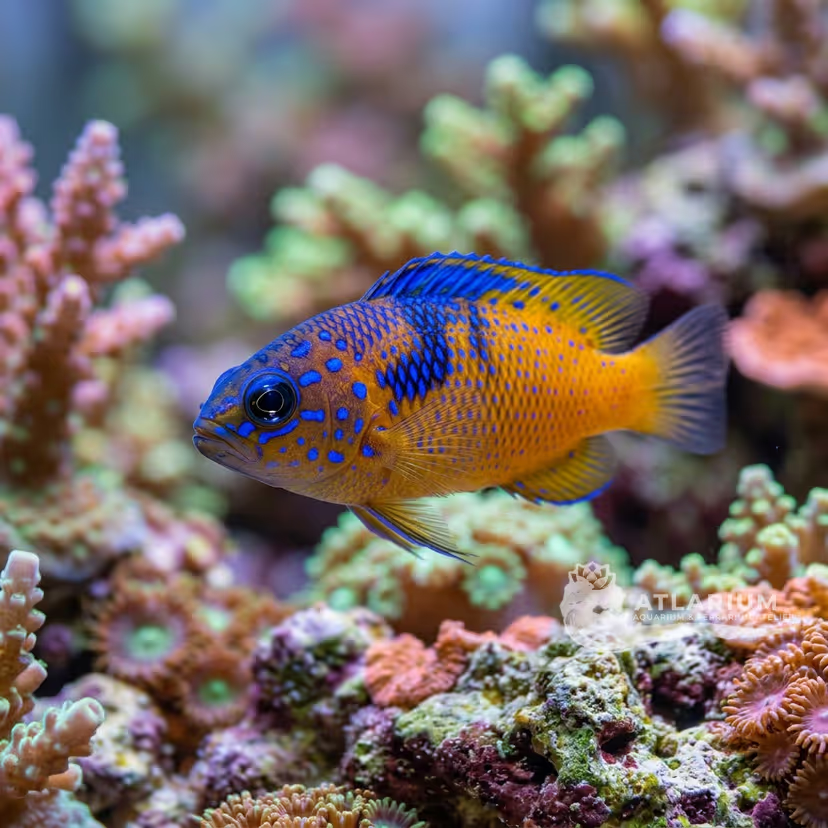
Gold-spotted dottyback

Gold-spotted dottyback

Pseudochromis chrysospilus
View details->
Spotted-tail dottyback

Spotted-tail dottyback

Pseudochromis caudalis

View details->
Blueback Dottyback

Blueback Dottyback

Pseudochromis cyanotaenia

View details->
Elongate dottyback

Elongate dottyback

Pseudochromis elongatus

View details->
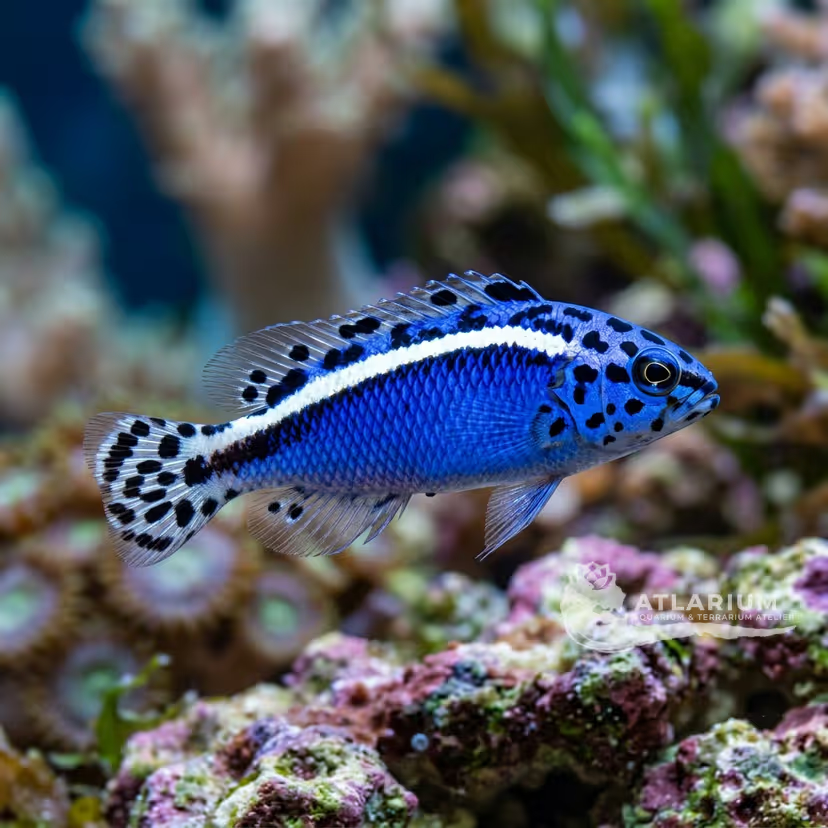
Goldline Dottyback

Goldline Dottyback

Pseudochromis aureolineatus
View details->
Sankey's Dottyback

Sankey's Dottyback

Pseudochromis sankeyi

View details->

Recommended companions

Compatible cards from coherent ecosystems with matching parameters.

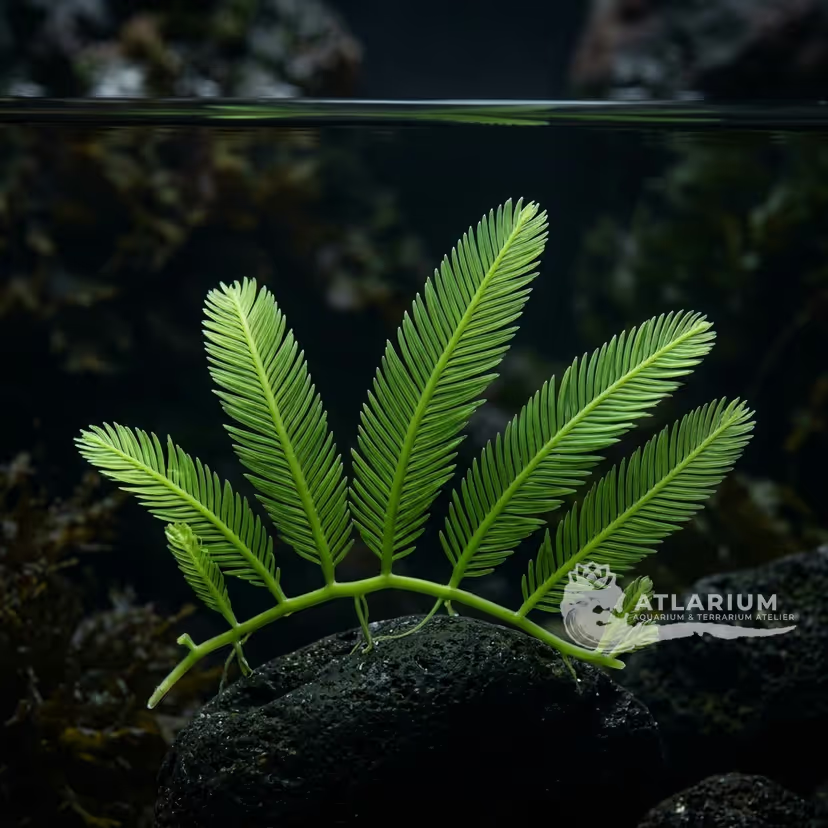
Caulerpa prolifera
Plant

Caulerpa prolifera

Caulerpa prolifera
View details->
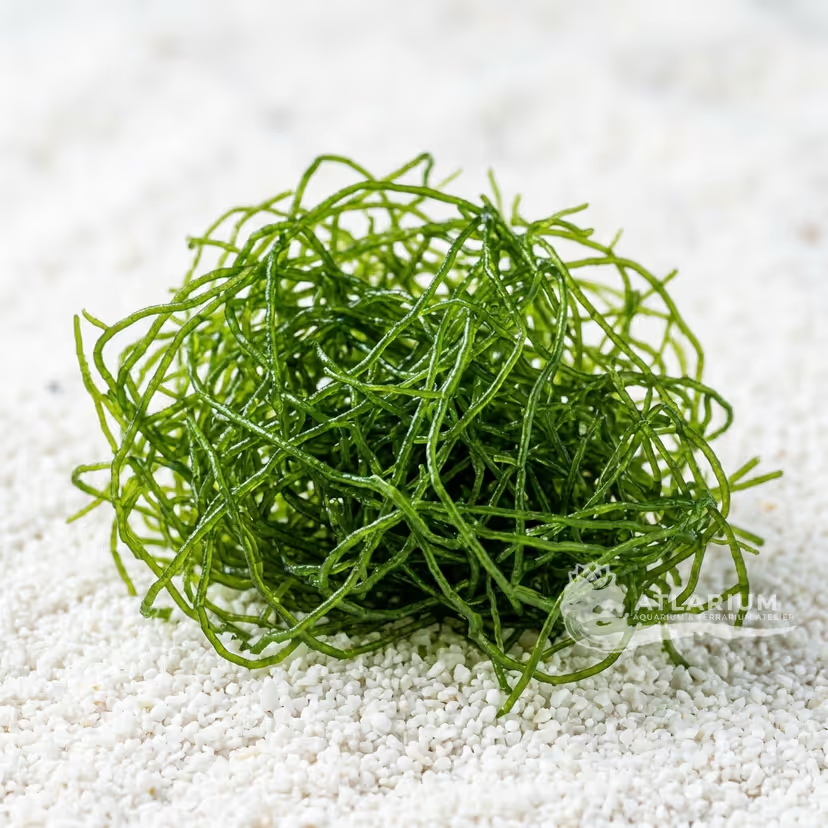
Caulerpa taxifolia
Plant

Caulerpa taxifolia

Caulerpa taxifolia
View details->
Chaetomorpha macroalgae
Plant

Chaetomorpha macroalgae

Chaetomorpha linum

View details->
Dead man fingers algae
Plant

Dead man fingers algae

Codium fragile

View details->
Grape caulerpa
Plant

Grape caulerpa

Caulerpa racemosa

View details->
Halimeda macroalgae
Plant

Halimeda macroalgae

Halimeda opuntia

View details->
Peacock tail algae
Plant

Peacock tail algae

Padina pavonica

View details->
Red gracilaria
Plant

Red gracilaria

Gracilaria parvispora

View details->
Red grape algae
Plant

Red grape algae

Botryocladia uvaria

View details->
Sea lettuce
Plant

Sea lettuce

Ulva lactuca

View details->
Red Mangrove
Plant

Red Mangrove

Rhizophora mangle

View details->

Similar care

Cards with similar requirements, difficulty, habitat, and husbandry profile.
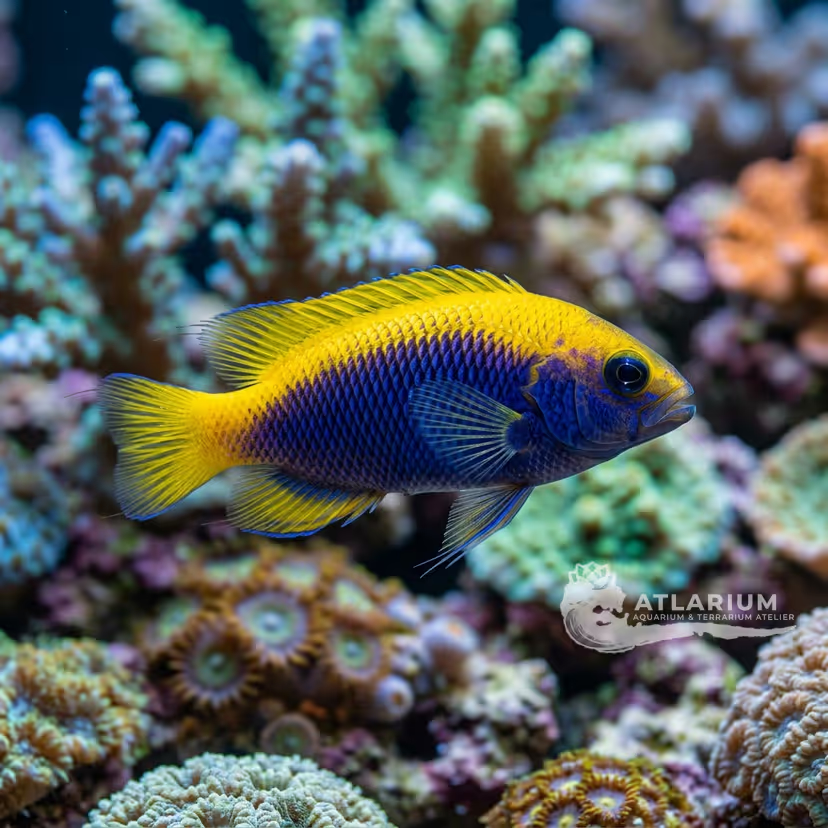
Sunrise Dottyback

Sunrise Dottyback

Pseudochromis flavivertex
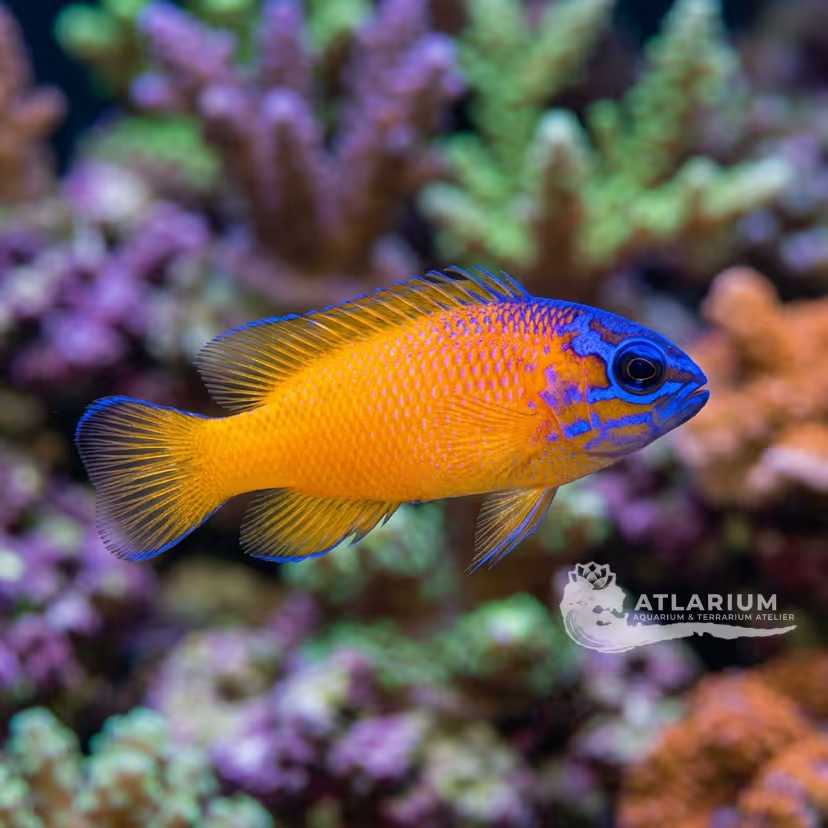
View details->
Tono's Dottyback

Tono's Dottyback

Pseudochromis tonozukai

View details->
Blue Dottyback

Blue Dottyback

Pseudochromis

View details->
Springer's Dottyback

Springer's Dottyback

Pseudochromis springeri

View details->
Neon dottyback

Neon dottyback

Pseudochromis aldabraensis

View details->
Red-tail dottyback

Red-tail dottyback

Pseudochromis coccinicauda

View details->
Spot-breast Dottyback

Spot-breast Dottyback

Pseudochromis alticaudex

View details->
Oblique-lined Dottyback

Oblique-lined Dottyback

Cypho purpurascens

View details->
Dilectus dottyback

Dilectus dottyback

Pseudochromis dilectus

View details->
Erdmann's dottyback

Erdmann's dottyback

Pseudochromis erdmanni
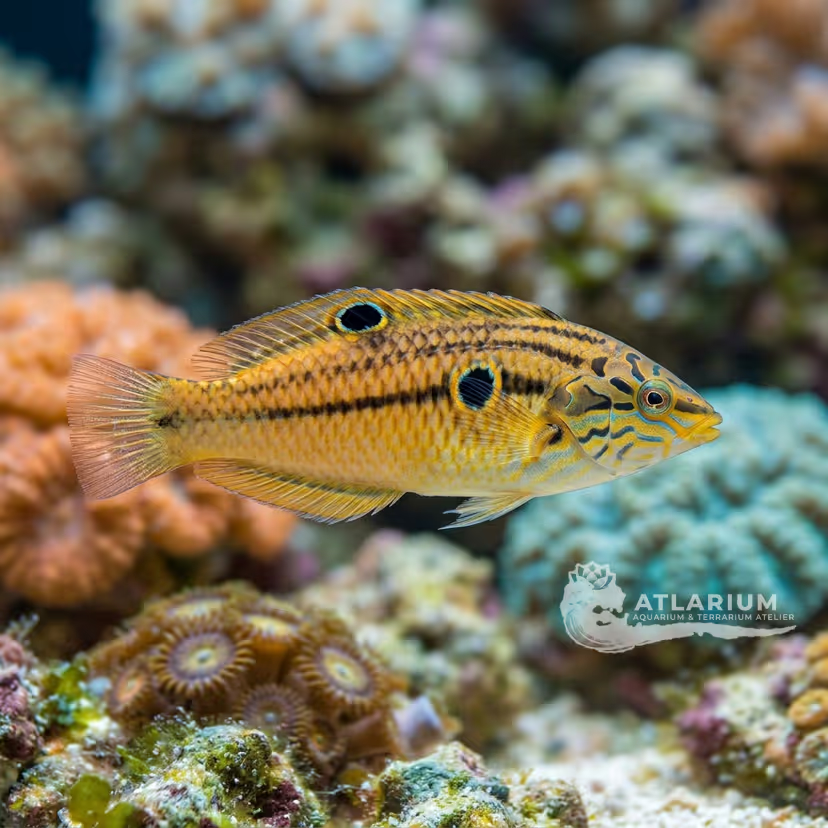
View details->
Golden-ear Wrasse

Golden-ear Wrasse

Halichoeres melanotis
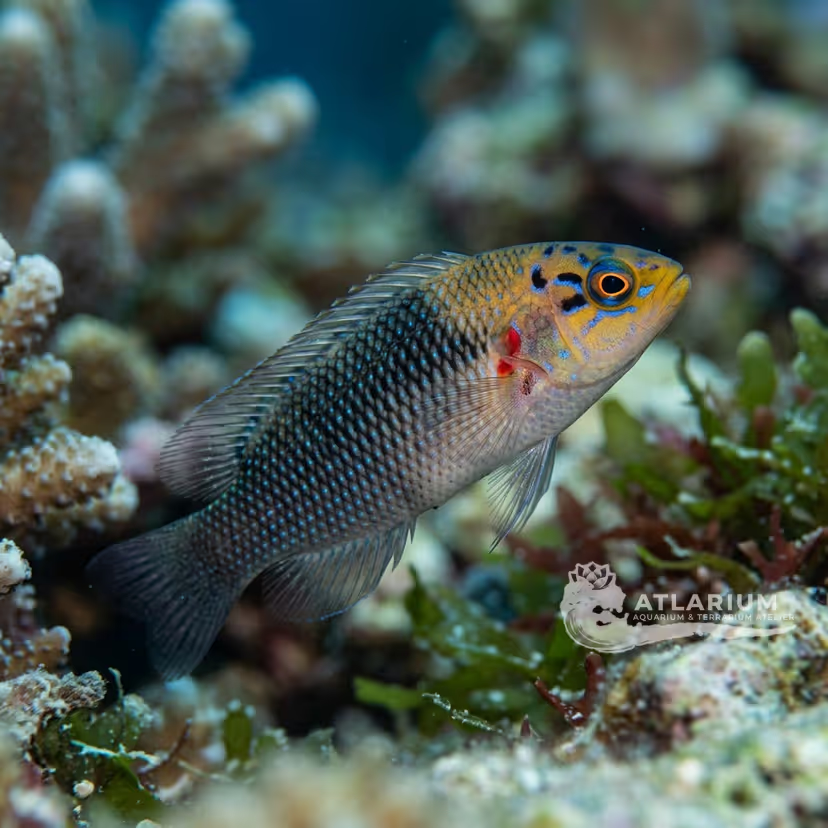
View details->
Steene's Dottyback

Steene's Dottyback

Pseudochromis steenei

View details->
Royal Dottyback

Royal Dottyback

Pictichromis paccagnellae
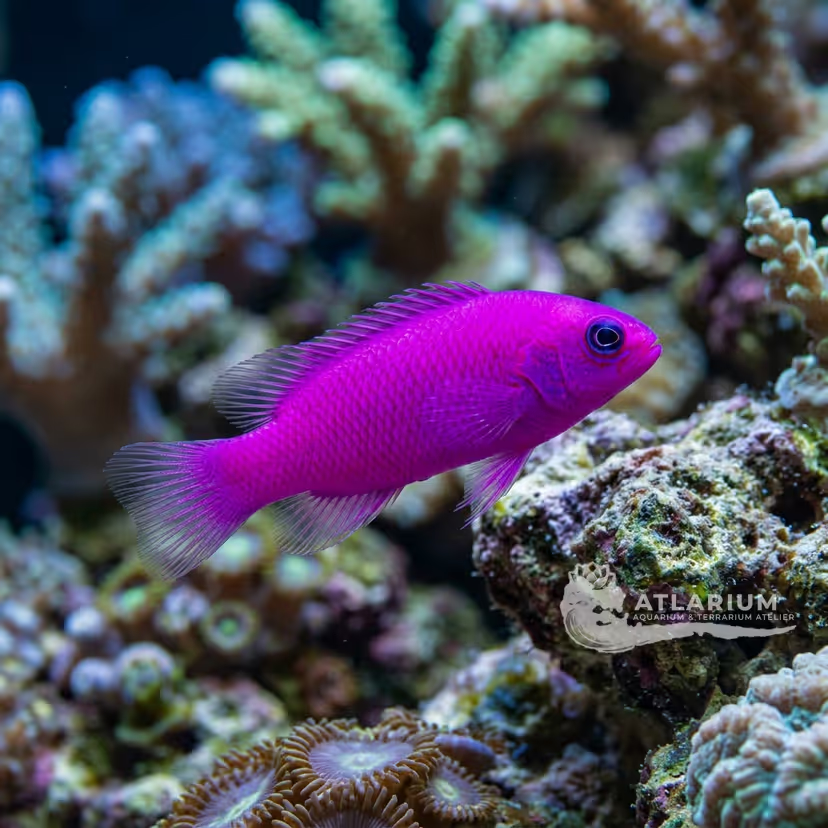
View details->
Strawberry Dottyback

Strawberry Dottyback

Pictichromis porphyrea
View details->
Ellipse shrimpgoby

Ellipse shrimpgoby

Amblyeleotris ellipse
View details->
Flame wrasse

Flame wrasse

Cirrhilabrus jordani

View details->
Last updated: 06/30/2026
Blackstripe Dottyback (Pseudochromis nigrovittatus) Care Guide & Tank Setup | Atlarium