Encyclopaedia

FishMarineEasy
©AI Generated·Proprietary

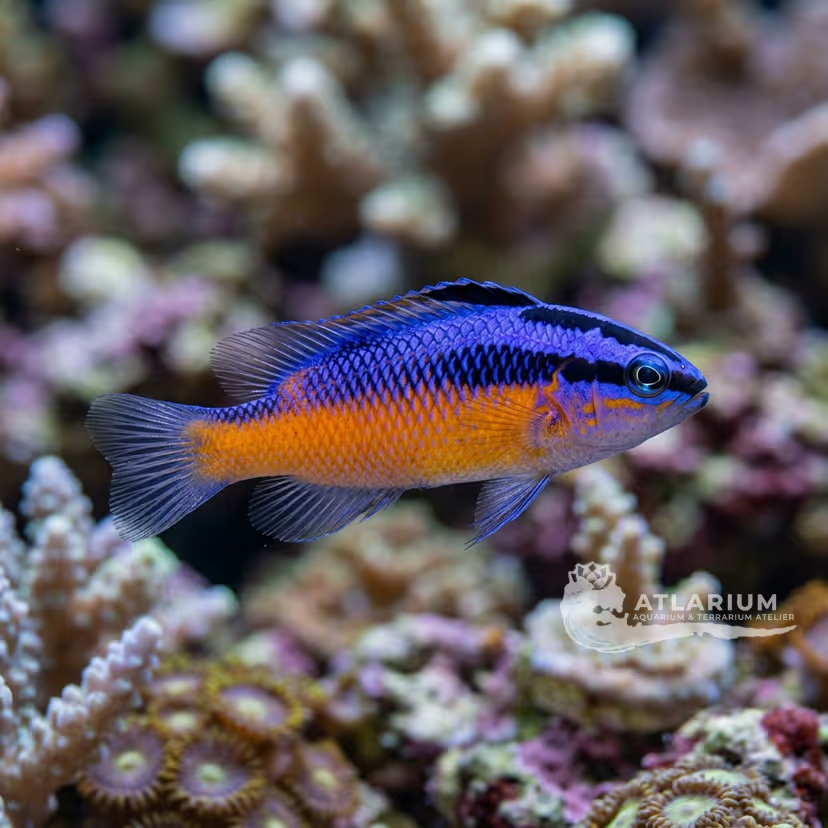
Oblique-lined Dottyback

Cypho purpurascens

The oblique-lined dottyback is a brilliant red-orange predator that patrols reef rubble. Exceptional at pest control, it is notoriously aggressive and demands extensive hiding spaces to reduce stress.

Taxonomy
Class:Actinopteri
Order:Perciformes
Family:Pseudochromidae
Genus:Cypho
Species:Cypho purpurascens

Share

Check out Oblique-lined Dottyback on Atlarium

PracticeRecognition quizzesPhotos, names, origins, and puzzles to review Atlas species.Open quizzes
Water Temperature

22 - 28 °C

pH Value

8.1 - 8.4

Water type

Marine

Tank level

Bottom and middle

Adult size

7.5 cm

Minimum tank volume

>= 120 L

Minimum group

>= 1

KH

8 - 12 dKH

Species description

Geographical Origin and Habitat:
Cypho purpurascens is native to the Western Pacific Ocean, ranging from the Ryukyu Islands in Japan to Rowley Shoals and the Great Barrier Reef in Australia. It inhabits shallow lagoons, inner reefs, and rubble zones at depths of 2 to 20 meters.
Taxonomy and Morphology:
Member of the family Pseudochromidae. It features a slightly stocky, elongated body with a rounded dorsal fin. Reaches a maximum length of 7.5 cm. It possesses sharp eyesight and a strong mouth with small, sharp teeth adapted for capturing prey.
Social Behavior:
Highly territorial and aggressive. It defends its chosen rocky cave and surrounding territory with extreme determination. It will attack similarly shaped or colored fish, and is often aggressive toward newly introduced tankmates.
Coloration and Sexual Dimorphism:
This species exhibits strong sexual dimorphism. Males are bright fire-red or reddish-orange, with fine, dark, oblique lines along the body and blue-edged fins. Females are much duller, with a brownish-gray body and translucent fins.

Care, breeding and tankmates

Aquarium Setup:
Requires a tank of at least 120 liters with extensive live rock arranged to create numerous caves, tunnels, and crevices. This complex rockwork allows the fish to establish a territory, reducing its aggression. A tight lid is mandatory due to its jumping ability.
Diet and Feeding:
Carnivore. It is an active hunter of microfauna in the tank. Feed high-quality frozen foods like brine shrimp, mysis, copepods, and finely chopped krill. Eagerly accepts dry pellets and flakes. Feed twice daily.
Water Quality:
Maintain stable marine conditions: temperature at 22-28°C, pH at 8.1-8.4, and salinity at SG 1.020-1.025. Efficient filtration and protein skimming are required to keep dissolved waste low, promoting the bright coloration of the male.
Compatibility and Cohabitation:
Reef safe with corals but not safe with small ornamental invertebrates. It will eat small shrimp and crabs. Do not house with other dottybacks or small, peaceful fish like gobies. Best kept with robust, active tankmates like tangs and damselfish.
Aquarium Breeding:
Breeding has been achieved. They are egg-layers; after courtship, the female deposits a ball of eggs in a cave. The male fertilizes and aggressively guards them, fanning the clutch until they hatch. Larvae require microscopic live food.
Risks and Diseases:
A very hardy species that acclimates easily. It can contract marine parasites like ich if water parameters fluctuate drastically. The primary risks are jumping from uncovered aquariums and injuries sustained during territorial conflicts.

Geographic Origin and Distribution

Cypho purpurascens is native to the Western Pacific Ocean, ranging from the Ryukyu Islands in Japan to Rowley Shoals and the Great Barrier Reef in Australia. It inhabits shallow lagoons, inner reefs, and rubble zones at depths of 2 to 20 meters.

Origin

Tropical oceans and reefsEast AsiaAustralia, New Guinea, and Oceania

Fish profile

Temperament
Aggressive
This fish possesses a highly territorial and combative temperament, aggressively defending its chosen cave. It will relentlessly harass any fish that dares to enter its established boundaries, regardless of the intruder's size. Tank mates must be carefully selected to withstand its surprisingly fierce personality.
Diet
Carnivore
The diet is strictly carnivorous, consisting primarily of meaty foods like mysis shrimp, brine shrimp, and chopped seafood. A varied diet enriched with vitamins is necessary to maintain its vibrant colors. Feeding a mix of frozen and high-quality pellet foods ensures optimal health.
Sex ratio
Solitary
Males are distinctly more colorful and robust than the females. They are incredibly intolerant of other males and will fight to the death if housed together. It is best to keep them strictly individually or as a confirmed, bonded male-female pair.
Feeding frequency
Twice daily
Feeding one to two times per day is ideal for maintaining the health of this fish. Care must be taken not to overfeed, as uneaten food will quickly degrade the water quality. Small portions consumed completely within a few minutes are best.
Bioload
This fish has a low to moderate bioload, meaning it does not heavily pollute the tank. Adequate mechanical and biological filtration will easily handle its waste production. Routine maintenance and periodic water testing are still highly recommended to ensure stability.
Flow
Strong
A moderate, varied water flow perfectly simulates its natural reef environment. The flow should be strong enough to keep detritus suspended, but not so strong that the fish struggles to swim. Random, alternating currents are particularly appreciated.
Jump risk
Yes
This species is highly prone to jumping and can easily launch itself out of an uncovered tank. Startling lights or sudden shadows frequently trigger erratic darting behavior towards the surface. A secure, weighted mesh lid is absolutely mandatory to keep them safely contained.
Reproduction
Oviparous
This species is a cave spawner, meaning it lays adhesive egg clusters in dark, secluded crevices. The male takes on the sole responsibility of guarding the nest and aggressively fanning the eggs. While captive spawning occurs, successfully raising the microscopic larvae remains extremely challenging.
Compatibility & tankmates
Peaceful
It can be highly aggressive towards smaller, docile fish in the aquarium. It is best kept with larger or similarly semi-aggressive tank mates that can hold their own. Small ornamental crustaceans may also be viewed as potential prey and should be avoided.
Tank level
Middle/Bottom
It generally inhabits the lower and middle strata of the aquarium environment. You will frequently find it darting among the rockwork and carefully exploring small caves. It rarely ventures close to the bright surface unless aggressively pursuing food.

Window to the official scientific data of the species

Data synced on: 06/15/2026

Scientific Parameters & Models

Trophic level
3.5 ± 0.5 se
Phylogenetic uniqueness (PD50)
0.75
Bayesian Length-Weight
a = 0.00501, b = 3.1
VulnerabilityLow vulnerability (10 / 100)

Image gallery

Licensed images linked to the species or, when marked, to the closest representative taxon.

Related species

Recommendations grouped by close relatives, companion choices, and similar care.

Variants and close relatives

Same atlas type, nearby scientific identity, genus, or family.

Blue Dottyback

Blue Dottyback

Pseudochromis

View details->
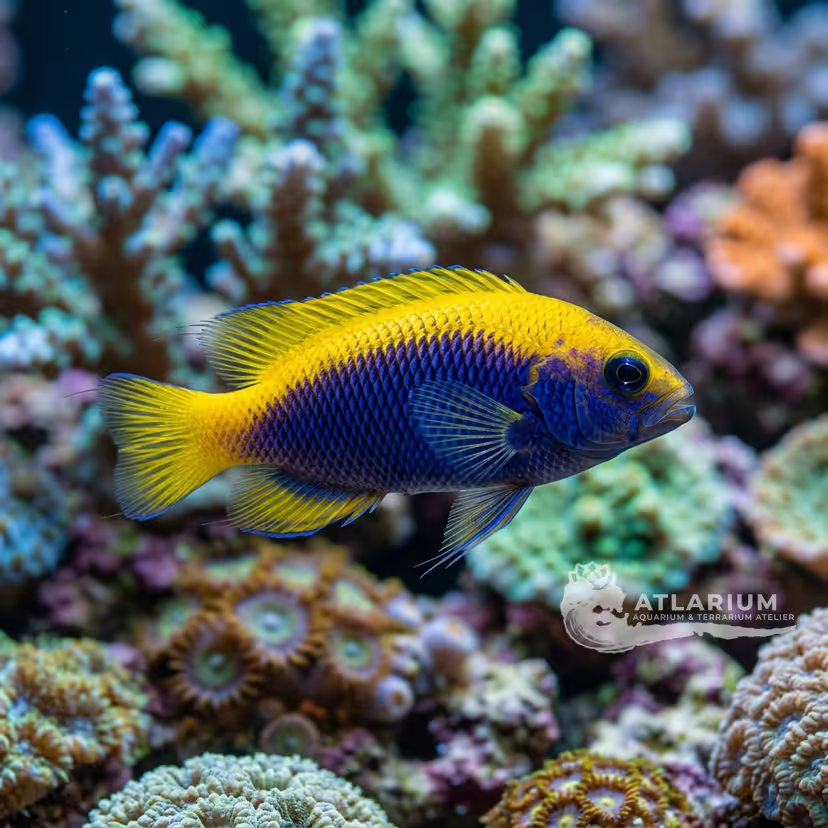
Springer's Dottyback

Springer's Dottyback

Pseudochromis springeri
View details->
Sunrise Dottyback

Sunrise Dottyback

Pseudochromis flavivertex

View details->
Ammer's dottyback

Ammer's dottyback

Pseudochromis ammeri

View details->
Cole's Dottyback

Cole's Dottyback

Pseudochromis colei

View details->
Comet dottyback

Comet dottyback

Pseudochromis cometes

View details->
Erdmann's dottyback

Erdmann's dottyback

Pseudochromis erdmanni

View details->
Gold-lined dottyback

Gold-lined dottyback

Pseudochromis aurulentus

View details->
Red-tail dottyback

Red-tail dottyback

Pseudochromis coccinicauda

View details->
Neon dottyback

Neon dottyback

Pseudochromis aldabraensis

View details->
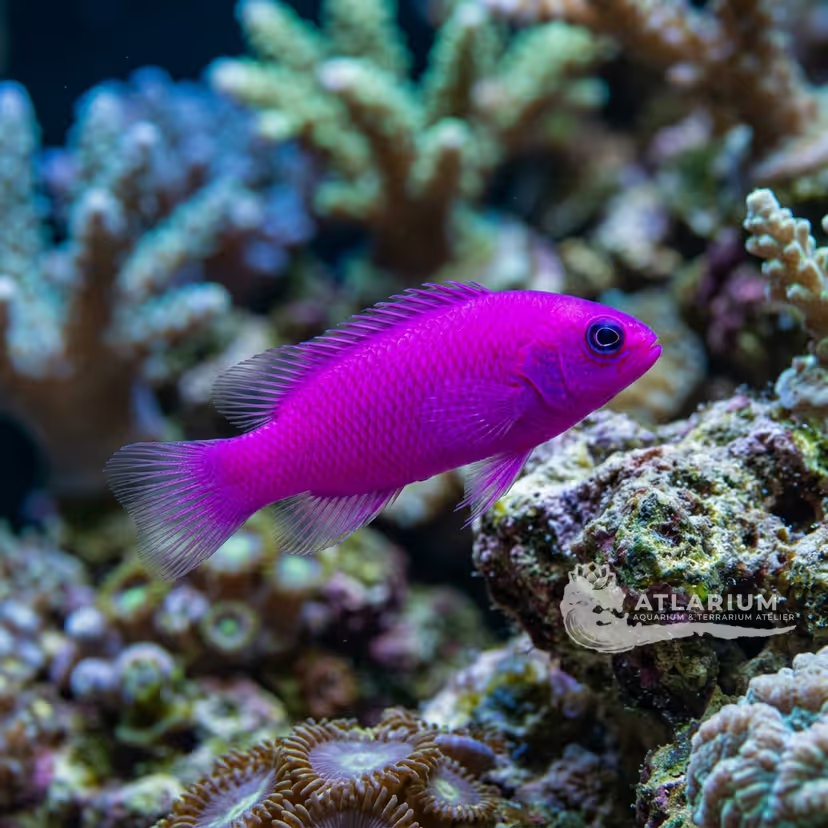
Royal Dottyback

Royal Dottyback

Pictichromis paccagnellae
View details->
Strawberry Dottyback

Strawberry Dottyback

Pictichromis porphyrea

View details->
Blueback Dottyback

Blueback Dottyback

Pseudochromis cyanotaenia

View details->
Elongate dottyback

Elongate dottyback

Pseudochromis elongatus

View details->
Goldline Dottyback

Goldline Dottyback

Pseudochromis aureolineatus

View details->
Lined Dottyback

Lined Dottyback

Labracinus lineatus

View details->

Recommended companions

Compatible cards from coherent ecosystems with matching parameters.

Grape caulerpa
Plant

Grape caulerpa

Caulerpa racemosa

View details->
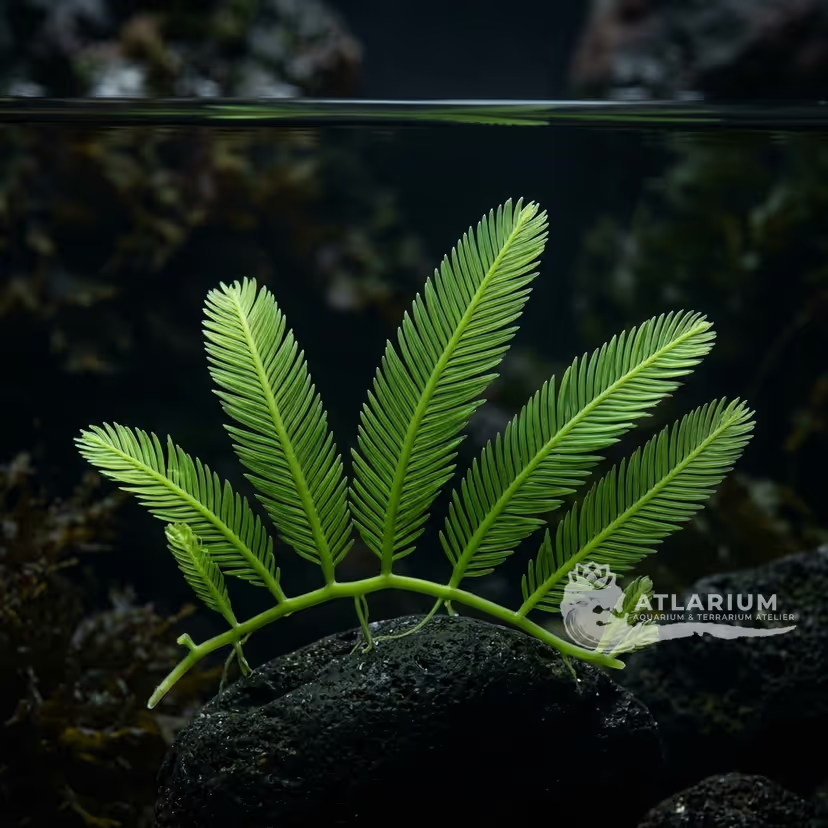
Caulerpa prolifera
Plant

Caulerpa prolifera

Caulerpa prolifera
View details->
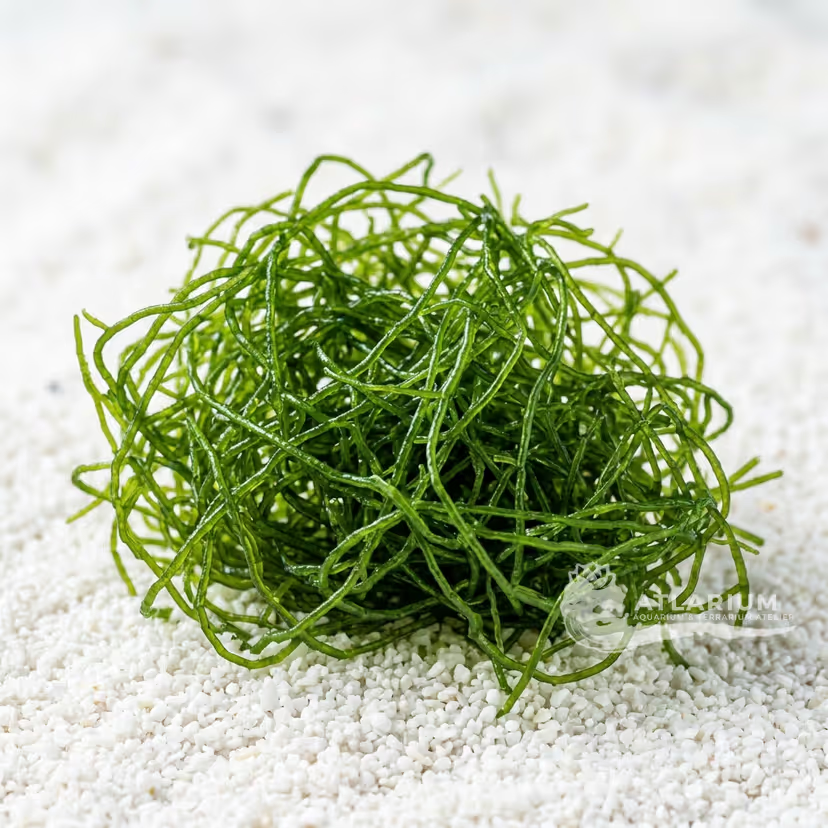
Caulerpa taxifolia
Plant

Caulerpa taxifolia

Caulerpa taxifolia
View details->
Chaetomorpha macroalgae
Plant

Chaetomorpha macroalgae

Chaetomorpha linum

View details->
Dead man fingers algae
Plant

Dead man fingers algae

Codium fragile

View details->
Halimeda macroalgae
Plant

Halimeda macroalgae

Halimeda opuntia

View details->
Peacock tail algae
Plant

Peacock tail algae

Padina pavonica

View details->
Red gracilaria
Plant

Red gracilaria

Gracilaria parvispora

View details->
Red grape algae
Plant

Red grape algae

Botryocladia uvaria

View details->
Sea lettuce
Plant

Sea lettuce

Ulva lactuca

View details->
Red Mangrove
Plant

Red Mangrove

Rhizophora mangle

View details->

Similar care

Cards with similar requirements, difficulty, habitat, and husbandry profile.

Doublebar dottyback

Doublebar dottyback

Pseudochromis bitaeniatus

View details->
Forktail dottyback

Forktail dottyback

Pseudochromis dixurus

View details->
Blackear Wrasse

Blackear Wrasse

Halichoeres poeyi

View details->
Coral Hawkfish

Coral Hawkfish

Cirrhitichthys oxycephalus

View details->
Eichler's Dottyback

Eichler's Dottyback

Pseudochromis eichleri

View details->
Blackstripe Dottyback

Blackstripe Dottyback

Pseudochromis nigrovittatus

View details->
Blue Damselfish

Blue Damselfish

Chrysiptera cyanea

View details->
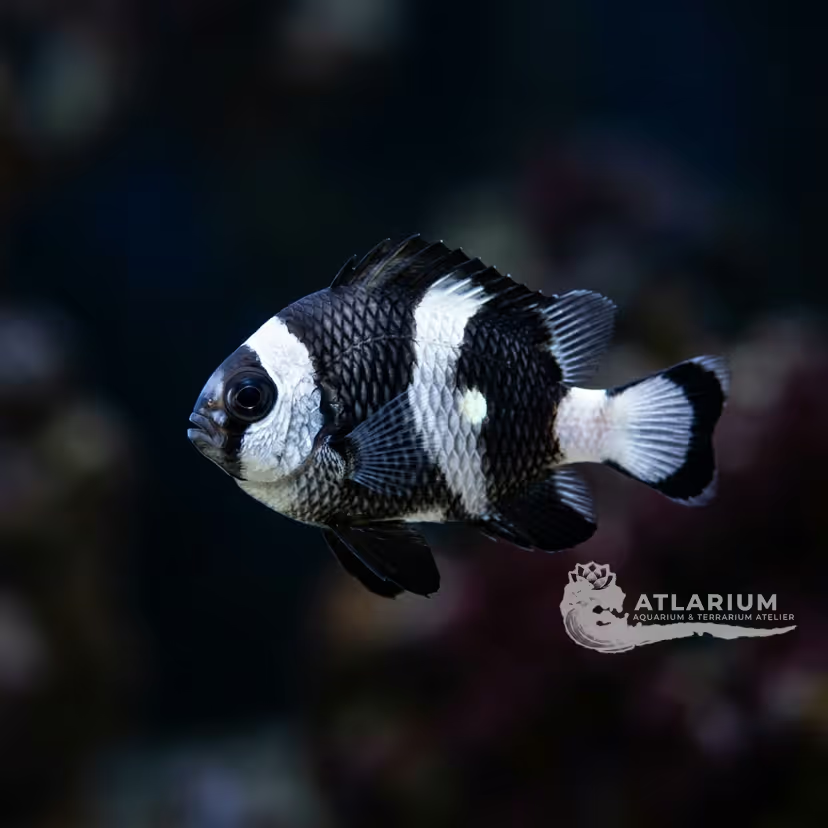
Dilectus dottyback

Dilectus dottyback

Pseudochromis dilectus
View details->
Four-stripe Damselfish / Blacktail Humbug

Four-stripe Damselfish / Blacktail Humbug

Dascyllus melanurus

View details->
Blackside Hawkfish

Blackside Hawkfish

Paracirrhites forsteri

View details->
Andaman Dottyback

Andaman Dottyback

Pseudochromis andamanensis

View details->
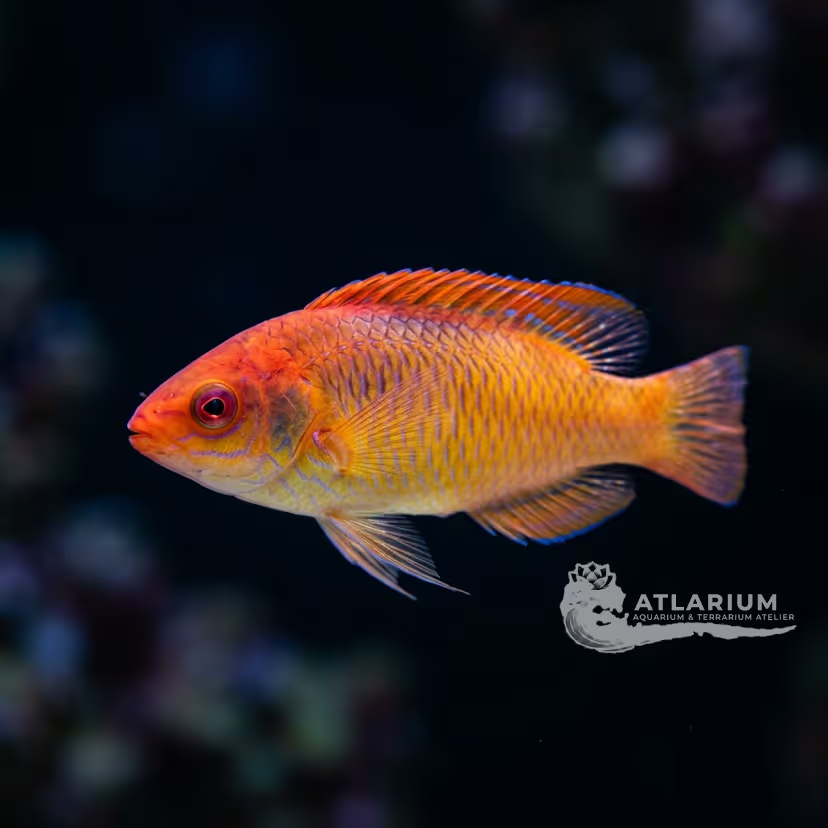
Firetail dottyback

Firetail dottyback

Pseudochromis flammicauda
View details->
Flame wrasse

Flame wrasse

Cirrhilabrus jordani

View details->
Gold-spotted dottyback

Gold-spotted dottyback

Pseudochromis chrysospilus

View details->
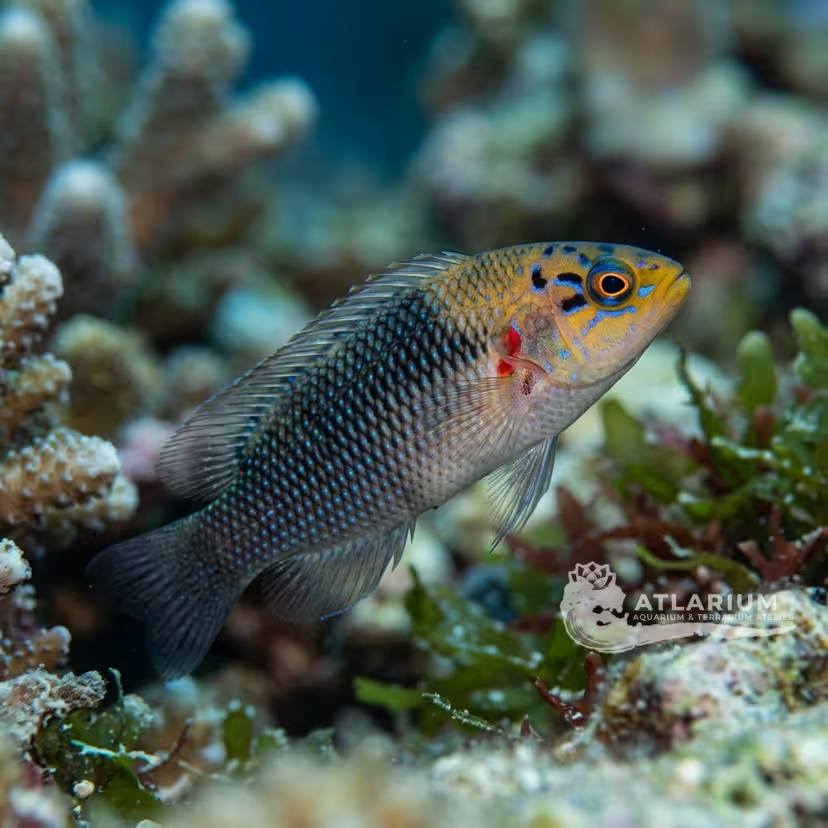
Orchid dottyback

Orchid dottyback

Pseudochromis fridmani
View details->
Steene's Dottyback

Steene's Dottyback

Pseudochromis steenei

View details->
Last updated: 06/30/2026
Oblique-lined Dottyback (Cypho purpurascens) Care Guide & Tank Setup | Atlarium