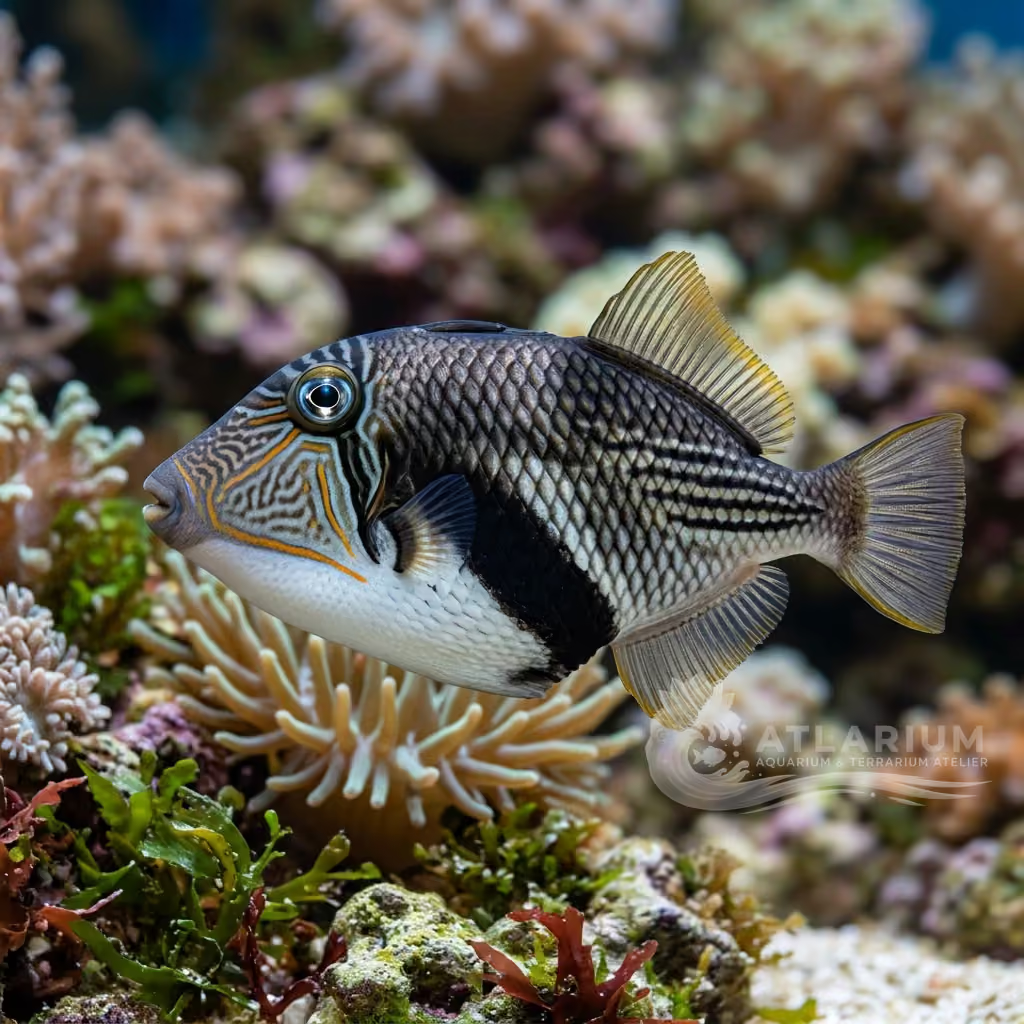
Arabian picasso triggerfish
Rhinecanthus assasi
Endemic to the Red Sea, the Picasso triggerfish is a robust, aggressive predator. Possessing powerful jaws, it requires a massive aquarium with immovable rockwork and an open sandy bottom for foraging.
Water Temperature
22 - 28 °C
pH Value
8.1 - 8.4
Water type
Marine
Tank level
All levels
Adult size
30 cm
Minimum tank volume
>= 400 L
Minimum group
>= 1
KH
8 - 12 dKH

Species description
Geographical Origin and Habitat: Rhinecanthus assasi is a marine fish endemic to the Red Sea, the Gulf of Aden, and the Persian Gulf. It primarily inhabits shallow coral reefs, sandy reef flats, and coastal lagoons at depths of 1 to 20 meters. It is typically found in areas with scattered rocks that provide hiding places near sandy zones.
Taxonomy and Morphology: Belonging to the family Balistidae and the genus Rhinecanthus, this species has a stocky, compressed body covered in tough, leathery skin. It possesses a small mouth with strong, beak-like teeth. It features a lockable first dorsal spine used to anchor itself inside crevices or deter predators. Adults grow to about 25-30 cm.
Social Behavior: Highly territorial, solitary, and aggressive, especially as they mature. It establishes a home range and defends it fiercely against any intruders, including divers. It is a highly intelligent and curious fish that quickly learns to recognize its owner and will actively inspect its surroundings.
Coloration and Sexual Dimorphism: Features a beautiful, paint-like geometric pattern. The body is olive-grey on the back, fading to white below. Distinctive blue and black stripes run across the forehead, orange-yellow bands extend from the mouth, and dark lines mark the caudal peduncle. There is no visible external sexual dimorphism.

Care, breeding and tankmates
Aquarium Setup: Requires a spacious tank of at least 400 liters (approx. 100 gallons) for a single adult. The rockwork must be very heavy and secure, as this fish will manipulate and move loose rocks with its strong jaws. Corals and sessile invertebrates should not be kept. Provide an open sandy substrate area.
Diet and Feeding: Omnivorous with a preference for hard-shelled invertebrates. In the wild, it feeds on sea urchins, crabs, snails, worms, and detritus. In captivity, feed hard foods to naturally wear down their teeth: whole unshelled clams, mussels, shrimp tail-on, krill, and high-quality sinking pellets.
Water Quality: Keep standard marine parameters stable: temperature 24-27°C (75-81°F), pH 8.1-8.4, and specific gravity 1.021-1.025. A heavy-duty filtration system and a large protein skimmer are essential to cope with the high organic load caused by their messy feeding habits.
Compatibility and Cohabitation: Not reef-safe. It will eat all ornamental shrimp, crabs, snails, and sea urchins, and will bite or destroy corals. Best kept in a 'fish-only with live rock' (FOWLR) tank alongside other aggressive or robust species like large tangs, groupers, large angelfish, and moray eels.
Aquarium Breeding: Breeding in home aquariums is extremely difficult and rarely documented. In their natural habitat, they dig a shallow pit in the sand where the female deposits adhesive eggs. The parents guard the nest site with intense aggression against any approaching creature until the eggs hatch.
Risks and Diseases: This is an exceptionally hardy species with high resistance to disease. The main risk is their powerful bite; they can chew on heaters, filter intake tubes, and cords, and may bite the aquarist's hand during maintenance. Use extreme caution and tank barriers when working in their tank.

Geographic origin and distribution
Rhinecanthus assasi is a marine fish endemic to the Red Sea, the Gulf of Aden, and the Persian Gulf. It primarily inhabits shallow coral reefs, sandy reef flats, and coastal lagoons at depths of 1 to 20 meters. It is typically found in areas with scattered rocks that provide hiding places near sandy zones.
Origin
Tropical oceans and reefsEurope, Mediterranean, and West AsiaSouth and Southeast AsiaEast Asia

Fish profile
- Temperament
- Aggressive
- It has a notoriously bold and aggressive temperament, completely unfazed by larger fish or even human hands. It may indiscriminately bite or rearrange aquarium decor, displaying a highly intelligent but destructive curiosity. A strict species-only or aggressive community setup is the only way to manage its intense personality.
- Diet
- Omnivore
- This species requires a diet rich in hard-shelled invertebrates to wear down its continuously growing teeth. Clams on the half shell, whole shrimp, and hard-shelled crabs are excellent food choices. Supplementing with tough squid and specialized triggerfish formulas is also highly recommended.
- Life expectancy
- 10-15 years
- Adult size
- 30 cm
- Sex ratio
- Solitary
- Distinguishing males from females visually is virtually impossible for the average aquarist. Because they show extreme conspecific aggression, keeping multiple individuals together is a recipe for disaster. It is universally recommended to keep only a single specimen per aquarium.
- Feeding frequency
- Twice daily
- This active species has a high metabolism and should be fed two to three times daily. Offering multiple smaller meals helps reduce aggression and prevents nutrient spikes in the tank. A varied schedule combining pellets and frozen food yields the best results.
- Bioload
- High
- This fish produces a significantly high amount of waste due to its size and diet. Heavy-duty filtration, including a highly rated protein skimmer, is absolutely mandatory. Aquarists must perform frequent large water changes to prevent the rapid degradation of water quality.
- Flow
- Strong
- Excellent swimming capabilities allow this fish to enjoy and utilize very high water flow. Powerful turnover rates and strong wave patterns keep the fish active and healthy. The high flow also ensures exceptional gas exchange and pristine environmental conditions.
- Jump risk
- Yes
- With a moderate to high jump risk, this fish will attempt to escape if heavily stressed or frightened. Open-top aquariums are not recommended under any circumstances. Ensure that your tank cover has no gaps where an agile fish might squeeze through.
- Reproduction
- Oviparous
- During reproduction, the female carefully prepares a crater-like nest in the sandy substrate. After the eggs are laid and fertilized, both parents may aggressively defend the immediate territory. Captive rearing is rarely achieved due to extreme aggression and the incredibly tiny size of the fry.
- Compatibility & tankmates
- Not reef safe
- This fish is generally not considered reef-safe, as it will nip at or consume corals and various invertebrates. It should be housed in a fish-only system with similarly aggressive or large tank mates. Smaller tank mates may be bullied, injured, or eaten as this fish matures.
- Tank level
- All levels
- This species is an extremely active swimmer that constantly cruises through the middle to upper levels of the tank. It demands a vast amount of open swimming space to remain physically and psychologically healthy. While it may occasionally investigate the rocks, it prefers the open water column.

Scientific Parameters & Models
FishBase
Window to the official scientific data of the species
FishBase v25.04Data synced on: 06/15/2026
- Trophic level
- 4.5 ± 0.13 se
- Resilience
- Medium (1.4 - 4.4 years)
- Phylogenetic uniqueness (PD50)
- 0.5078
- Bayesian Length-Weight
- a = 0.02754, b = 2.91
- VulnerabilityLow vulnerability (20 / 100)

Related species
Recommendations grouped by close relatives, companion choices, and similar care.