Lined butterflyfish
Chaetodon lineolatus
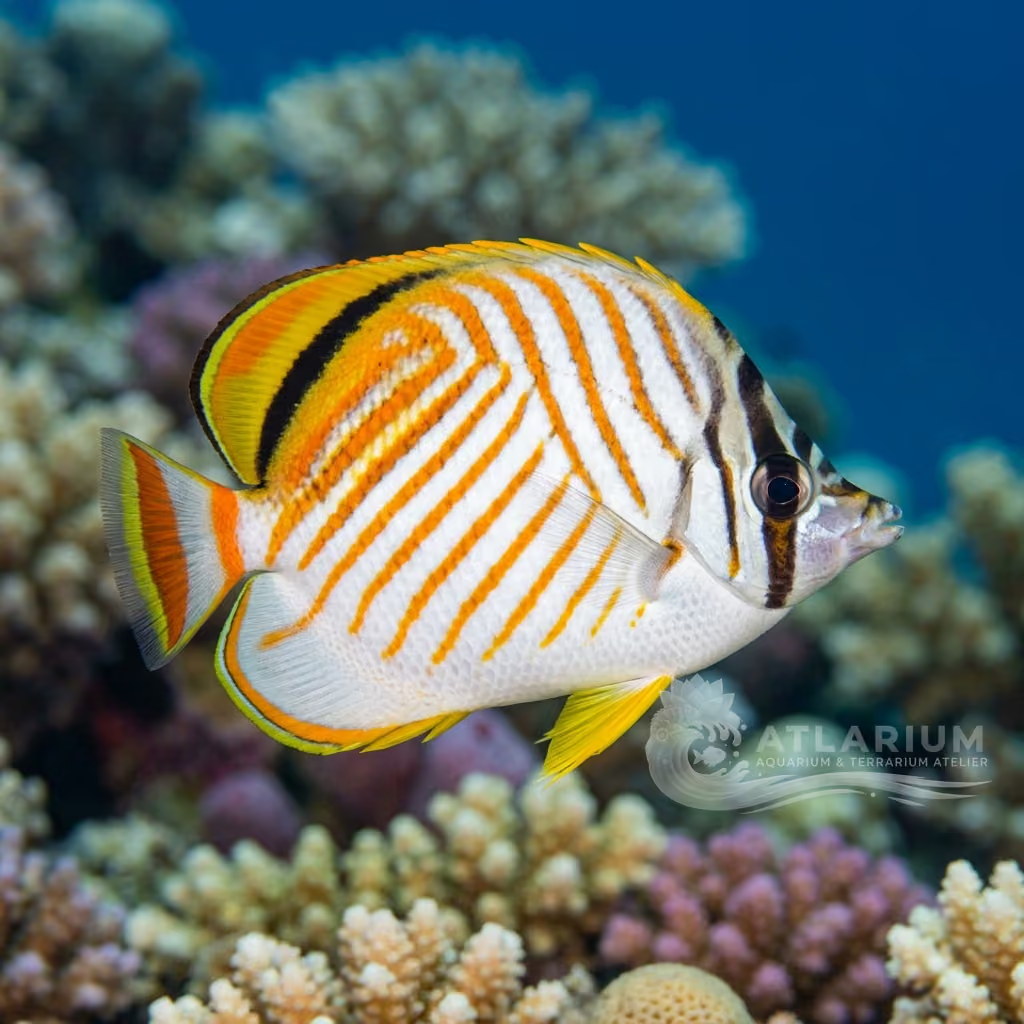
The largest butterflyfish species in the world, featuring a striking yellow and white body with thin vertical black stripes. Difficult to feed in captivity and not reef-safe.
Water Temperature
22 - 26 °C
pH Value
8.1 - 8.4
Water type
Marine
Tank level
All levels
Adult size
30 cm
Minimum tank volume
>= 600 L
Minimum group
>= 1

Species description
Geographical Origin and Habitat: Native to the tropical Indo-Pacific, ranging from the Red Sea and East Africa to Hawaii, the Marquesas, and southern Japan. It inhabits seaward reefs and coral-rich lagoons at depths between 2 and 50 meters.
Taxonomy and Morphology: Belongs to the family Chaetodontidae, genus Chaetodon. Characterized by a laterally compressed, disc-like body and a small, protractile mouth with brush-like teeth suited for feeding on coral polyps.
Social Behavior: A monogamous species that is typically seen in stable pairs or occasionally solitary. It is an active swimmer that patrols large territories in search of food.
Coloration and Sexual Dimorphism: Features a bright white body with thin, vertical black lines along the sides. The dorsal and tail areas are bright yellow, with a prominent black band covering the eye. No visible sexual dimorphism.

Care, breeding and tankmates
Aquarium Setup: Requires a large aquarium of at least 200-250 gallons (800-1000 liters) to provide sufficient swimming space. Provide a structured rock layout with caves and swim-throughs, combined with vast open areas for active swimming.
Diet and Feeding: Facultative corallivore and micro-predator. It is notoriously difficult to transition to prepared foods. Offer sacrificial live corals, fresh chopped clams, mysis, brine shrimp, fish eggs, and gel foods pressed onto rocks.
Water Quality: Sensitive to water chemistry fluctuations and organic waste. Target parameters: pH 8.1-8.4, specific gravity 1.021-1.025, temperature 24-26°C (75-79°F). High-quality filtration and regular water changes are required.
Compatibility and Cohabitation: Absolutely not reef-safe, as it will systematically consume hard corals (SPS/LPS) and anemones. Good tankmates include peaceful reef fish such as large tangs and wrasses.
Aquarium Breeding: Not achieved in home aquaria due to their pelagic spawning habits, which require open water and specialized larval culture.
Risks and Diseases: Highly susceptible to marine white spot (Cryptocaryon) and Amyloodinium (marine velvet) when stressed or undernourished.

Geographic origin and distribution
Native to the tropical Indo-Pacific, ranging from the Red Sea and East Africa to Hawaii, the Marquesas, and southern Japan. It inhabits seaward reefs and coral-rich lagoons at depths between 2 and 50 meters.
Origin
Tropical oceans and reefsAfrica and MadagascarEast Asia

Fish profile
- Temperament
- Territorial
- Chaetodon lineolatus is a generally peaceful and non-aggressive species toward other types of fish. They tend to ignore tankmates that are not of similar shape or color, making them suitable for large fish-only community aquariums. However, they can show significant territorial aggression toward conspecifics or closely related butterflyfish species. It is crucial to monitor their behavior during introduction and ensure they are not housed with overly aggressive species that might bully them.
- Diet
- Omnivore
- In the wild, the Lined Butterflyfish is primarily a corallivore and opportunistic carnivore, feeding on coral polyps, anemones, hydroids, and small invertebrates. In captivity, training them to accept prepared foods can be highly challenging, especially for adult specimens. Initial feeding should focus on enticing items like fresh clams or mussels on the half-shell, live brine shrimp, and blackworms. Once acclimated, they should be transitioned to a varied diet of frozen mysis, krill, spirulina, and high-quality marine flakes or pellets.
- Life expectancy
- 10-15 years
- Adult size
- 30 cm
- Sex ratio
- 1:1 ratio
- In their natural habitat, Chaetodon lineolatus are typically observed as solitary individuals or in monogamous pairs. In a home aquarium, it is generally recommended to keep them singly unless a confirmed male-female mated pair can be acquired. Attempting to house multiple specimens of the same sex or random individuals together often leads to severe territorial aggression. If keeping a pair, they should be introduced to the tank simultaneously to minimize conflict.
- Feeding frequency
- Twice daily
- Because of their active nature and relatively small digestive systems, Lined Butterflyfish require multiple small feedings throughout the day. It is highly recommended to feed them at least three to four times daily to sustain their energy levels and maintain body mass. Providing food in small increments prevents excess waste from accumulating and polluting the water. A constant presence of grazing opportunities on mature live rock can also support their dietary needs between feedings.
- Bioload
- Medium to High
- The Lined Butterflyfish is a large species that reaches up to 30 cm in length, resulting in a substantial biological waste output. Due to their high metabolic rate and the necessity of frequent feeding, a robust filtration system, such as a high-capacity protein skimmer, is essential. Regular water changes and efficient mechanical and biological filtration are critical to keeping nitrates and phosphates at low levels. Consequently, they are classified as having a medium-high bioload that requires a well-established and oversized filtration setup.
- Flow
- Moderate
- The Lined Butterflyfish inhabits natural seaward reefs and shallow lagoons, where they experience moderate water currents. In an aquarium setting, they thrive best in environments with moderate, laminar water flow that mimics these natural conditions. Excessive and turbulent flow can stress the fish and restrict their swimming, while insufficient flow can lead to stagnant zones and lower oxygen levels. A well-designed circulation system with adjustable powerheads is ideal to maintain a comfortable environment.
- Jump risk
- No
- Reproduction
- Oviparous
- Reproduction of Chaetodon lineolatus in captivity is exceptionally difficult and rarely achieved by hobbyists. In the wild, they are pelagic broadcast spawners that release eggs and sperm into the water column, after which the larvae undergo a complex pelagic "tholichthys" stage. During this larval phase, they develop specialized bony plates on their heads, which requires specific oceanic conditions and microscopic live foods to survive. Consequently, almost all specimens available in the aquarium trade are wild-caught.
- Compatibility & tankmates
- Reef safe
- The Lined Butterflyfish is highly compatible with larger, peaceful to moderately semi-aggressive fish such as tangs, wrasses, large clownfish, and angelfish. However, because of their obligate coral-eating habits, they are not reef-safe and will actively consume stony and soft corals, anemones, and small decorative invertebrates. They should not be kept with aggressive tankmates that may outcompete them for food or stress them, nor with conspecifics unless they are a mated pair.
- Tank level
- All levels
- As benthopelagic fish, Lined Butterflyfish occupy and swim actively throughout all levels of the water column. They spend a significant amount of time near the live rock and substrate, searching and grazing for potential food sources. However, they also require large, open swimming areas in the middle and upper regions of the tank. An aquarium with a balance of structured rockwork and unobstructed open water is ideal for their active lifestyle.

Related species
Recommendations grouped by close relatives, companion choices, and similar care.