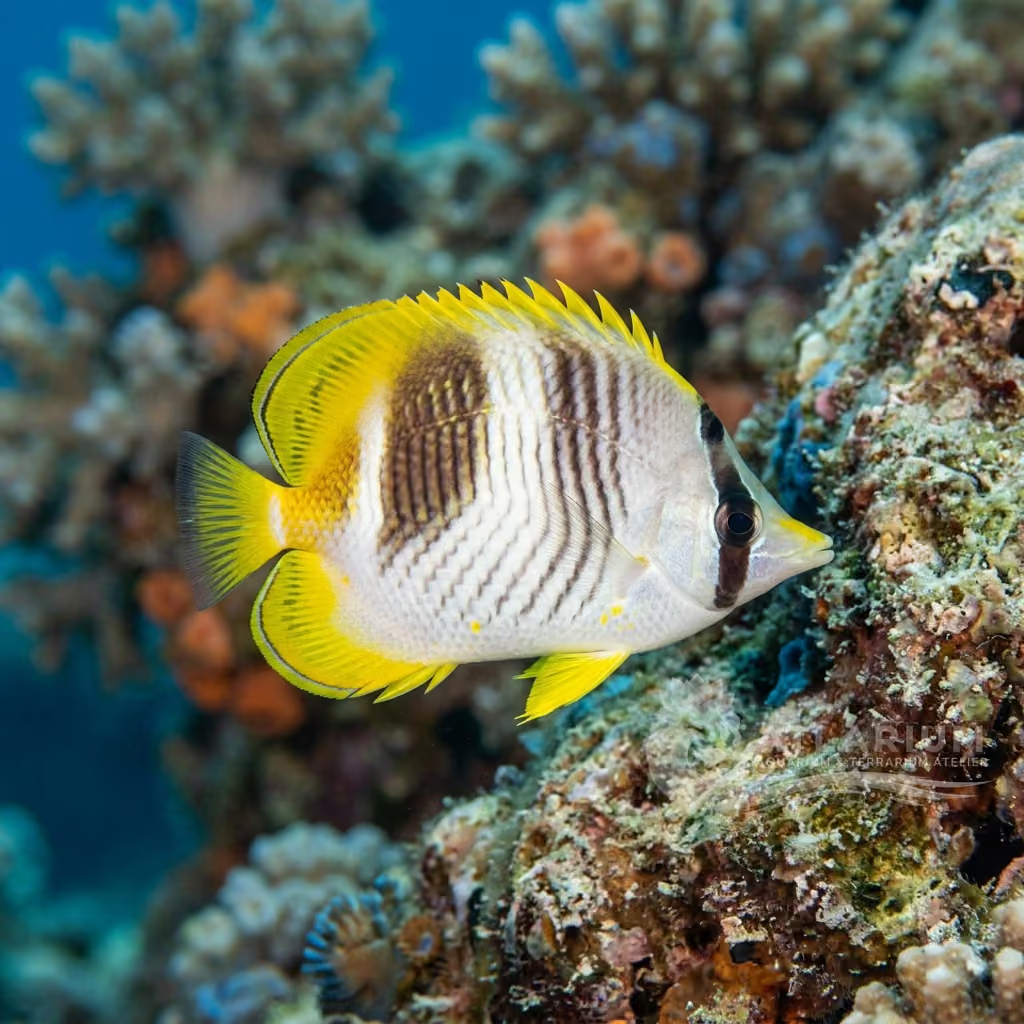
Masked Bannerfish
Heniochus monoceros
A stunning Indo-Pacific bannerfish noted for its yellow, black, and white bands and unique frontal horn. This peaceful omnivore thrives in 400L+ marine setups with ample swimming space and live rock.
Water Temperature
22 - 26 °C
pH Value
8.1 - 8.4
Water type
Marine
Tank level
Middle
Adult size
24 cm
Minimum tank volume
>= 400 L
Minimum group
>= 1

Species description
Geographical Origin and Habitat: Heniochus monoceros is native to the warm waters of the Indo-Pacific, from East Africa to the Tuamotu Islands, extending north to Japan and south to New South Wales. It is found on inner and outer reef slopes with rich coral growth.
Taxonomy and Morphology: Part of the Chaetodontidae family, described by Cuvier in 1831. It features a deep, laterally compressed body, a short dorsal filament compared to other Heniochus species, and a distinct small horn-like projection on the forehead of adults.
Social Behavior: Peaceful and moderately social. Juveniles often form schools, while adults are usually seen in pairs or traveling singly. They display a calm demeanor and show minimal aggression toward non-related fish in the tank.
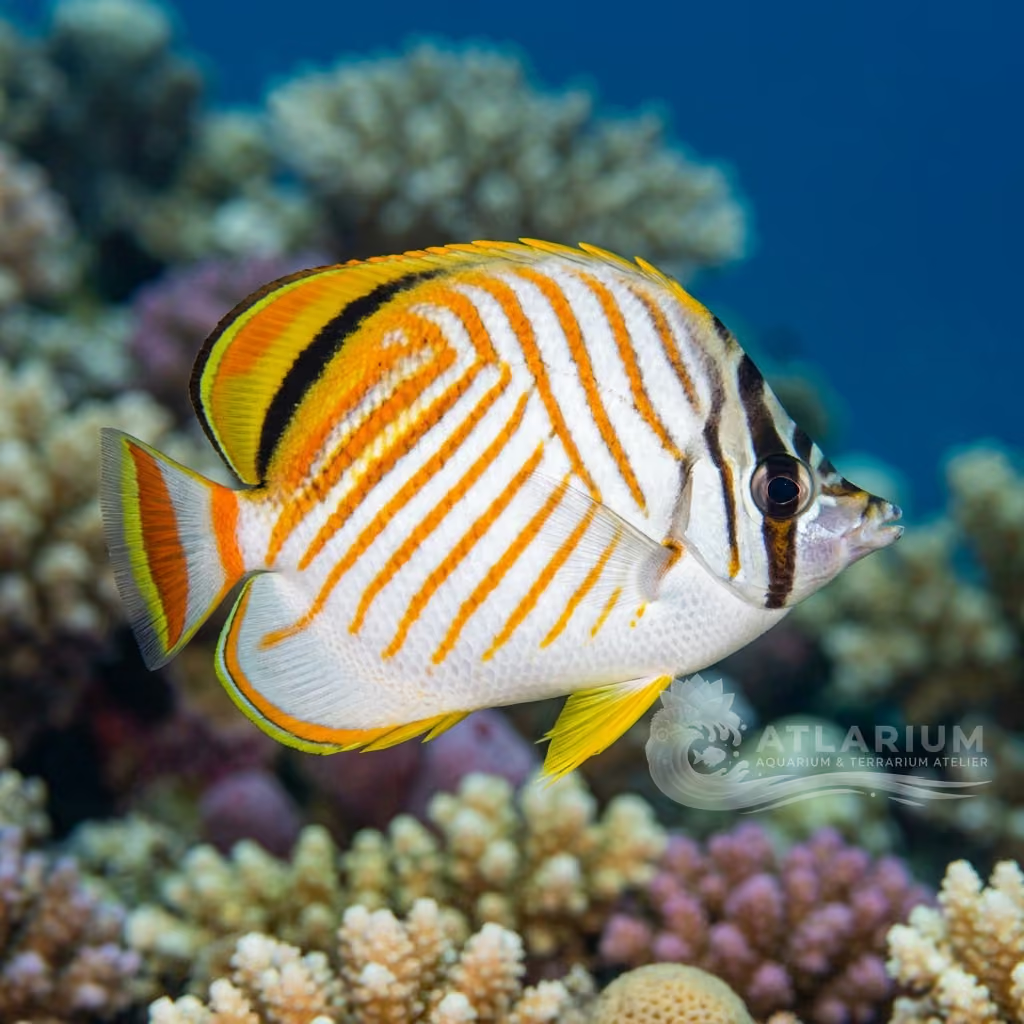
Coloration and Sexual Dimorphism: Body has a white-yellow base crossed by three broad blackish-brown vertical bands. The soft dorsal and caudal fins are bright yellow, and a black mask covers the eyes. Genders show no external physical differences.

Care, breeding and tankmates
Aquarium Setup: An aquarium of at least 400 liters is required to provide sufficient swimming space. The layout should combine open water zones with plenty of live rock structures to allow shelter and mimic a reef wall.
Diet and Feeding: Omnivorous. Readily adapts to captive diets. Offer a mix of frozen foods like mysis shrimp, brine shrimp, chopped krill, along with dried seaweed (nori) and spirulina-enriched flakes to maintain color and health.
Water Quality: Requires clean, stable marine conditions: temperature 23-26°C, specific gravity 1.020-1.025, and pH 8.1-8.4. Efficient protein skimming and regular water changes are necessary to keep dissolved organic compounds low.
Compatibility and Cohabitation: Semi-reef safe. While safer than most butterflyfish, they may nip at stony corals, zoanthids, and ornamental fan worms. Best housed with active, peaceful fish such as tangs, wrasses, and clownfish.
Aquarium Breeding: Spawning in home aquaria is undocumented due to their complex pelagic reproductive cycle. In the wild, they release pelagic eggs that hatch into larvae and drift with plankton before settling onto the reef.
Risks and Diseases: Vulnerable to marine ich (Cryptocaryon irritans) and head and lateral line erosion (HLLE) if fed a nutritionally deficient diet or if water quality is poor. Quarantine new arrivals to ensure they are eating well.

Geographic origin and distribution
Heniochus monoceros is native to the warm waters of the Indo-Pacific, from East Africa to the Tuamotu Islands, extending north to Japan and south to New South Wales. It is found on inner and outer reef slopes with rich coral growth.
Origin
Tropical oceans and reefsAfrica and MadagascarEast Asia

Fish profile
- Temperament
- Territorial
- The Masked bannerfish is known for being peaceful and elegant, making them a graceful addition to a large display tank. They do not bother smaller fish and generally ignore invertebrates like ornamental shrimp. They are somewhat prone to stress if bullied, so monitoring tank dynamics is important. Once settled, they are bold, active, and easily become a centerpiece fish.
- Diet
- Omnivore
- As an omnivorous species, the Masked bannerfish requires a highly varied diet to maintain its health. They should be fed a mix of high-quality frozen preparations containing mysis shrimp, brine shrimp, and spirulina. They will also readily accept marine flakes and small pellets once acclimated. Offering a clam on the half-shell is a great way to encourage natural picking behavior.
- Life expectancy
- 5-10 years
- Adult size
- 24 cm
- Sex ratio
- Solitary
- There are no distinguishing external sexual characteristics between male and female Masked bannerfish. In the wild, they are frequently found in pairs or occasionally in large, loose schools. In a home aquarium, multiple individuals can be kept together if introduced simultaneously into a large tank. Otherwise, maintaining a single specimen is perfectly fine and often easier.
- Feeding frequency
- Twice daily
- They should be fed small amounts two to three times daily. Because of their active swimming habits, they require a constant intake of calories to maintain their weight. Providing multiple small feedings is much better for their digestion than one large meal. Grazing on mature live rock between meals also helps supplement their nutritional needs.
- Bioload
- High
- The Masked bannerfish contributes a moderate bioload to the aquarium, similar to most butterflyfish. They require excellent water quality, so efficient filtration and aggressive protein skimming are necessary. Regular partial water changes are essential to keep nitrate and phosphate levels minimal. A mature biological filter is crucial before introducing this species to your tank.
- Flow
- Moderate
- The Masked bannerfish thrives in moderate to moderately strong water flow. Good circulation mimics the reef drop-offs and slopes where they naturally congregate. The flow should be strong enough to keep detritus suspended but not so overpowering that it pins them to the glass. Dynamic, alternating currents from wavemakers create the perfect environment.
- Jump risk
- No
- Reproduction
- Oviparous
- Captive breeding of the Masked bannerfish is not commonly achieved by hobbyists. They are pelagic spawners that release their gametes into the water column during dusk. The larvae drift in the ocean currents for a long period before settling onto the reef. This complex life cycle makes raising the fry incredibly challenging without specialized aquaculture facilities.
- Compatibility & tankmates
- Reef safe
- This fish is generally peaceful and does well with other peaceful to semi-aggressive community fish. The Masked bannerfish may nip at certain large-polyp stony (LPS) corals and soft corals, so caution is advised in reef tanks. They are often kept successfully in FOWLR setups with angelfish, tangs, and larger wrasses. They should not be kept with overly aggressive fish that may harass them.
- Tank level
- Middle
- They are highly active swimmers that prominently occupy the middle and upper levels of the water column. The Masked bannerfish enjoys swimming out in the open, displaying their beautiful dorsal filaments. They also appreciate having tall rock structures to retreat behind when they feel threatened. Sufficient open swimming space is an absolute requirement for this species.

Related species
Recommendations grouped by close relatives, companion choices, and similar care.