Horned Bannerfish
Heniochus varius
This unique, dark-colored bannerfish features striking velvety black shades and horn-like bumps. It requires a spacious, mature marine aquarium and a varied carnivorous diet for optimal health.
Water Temperature
22 - 26 °C
pH Value
8.1 - 8.4
Water type
Marine
Tank level
Middle
Adult size
19 cm
Minimum tank volume
>= 300 L
Minimum group
>= 1

Species description
Geographical Origin and Habitat: Heniochus varius is widely distributed throughout the Western Central Indo-Pacific, from the coastal reefs of Indonesia and the Philippines to the Australian Great Barrier Reef and parts of Polynesia. It inhabits outer reef slopes and steep drop-offs exposed to strong currents at depths ranging from 2 to 30 meters, preferring areas rich in sponges and stony corals.
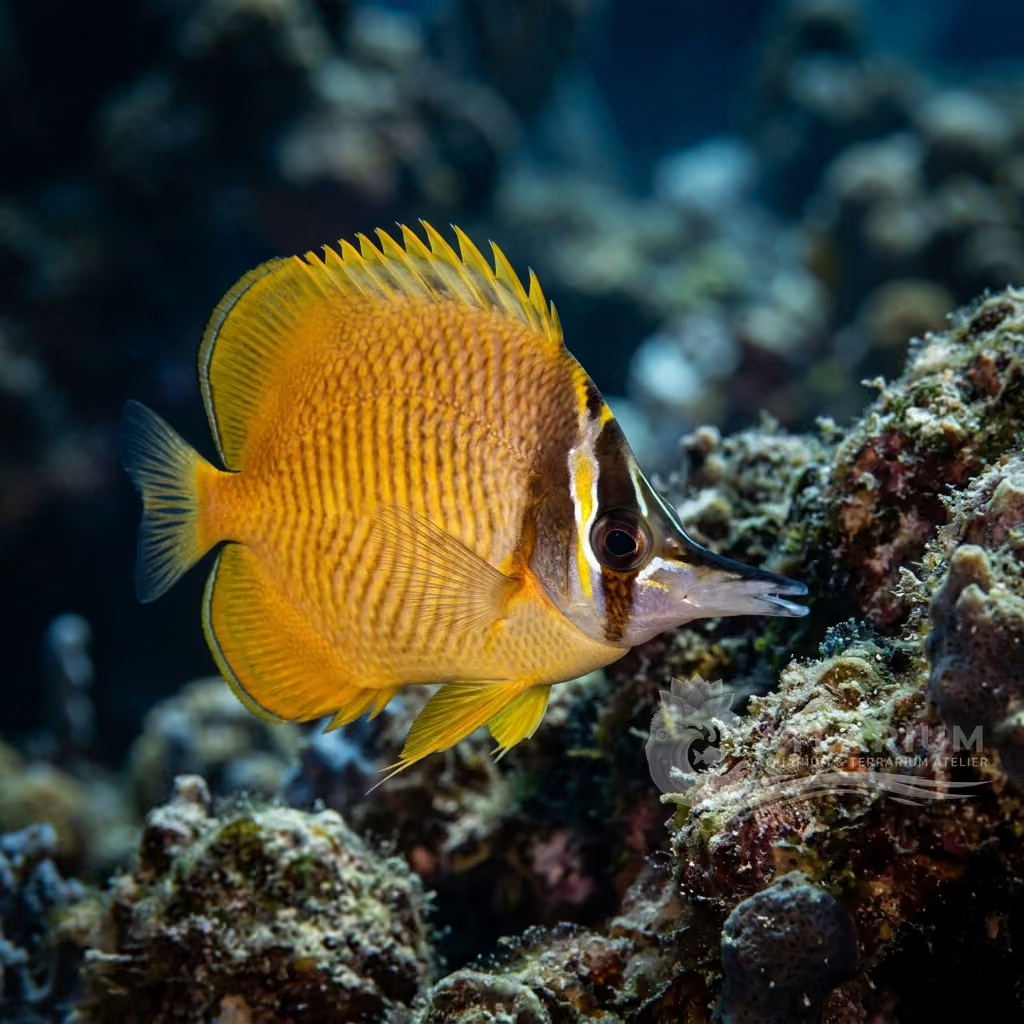
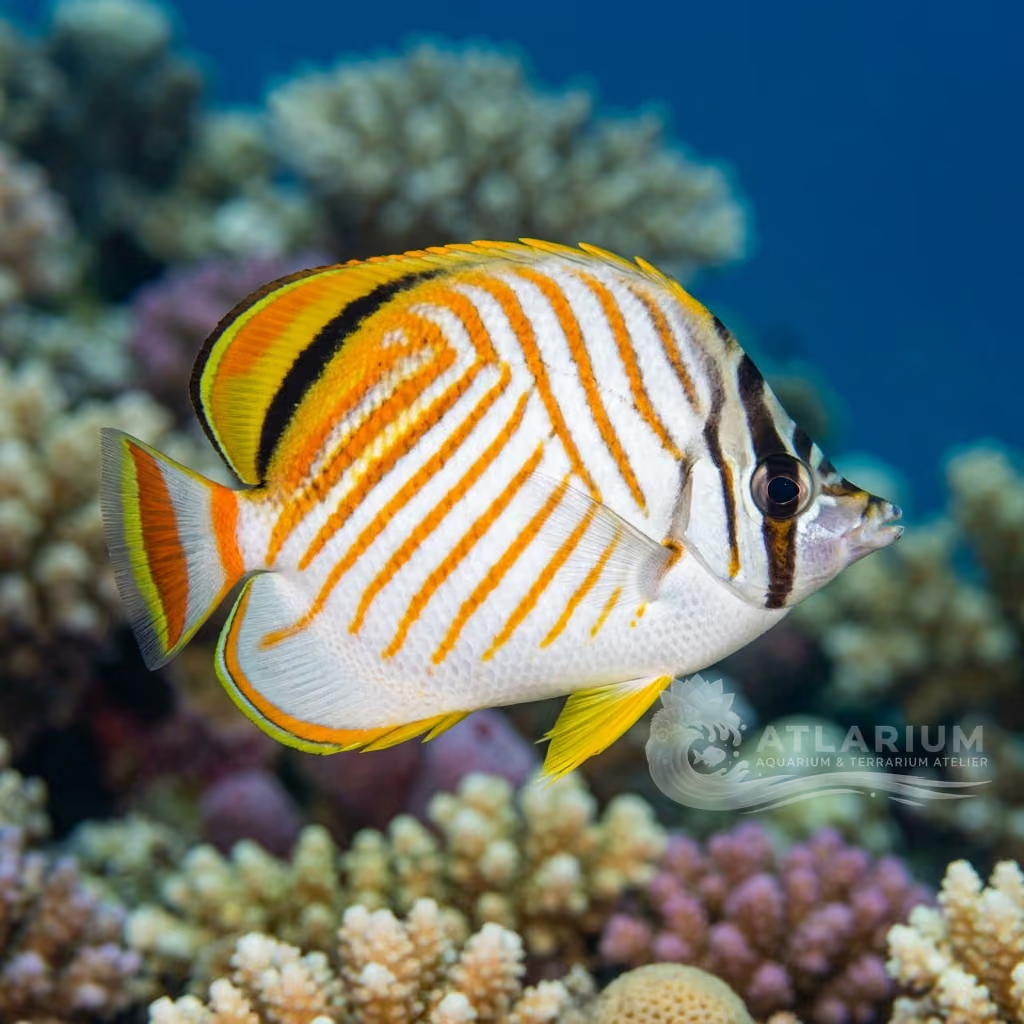
Taxonomy and Morphology: Belongs to the family Chaetodontidae, under the genus Heniochus. It is distinguished from other bannerfish by the absence of an elongated dorsal filament and the presence, in adults, of a distinct horn-like bump on the forehead between the eyes, accompanied by a curved spine above each eye. The body is highly compressed laterally and triangular.
Social Behavior: In the wild, it lives solitarily or in small, close-knit groups. Unlike other bannerfish, it displays a shy and secretive behavior in aquariums, particularly during the first few weeks. It is not considered reef-safe, as it will nip at the polyps of stony corals (both SPS and LPS), sponges, and small anemones, though it usually ignores soft corals.
Coloration and Sexual Dimorphism: It displays an unusual, dark color scheme compared to its congeners, dominated by dark brown to velvety black shades, broken by two white vertical bands: one passing behind the eye and another running obliquely from the dorsal area to the caudal peduncle. There is no visible sexual dimorphism between males and females.

Care, breeding and tankmates
Aquarium Setup: Requires a very spacious, mature marine aquarium of at least 300-400 liters (approx. 80-100 gallons), characterized by strong water movement and high oxygen levels. The rockwork should consist of a substantial amount of live rock arranged to create large caves and overhangs where the fish can rest and feel secure.
Diet and Feeding: Omnivorous with a strong carnivorous preference. Feeding is the main challenge in keeping this species: it must be fed multiple times daily with a varied diet of frozen foods such as mysis, krill, enriched brine shrimp, minced clam, sponge-based angelfish preparations, and sheets of dried marine algae (nori).
Water Quality: Demands pristine, stable water parameters: specific gravity of 1.021 - 1.025, pH of 8.1 - 8.4, and a temperature of 24 - 26 °C (75 - 79 °F). Ammonia and nitrite must be zero, and nitrates should be kept as low as possible through powerful protein skimming, chemical filtration, and regular water changes.
Compatibility and Cohabitation: Can be kept with peaceful or semi-aggressive tankmates of similar size, such as tangs, clownfish, and larger wrasses. Avoid housing with overly aggressive fish that might bully it, preventing it from feeding. It should not be housed in premium reef tanks containing valuable coral colonies.
Aquarium Breeding: No successful breeding cases have been reported in home aquariums. In the wild, they are pelagic spawners, releasing buoyant eggs into the open water column at dusk. The larvae undergo a complex planktonic stage (tholichthys stage) characteristic of butterflyfishes before settling on the reef.
Risks and Diseases: Delicate species that is highly susceptible to external parasitic infections like Cryptocaryon irritans (marine ich) and Oodinium, especially when stressed by shipping or fluctuating water parameters. A strict quarantine period is highly recommended. Malnutrition and feeding refusal are common risks during acclimation.

Geographic origin and distribution
Heniochus varius is widely distributed throughout the Western Central Indo-Pacific, from the coastal reefs of Indonesia and the Philippines to the Australian Great Barrier Reef and parts of Polynesia. It inhabits outer reef slopes and steep drop-offs exposed to strong currents at depths ranging from 2 to 30 meters, preferring areas rich in sponges and stony corals.
Origin
Tropical oceans and reefsSouth and Southeast AsiaAustralia, New Guinea, and Oceania

Fish profile
- Temperament
- Peaceful
- The Brown bannerfish is known for being peaceful and somewhat shy, making them a graceful addition to a large display tank. They do not bother smaller fish and generally ignore invertebrates like ornamental shrimp. They are somewhat prone to stress if bullied, so monitoring tank dynamics is important. Once settled, they are bold, active, and easily become a centerpiece fish.
- Diet
- Omnivore
- As an omnivorous species, the Brown bannerfish requires a highly varied diet to maintain its health. They should be fed a mix of high-quality frozen preparations containing mysis shrimp, brine shrimp, and spirulina. They will also readily accept marine flakes and small pellets once acclimated. Offering a clam on the half-shell is a great way to encourage natural picking behavior.
- Life expectancy
- 5-7 years
- Adult size
- 19 cm
- Sex ratio
- Solitary
- There are no distinguishing external sexual characteristics between male and female Brown bannerfish. In the wild, they are frequently found in pairs or occasionally in large, loose schools. In a home aquarium, multiple individuals can be kept together if introduced simultaneously into a large tank. Otherwise, maintaining a single specimen is perfectly fine and often easier.
- Feeding frequency
- Twice daily
- They should be fed small amounts two to three times daily. Because of their active swimming habits, they require a constant intake of calories to maintain their weight. Providing multiple small feedings is much better for their digestion than one large meal. Grazing on mature live rock between meals also helps supplement their nutritional needs.
- Bioload
- Medium to High
- The Brown bannerfish contributes a moderate bioload to the aquarium, similar to most butterflyfish. They require excellent water quality, so efficient filtration and aggressive protein skimming are necessary. Regular partial water changes are essential to keep nitrate and phosphate levels minimal. A mature biological filter is crucial before introducing this species to your tank.
- Flow
- Moderate
- The Brown bannerfish thrives in moderate to moderately strong water flow. Good circulation mimics the reef drop-offs and slopes where they naturally congregate. The flow should be strong enough to keep detritus suspended but not so overpowering that it pins them to the glass. Dynamic, alternating currents from wavemakers create the perfect environment.
- Jump risk
- No
- Reproduction
- Oviparous
- Captive breeding of the Brown bannerfish is not commonly achieved by hobbyists. They are pelagic spawners that release their gametes into the water column during dusk. The larvae drift in the ocean currents for a long period before settling onto the reef. This complex life cycle makes raising the fry incredibly challenging without specialized aquaculture facilities.
- Compatibility & tankmates
- Reef safe
- This fish is generally peaceful and does well with other peaceful to semi-aggressive community fish. The Brown bannerfish may nip at certain large-polyp stony (LPS) corals and soft corals, so caution is advised in reef tanks. They are often kept successfully in FOWLR setups with angelfish, tangs, and larger wrasses. They should not be kept with overly aggressive fish that may harass them.
- Tank level
- Middle
- They are highly active swimmers that prominently occupy the middle and upper levels of the water column. The Brown bannerfish enjoys swimming out in the open, displaying their beautiful dorsal filaments. They also appreciate having tall rock structures to retreat behind when they feel threatened. Sufficient open swimming space is an absolute requirement for this species.

Related species
Recommendations grouped by close relatives, companion choices, and similar care.