Chevron Butterflyfish
Chaetodon trifascialis
The chevron butterflyfish is an obligate corallivore of the Indo-Pacific. It demands a 300L tank densely packed with live Acropora to display its natural foraging.
Water Temperature
22 - 27 °C
pH Value
8.1 - 8.4
Water type
Marine
Tank level
All levels
Adult size
18 cm
Minimum tank volume
>= 350 L
Minimum group
>= 1

Species description
Geographical Origin and Habitat: Chaetodon trifascialis, commonly known as the chevron butterflyfish or triangulate butterflyfish, is widely distributed in tropical waters across the Indo-Pacific. Its range extends from the Red Sea and East Africa eastward to the Hawaiian Islands and French Polynesia, north to southern Japan, and south to the Great Barrier Reef. It lives in shallow lagoons and seaward reefs at depths of 1 to 30 meters, highly associated with table corals of the genus Acropora.
Taxonomy and Morphology: Belonging to the family Chaetodonidae and genus Chaetodon, it features a highly compressed, oval body shape with a pointed snout and a narrow, terminal mouth specifically adapted for nipping stony coral polyps. Its dorsal profile is nearly straight, and it has a truncated tail fin. Adults reach a maximum length of about 15-18 centimeters, which is moderate for this family.
Social Behavior: This butterflyfish is an extremely territorial and solitary species. In the wild, an individual typically defends a single colony of Acropora coral as its exclusive territory, aggressively chasing away conspecifics and other corallivorous fishes. In an aquarium setting, it exhibits strong intolerance toward other members of its species or similar looking fishes, and must be housed alone.
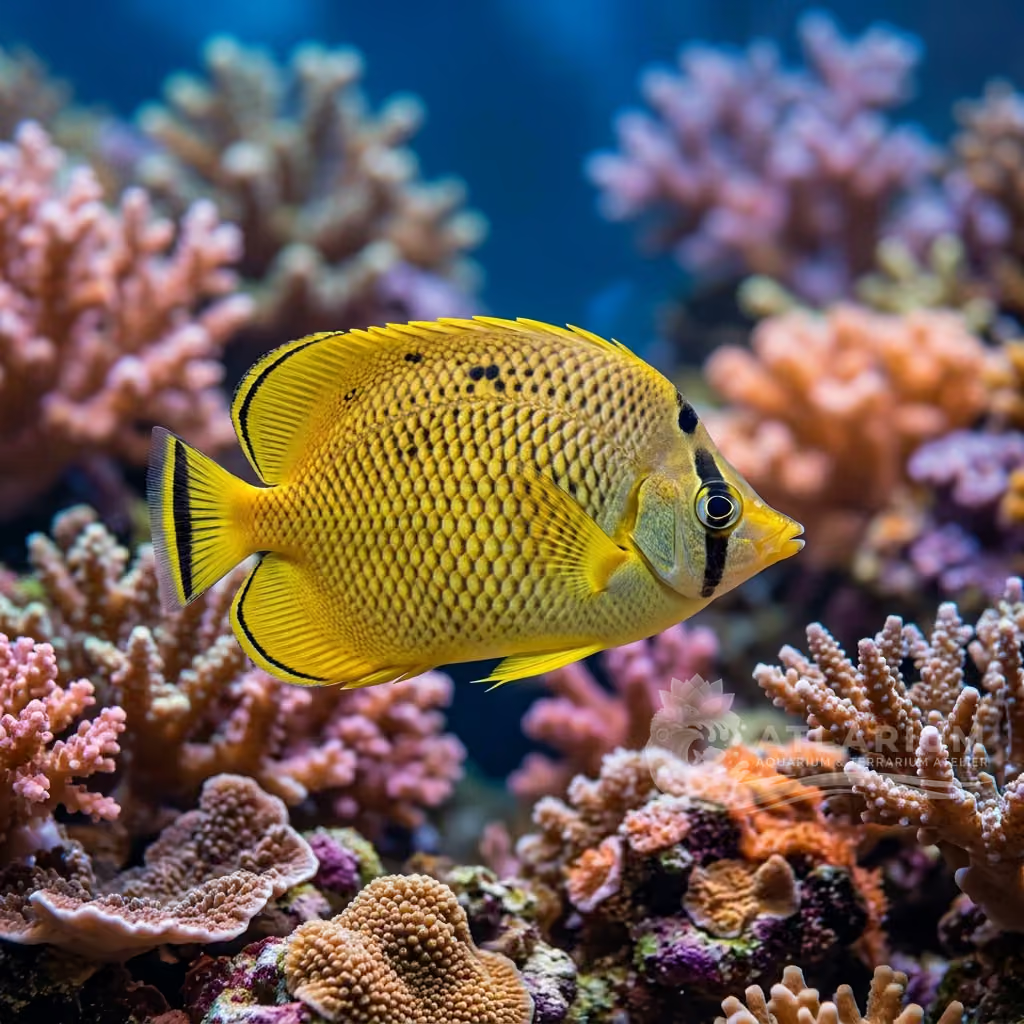
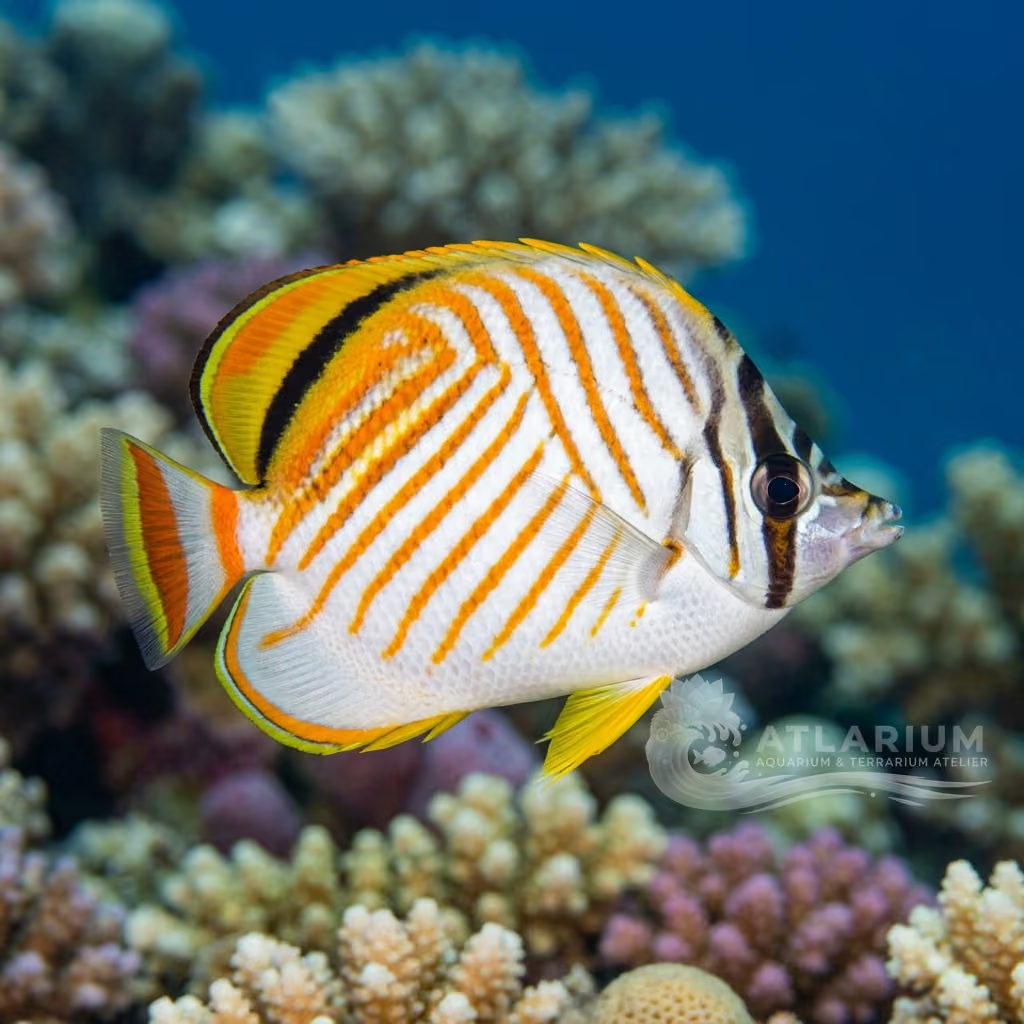
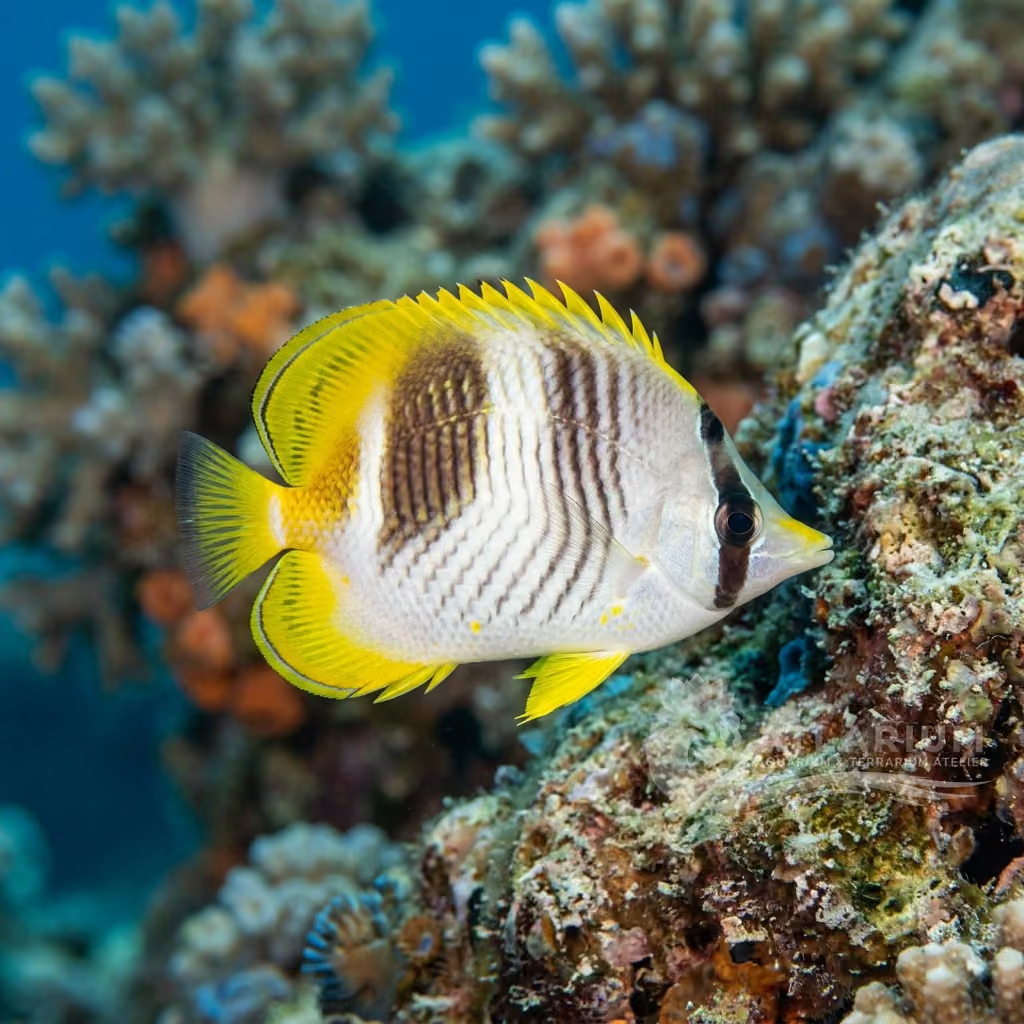
Coloration and Sexual Dimorphism: The color pattern is elegant, consisting of a silvery-white body marked by numerous dark parallel chevron-shaped (arrow-like) lines pointing forward on its sides. A distinct black vertical bar runs through the eye from the nape to the throat. The tail fin is dark with a yellow border. There is no visible external sexual dimorphism; males and females look identical in coloration and size.

Care, breeding and tankmates
Aquarium Setup: Requires a well-established marine aquarium of at least 300 liters. The tank must be populated with a high density of live stony corals, particularly Acropora, to allow the fish to display its natural foraging behavior. Rocky caves and crevices must be provided for nighttime shelter, along with open swimming areas.
Diet and Feeding: It is an obligate corallivore, feeding almost exclusively on the polyps and mucus of Acropora corals. Consequently, keeping this species in captivity is extremely difficult, as they generally refuse prepared frozen or dry foods. Success requires a constant, expensive supply of live Acropora coral colonies for the fish to feed on, otherwise it will starve.
Water Quality: Demands pristine and stable water parameters typical of a mature reef: temperature between 24°C and 26°C, pH between 8.1 and 8.4, and specific gravity (salinity) between 1.021 and 1.025. Ammonia and nitrite must be zero, and nitrates and phosphates must be kept as low as possible. Strong water movement and a high-capacity protein skimmer are required.
Compatibility and Cohabitation: Not reef-safe in the traditional sense, as it will destroy live Acropora corals. It can be housed with other peaceful reef fish of moderate size, such as clownfish, gobies, blennies, and tangs. Avoid keeping them with hyperactive or aggressive tankmates that could stress the butterflyfish and prevent it from feeding.
Aquarium Breeding: Breeding in a home aquarium is considered impossible and has never been documented. This species is a pelagic spawner, releasing buoyant eggs into the water column to be dispersed by ocean currents. The complex planktonic larval stages cannot survive in standard closed aquarium systems.
Risks and Diseases: An extremely delicate species that is highly prone to common marine external parasites like Cryptocaryon irritans (marine ich). Starvation due to refusal of non-coral foods is the leading cause of mortality in captivity. This species should only be kept by advanced aquarists who can commit to providing live coral feed.

Geographic origin and distribution
Chaetodon trifascialis, commonly known as the chevron butterflyfish or triangulate butterflyfish, is widely distributed in tropical waters across the Indo-Pacific. Its range extends from the Red Sea and East Africa eastward to the Hawaiian Islands and French Polynesia, north to southern Japan, and south to the Great Barrier Reef. It lives in shallow lagoons and seaward reefs at depths of 1 to 30 meters, highly associated with table corals of the genus Acropora.
Origin
Tropical oceans and reefsAfrica and MadagascarEast Asia

Fish profile
- Temperament
- Territorial
- The Chevron Butterflyfish is generally peaceful toward unrelated tankmates but shows strong territorial aggression toward members of its own species and other similar butterflyfish. They establish territories centered around tabular corals in the wild and will actively defend these zones. In the aquarium, this territorial behavior can lead to intense bullying if the tank is too small or lacks physical barriers. They are best kept singly or as a mated pair to avoid conspecific fighting.
- Diet
- Corallivore
- This species is an obligate corallivore, feeding almost exclusively on the polyps and mucus of Acropora corals in the wild. In captivity, they rarely accept prepared foods, and the vast majority will starve without a constant supply of live stony corals. Very experienced aquarists may try transitioning them using fresh mussels, clam on the half shell, or specialized paste foods pressed into coral skeletons, but success is highly uncommon. A continuous supply of live Acropora is the only reliable way to guarantee their nutritional needs are met.
- Life expectancy
- 5-10 years
- Adult size
- 18 cm
- Sex ratio
- 1:1 ratio
- In their natural habitat, Chevron Butterflyfish are commonly observed living singly or forming monogamous pairs. In the home aquarium, they should generally be kept individually unless a confirmed, compatible mated pair can be acquired. Because they are highly territorial and aggressive toward members of their own species, keeping multiples in a single tank is not recommended. If a pair is attempted, a very large aquarium with numerous hiding places is necessary to minimize territorial disputes.
- Feeding frequency
- Twice daily
- Because of their high metabolism and active foraging behavior, Chevron Butterflyfish need to feed continuously throughout the day. In a captive environment, they should ideally have access to live corals to graze on at will, or be fed specialized foods 3 to 5 times daily. If they can be trained to accept alternative diets, feeding small portions multiple times a day is crucial to maintain their body weight and health. Infrequent feeding will quickly lead to emaciation and decline in this delicate species.
- Bioload
- Medium to High
- The Chevron Butterflyfish has a medium bioload, but its high metabolic rate and delicate nature require a robust filtration system. Because they need high water quality and are often fed frequently with specialized foods or live corals, heavy protein skimming and efficient mechanical filtration are essential. Regular water changes and monitoring of nitrates and phosphates are critical to prevent waste buildup, which this sensitive species cannot tolerate. Aquarists must ensure a mature biological filter is established before introducing this fish.
- Flow
- Strong
- The Chevron Butterflyfish inhabits shallow, high-energy reef flats and seaward reefs where water flow is moderate to strong. In the aquarium, they thrive with good water movement that mimics these shallow surge zones, which also helps keep suspended debris to a minimum. A strong flow helps maintain high oxygen levels, which is vital for their respiratory health and overall well-being. However, there should also be some lower-flow areas or caves where they can rest without fighting constant currents.
- Jump risk
- Yes
- While not classified as chronic jumpers, Chevron Butterflyfish can easily jump out of the tank when startled, stressed, or during territorial chases. A tight-fitting lid or a secure mesh cover is highly recommended to prevent accidental escapes. Adequate cover and rockwork can help reduce stress, giving the fish safe retreats and minimizing the likelihood of panic-driven jumps. Keeping the aquarium lighting on a gradual dimming cycle can also prevent sudden frights that trigger jumping behavior.
- Reproduction
- Oviparous
- Reproduction in captivity is exceptionally difficult and has not been achieved successfully in home aquaria. In the wild, Chevron Butterflyfish are pelagic spawners that release their eggs and sperm into the water column during spawning events, often coordinated with lunar phases. The larvae float in the ocean currents for a prolonged period before settling onto the reef. Replicating these oceanic conditions and providing the necessary microscopic foods for the pelagic larvae remains a major hurdle for breeders.
- Compatibility & tankmates
- Aggressive
- Due to their obligate corallivore diet, Chevron Butterflyfish are completely incompatible with reef aquariums containing stony corals, as they will consume them. They are generally peaceful toward non-competitive, non-aggressive fish like clownfish, wrasses, and gobies. However, they should not be housed with other butterflyfish or conspecifics unless the aquarium is exceptionally large, as intense territorial disputes will occur. Aggressive tankmates should be avoided, as this sensitive species easily becomes stressed and stops feeding.
- Tank level
- All levels
- The Chevron Butterflyfish is a benthopelagic species that utilizes all levels of the aquarium, though it spends much of its time in the lower and middle zones. It remains closely associated with the live rock and reef structures, foraging constantly for food among coral branches. Ample open swimming space should be provided alongside dense structures that mimic their natural reef environment. They require a spacious tank to satisfy their active swimming habits across the water column.

Scientific Parameters & Models
FishBase
Window to the official scientific data of the species
FishBase v25.04Data synced on: 06/15/2026
- Trophic level
- 3.3 ± 0.6 se
- Resilience
- High (less than 15 months)
- Phylogenetic uniqueness (PD50)
- 0.5
- Bayesian Length-Weight
- a = 0.02138, b = 2.95
- VulnerabilityLow vulnerability (11 / 100)

Related species
Recommendations grouped by close relatives, companion choices, and similar care.