Smith's butterflyfish
Chaetodon smithi
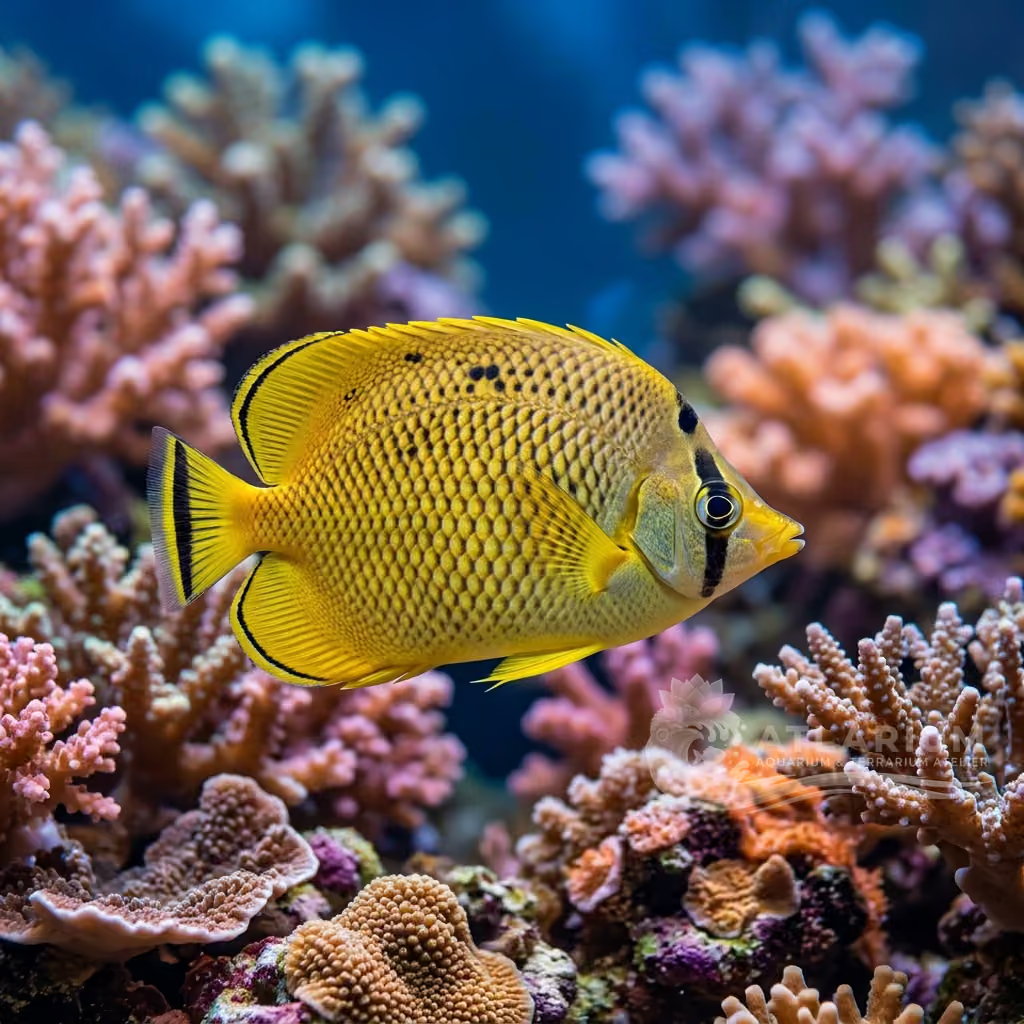
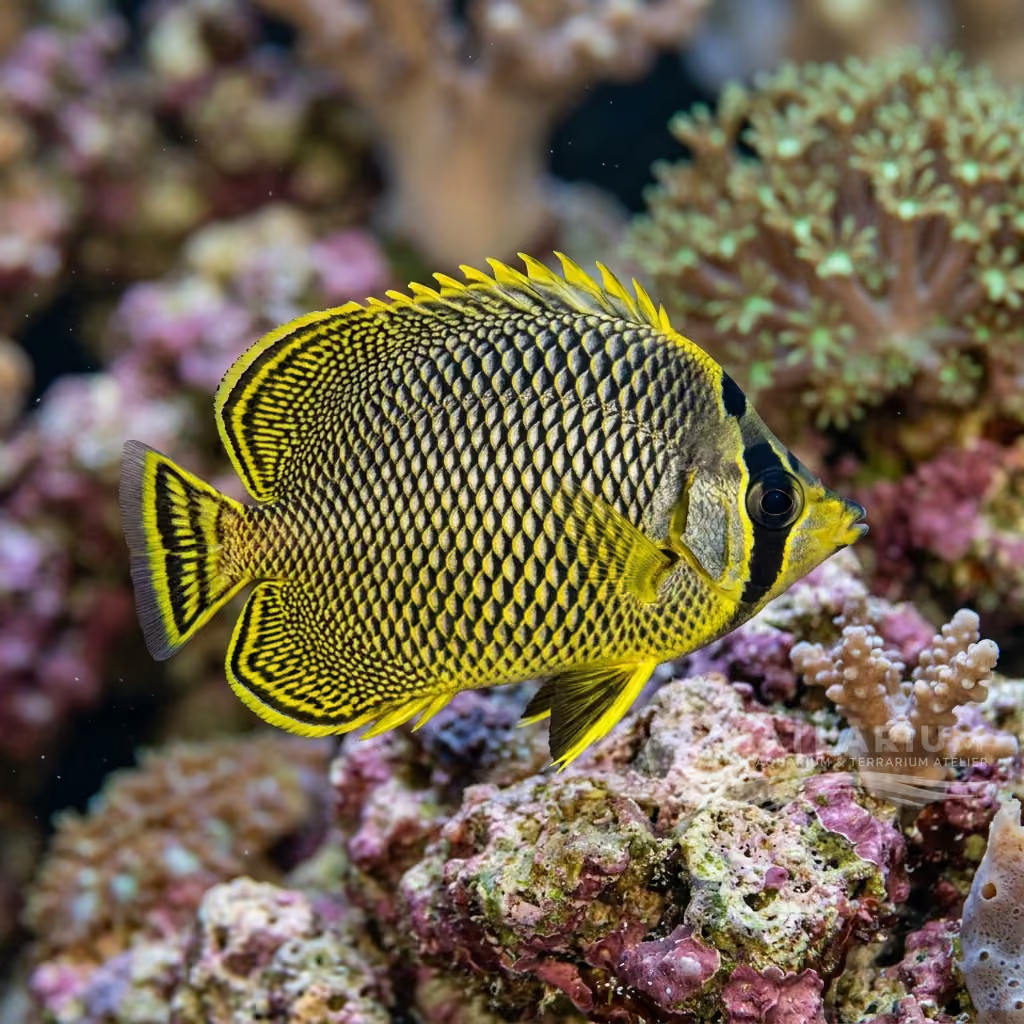
Smith's Butterflyfish is a striking bicolored marine species with a dark brown front and brilliant yellow rear. As an active open-water planktivore, it is relatively reef-safe for large tanks.
Water Temperature
20 - 25 °C
pH Value
8.1 - 8.4
Water type
Marine
Tank level
All levels
Adult size
17 cm
Minimum tank volume
>= 300 L
Minimum group
>= 1

Species description
Geographical Origin and Habitat: This species has a restricted geographical distribution and is endemic to the southeastern Pacific Ocean. The main populations are found around the Pitcairn Islands, Easter Island (Rapa Nui), and Rapa Iti in French Polynesia. It inhabits rocky reefs exposed to strong ocean currents, characterized by rich macroalgae growth and sparse coral cover, at depths between 10 and 30 meters, though it has been reported down to 80 meters.
Taxonomy and Morphology: Belonging to the family Chaetodontidae, genus Chaetodon, and subgenus Lepidochaetodon. Described in 1975 by American ichthyologist John Ernest Randall, the species was named in honor of C. Lavett Smith. It features a laterally compressed, oval body with a pointed mouth equipped with small brush-like teeth. Adults can reach a maximum length of about 18 cm.
Social Behavior: Unlike many butterflyfishes that feed on coral polyps, this species is an open-water planktivore. In the wild, it often gathers in large schools that swim in the mid-water or near the surface over rocky reefs to intercept zooplankton carried by ocean currents. It has a peaceful but active temperament and requires ample open space for swimming.
Coloration and Sexual Dimorphism: The coloration is striking and bicolored, divided vertically. The anterior half of the body, including the head and the first part of the dorsal fin, is dark brown to deep black, while the posterior half, along with the anal, caudal, and posterior dorsal fins, is a brilliant golden yellow. There is no visible sexual dimorphism.

Care, breeding and tankmates
Aquarium Setup: Requires an exceptionally large, mature marine aquarium of at least 500 liters (approx. 130 gallons) to accommodate a small group. The aquascape should feature large open areas for fast swimming, combined with a robust live rock structure at the back containing wide swim-throughs and caves for shelter when startled.
Diet and Feeding: Feeding is a critical aspect. As an active planktivore, it must be fed multiple times a day (at least three) with high-quality frozen foods such as mysis, brine shrimp, finely chopped krill, and calanus. It can be gradually transitioned to high-quality dry granulate or flake foods, but the dietary base must remain moist and varied.
Water Quality: Water quality must be kept at pristine levels, typical of outer reefs: temperature between 22°C and 25°C (71-77°F) (it prefers slightly cooler water than typical tropical fish), pH 8.1-8.4, and specific gravity 1.022-1.025. A powerful protein skimmer and circulation pumps providing strong, oxygen-rich currents are essential.
Compatibility and Cohabitation: It is a peaceful species that coexists well with surgeonfish, wrasses, damselfishes, and other non-aggressive reef fish. It can be kept in pairs or small groups if introduced simultaneously in a large tank. It is considered relatively reef-safe because it does not eat coral polyps, though it may occasionally nip at small bentic invertebrates.
Aquarium Breeding: Breeding in captivity has never been achieved in home aquaria. In the wild, they are pelagic spawners that form stable pairs during the breeding season; they release buoyant eggs into the water column, which drift with the currents until hatching. The larval development is long and complex, requiring specialized laboratory setups.
Risks and Diseases: The main risks are related to acclimation stress, during which the fish may refuse food. It is susceptible to common marine parasites like Cryptocaryon irritans and Amyloodinium ocellatum, especially if subjected to temperature fluctuations. A preventative quarantine in a quiet tank is highly recommended to encourage feeding without competition.

Geographic origin and distribution
This species has a restricted geographical distribution and is endemic to the southeastern Pacific Ocean. The main populations are found around the Pitcairn Islands, Easter Island (Rapa Nui), and Rapa Iti in French Polynesia. It inhabits rocky reefs exposed to strong ocean currents, characterized by rich macroalgae growth and sparse coral cover, at depths between 10 and 30 meters, though it has been reported down to 80 meters.
Origin
Tropical oceans and reefsNorth America

Fish profile
- Temperament
- Territorial
- Smith's Butterflyfish is a peaceful and active species that gets along well with most non-aggressive tank mates. They do not exhibit territorial aggression toward unrelated fish, but they can be aggressive toward conspecifics or similar butterflyfishes. They are energetic swimmers that spend most of the day exploring the open water column. Their docile nature makes them well-suited for a marine community aquarium.
- Diet
- Omnivore
- Smith's Butterflyfish is primarily a zooplankton feeder that eats mid-water organisms in the wild. In captivity, they must be transitioned to a variety of high-quality meaty foods, such as mysis shrimp, enriched brine shrimp, and finely chopped marine flesh. Since they do not feed on coral polyps like some other butterflyfish, they are generally safer for reef aquariums. Offering foods enriched with vitamins and occasional spirulina will support their immune system and coloration.
- Life expectancy
- 8-12 years
- Adult size
- 17 cm
- Sex ratio
- 1:1 ratio
- In their natural habitat, Smith's Butterflyfishes are mid-water plankton feeders that form large aggregations but pair off for breeding. In a home aquarium, it is recommended to keep them singly or as a verified male-female pair. Keeping multiple individuals in smaller tanks can lead to conspecific aggression, especially between fish of the same sex. A group or schooling setup is only feasible in extremely large systems where plenty of swimming space and territory exist.
- Feeding frequency
- Twice daily
- Because they are active mid-water foragers with fast metabolisms, they require multiple small feedings throughout the day. It is recommended to feed them two to three times daily in small portions that they can consume within a few minutes. Consistent feeding helps prevent muscle wasting and nutritional stress, which are common in newly imported specimens. Automatic feeders can be used to ensure they receive food regularly when the hobbyist is away.
- Bioload
- Medium
- Smith's Butterflyfish (Chaetodon smithi) has a moderate biological waste output due to its active swimming nature and the need for frequent, high-protein feedings. A high-quality filtration system, equipped with a powerful protein skimmer, is essential to manage this waste. Regular partial water changes and chemical media like activated carbon are recommended to keep nutrients low. A spacious aquarium of at least 100 gallons will help dilute biological waste and maintain stable parameters.
- Flow
- Strong
- Smith's Butterflyfish is accustomed to the moderate to strong currents of subtropical rocky reefs. In the aquarium, they benefit from moderate water flow, which encourages natural swimming behavior and helps keep food suspended in the water column. High-quality powerheads should be positioned to create a dynamic flow pattern without causing excessive turbulence. However, calmer areas within the rockwork must be provided so the fish can rest comfortably during the night.
- Jump risk
- No
- Reproduction
- Oviparous
- Smith's Butterflyfish is an oviparous pelagic spawner that releases eggs and sperm directly into the water column. In nature, they form monogamous pairs during the breeding season, and the eggs drift with the oceanic currents. Breeding this species in captivity is exceptionally difficult and has not been documented in private aquariums. The challenges of stimulating spawning, along with the complex task of raising microscopic pelagic larvae on specialized live foods, make it currently impractical.
- Compatibility & tankmates
- Peaceful
- This species is highly compatible with other peaceful to semi-aggressive marine fish, such as tangs, clownfishes, and gobies. As plankton feeders, they are generally reef-safe and unlikely to damage corals, though they may occasionally nip at sessile invertebrates if underfed. They should not be kept with highly aggressive or territorial tank mates that could bully them or prevent them from eating. Conspecifics should only be housed together in very large systems.
- Tank level
- All levels
- Unlike many benthic butterflyfish species, Smith's Butterflyfish (Chaetodon smithi) is a pelagic planktivore that prefers the middle and upper levels of the water column. They spend the majority of their time actively swimming and foraging in open water. Nonetheless, they still require rocky reef structures at the bottom of the tank for nocturnal shelter and security. A setup providing both a large open swimming area and lower rocky zones is ideal for their behavior.

Scientific Parameters & Models
FishBase
Window to the official scientific data of the species
FishBase v25.04Data synced on: 06/15/2026
- Trophic level
- 3.4 ± 0.45 se
- Resilience
- High (less than 15 months)
- Phylogenetic uniqueness (PD50)
- 0.5
- Bayesian Length-Weight
- a = 0.02291, b = 3
- VulnerabilityLow vulnerability (10 / 100)

Related species
Recommendations grouped by close relatives, companion choices, and similar care.