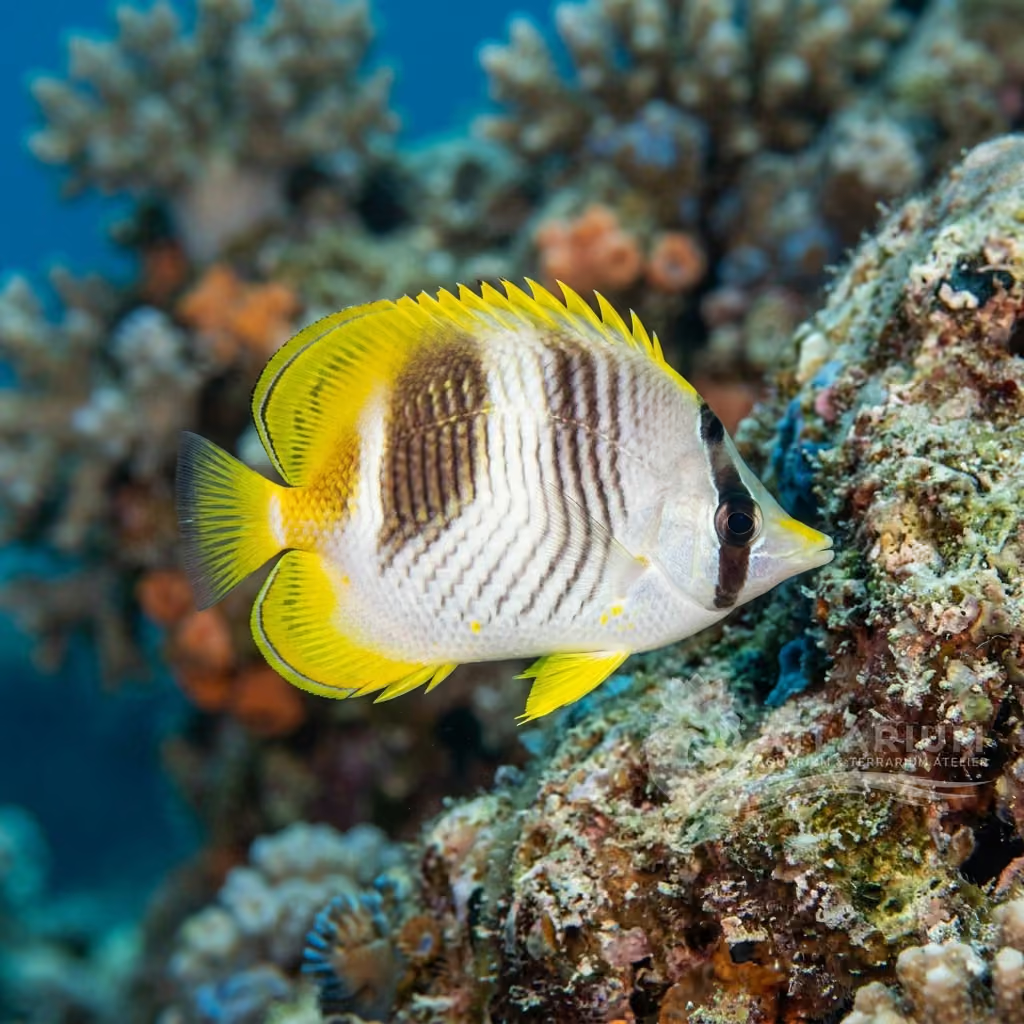
Banded Butterflyfish
Chaetodon striatus
The Banded Butterflyfish is a distinctive Atlantic species with four dark vertical bands on a white body. Demanding to keep, it requires excellent water quality.
Water Temperature
22 - 28 °C
pH Value
8.1 - 8.4
Water type
Marine
Tank level
Bottom and middle
Adult size
15 cm
Minimum tank volume
>= 300 L
Minimum group
>= 1
KH
8 - 12 dKH

Species description
Geographical Origin and Habitat: Widespread in the tropical and subtropical Western Atlantic, from Massachusetts (USA) and the southern Gulf of Mexico through the Caribbean Sea down to Santa Catarina in Brazil. Found on shallow coral reefs and rocky reefs at depths from 3 to 70 meters.
Taxonomy and Morphology: Member of the family Chaetodontidae. Features a highly compressed, disc-like oval body. Equipped with brush-like teeth suitable for plucking small prey. Reaches a maximum length of about 15 cm.
Social Behavior: Diurnal species. Mostly observed in stable monogamous pairs, though juveniles and occasionally adults can be seen singly or in small groups of up to 20 individuals while feeding.
Coloration and Sexual Dimorphism: Silvery-white body with four dark brown-to-black vertical bands: one through the eye, two on the sides, and a fourth on the caudal peduncle. No visible sexual dimorphism.

Care, breeding and tankmates
Aquarium Setup: Requires a spacious aquarium of at least 300 liters with plenty of open swimming space and live rock. Not suitable for traditional reef tanks as it will feed on coral polyps.
Diet and Feeding: Carnivore. Naturally feeds on polychaete worms, coral polyps, and mollusk eggs. In captivity, feed three times daily with mysis, brine shrimp, krill, and finely chopped clam.
Water Quality: Stable marine parameters with efficient protein skimming. Temperature 22–28°C, pH 8.1–8.4, salinity SG 1.020–1.025, GH 15–25, and KH 8–12. Keep nitrate and phosphate levels low.
Compatibility and Cohabitation: Peaceful with other fish families. May exhibit territorial behavior toward similar butterflyfishes. Not reef-safe: it will destroy tubeworms, feather dusters, and most corals.
Aquarium Breeding: Extremely difficult and undocumented in home aquariums. Broadcast spawners that release pelagic eggs in pairs.
Risks and Diseases: Difficult to transition to prepared aquarium foods. Highly susceptible to marine ich (Cryptocaryon) and other skin parasites under stress or poor water conditions.

Geographic origin and distribution
Widespread in the tropical and subtropical Western Atlantic, from Massachusetts (USA) and the southern Gulf of Mexico through the Caribbean Sea down to Santa Catarina in Brazil. Found on shallow coral reefs and rocky reefs at depths from 3 to 70 meters.
Origin
Tropical oceans and reefsExtra-Amazon South AmericaCentral America and CaribbeanNorth America

Fish profile
- Temperament
- Semi-aggressive
- The banded butterflyfish is generally a peaceful and active species that does well in a community aquarium. However, it can show territorial behavior and aggression toward members of its own species or closely related butterflyfish. They are diurnal, spending their daytime hours actively exploring the tank and grazing, while seeking shelter in the rockwork at night. They are non-aggressive toward unrelated fish, making them excellent candidates for peaceful marine community tanks.
- Diet
- Carnivore
- In their natural habitat, these fish are specialized carnivores that feed on polychaete worms, coral polyps, small crustaceans, and mollusk eggs. In captivity, they can be difficult to acclimate to prepared foods and initially require live or high-quality frozen foods like mysis shrimp, brine shrimp, and chopped seafood. Offering foods bound to coral skeletons or rocks can help stimulate their natural grazing behavior. A varied diet that includes vitamin-enriched foods and marine algae is crucial to prevent nutritional diseases.
- Life expectancy
- 5-10 years
- Adult size
- 15 cm
- Sex ratio
- 1:1 ratio
- In the wild, this species is strictly monogamous and forms long-lasting pairs that defend their territories together. In an aquarium, they are best kept as a single specimen or as a verified male-female mated pair to avoid conspecific aggression. Attempting to keep multiple individuals or groups in a standard-sized tank without sufficient space will likely result in territorial disputes. If a bonded pair is acquired, they should be introduced to the tank simultaneously.
- Feeding frequency
- Twice daily
- Due to their high activity levels and small digestive tracts, banded butterflyfish require frequent feeding throughout the day. It is recommended to feed them at least three to four times daily in small portions to ensure they receive adequate nutrition. Newly introduced specimens may need even more frequent feedings with live food to encourage a feeding response. Using automated feeders or target-feeding can help ensure they are fed consistently without polluting the aquarium water.
- Bioload
- Medium
- The banded butterflyfish produces a moderate biological load due to its constant grazing and frequent feeding requirements. To maintain the pristine water quality these sensitive marine fish need, a robust filtration system, including an efficient protein skimmer, is essential. Regular water changes and monitoring of nitrogenous waste are critical to prevent stress and disease. The aquarium should also feature active chemical and biological filtration to handle the waste from multiple daily feedings.
- Flow
- Strong
- This species is accustomed to the dynamic water movement of tropical coral reefs and prefers moderate water flow in the aquarium. The current should be strong enough to mimic their natural habitat and promote oxygenation but not so intense that the fish struggles to swim or feed. Creating zones of varying flow, including calmer areas near rock caves where they can rest, is highly beneficial. Good water circulation also helps prevent detritus from settling, maintaining the clean environment they require.
- Jump risk
- Yes
- While not notorious jumpers compared to some reef species, the banded butterflyfish can easily leap from the water when startled, stressed, or chased by tankmates. A secure, tight-fitting lid or a mesh screen is highly recommended to prevent accidental jumps. Stress during the acclimation phase or sudden lighting changes can trigger escape jumps, so providing dimming lights can reduce this risk. Ensuring plenty of hiding spaces in the rockwork also helps the fish feel secure and reduces the urge to jump.
- Reproduction
- Oviparous
- The banded butterflyfish is a pelagic spawner, releasing eggs and sperm into the water column where fertilization occurs at dusk. Due to their complex courtship rituals, pelagic larval stage, and specific environmental triggers, reproduction in home aquariums is extremely difficult and has not been reliably achieved. In the wild, they form stable, monogamous breeding pairs that spawn repeatedly during the breeding season. Breeding these fish in captivity remains a challenge left primarily to public aquariums and advanced research facilities.
- Compatibility & tankmates
- Not reef safe
- The banded butterflyfish is not reef-safe and will readily nip at or consume stony corals, soft corals, sea anemones, and ornamental invertebrates like feather dusters. They are highly compatible with other peaceful, non-coral-eating marine species, making them excellent additions to a Fish-Only-With-Live-Rock (FOWLR) aquarium. Suitable tankmates include peaceful wrasses, anthias, cardinalfish, and larger, non-aggressive species. They should not be housed with aggressive tankmates like triggerfish or large dottybacks, which may stress or bully them.
- Tank level
- Middle/Bottom
- Chaetodon striatus primarily occupies the lower and middle regions of the water column, where it searches for food along the substrate. It is closely associated with coral reefs, rocky outcrops, and rubble zones, rarely venturing to the surface unless feeding on plankton. Providing plenty of live rock structure with caves and swim-throughs will encourage natural swimming behavior in these zones. A spacious aquarium with open swimming areas in the middle and bottom layers is ideal for their active lifestyle.

Scientific Parameters & Models
FishBase
Window to the official scientific data of the species
FishBase v25.04Data synced on: 06/15/2026
- Trophic level
- 3.5 ± 0.2 se
- Resilience
- High (less than 15 months)
- Phylogenetic uniqueness (PD50)
- 0.5
- Bayesian Length-Weight
- a = 0.02239, b = 3.02
- VulnerabilityLow vulnerability (10 / 100)

Related species
Recommendations grouped by close relatives, companion choices, and similar care.