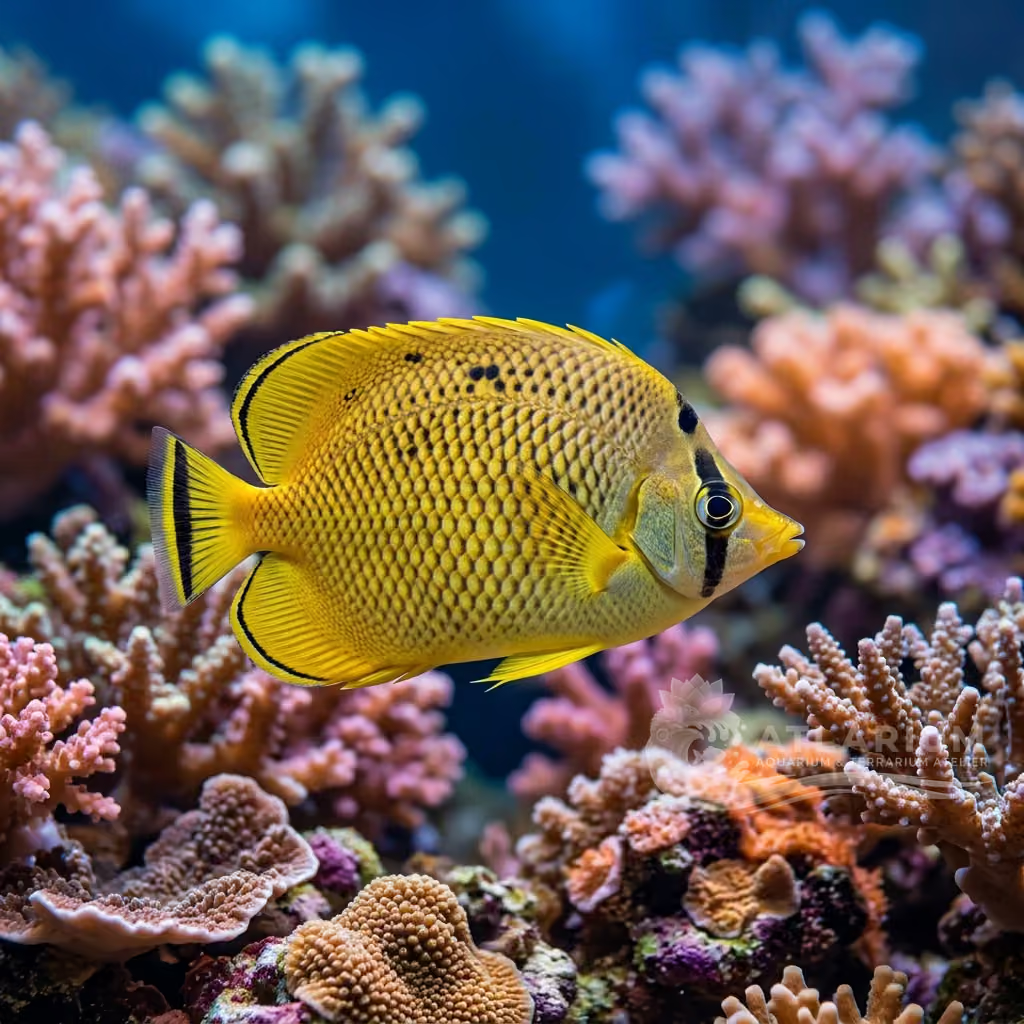
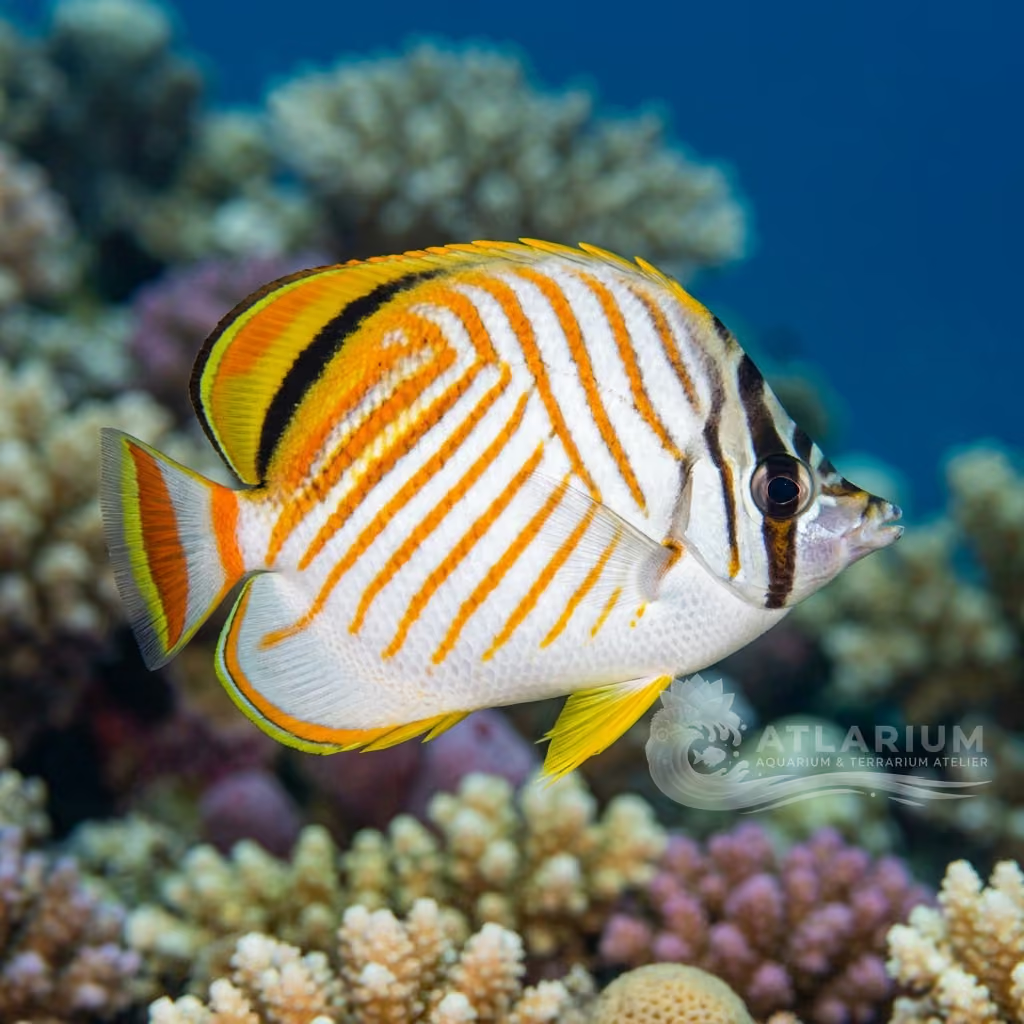
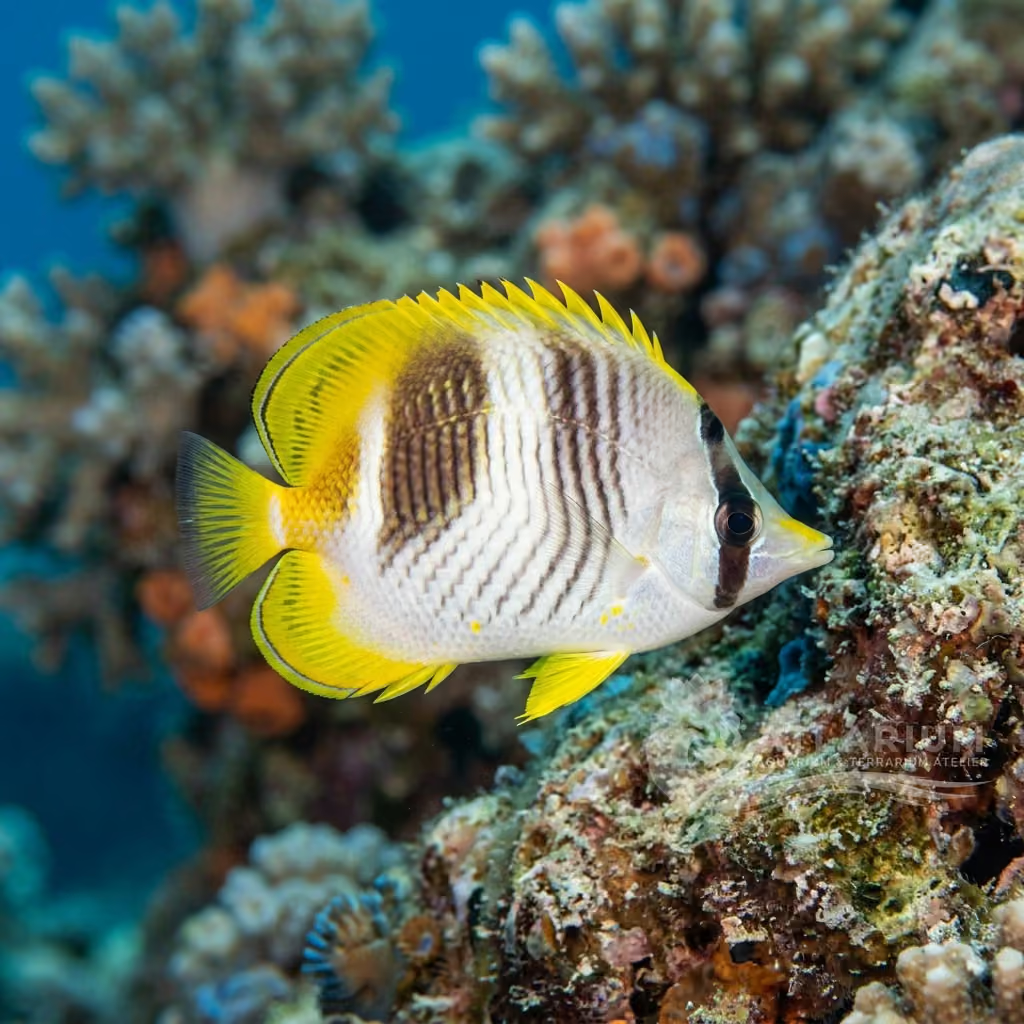
Collared butterflyfish
Chaetodon collare
The Collared Butterflyfish is an exquisite but delicate species with a reticulated dark body and white collar. It requires pristine water and specialized diets.
Water Temperature
24 - 27 °C
pH Value
8.1 - 8.4
Water type
Marine
Tank level
Surface and middle
Adult size
18 cm
Minimum tank volume
>= 350 L
Minimum group
>= 1
KH
8 - 12 dKH

Species description
Geographical Origin and Habitat: The Collared butterflyfish is distributed in the tropical waters of the Western Indo-Pacific. Its range extends from the Persian Gulf and the northwestern Indian Ocean (including the Maldives) to the Philippines and southern Japan. It inhabits shallow coral reefs and rocky reefs, typically at depths of 3 to 15 meters.
Taxonomy and Morphology: Belonging to the family Chaetodontidae, Chaetodon collare exhibits a deeply compressed, disc-like body shape with a short snout and terminal mouth. In the wild, adults can grow up to 18 centimeters in length. The skeletal and fin structure is optimized for precise maneuvering within complex coral reefs.
Social Behavior: This species is gregarious, often found in large schools or stable monogamous pairs in its natural environment. In an aquarium, it is generally peaceful toward unrelated species but can display territorial behavior and aggression toward other butterflyfishes or its own species in confined spaces.
Coloration and Sexual Dimorphism: The color pattern is striking, featuring a dark reddish-brown body with pale centers on the scales, creating a reticulated appearance. A prominent white vertical band runs behind the eyes, resembling a collar, and the tail fin has a bright red center. There is no visible sexual dimorphism.

Care, breeding and tankmates
Aquarium Setup: Requires a large, mature aquarium of at least 400 liters. The aquascape should incorporate plenty of premium live rock arranged to create deep caves and hiding places to help the fish feel secure and lower stress. Provide a wide, unobstructed area in the middle of the tank for active swimming.
Diet and Feeding: A facultative corallivore and microphage, making it challenging to feed in captivity. Initially, offer live foods like brine shrimp or fresh clams on the half-shell to stimulate feeding behavior. Once acclimated, transition to frozen mysis, enriched brine shrimp, and high-quality prepared foods.
Water Quality: Demands pristine water quality with highly stable parameters. Water temperature must be maintained between 24°C and 28°C, pH between 8.1 and 8.4, and specific gravity between 1.021 and 1.025. Nitrates must be kept near zero, necessitating a heavy protein skimmer and frequent water changes.
Compatibility and Cohabitation: Not reef-safe. This species will feed on stony coral polyps, soft corals, and sea anemones. It is best suited for a fish-only-with-live-rock (FOWLR) tank. Compatible with other peaceful, active marine fish such as tangs, large wrasses, and non-aggressive angelfishes.
Aquarium Breeding: Breeding has not been successfully achieved in home aquaria. In nature, they release pelagic eggs that float in the water column. The larval stage is highly complex and fragile, requiring specialized laboratory facilities and microscopic live prey to survive.
Risks and Diseases: Quite delicate and highly susceptible to marine external parasites such as Cryptocaryon irritans and Amyloodinium. Stress from poor shipping, aggressive tankmates, or shifting water values can cause them to refuse food, leading to rapid starvation. A strict quarantine period is mandatory.

Geographic origin and distribution
The Collared butterflyfish is distributed in the tropical waters of the Western Indo-Pacific. Its range extends from the Persian Gulf and the northwestern Indian Ocean (including the Maldives) to the Philippines and southern Japan. It inhabits shallow coral reefs and rocky reefs, typically at depths of 3 to 15 meters.
Origin
Tropical oceans and reefsEurope, Mediterranean, and West AsiaSouth and Southeast AsiaEast Asia

Fish profile
- Temperament
- Territorial
- This species is generally peaceful and non-aggressive towards other fish families. However, they can show territorial behavior towards conspecifics or similar-looking butterflyfish if space is limited. They are somewhat shy and sensitive, meaning they can easily be intimidated by larger, highly aggressive tankmates.
- Diet
- Carnivore
- In the wild, Chaetodon collare is a corallivore, feeding primarily on coral polyps and soft invertebrates. In an aquarium, they can be difficult to acclimate to prepared foods and must be weaned onto frozen fare. A varied diet of mysis shrimp, vitamin-enriched brine shrimp, chopped clams, and algae sheets is necessary to sustain their health.
- Life expectancy
- 5-10 years
- Adult size
- 18 cm
- Sex ratio
- 1:1 ratio
- In their natural habitat, these fish form monogamous pairs and are usually observed swimming together. In a home aquarium, they are best kept singly or as a verified male-female pair. Introducing them simultaneously is crucial to prevent territorial aggression. If the tank is not sufficiently large, keeping multiple individuals can lead to severe conspecific conflict.
- Feeding frequency
- Twice daily
- Due to their active swimming nature and specialized metabolism, they should be fed small portions 3 to 4 times daily. Frequent feeding helps simulate their natural grazing behavior and prevents nutritional decline. Newly introduced specimens may require live foods, such as live blackworms or clam on a half shell, to stimulate their feeding response.
- Bioload
- Medium to High
- Chaetodon collare is a relatively large butterflyfish that reaches up to 18 cm in length, resulting in a moderate-to-high biological footprint. Because they require frequent daily feedings of meaty foods, they produce a significant amount of waste. A highly efficient filtration system, including a powerful protein skimmer, is essential to maintain low nitrate and phosphate levels. Regular water changes and a well-established nitrogen cycle are critical to ensure their long-term health.
- Flow
- Strong
- This species inhabits shallow reefs and reef slopes, meaning they prefer moderate to strong water flow. A dynamic current helps oxygenate the water and mimics their natural wave-swept habitat. However, areas of lower flow should also be provided to allow the fish to rest comfortably during the night.
- Jump risk
- Yes
- While they are not notorious jumpers compared to wrasses or firefish, they can easily leap out of the water if startled. Sudden changes in lighting, aggressive tankmates, or maintenance activities can cause them to panic and jump. A tight-fitting lid or a secure mesh cover is highly recommended to prevent accidental escapes.
- Reproduction
- Oviparous
- Chaetodon collare is an oviparous species that practices external fertilization in open water. Breeding in captivity is extremely difficult and has not been reliably achieved in home aquariums. The complex pelagic larval stage and the specific dietary needs of the fry make captive propagation a significant challenge for researchers.
- Compatibility & tankmates
- Not reef safe
- They are generally compatible with peaceful or semi-aggressive fish like gobies, tangs, and clownfish. However, they are absolutely not reef-safe and will readily consume stony corals, soft corals, and small sessile invertebrates. Avoid housing them with aggressive predators or highly boisterous species that could cause chronic stress.
- Tank level
- Top/Middle
- The Redtail Butterflyfish is an active, open-water swimmer that primarily occupies the middle and upper levels of the water column. However, they will frequently venture to the lower levels to graze on live rock surfaces in search of food. Providing ample open swimming space in the middle-top zones alongside rocky arches is ideal for their natural behavior.

Scientific Parameters & Models
FishBase
Window to the official scientific data of the species
FishBase v25.04Data synced on: 06/15/2026
- Trophic level
- 3.8 ± 0.43 se
- Resilience
- High (less than 15 months)
- Phylogenetic uniqueness (PD50)
- 0.5
- Bayesian Length-Weight
- a = 0.02291, b = 3
- VulnerabilityLow vulnerability (10 / 100)

Related species
Recommendations grouped by close relatives, companion choices, and similar care.