Spotfin Butterflyfish
Chaetodon ocellatus
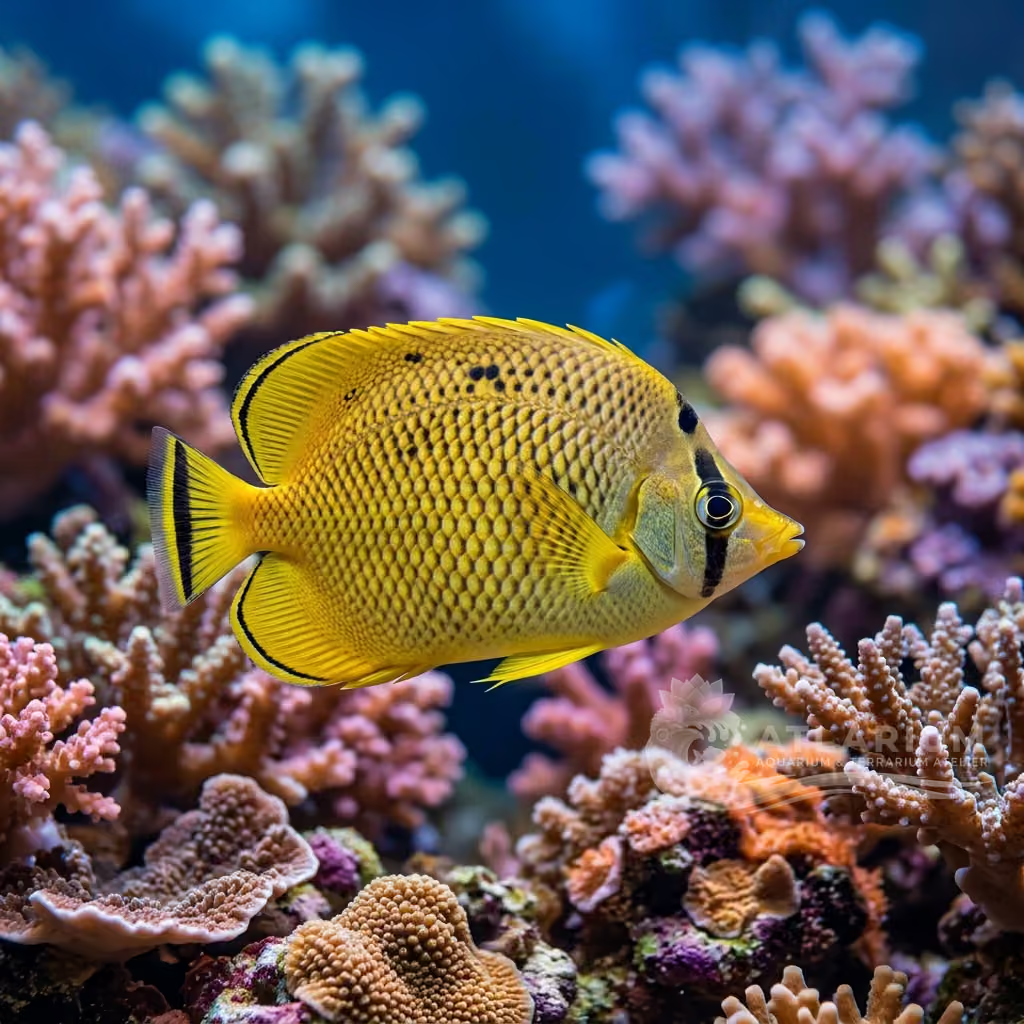
The Spotfin Butterflyfish from the Western Atlantic showcases bright yellow fins and a prominent black eyespot, requiring a spacious FOWLR setup to thrive safely.
Water Temperature
22 - 28 °C
pH Value
8.1 - 8.4
Water type
Marine
Tank level
Bottom and middle
Adult size
20 cm
Minimum tank volume
>= 350 L
Minimum group
>= 1
KH
8 - 12 dKH

Species description
Geographical Origin and Habitat: Widespread in the Western Atlantic, from North Carolina and the Gulf of Mexico through the Caribbean to Brazil. Juveniles drift north to Massachusetts via the Gulf Stream. Inhabits coral reefs and sandy lagoon fringes down to 30 meters.
Taxonomy and Morphology: Member of the family Chaetodontidae. Features a highly compressed, disc-like white body. Reaches up to 20 cm in length. Equipped with a small mouth and fine teeth suited for picking at tiny invertebrates.
Social Behavior: Diurnal and active, usually found in stable pairs. Peaceful toward tankmates from other families, but shows territorial aggression toward conspecifics or similar-looking butterflyfishes.
Coloration and Sexual Dimorphism: Silvery-white body with bright yellow dorsal, anal, and caudal fins. A vertical black bar runs through the eye, and a distinct black spot (ocellus) sits on the rear dorsal fin. No sexual dimorphism is present.

Care, breeding and tankmates
Aquarium Setup: Requires a large tank of at least 350 liters with abundant live rock arranged to form caves and grazing structures. A secure lid is needed as they may jump if startled.
Diet and Feeding: Carnivore. Feeds on coral polyps, anemones, polychaetes, and small crustaceans. In captivity, feed 2–3 times daily with frozen mysis, brine shrimp, krill, and chopped seafood. Hesitant to accept dry food initially.
Water Quality: Stable marine chemistry is essential. Temperature 22–28°C, pH 8.1–8.4, salinity SG 1.020–1.025, GH 15–25, and KH 8–12. High sensitivity to nitrate accumulation requires good filtration and skimming.
Compatibility and Cohabitation: Ideal for Fish-Only With Live Rock (FOWLR) systems. Not reef-safe under any circumstances, as it will actively consume soft and stony corals, sea anemones, and feather dusters.
Aquarium Breeding: Undocumented in captivity. Broadcast spawners that release pelagic eggs into the water column during pairing behavior.
Risks and Diseases: Starvation can occur if it refuses to feed upon introduction. Highly prone to marine ich (Cryptocaryon) and skin parasites if stressed or kept in suboptimal water conditions.

Geographic origin and distribution
Widespread in the Western Atlantic, from North Carolina and the Gulf of Mexico through the Caribbean to Brazil. Juveniles drift north to Massachusetts via the Gulf Stream. Inhabits coral reefs and sandy lagoon fringes down to 30 meters.
Origin
Tropical oceans and reefsExtra-Amazon South AmericaCentral America and CaribbeanNorth AmericaEast Asia

Fish profile
- Temperament
- Semi-aggressive
- The Spotfin butterflyfish is generally peaceful toward most tankmates but can exhibit territorial behavior toward similar-looking species or other butterflyfishes. They are shy and nervous when first introduced, requiring quiet tankmates and plenty of hiding spots to feel secure. Avoid housing them with overly aggressive or fast-swimming species that might outcompete them for food.
- Diet
- Carnivore
- As carnivores and facultative corallivores, *Chaetodon ocellatus* feeds on a variety of invertebrates, including polychaete worms, small crustaceans, anemones, and coral polyps. In captivity, they can be difficult to transition to prepared foods and often require live foods like brine shrimp, mysis, or blackworms to start feeding. Once acclimated, they should be offered a varied diet of high-quality frozen marine foods, chopped seafood, and vitamin-enriched preparations.
- Life expectancy
- 5-10 years
- Adult size
- 20 cm
- Sex ratio
- 1:1 ratio
- In the aquarium, *Chaetodon ocellatus* is typically kept singly or in mated pairs. Housed together, individuals of the same sex or species can exhibit high levels of territorial aggression unless introduced as an established male-female pair. When keeping multiple individuals, a very large tank with numerous hiding spots is necessary to distribute aggression.
- Feeding frequency
- 2-3 times daily
- Due to their high metabolic rate and continuous foraging behavior, Spotfin butterflyfish should be fed at least two to three times a day. Offering smaller, frequent meals throughout the day helps replicate their natural grazing behavior on the reef and prevents malnutrition. Feeding them regularly also reduces the chance of them picking at coral polyps or other tank invertebrates.
- Bioload
- Medium to High
- Spotfin butterflyfish are active swimmers and relatively large marine fish, producing a moderate to high amount of waste. They require a robust filtration system, preferably with a high-quality protein skimmer, and regular water changes to maintain pristine water quality. An established aquarium with plenty of biological filtration is essential to handle their metabolic output.
- Flow
- Strong
- The Spotfin butterflyfish prefers moderate water flow, which mimics the gentle currents of their natural reef and coastal habitats. Very strong, laminar currents can stress the fish and make swimming difficult, while weak flow might not provide sufficient oxygenation or debris suspension. A combination of moderate, turbulent flow and calm areas where the fish can rest is ideal for their well-being.
- Jump risk
- Yes
- While the Spotfin butterflyfish is not classified as a notorious jumper, it can easily leap out of the tank when startled or chased by tankmates. A secure, tight-fitting lid or mesh cover is highly recommended to prevent accidental escapes. Providing plenty of rocky crevices and caves where the fish can quickly seek shelter will also reduce their stress and tendency to jump.
- Reproduction
- Oviparous
- Reproduction of *Chaetodon ocellatus* in captivity is extremely difficult and has rarely, if ever, been achieved by hobbyists. In nature, they are pelagic spawners, releasing eggs and sperm into the open water column, where the fertilized eggs drift with the currents as plankton. The complex larval stages, which include a specialized post-larval tholichthys stage unique to butterflyfishes, make rearing the fry in home aquariums virtually impossible with current technology.
- Compatibility & tankmates
- Not reef safe
- This species is compatible with other peaceful marine fish such as tangs, clownfish, gobies, and wrasses, but it should not be kept with aggressive tankmates that could intimidate it. Because they naturally feed on invertebrates, they are not considered reef-safe and will actively consume stony corals, soft corals, sea anemones, and feather dusters. They can be kept in a fish-only-with-live-rock (FOWLR) system, where their striking colors can be showcased without risking valuable corals.
- Tank level
- Middle/Bottom
- The Spotfin butterflyfish is a highly active species that utilizes the middle and lower levels of the water column. In their natural habitat, they are found hovering close to reef structures, sandy flats, and seagrass beds where they forage for food. In captivity, they will utilize all open swimming areas, but they prefer staying close to the safety of rockwork in the middle-bottom zones.

Scientific Parameters & Models
FishBase
Window to the official scientific data of the species
FishBase v25.04Data synced on: 06/15/2026
- Trophic level
- 3.7 ± 0.2 se
- Resilience
- High (less than 15 months)
- Phylogenetic uniqueness (PD50)
- 0.5
- Bayesian Length-Weight
- a = 0.0263, b = 3.02
- VulnerabilityLow vulnerability (10 / 100)

Related species
Recommendations grouped by close relatives, companion choices, and similar care.