Big Longnose Butterflyfish
Forcipiger longirostris
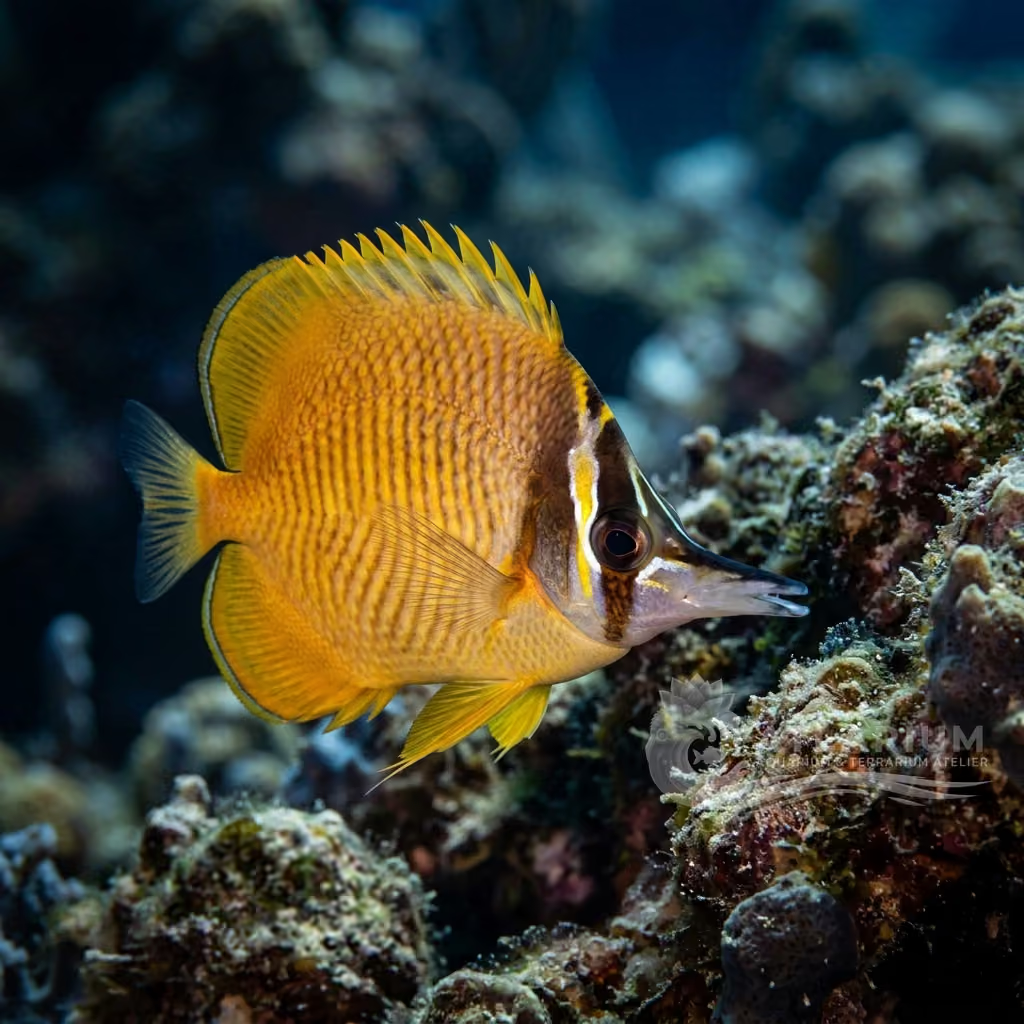
Boasting an incredibly extended, needle-like snout, this vibrant yellow butterflyfish meticulously hunts marine worms and small crustaceans in deep drop-offs. It is fragile and requires expert care.
Water Temperature
23 - 28 °C
pH Value
8.1 - 8.4
Water type
Marine
Tank level
All levels
Adult size
22 cm
Minimum tank volume
>= 400 L
Minimum group
>= 1
KH
8 - 12 dKH

Species description
Geographical Origin and Habitat: Widespread in the tropical Indo-Pacific, from East Africa and the Red Sea to Hawaii, the Marquesas, and Pitcairn Islands, north to southern Japan, and south to Australia and New Caledonia. Inhabits exposed seaward reefs and drop-offs rich in coral cover at depths down to 60+ meters.
Taxonomy and Morphology: Belonging to the family Chaetodontidae. Recognized by its extremely long, needle-like snout, small mouth, and compressed yellow body. It has 10–11 dorsal spines (fewer than F. flavissimus) and rows of tiny black spots on the chest. Grows to about 22 cm.
Social Behavior: Diurnal and generally solitary, though commonly seen in stable monogamous pairs. They defend feeding territories from competitors but remain peaceful toward unrelated fish species.
Coloration and Sexual Dimorphism: Features a brilliant lemon-yellow body, with the head divided horizontally: black on top and white below. A cluster of small black spots dots the breast. A rare all-black or brown melanistic morph also occurs. No sexual dimorphism is visible.

Care, breeding and tankmates
Aquarium Setup: Needs a mature and roomy aquarium of at least 400 liters with plenty of open swimming space and live rock for foraging. A secure tight-fitting lid is essential as they are known to jump when startled.
Diet and Feeding: Specialized carnivore. Uses its long snout to pluck small crustaceans, polychaete tentacles, and echinoderm tube feet. Feed 3–4 times daily with fine frozen foods like mysis, brine shrimp, lobster eggs, and chopped clam.
Water Quality: Demands stable marine parameters and high water quality. Temperature 23–28°C, pH 8.1–8.4, salinity SG 1.020–1.025, GH 15–25, and KH 8–12. Sensitive to high nitrate levels.
Compatibility and Cohabitation: Peaceful with most reef tankmates. Avoid housing with aggressive fish or hyperactive feeders that might starve it. Reef-safe with caution: it may nip at feather dusters, tubeworms, and some corals.
Aquarium Breeding: Not bred in captivity. In nature, they are broadcast spawners that form stable, monogamous pairs.
Risks and Diseases: Starvation is the primary risk if the fish refuses food or is outcompeted. Highly prone to Cryptocaryon and external parasites if stressed or kept in suboptimal water conditions.

Geographic origin and distribution
Widespread in the tropical Indo-Pacific, from East Africa and the Red Sea to Hawaii, the Marquesas, and Pitcairn Islands, north to southern Japan, and south to Australia and New Caledonia. Inhabits exposed seaward reefs and drop-offs rich in coral cover at depths down to 60+ meters.
Origin
Tropical oceans and reefsAfrica and MadagascarEast AsiaAustralia, New Guinea, and Oceania

Fish profile
- Temperament
- Semi-aggressive
- These butterflyfish have a peaceful and somewhat shy demeanor when first introduced. They can easily be intimidated by faster or more aggressive fish. Once properly acclimated, they display graceful swimming patterns and a curious nature.
- Diet
- Carnivore
- Their long snout is perfectly adapted for extracting small crustaceans and invertebrates from rock crevices. In captivity, they should be offered varied high-quality meaty foods like mysis shrimp and chopped seafood. Training them to accept frozen preparations may require patience and initial use of live foods.
- Life expectancy
- 7-10 years
- Adult size
- 22 cm
- Sex ratio
- Flexible
- There are no obvious external physical differences between males and females. They are almost always collected and sold as unsexed individuals in the hobby. If a pair is desired, introducing two individuals simultaneously and monitoring them closely is required.
- Feeding frequency
- 3-4 times daily
- Because of their high energy levels and small stomachs, they need frequent meals. It is recommended to feed them small portions at least three to four times a day. Providing abundant live rock encourages their natural, continuous grazing behavior between meals.
- Bioload
- Medium
- This species produces a moderate to high bioload due to its specialized diet. Powerful mechanical and biological filtration systems are necessary to process their waste. Frequent water changes help maintain the pristine conditions these marine fish demand.
- Flow
- Strong
- They prefer moderate to strong water flow that mimics natural ocean currents. Good water movement ensures proper oxygenation and helps transport waste to the filtration system. Be sure to provide some sheltered areas where they can rest from continuous strong currents.
- Jump risk
- Yes
- There is a moderate risk of jumping, especially when they are startled or chased. A secure, tight-fitting mesh lid is essential for their aquarium. Aquarists should be cautious during maintenance to avoid triggering their flight response.
- Reproduction
- Oviparous
- Breeding this species in a home aquarium is exceptionally rare and poorly documented. They are pelagic spawners that release their eggs directly into the ocean currents. Rearing the complex planktonic larvae requires specialized aquaculture facilities and microscopic food cultures.
- Compatibility & tankmates
- With caution
- They are generally peaceful but should not be housed with overly aggressive tank mates. Caution is advised in reef tanks as they may nip at certain soft corals or feather dusters. Keeping them as solitary individuals or a mated pair is usually the best approach.
- Tank level
- All levels
- They primarily occupy the middle and lower levels of the water column. You will often see them exploring the intricate structures of live rock. Open swimming spaces combined with deep crevices are ideal for their natural behavior.

Scientific Parameters & Models
FishBase
Window to the official scientific data of the species
FishBase v25.04Data synced on: 06/15/2026
- Trophic level
- 3.5 ± 0.5 se
- Resilience
- High (less than 15 months)
- Phylogenetic uniqueness (PD50)
- 0.625
- Bayesian Length-Weight
- a = 0.02291, b = 3.02
- VulnerabilityLow vulnerability (12 / 100)

Related species
Recommendations grouped by close relatives, companion choices, and similar care.