Pennant coralfish
Heniochus acuminatus
The Longfin Bannerfish is a striking Indo-Pacific species with elongated dorsal filaments. It needs a spacious marine aquarium with open swimming areas and is not fully reef-safe as it may nip corals.
Water Temperature
24 - 27 °C
pH Value
8.1 - 8.4
Water type
Marine
Tank level
Surface and middle
Adult size
25 cm
Minimum tank volume
>= 350 L
Minimum group
>= 1
KH
8 - 12 dKH

Species description
Geographical Origin and Habitat: Heniochus acuminatus is widely distributed throughout the tropical waters of the Indo-Pacific. It inhabits coastal areas from East Africa and the Red Sea to the Hawaiian Islands and French Polynesia, extending north to southern Japan and south to coastal Australia and New Caledonia. It primarily frequents seaward reef slopes, deep channels, and clear, coral-rich lagoons at depths between 2 and 75 meters. Juveniles are often found in sheltered pools or shallow reefs, while adults prefer deep reef walls where they swim in pairs or small schools.
Taxonomy and Morphology: It belongs to the class Actinopterygii, order Perciformes, family Chaetodontidae. It features a deep, discoid, and strongly compressed lateral body. Its most prominent morphological feature is the fourth dorsal spine, which is extraordinarily elongated to form a long, white, whip-like filament (pennant) that exceeds the body length. It reaches a maximum adult length of about 25 centimeters. The snout is moderately pointed with small brush-like teeth.
Social Behavior: It is an active, diurnal, and gregarious species. Unlike many territorial butterflyfish, it displays a strong schooling nature and forms large groups in the wild, especially in current-swept areas. In the aquarium, it should be kept in pairs or small schools (at least 3-4 specimens) if space permits. It has a peaceful temperament toward other tankmates and does not exhibit intraspecific aggression if introduced together.
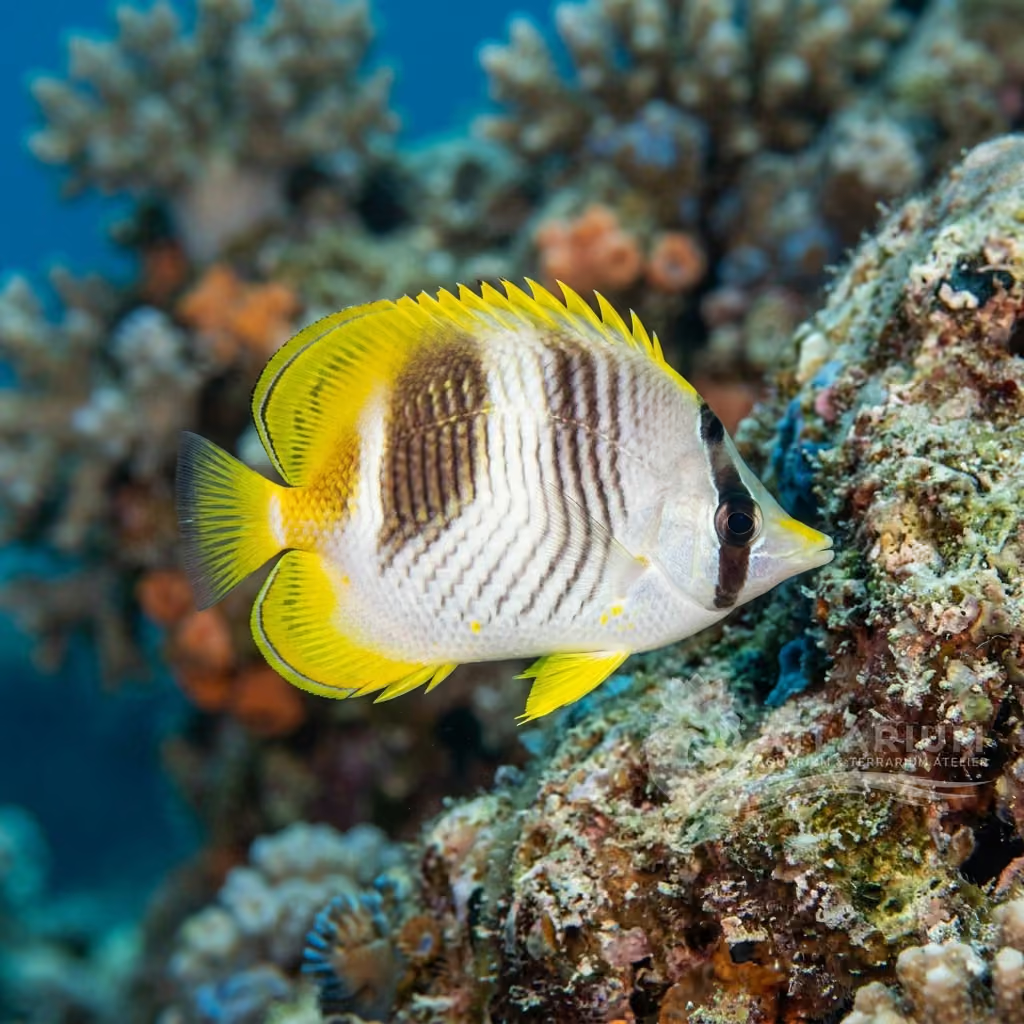
Coloration and Sexual Dimorphism: The coloration features a white base body crossed by two broad, diagonal black bands: the first runs from the start of the dorsal fin down to the pelvic fins, obscuring the eye, and the second crosses the rear part of the body down to the anal fin. The pectoral fins, tail fin, and the posterior part of the dorsal fin are bright yellow. The long dorsal filament is white. There is no visible external sexual dimorphism.

Care, breeding and tankmates
Aquarium Setup: It requires a very spacious marine aquarium with a minimum capacity of 300 liters, providing ample open swimming space and a solid structure of live rock along the sides for shelter. Although classified as a butterflyfish, it is not considered 100% reef-safe: juveniles tend to be safer with corals, whereas adults may nip at soft and hard coral polyps, as well as prey on feather dusters (polychaetes) and small benthic invertebrates. It is recommended for mixed marine aquariums with hardy corals or fish-only with live rock (FOWLR) setups.
Diet and Feeding: It is an omnivorous fish with a good appetite, much easier to feed than other butterflyfish. It readily accepts high-quality frozen foods such as mysis, brine shrimp, krill, chopped clams, and bloodworms. Its diet should also include plant-based foods such as spirulina flakes, herbivorous pellets, and dried nori seaweed attached to a veggie clip. A varied diet fed 2-3 times daily ensures healthy growth and keeps the yellow and black body colors vibrant.
Water Quality: It needs well-filtered, highly oxygenated water with moderate-to-strong current flows to encourage its active swimming. Optimal water parameters include a temperature range of 24°C to 28°C, a stable pH between 8.1 and 8.4, specific gravity between 1.021 and 1.025, and carbonate hardness between 8 and 12 dKH. Performing regular partial water changes (10-15% every two weeks) and having an efficient protein skimmer are important for keeping nitrates and phosphates in check.
Compatibility and Cohabitation: It is a peaceful inhabitant that coexists well with most marine reef fish such as surgeonfish, clownfish, damselfish, wrasses, and dwarf angelfish. Avoid housing it with markedly aggressive or nippy fish that might bite its long dorsal filament or intimidate it. If kept in a group, it is recommended to introduce all pennant coralfish at the same time to prevent hierarchy conflicts.
Aquarium Breeding: Breeding in home aquariums is extremely complex, and to date, no successful captive breeding has been recorded in the hobby or commercial sector. It is an oviparous, pelagic-spawning species: during mating, the pair releases floating eggs into the water column. The hatched larvae are planktonic and highly difficult to feed in closed aquariums due to their strict requirement for specific live zooplankton cultures.
Risks and Diseases: It is a relatively hardy fish once acclimated but is vulnerable to common marine skin parasites such as Marine Ich (Cryptocaryon) and Velvet (Oodinium), especially when stressed or subjected to poor water conditions. Quarantine is highly recommended. The long dorsal filament is delicate and can suffer mechanical damage or be nipped by unsuitable tankmates, but it has the capacity to regenerate quickly in clean water.

Geographic origin and distribution
Heniochus acuminatus is widely distributed throughout the tropical waters of the Indo-Pacific. It inhabits coastal areas from East Africa and the Red Sea to the Hawaiian Islands and French Polynesia, extending north to southern Japan and south to coastal Australia and New Caledonia. It primarily frequents seaward reef slopes, deep channels, and clear, coral-rich lagoons at depths between 2 and 75 meters. Juveniles are often found in sheltered pools or shallow reefs, while adults prefer deep reef walls where they swim in pairs or small schools.
Origin
Tropical oceans and reefsAfrica and MadagascarEast AsiaAustralia, New Guinea, and Oceania

Fish profile
- Temperament
- Territorial
- This is a graceful, peaceful fish that brings a serene presence to the aquarium. They are generally tolerant of other species but may occasionally bicker with conspecifics if the tank is too small. Once acclimated, they are bold, curious fish that will quickly learn to recognize their caretaker at feeding time.
- Diet
- Omnivore
- In their natural habitat, they feed on zooplankton and various benthic invertebrates. In the aquarium, they readily accept a mixed diet of high-quality marine flakes, pellets, and frozen foods like mysis shrimp, brine shrimp, and krill. Offering them small amounts of finely chopped seafood and algae sheets will ensure they receive balanced nutrition.
- Life expectancy
- 5-7 years
- Adult size
- 25 cm
- Sex ratio
- Solitary
- There are no visible external differences between the sexes, making them difficult to pair intentionally. They are often kept singly or in small groups if the aquarium is large enough. If a true pair naturally forms from a group, they will generally swim together peacefully and establish a harmonious bond.
- Feeding frequency
- Twice daily
- They are active foragers that do best when fed small amounts two to three times daily. Providing frequent, small meals closely mimics their natural eating habits on the reef and helps maintain their body weight. Consistent feeding schedules also reduce the likelihood of them picking at tank mates or corals out of hunger.
- Bioload
- High
- These butterflyfish produce a moderately high bioload and require excellent water conditions to thrive. A well-established marine aquarium with a robust protein skimmer and efficient biological filtration is crucial for their well-being. Regular water changes are necessary to keep nitrates very low and maintain optimal water clarity.
- Flow
- Strong
- They enjoy moderate to strong water flow, typical of the outer reef slopes and drop-offs they naturally inhabit. Good water movement provides them with the oxygen-rich environment they require and encourages active swimming behavior. Ensure that flow patterns are broad and varied rather than a single, harsh, unidirectional jet.
- Jump risk
- No
- Reproduction
- Oviparous
- Breeding the Pennant Coralfish in captivity is exceedingly difficult and rarely accomplished by hobbyists. They are pelagic spawners that release their eggs and sperm into the water column during complex courtship rituals. Rearing the delicate pelagic larvae requires highly specialized aquaculture facilities and microscopic live foods.
- Compatibility & tankmates
- Not reef safe
- They are generally peaceful and make great additions to large fish-only marine setups. They can be kept with a wide variety of similarly peaceful to semi-aggressive species, including tangs and wrasses. Caution is advised in reef tanks, as they have a tendency to pick at stony corals, feather dusters, and tridacnid clams.
- Tank level
- Top/Middle
- They are highly visible midwater swimmers that will utilize the entire open water column. Their tall dorsal filaments make them appear larger, requiring an aquarium with significant vertical height and ample swimming room. While they appreciate open space, they also need extensive rockwork with large caves to retreat into at night.

Scientific Parameters & Models
FishBase
Window to the official scientific data of the species
FishBase v25.04Data synced on: 06/15/2026
- Trophic level
- 3.8 ± 0.37 se
- Resilience
- High (less than 15 months)
- Phylogenetic uniqueness (PD50)
- 0.5039
- Bayesian Length-Weight
- a = 0.02291, b = 3.04
- VulnerabilityLow vulnerability (15 / 100)

Related species
Recommendations grouped by close relatives, companion choices, and similar care.