Yellowback anthias
Mirolabrichthys evansi
An extraordinarily colorful but extremely delicate marine reef fish from the Indian Ocean, known for its strictly zooplanktivorous diet.
Water Temperature
24 - 27 °C
pH Value
8.1 - 8.4
Water type
Marine
Tank level
Surface and middle
Adult size
12 cm
Minimum tank volume
>= 400 L
Minimum group
>= 5
KH
8 - 12 dKH

Species description
Geographical Origin and Habitat: Mirolabrichthys evansi is native to the tropical Indian Ocean, with a distribution range extending from the East African coast (including Mauritius and the Seychelles), through the Maldives and Chagos archipelagos, to the Cocos-Keeling Islands. It inhabits outer reef slopes and steep drop-offs exposed to strong currents, at depths between 4 and 30 meters. They aggregate in large schools hovering above hard branching Acropora corals, which provide immediate shelter.
Taxonomy and Morphology: It belongs to the family Serranidae and the subfamily Anthiadinae. It features a slender, streamlined, and elongated body with a large eye and protractile mouth. The caudal fin is deeply bifurcated (lyre-shaped) and features long filaments extending from the lobes in adult males. The fins are adapted for continuous swimming against strong currents. It reaches a maximum length of about 10-12 cm.
Social Behavior: It is a highly gregarious and social species characterized by a complex hierarchical structure within the shoal. Like all anthias, it is a protogynous hermaphrodite: individuals are born female and transition into dominant males based on social cues. In captivity, they must be kept in a small harem consisting of one male and several females. They spend the day actively swimming in the water column looking for food.
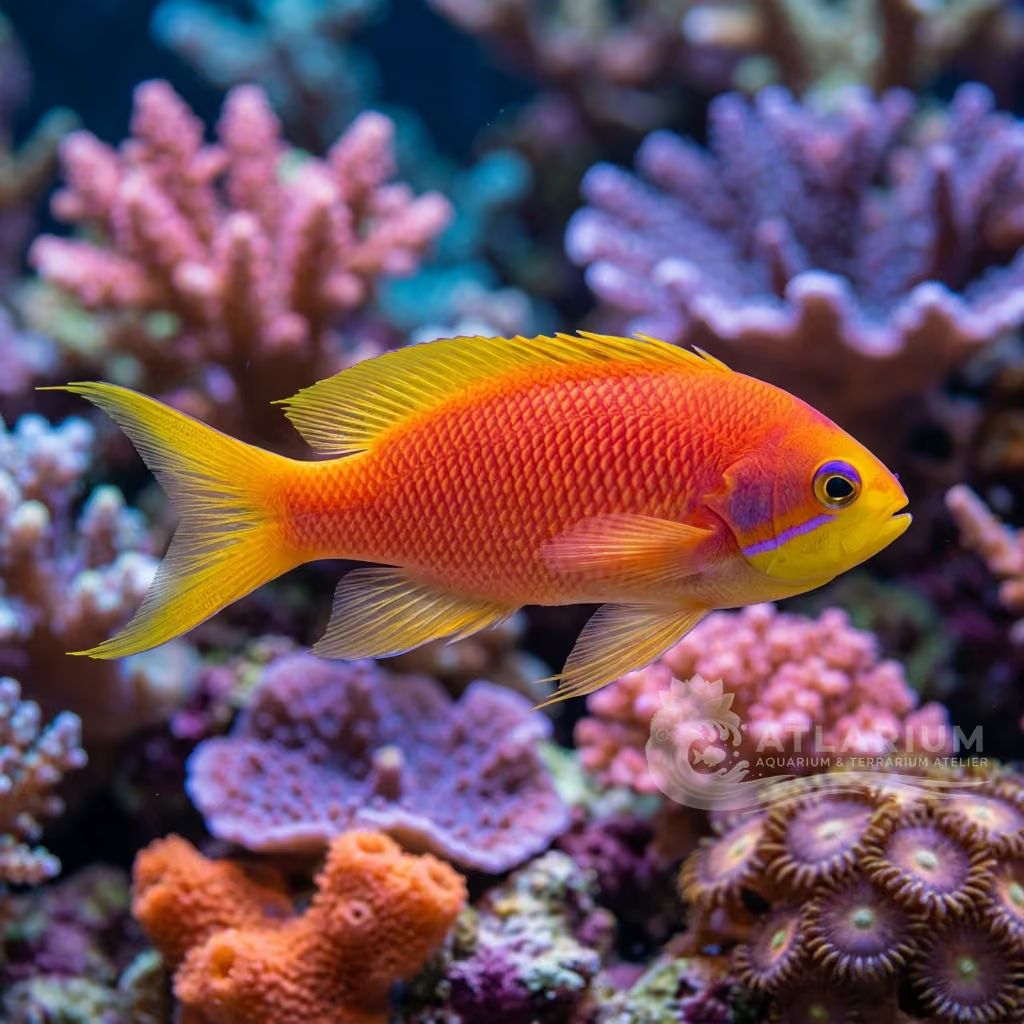
Coloration and Sexual Dimorphism: Its coloration is spectacular and unique: the body displays a bright pinkish-purple or magenta color on the flanks and belly, which transitions sharply to a bright golden yellow on the back, dorsal fin, and upper caudal lobe. Sexual dimorphism is distinct: males feature more intense coloration, longer caudal filaments, and a characteristic yellow or red stripe running from the eye to the pectoral fin base.

Care, breeding and tankmates
Aquarium Setup: Requires a mature and spacious marine aquarium of at least 250-300 liters to house a small group. The layout should feature a large open swimming area in the center, supported by a rockwork structure containing caves, overhangs, and shaded spots for shelter. Strong water movement created by wavemakers is essential to simulate the currents of their natural outer reef slope habitats.
Diet and Feeding: This is the most critical factor for their survival. Wrasses of this species are specialized zooplanktivores with a very high metabolic rate. In the aquarium, they must be fed frequently (at least 4-5 times a day) with small amounts of high-quality frozen foods like copepods, rotifers, baby brine shrimp, mysis, and lobster eggs. Inadequate feeding frequency leads to rapid weight loss and death.
Water Quality: Demands pristine and highly stable water parameters: temperature 22-26 °C, pH 8.1-8.4, specific gravity 1.020-1.025, and KH 8-12. An efficient filtration system with an oversized protein skimmer and regular water changes are necessary to keep nitrates and phosphates close to zero, while ensuring high dissolved oxygen saturation levels.
Compatibility and Cohabitation: It is 100% reef-safe and will not bother corals, clams, or invertebrates. It is a peaceful, easily stressed fish that must only be housed with docile reef species like gobies, clownfish, and small wrasses. Avoid keeping them with large, fast-moving, or aggressive tankmates that could intimidate them and prevent them from emerging from the rockwork to feed.
Aquarium Breeding: Breeding in home aquariums is extremely difficult, and no successful spawnings have been reported. In the wild, they are pelagic spawners, releasing eggs and sperm into the water column at dusk. Rearing the larvae requires specialized setups and a constant supply of specific live micro-plankton, which is difficult to cultivate.
Risks and Diseases: They have an extremely high mortality rate during the first few weeks due to shipping stress and starvation. They are highly susceptible to marine parasites like marine ich (Cryptocaryon) and velvet if stressed. A quarantine period is strongly recommended to monitor their health and acclimate them to frozen food before introducing them to the main reef tank.

Geographic origin and distribution
Mirolabrichthys evansi is native to the tropical Indian Ocean, with a distribution range extending from the East African coast (including Mauritius and the Seychelles), through the Maldives and Chagos archipelagos, to the Cocos-Keeling Islands. It inhabits outer reef slopes and steep drop-offs exposed to strong currents, at depths between 4 and 30 meters. They aggregate in large schools hovering above hard branching Acropora corals, which provide immediate shelter.
Origin
Tropical oceans and reefsAfrica and MadagascarSouth and Southeast Asia

Fish profile
- Temperament
- Peaceful
- The temperament of Mirolabrichthys evansi is generally peaceful towards completely unrelated fish, making them wonderful community residents. However, they establish a strict pecking order within their own group, which can involve some chasing and posturing. The dominant male will frequently display to the females to maintain his status and keep the harem in line. While usually harmless, this internal squabbling requires adequate space and hiding spots for subordinate individuals. They should not be housed with overly aggressive predators that might bully or consume them.
- Diet
- Planktivore
- In the wild, Mirolabrichthys evansi is a dedicated zooplanktivore that constantly picks tiny organisms from the water column. In the home aquarium, they require a varied diet consisting of high-quality frozen or live meaty foods. Suitable options include mysis shrimp, enriched brine shrimp, copepods, and finely chopped seafood. Getting them to accept dry prepared foods like high-quality flakes or small pellets can take time and patience. A diverse nutritional profile is crucial for maintaining their vibrant coloration and immune health.
- Life expectancy
- 5-7 years
- Adult size
- 12 cm
- Sex ratio
- Harem
- This species exhibits a fascinating social structure characterized by protogynous hermaphroditism, where all individuals are born female. A typical group consists of a single dominant male maintaining a harem of several females. If the dominant male is removed or dies, the largest and most dominant female will morph into a male to take his place. For the home aquarium, it is best to purchase a group of females and allow this natural transition to occur. Keeping multiple males usually results in fatal aggression unless the tank is massive.
- Feeding frequency
- 3-4 times daily
- Due to their incredibly active metabolism and natural grazing behavior, Mirolabrichthys evansi requires multiple feedings throughout the day. It is highly recommended to feed them small amounts at least three to four times daily. Infrequent, large feedings are poorly digested and can lead to malnutrition or starvation over time. Automated feeders can be very useful for dispensing small amounts of dry food while the aquarist is away. Consistent, frequent meals are the key to long-term success with this species.
- Bioload
- Medium
- Mirolabrichthys evansi contributes a moderate amount to the overall bioload of a marine aquarium system. Due to their highly active nature and constant swimming, they require frequent feedings which indirectly increases the organic waste produced. Excellent filtration and regular water changes are strongly recommended to process these nutrients. Maintaining a robust protein skimmer will help manage the dissolved organics effectively. Proper husbandry ensures that the bioload remains manageable over the long term.
- Flow
- Strong
- This species originates from dynamic reef environments where strong water movement is a constant factor. Mirolabrichthys evansi thrives in aquariums that provide moderate to strong, turbulent water flow across the aquascape. Brisk currents simulate their natural habitat and encourage their natural schooling and feeding behaviors in the water column. Powerheads or wavemakers should be positioned to create broad, sweeping flow patterns rather than harsh, direct streams. Adequate flow also keeps particulate food suspended longer, giving them more time to feed.
- Jump risk
- Yes
- Like many highly active reef fishes, Mirolabrichthys evansi presents a moderate to high risk of jumping out of an open aquarium. They are easily startled by sudden movements, lighting changes, or aggressive tank mates, which can trigger a flight response. It is strongly advised to keep a tight-fitting lid or a custom mesh screen over the tank at all times. Even small gaps around equipment and overflow boxes should be covered to prevent tragic accidents. Taking these precautions is a simple but vital part of their husbandry.
- Reproduction
- Oviparous
- Breeding Mirolabrichthys evansi in a home aquarium is exceptionally rare and presents significant challenges for even advanced hobbyists. They are pelagic spawners that release their eggs and sperm into the water column during synchronized mating rituals. The resulting larvae are microscopic and require highly specialized, perfectly sized live planktonic foods to survive. Furthermore, the larval stage is extremely long and sensitive to minute changes in water quality. Consequently, nearly all specimens available in the trade are wild-caught rather than captive-bred.
- Compatibility & tankmates
- Reef safe
- This species is generally considered completely reef safe and makes a stunning addition to mixed reef aquariums. Mirolabrichthys evansi will typically ignore corals, sessile invertebrates, and most motile invertebrates like ornamental shrimp. They are generally peaceful towards heterospecifics but can display significant aggression towards other Anthias species. It is usually best to keep them as the only Anthias species in the tank unless the aquarium is exceptionally large. Careful observation is needed when introducing new tank mates to ensure harmony.
- Tank level
- Top/Middle
- Throughout the day, Mirolabrichthys evansi will predominantly occupy the middle to upper levels of the water column. They are highly visible fish that love to hover above the reef structure, facing into the current to catch passing food. At night or when frightened, they will quickly dart into the rockwork to seek shelter in crevices and caves. Providing plenty of open swimming space alongside complex rock formations is essential for their comfort. Their active presence brings a wonderful sense of movement and life to the upper reef zones.

Scientific Parameters & Models
FishBase
Window to the official scientific data of the species
FishBase v25.04Data synced on: 06/15/2026
- Trophic level
- 3.4 ± 0.45 se
- Resilience
- High (less than 15 months)
- Phylogenetic uniqueness (PD50)
- 0.625
- Bayesian Length-Weight
- a = 0.01413, b = 3
- VulnerabilityLow vulnerability (10 / 100)

Related species
Recommendations grouped by close relatives, companion choices, and similar care.