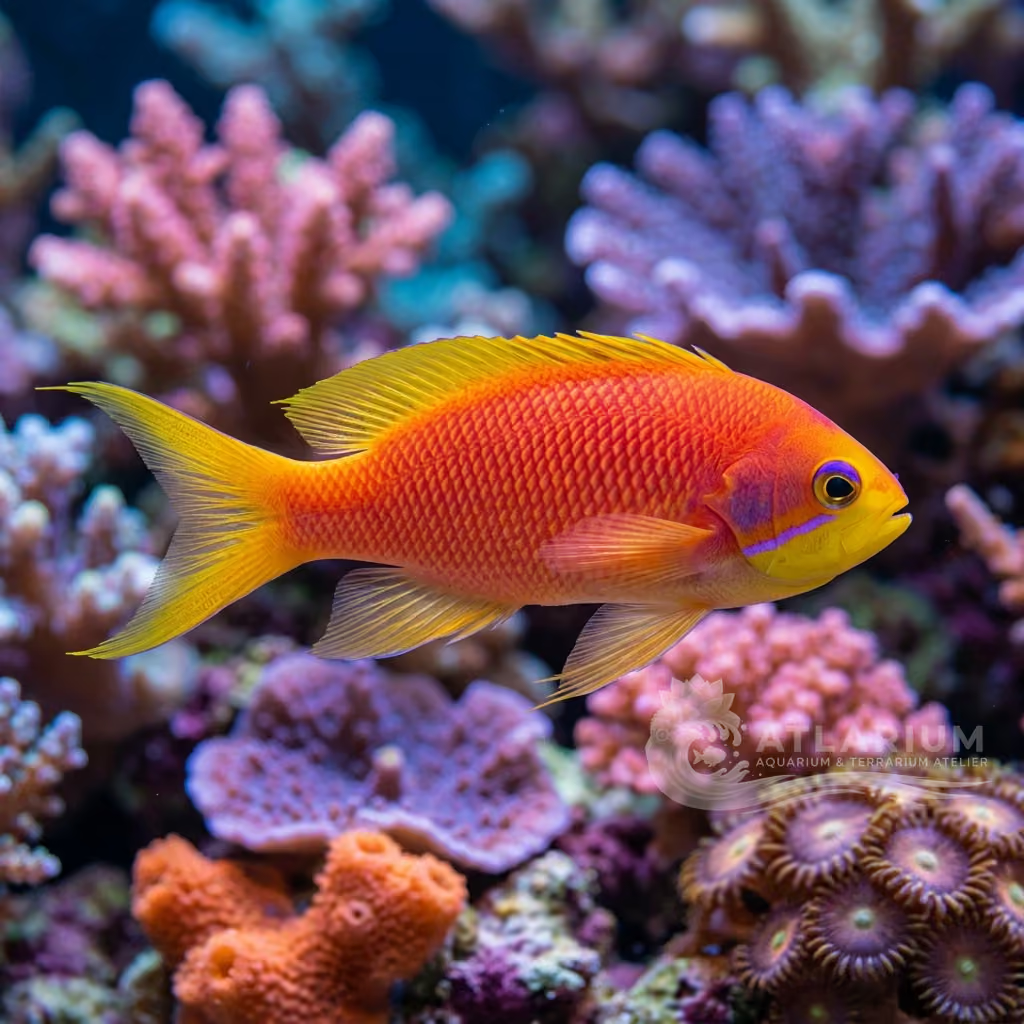
Magenta Slender Anthias
Luzonichthys waitei
A small, vibrant marine anthias from the Indo-Pacific. A tight schooling fish that thrives in high-flow reef setups and demands multiple daily feedings.
Water Temperature
22 - 28 °C
pH Value
8 - 8.5
Water type
Marine
Tank level
Surface and middle
Adult size
7 cm
Minimum tank volume
>= 250 L
Minimum group
>= 5
KH
8 - 12 dKH

Species description
Geographical Origin and Habitat: Widely distributed across the tropical Western Indo-Pacific, ranging from the Seychelles to the Philippines, Indonesia, the Great Barrier Reef, and the Solomon Islands. It inhabits outer reef slopes exposed to strong oceanic currents, at depths from 1 to 55 meters. They aggregate in massive schools above coral heads to feed on drifting zooplankton.
Taxonomy and Morphology: Belongs to the order Perciformes, family Anthiadidae (often classified under subfamily Anthiadinae within Serranidae), and genus Luzonichthys. Described by Fowler in 1931. It is distinguished from other anthias by its deeply divided dorsal fin and its exceptionally slender, streamlined body shape. Maximum length is 6-7 cm (2.4-2.8 inches).
Social Behavior: Highly gregarious and obligate schooling species. It must be kept in groups of at least 8-10 individuals to alleviate stress and promote natural schooling behaviors. Domination hierarchies are established by males but rarely result in physical damage. They are active swimmers, constantly occupying the open water column.
Coloration and Sexual Dimorphism: Displays a striking color palette with magenta-pink to bright purple on the dorsal surface, transitioning to orange or yellow along the flanks and a silver belly. The caudal fin is deeply forked. Dominant males are slightly larger and show more intense coloration and elongated fin rays compared to females.

Care, breeding and tankmates
Aquarium Setup: Demands a mature reef aquarium with a minimum volume of 300 liters (80 gallons) to accommodate a small school. The aquascaping must provide extensive open swimming space, combined with numerous rocky caves and overhangs for nighttime shelter. Install powerful powerheads to generate vigorous water flow.
Diet and Feeding: The primary challenge in keeping this species. Due to their high metabolic rate and small stomachs, they must be fed 3 to 5 times daily. Provide a variety of small frozen or live foods, including cyclops, copepods, enriched brine shrimp, mysis, and high-quality micro-particulate dry foods enriched with vitamins.
Water Quality: Requires pristine, highly stable reef parameters. Temperature should be 24-26°C (75-79°F), pH 8.1-8.4, specific gravity 1.023-1.025, and nitrates/phosphates kept near zero. An oversized protein skimmer and efficient biological filtration are mandatory to handle the high nutrient load from frequent feedings.
Compatibility and Cohabitation: Perfect for peaceful reef systems. Good tankmates include other peaceful anthias, reef-safe wrasses, cardfish, gobies, and non-aggressive tangs. Avoid housing them with large, predatory, or highly aggressive fish (such as large triggerfish or groupers) that may intimidate them or treat them as prey.
Aquarium Breeding: Breeding in captivity is undocumented and highly unlikely. They are protogynous hermaphrodites, where individuals mature as females and the dominant, largest specimens transition to males. Spawning in the wild occurs in open water, releasing pelagic eggs that drift with the plankton.
Risks and Diseases: Starvation is the leading cause of mortality in home aquariums due to insufficient feeding frequency. They are sensitive to shipping stress and acclimation shocks. Prone to marine ich (Cryptocaryon irritans) and velvet (Oodinium) if immune systems are compromised by poor water quality or chronic stress.

Geographic origin and distribution
Widely distributed across the tropical Western Indo-Pacific, ranging from the Seychelles to the Philippines, Indonesia, the Great Barrier Reef, and the Solomon Islands. It inhabits outer reef slopes exposed to strong oceanic currents, at depths from 1 to 55 meters. They aggregate in massive schools above coral heads to feed on drifting zooplankton.
Origin
Tropical oceans and reefsAfrica and MadagascarSouth and Southeast AsiaEast Asia

Fish profile
- Temperament
- Territorial
- They are very peaceful and somewhat timid. They rely on their school for security. Aggressive tank mates will force them into hiding.
- Diet
- Carnivore
- Luzonichthys waitei is a strict zooplanktivore. Feed them small meaty foods like frozen cyclops. Enriched brine shrimp is also very good.
- Life expectancy
- 3-7 years
- Adult size
- 7 cm
- Sex ratio
- Harem
- They must be kept in a harem. Keep one male with several females. Multiple males will fight to the death.
- Feeding frequency
- 3-4 times daily
- They must be fed three to four times daily. Their high metabolism demands constant energy. Missing feedings leads to rapid weight loss.
- Bioload
- Low to Medium
- Luzonichthys waitei contributes a moderate bioload to the tank. Frequent feeding leads to more organic waste. A strong protein skimmer is highly recommended.
- Flow
- Strong
- They thrive in strong, chaotic water flow. Good circulation mimics their natural reef environment. Wavemakers are highly recommended.
- Jump risk
- Yes
- The jump risk is very significant. They dart upwards when startled. A secure mesh lid is an absolute requirement.
- Reproduction
- Protogynous hermaphrodite
- Breeding in captivity is incredibly difficult. They are pelagic spawners releasing tiny eggs. The larvae require highly specialized microscopic live foods.
- Compatibility & tankmates
- Reef safe
- This is a completely reef-safe and peaceful fish. Keep them with other calm reef species. Do not mix with large aggressive predators.
- Tank level
- Top/Middle
- Luzonichthys waitei swims in the middle and upper levels. They need open water for feeding. They also require rockwork caves for sleeping.

Scientific Parameters & Models
FishBase
Window to the official scientific data of the species
FishBase v25.04Data synced on: 06/15/2026
- Trophic level
- 3.4 ± 0.45 se
- Resilience
- High (less than 15 months)
- Phylogenetic uniqueness (PD50)
- 0.5039
- Bayesian Length-Weight
- a = 0.00389, b = 3.12
- VulnerabilityLow vulnerability (10 / 100)

Related species
Recommendations grouped by close relatives, companion choices, and similar care.