Longfin Anthias
Compsanthias ventralis
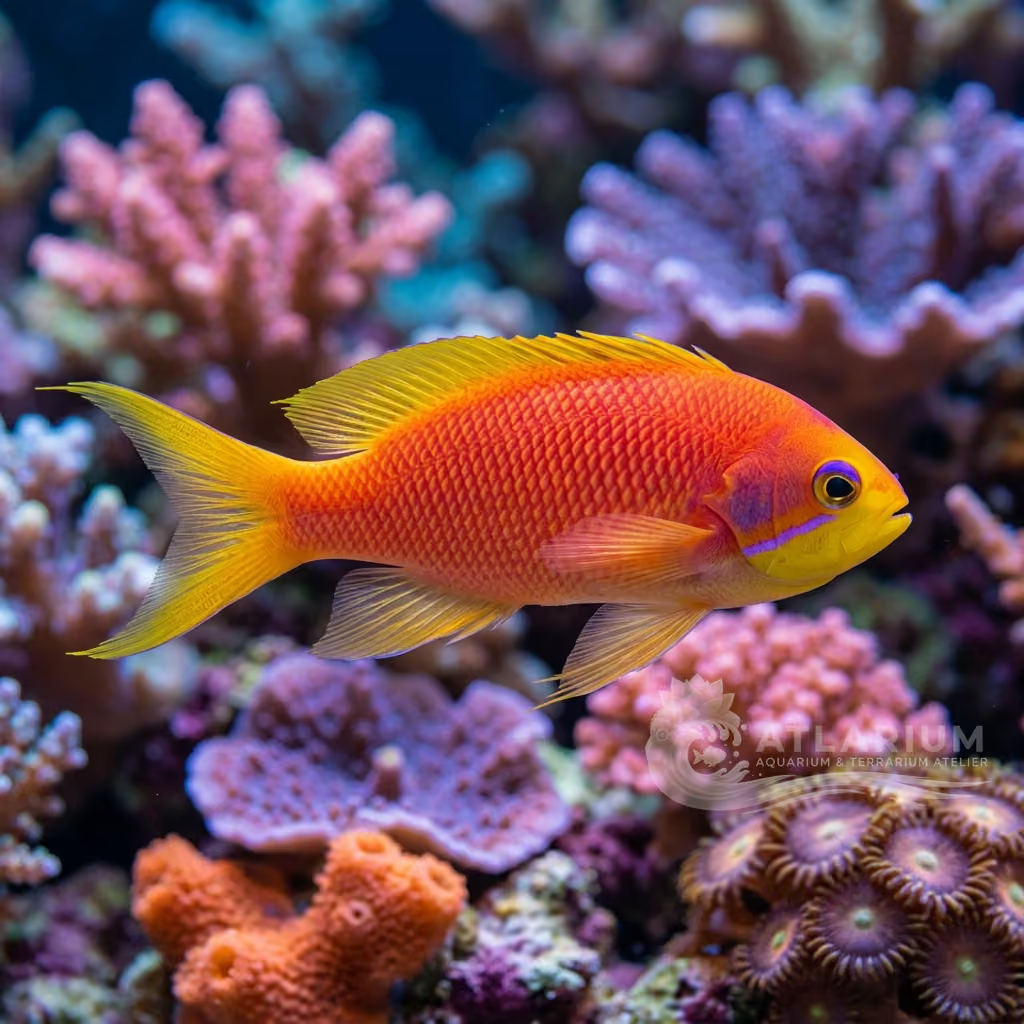
The Longfin Anthias is a stunning deep-water marine reef fish with long flowing fins, highly prized by advanced aquarists for its delicate nature and vibrant colors.
Water Temperature
20 - 25 °C
pH Value
8.1 - 8.4
Water type
Marine
Tank level
Bottom and middle
Adult size
7 cm
Minimum tank volume
>= 150 L
Minimum group
>= 4
KH
8 - 12 dKH

Species description
Geographical Origin and Habitat: Inhabits the tropical Western and Central Pacific, from the Ryukyu Islands of southern Japan to the Great Barrier Reef, Marshall Islands, and French Polynesia. It is a deep-water species, typically found on steep outer slopes and inside caves at depths of 25 to 120 meters, in cooler reef zones.
Taxonomy and Morphology: A member of the family Serranidae, subfamily Anthiadinae. It features a moderately elongated body. The pelvic and anal fins of mature males are uniquely elongated and flowing, giving the species its common name. It is a small Anthias, reaching a maximum size of 6-7 cm.
Social Behavior: Extremely shy and secretive. It lives in small haremic groups close to cave ceilings and deep cracks. Unlike shallow-water Anthias, it rarely ventures into open, brightly lit waters, preferring to stay close to structural cover. Group structures are led by a dominant male.
Coloration and Sexual Dimorphism: Displays striking colors. Males have a purple-magenta body with iridescent yellow stripes, red patches, and electric blue margins on their long fins. Females are mostly bright yellow on the back and lavender-pink on the belly. The sexual dimorphism is pronounced and highly contrasting.

Care, breeding and tankmates
Aquarium Setup: Needs a specialized deep-water reef tank of at least 200 liters. The lighting must be dim or heavily diffused, with plenty of overhanging rocks and dark caves to make the fish feel secure. Provide moderate, laminar water movement rather than turbulent flow.
Diet and Feeding: Highly demanding zooplanktivore. Often requires live foods like copepods to trigger a feeding response when first introduced. Gradually transition to fine frozen foods such as cyclops, oyster eggs, and baby mysis. Must be fed 3 to 4 times daily to sustain its weight.
Water Quality: Requires cooler water temperatures, ideally between 21°C and 24°C; a chiller is usually necessary to maintain these conditions. Keep water parameters pristine: pH 8.1-8.4, specific gravity 1.022-1.025, and zero ammonia. High dissolved oxygen levels are mandatory.
Compatibility and Cohabitation: Best kept in a quiet species tank or with very peaceful tankmates such as small gobies, pipefish, and dwarf wrasses. Avoid housing them with fast, aggressive, or boisterous fish (like damsels or tangs), which will easily outcompete them for food and cause fatal stress.
Aquarium Breeding: Protogynous hermaphrodites. Captive breeding is undocumented in the home hobby due to their deep-water origin, pelagic spawning behavior, and the difficulty of raising the pelagic larvae.
Risks and Diseases: Highly sensitive to shipping stress and decompression issues (if not collected properly from depth). They are prone to skin parasites and bacterial infections if water temperatures exceed 24°C or if water quality deteriorates.

Geographic origin and distribution
Inhabits the tropical Western and Central Pacific, from the Ryukyu Islands of southern Japan to the Great Barrier Reef, Marshall Islands, and French Polynesia. It is a deep-water species, typically found on steep outer slopes and inside caves at depths of 25 to 120 meters, in cooler reef zones.
Origin
Tropical oceans and reefsEast AsiaAustralia, New Guinea, and Oceania

Fish profile
- Temperament
- Peaceful
- They are peaceful, extremely shy, and easily stressed. They will often hide for days when first introduced to a new aquarium. Once they feel secure and have a steady food supply, they will cautiously venture out.
- Diet
- Carnivore
- They are planktivores that require very small, meaty foods. Providing a mix of live copepods, baby brine shrimp, and high-quality frozen cyclops or mysis is essential. They are notoriously finicky eaters and may refuse dry foods completely.
- Life expectancy
- 3-6 years
- Adult size
- 7 cm
- Sex ratio
- Harem
- They should ideally be kept in a harem arrangement. One male accompanied by several females creates the most stable social structure. Keeping multiple males will typically lead to fighting and the death of the weaker individuals.
- Feeding frequency
- 3-4 times daily
- Due to their high metabolism, they need to be fed multiple times throughout the day. A minimum of three to four small feedings daily is mandatory. Without constant access to suspended food, they will quickly deteriorate.
- Bioload
- Low to Medium
- They produce a moderate to high bioload due to their intensive feeding requirements. Maintaining immaculate water quality is crucial for their survival. Over-filtration and frequent water changes are needed to compensate for the heavy feeding.
- Flow
- Strong
- They prefer moderate to strong, varied water flow in the aquarium. This flow is necessary to keep their food suspended and mimic their natural deep-water reef environments. However, ensure there are calmer areas where they can rest if needed.
- Jump risk
- Yes
- Like most species in their genus, they have a strong tendency to jump when frightened. The aquarium must be tightly covered with a canopy or a specialized mesh screen. Minimizing stress and sudden light changes will help prevent jumping.
- Reproduction
- Oviparous
- They are protogynous hermaphrodites, changing from female to male depending on social hierarchy. They spawn by releasing eggs and sperm directly into the water column. Captive propagation is currently unachievable due to the microscopic size and dietary needs of their larvae.
- Compatibility & tankmates
- Reef safe
- They are completely reef safe and very peaceful towards other species. They must be housed with docile, calm tank mates to prevent them from hiding constantly. Avoid keeping them with boisterous fish that will outcompete them for food.
- Tank level
- Middle/Bottom
- They generally occupy the middle and lower levels of the aquarium, often staying close to rockwork. While they need swimming space, they are closely tied to the reef structure. They require numerous caves and overhangs for security, especially since they come from deeper waters.

Scientific Parameters & Models
FishBase
Window to the official scientific data of the species
FishBase v25.04Data synced on: 06/15/2026
- Trophic level
- 3.3 ± 0.4 se
- Resilience
- High (less than 15 months)
- Phylogenetic uniqueness (PD50)
- 0.75
- Bayesian Length-Weight
- a = 0.01413, b = 3
- VulnerabilityLow vulnerability (10 / 100)

Related species
Recommendations grouped by close relatives, companion choices, and similar care.