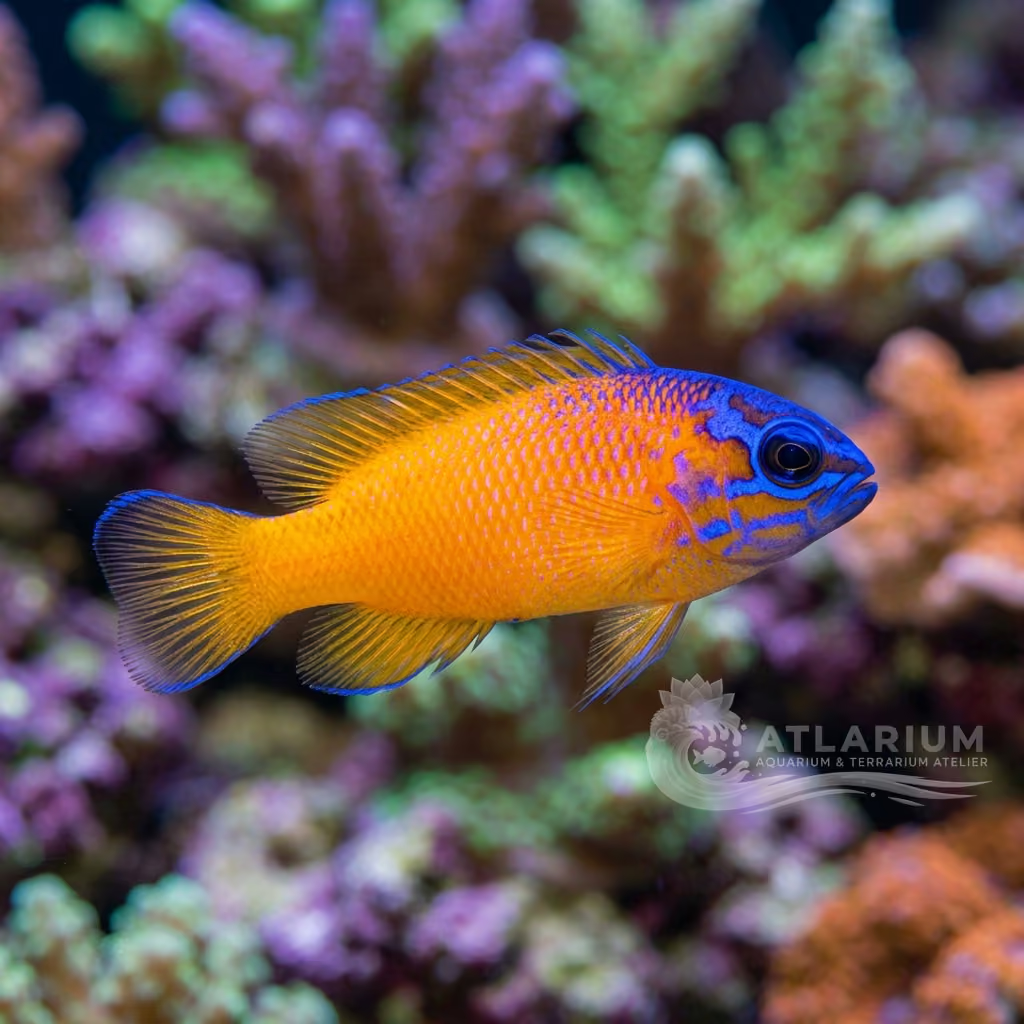
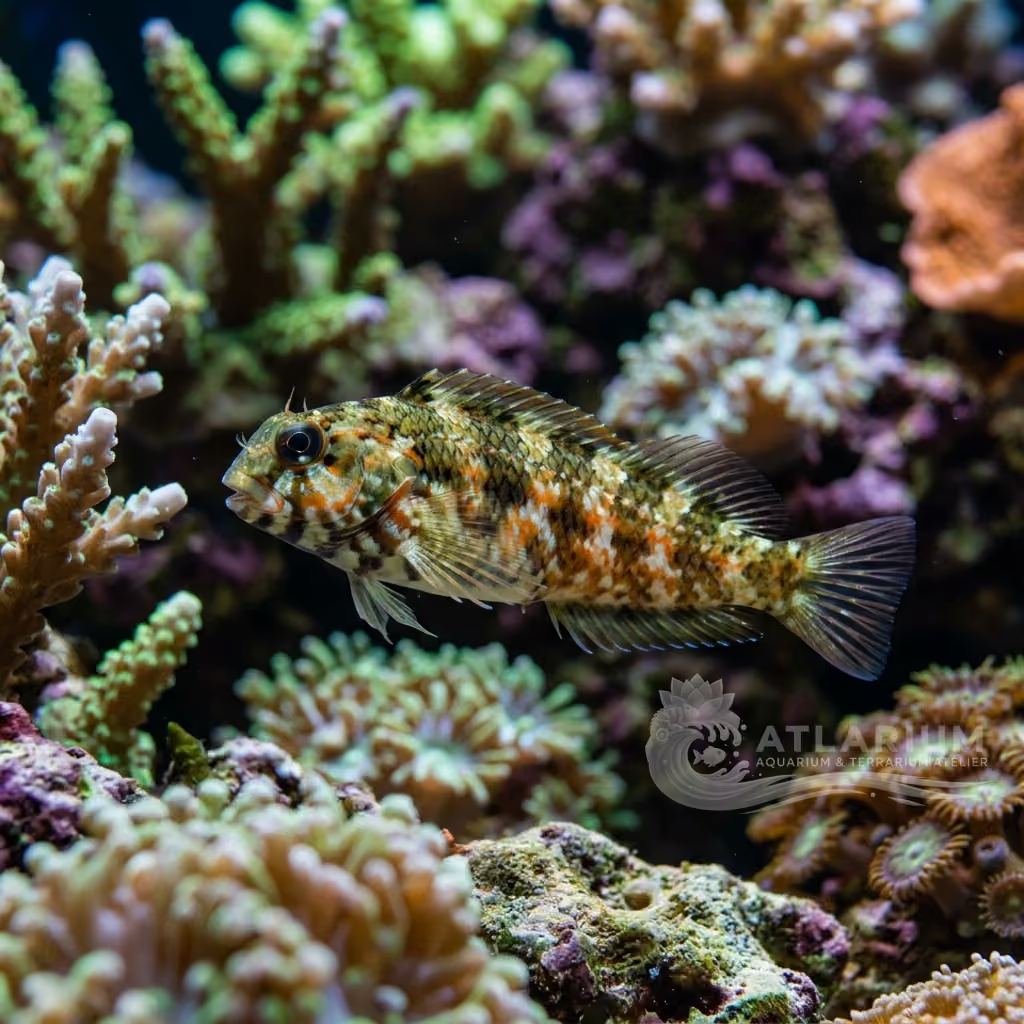
Candy basslet
Liopropoma carmabi
The Candy Basslet is a highly sought-after, brilliant deep-water Caribbean fish. This secretive predator needs a dimly-lit reef aquarium with ample rockwork and high water quality.
Water Temperature
22 - 26 °C
pH Value
8.1 - 8.4
Water type
Marine
Tank level
Bottom
Adult size
6 cm
Minimum tank volume
>= 80 L
Minimum group
>= 1

Species description
Geographical Origin and Habitat: Liopropoma carmabi, commonly known as the Candy Basslet, is native to the tropical waters of the western central Atlantic Ocean, particularly throughout the Caribbean, including the Bahamas, Puerto Rico, southern Florida, and the Netherlands Antilles. It inhabits deep coral reefs, typically at depths ranging from 15 to over 70 meters, sheltering in dark caves, deep crevices, and shaded ledges.
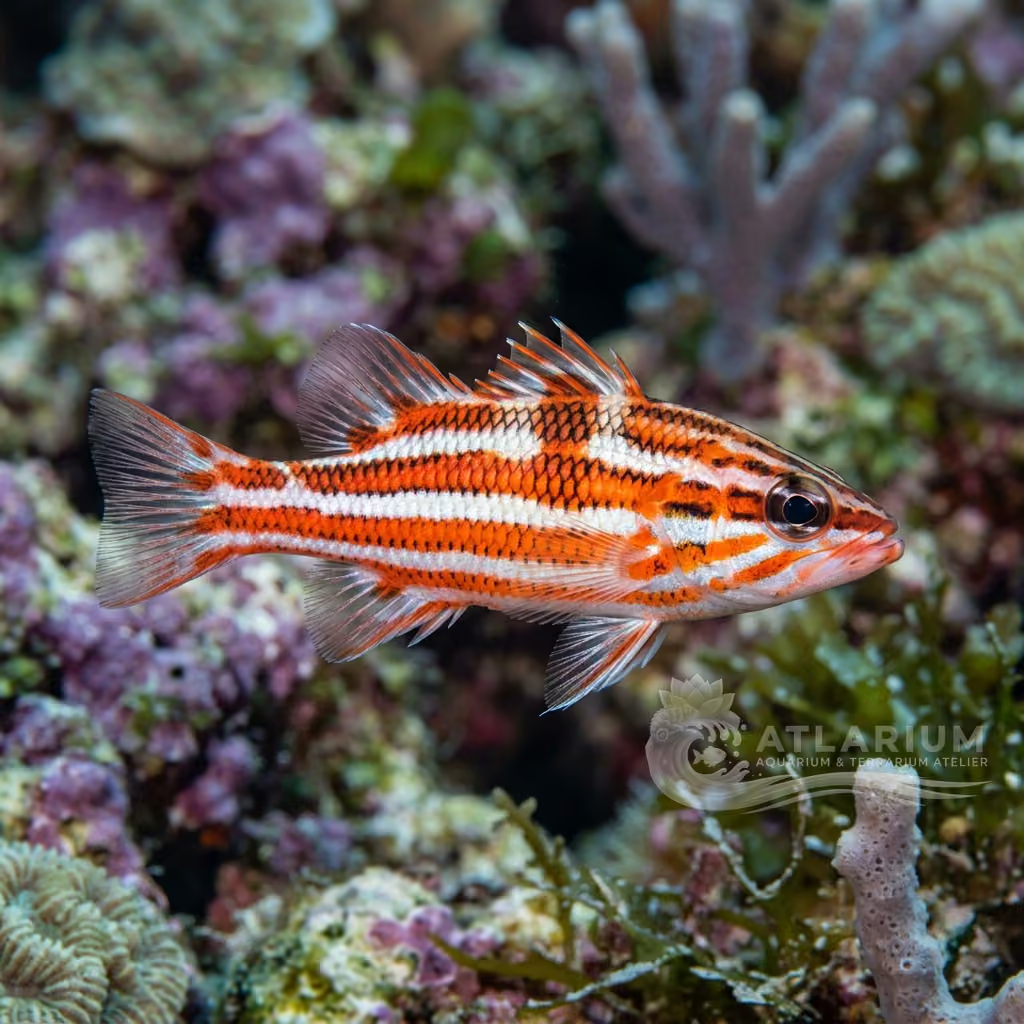
Taxonomy and Morphology: Classified within the family Serranidae and subfamily Liopropomatinae, this small basslet has a slender, torpedo-shaped body with a pointed snout and large eyes adapted for low-light environments. It reaches a maximum length of 5 to 6.5 centimeters, featuring well-developed dorsal and anal fins, and a slightly rounded or truncated caudal fin.
Social Behavior: A solitary and highly secretive species that is fiercely territorial toward its own kind. In the wild, it spends most of its time within rocky recesses, emerging only to hunt or during periods of dim lighting. While initially shy in the aquarium, once it acclimates, it becomes more curious and will make brief excursions into the open water.
Coloration and Sexual Dimorphism: Its coloration is legendary, showing brilliant longitudinal bands of bright orange, golden yellow, and lavender-pink or magenta, separated by thin red or purple lines. The tail fin features two prominent black spots ringed in iridescent blue. There is no visible sexual dimorphism, making it impossible to determine the sex visually.

Care, breeding and tankmates
Aquarium Setup: Needs a tank of at least 80-100 liters with an extensive arrangement of live rock to form numerous caves, arches, and dark overhangs. Subdued lighting is preferred, or at least ample shady areas where the fish can retreat. The species is entirely reef-safe and will not harm corals, though it prefers a quiet, low-stress environment.
Diet and Feeding: In nature, it feeds on small crustaceans and zooplankton. In captivity, it should be offered high-quality frozen foods such as mysis shrimp, enriched brine shrimp, copepods, and finely chopped seafood. It can be slow to accept dry foods, but may eventually take small sinking pellets if fed close to its rocky hideouts.
Water Quality: Pristine water quality is essential. Because it originates from deeper waters, it prefers cooler temperatures, ideally between 22-25 °C. Maintain a pH of 8.1-8.4, salinity at 1.020-1.025, and keep nitrate levels as close to zero as possible. Regular water changes and a high-performance protein skimmer are required.
Compatibility and Cohabitation: Peaceful toward most reef tankmates but may prey on very small ornamental shrimps. Avoid housing it with large, fast, or aggressive fish that could intimidate it or outcompete it for food. It should be kept individually, as it is highly aggressive toward conspecifics unless they are a mated pair.
Aquarium Breeding: Breeding in home aquariums is exceptionally difficult and rarely achieved. They are protogynous hermaphrodites, meaning females can transition to males depending on social hierarchy. Spawning occurs in the water column, releasing pelagic eggs. Rearing the larvae requires specialized microplankton and precise laboratory conditions.
Risks and Diseases: Many specimens are collected from deep water and can suffer from decompression sickness if not harvested properly (look for buoyancy issues). They are sensitive to common marine diseases like ich and velvet, particularly during acclimation. A quiet quarantine period is highly recommended before introduction.

Geographic origin and distribution
Liopropoma carmabi, commonly known as the Candy Basslet, is native to the tropical waters of the western central Atlantic Ocean, particularly throughout the Caribbean, including the Bahamas, Puerto Rico, southern Florida, and the Netherlands Antilles. It inhabits deep coral reefs, typically at depths ranging from 15 to over 70 meters, sheltering in dark caves, deep crevices, and shaded ledges.
Origin
Tropical oceans and reefsCentral America and CaribbeanNorth America

Fish profile
- Temperament
- Peaceful
- They are extremely shy initially, requiring a quiet environment to build confidence. Once established, they become delightfully curious, darting between caves to inspect their surroundings. They are entirely peaceful and completely reef safe.
- Diet
- Carnivore
- They are micro-predators that actively hunt for copepods and small crustaceans in the rockwork. They will accept finely chopped meaty foods, frozen mysis, and high-quality micro-pellets. Providing a mature tank with a thriving pod population is the key to their long-term health.
- Life expectancy
- 4-7 years
- Adult size
- 6 cm
- Sex ratio
- Solitary
- They are generally kept as solitary individuals due to their secretive nature and high cost. A confirmed mated pair can be kept together in a tank with ample cave structures. Keeping two males together will result in lethal territorial battles.
- Feeding frequency
- Twice daily
- Feed them one to two times a day, ensuring food reaches their hiding spots. Target feeding with a turkey baster helps ensure they are eating properly without competition. A constant supply of live pods allows them to graze naturally throughout the day.
- Bioload
- Low
- The Candy Basslet has an extremely light bioload, perfect for well-maintained nano or reef aquariums. Their small size and efficient digestion mean they produce very little waste. Basic protein skimming and regular water maintenance are more than adequate to support them.
- Flow
- Moderate
- They prefer gentle to moderate water flow that mimics the deep, sheltered reef caves they inhabit. High flow environments will force them to remain hidden and cause undue stress. Gentle, dispersed circulation allows them to swim comfortably between rock crevices.
- Jump risk
- Yes
- Like most basslets, they have a moderate risk of jumping if startled. A secure, tight-fitting mesh lid is required to prevent the loss of this rare and expensive fish. Extra care should be taken to cover any small gaps near the overflow.
- Reproduction
- Oviparous
- They are pelagic spawners, releasing eggs and sperm into the water column during twilight. While pairing is possible, captive breeding has proven extraordinarily difficult. The larval stage requires specialized microscopic foods that are hard to culture at home.
- Compatibility & tankmates
- Peaceful
- They are peaceful, cryptic fish that should only be kept with similarly gentle species. Do not house them with large, aggressive fish that will eat them or prevent them from foraging. Excellent tank mates include small gobies, assessors, and peaceful invertebrates.
- Tank level
- Bottom
- They are strictly bottom-to-middle dwellers that rarely venture far from the rockwork. They require an intricate aquascape with numerous dark caves and overhangs to feel secure. They often swim upside down under ledges, a behavior typical of their genus.

Scientific Parameters & Models
FishBase
Window to the official scientific data of the species
FishBase v25.04Data synced on: 06/15/2026
- Trophic level
- 3.5 ± 0.6 se
- Phylogenetic uniqueness (PD50)
- 0.5
- Bayesian Length-Weight
- a = 0.01122, b = 3.04
- VulnerabilityLow vulnerability (10 / 100)

Related species
Recommendations grouped by close relatives, companion choices, and similar care.