Encyclopaedia

FishMarineEasy
©AI Generated·Proprietary

Canary fangblenny

Meiacanthus oualanensis

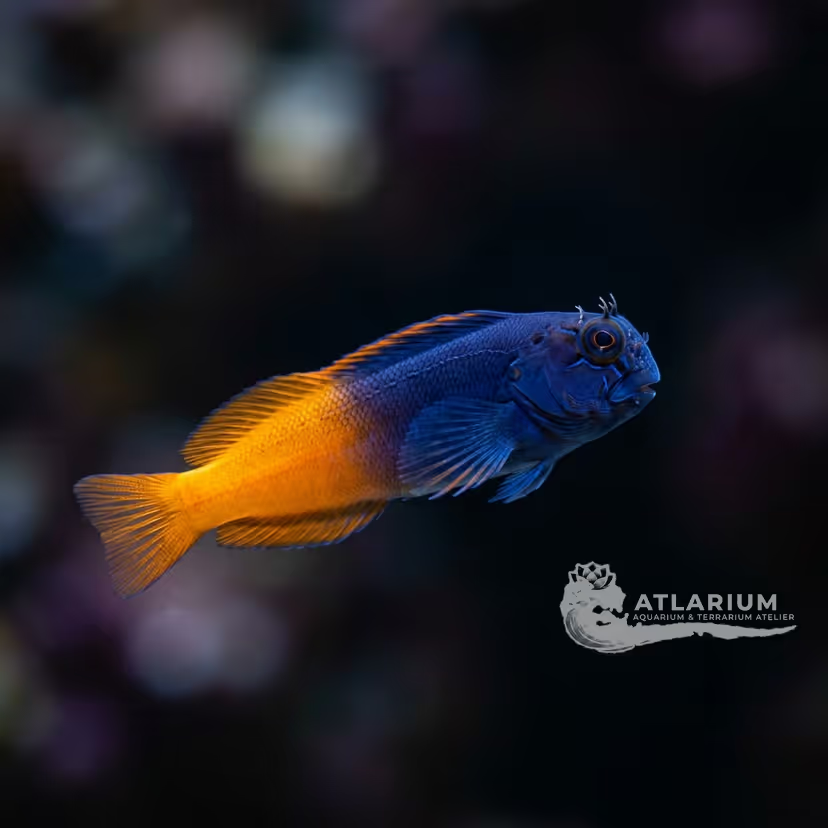
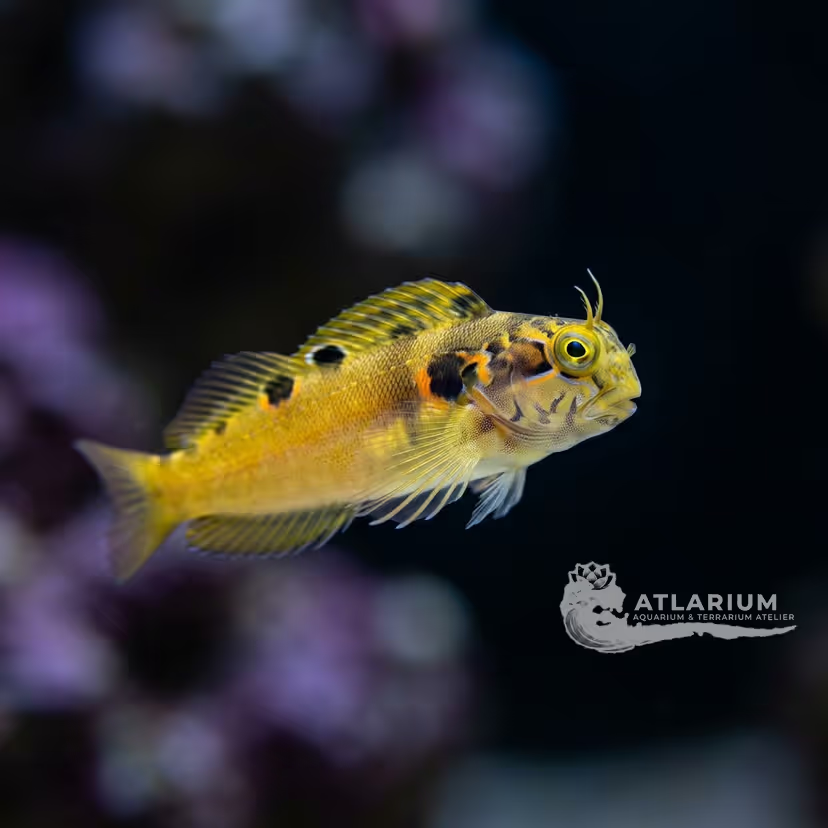
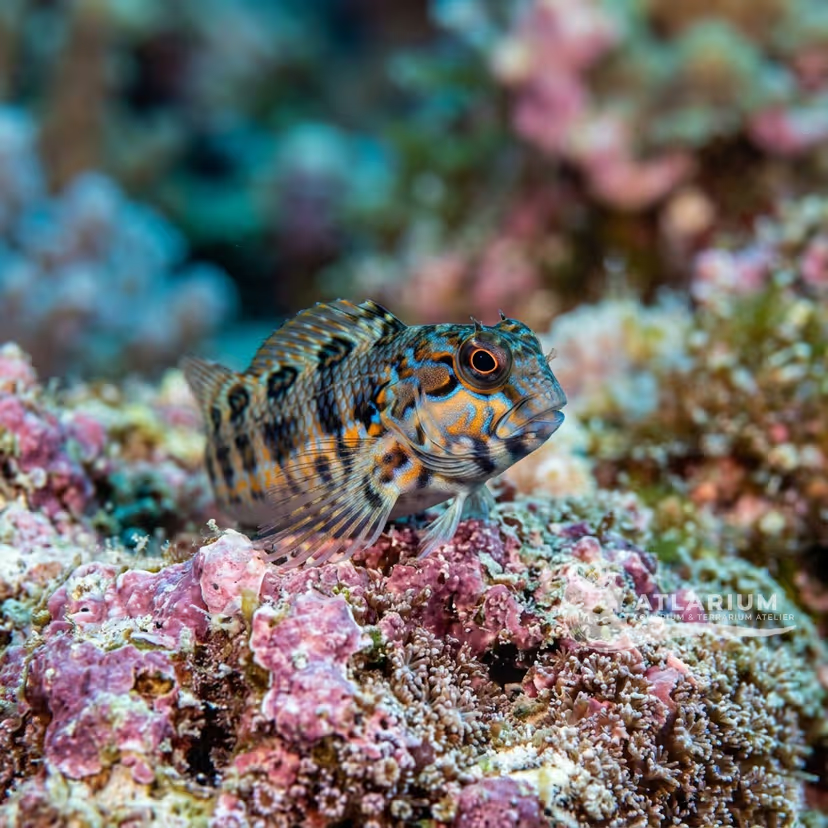
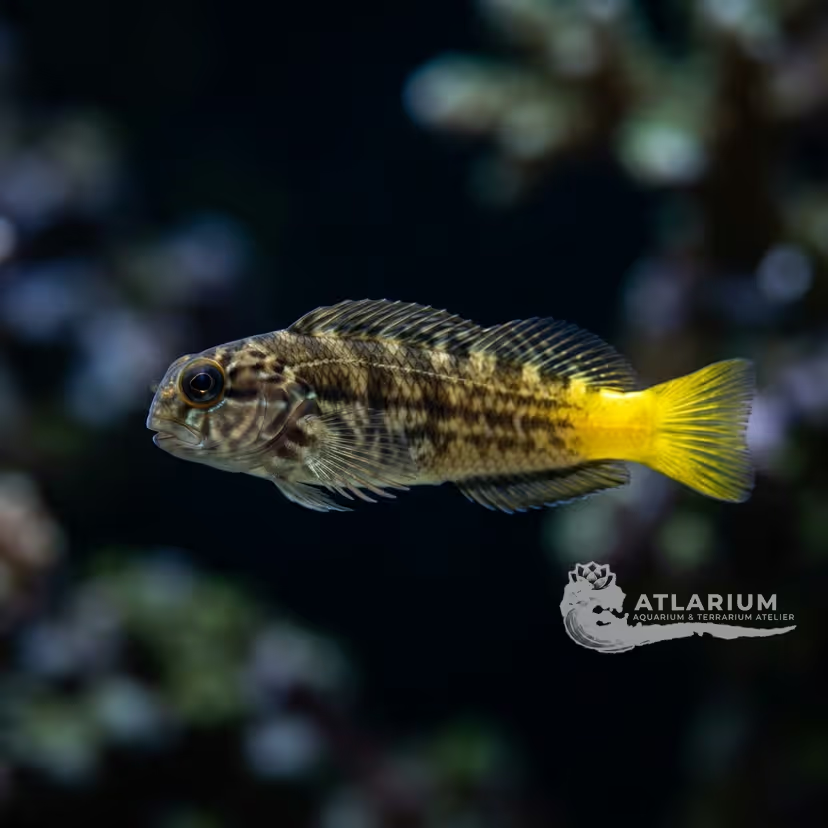
A vibrant lemon-yellow marine fangblenny boasting a venomous bite for defense. This active, peaceful swimmer thrives in reef setups and community tanks.

Taxonomy
Class:Actinopteri
Order:Perciformes
Family:Blenniidae
Genus:Meiacanthus
Species:Meiacanthus oualanensis
Formerly known as:Meiacanthus oualensis

Share

Check out Canary fangblenny on Atlarium

PracticeRecognition quizzesPhotos, names, origins, and puzzles to review Atlas species.Open quizzes
Water Temperature

22 - 27 °C

pH Value

8 - 8.4

Water type

Marine

Tank level

All levels

Adult size

12 cm

Minimum tank volume

>= 115 L

Minimum group

>= 1

KH

8 - 12 dKH

Species description

Geographical Origin and Habitat: Meiacanthus oualanensis is native to the Southwestern Pacific Ocean, particularly abundant in the tropical waters surrounding the Fiji Islands. It inhabits sheltered coastal lagoons, shallow outer reef slopes, and coral-rich passes at depths of 1 to 20 meters. Unlike most blennies that are benthic and spend their lives resting on rocks, this species is a semi-pelagic swimmer that spends much of its time active in the water column, swimming against moderate currents near coral heads.
Taxonomy and Morphology: Taxonomically, it belongs to the family Blenniidae and the subfamily Nemophini (fangblennies). The most significant and unique morphological feature of the genus Meiacanthus is the presence of two large, curved canine teeth in the lower jaw, which are grooved and connected to venom glands at their base. The venom induces jaw muscle relaxation in predators, allowing the swallowed blenny to bite its way out of the predator's mouth. Adults reach a length of 8-10 cm.
Social Behavior: Unlike other benthic blennies, this species is peaceful, outgoing, and an active swimmer that does not hide constantly in the rockwork. It can be kept in small groups if the aquarium is large enough to prevent territorial disputes. Males may display mild territoriality, which is usually resolved through harmless color-flaring and fin-waving displays. It is a bold fish that quickly learns to accept food from its keeper.
Coloration and Sexual Dimorphism: The coloration of Meiacanthus oualanensis is a solid, striking lemon-yellow or canary-yellow across its entire body and fins, completely lacking spots or stripes. This vibrant color serves as an aposematic signal to warn potential predators of its toxic bite. There is no major external sexual dimorphism, though mature males may develop slightly longer, more pointed outer filaments on their lyre-shaped caudal fin.

Care, breeding and tankmates

Aquarium Setup: Requires an aquarium of at least 100 liters with plenty of live rock arranged to provide caves for sleeping at night, while preserving a large open swimming area in the mid and upper water column. Because it is an active swimmer, it appreciates moderate water movement. The aquarium must be fitted with a tight-fitting lid or mesh net, as this species is a skilled jumper and can easily escape through small gaps.
Diet and Feeding: Its diet is primarily zooplanktivorous in the wild, feeding on small planktonic crustaceans. In captivity, it acclimates easily to a wide variety of foods, including high-quality flake foods, small sinking pellets, dried seaweed, and frozen foods such as mysis shrimp, brine shrimp, and finely chopped krill. Feeding two to three times daily in small amounts is recommended to keep it healthy and active.
Water Quality: Maintain standard reef parameters: temperature 23-26 °C, pH 8.1-8.4, specific gravity 1.020-1.025, and KH 8-12. An efficient filtration system is necessary to keep organic waste levels close to zero. Stable salinity and regular water changes are key components to keeping this fish healthy and ensuring the longevity of its vibrant coloration.
Compatibility and Cohabitation: This species is 100% reef safe and does not harm corals, clams, or small ornamental invertebrates. It is peaceful and does well with other calm reef fish such as gobies, clownfish, anthias, and small wrasses. Due to its venomous defense mechanism, it is rarely harassed by larger tankmates, but it should still not be kept with large predators that might swallow it whole.
Aquarium Breeding: Breeding in the home aquarium is possible and has been documented. They are demersal spawners that deposit adhesive eggs inside hollow tubes, crevices, or small clay pots. The male coaxes a female into the nest, fertilizes the eggs, and guards them diligently until they hatch, which usually takes 5-7 days. Rearing the larvae requires live rotifers and a separate fry rearing setup.
Risks and Diseases: The primary risks are jumping out of the tank and sensitivity to copper-based medications, which should be avoided as they can irritate its scaleless skin. When handling this fish with nets or during maintenance, be careful not to touch it with bare hands, as its venomous bite is painful and comparable to a bee sting. Otherwise, it is a hardy, disease-resistant fish.

Geographic Origin and Distribution

Meiacanthus oualanensis is native to the Southwestern Pacific Ocean, particularly abundant in the tropical waters surrounding the Fiji Islands. It inhabits sheltered coastal lagoons, shallow outer reef slopes, and coral-rich passes at depths of 1 to 20 meters. Unlike most blennies that are benthic and spend their lives resting on rocks, this species is a semi-pelagic swimmer that spends much of its time active in the water column, swimming against moderate currents near coral heads.

Origin

Tropical oceans and reefs

Fish profile

Temperament
Territorial
They are bold, active, and fascinating to watch as they constantly hover and swim in the open. While generally peaceful with other species, their venomous bite makes them completely fearless of larger fish. They will not hesitate to bite back if swallowed or attacked, often causing the predator to spit them out. They make a colorful, dynamic, and unique addition to a reef community.
Diet
Omnivore
This species is an omnivorous planktivore that feeds from the water column rather than grazing on rocks. They eagerly accept frozen foods like mysis shrimp, brine shrimp, and finely chopped seafood. High-quality marine flakes and micro-pellets are also usually taken with enthusiasm. A varied diet that includes some marine algae or spirulina will keep their colors bright and their immune systems strong.
Sex ratio
Flexible
It is highly recommended to keep only one individual per aquarium unless they are a proven, mated pair. Conspecifics or even similarly shaped blennies will engage in vicious, often fatal, combat. In very large tanks with abundant rockwork, multiple individuals might coexist, but the risk remains high. For the vast majority of home aquarists, keeping a single specimen is the safest choice.
Feeding frequency
Twice daily
They should be fed two to three times daily with small amounts they can quickly snatch from the water column. Since they have relatively small stomachs, frequent feeding mimics their natural continuous foraging behavior. They are quick and enthusiastic eaters that will aggressively compete for food. Automated feeders dispensing small sinking pellets are highly beneficial for them.
Bioload
The Canary Fang Blenny produces a minimal bioload making them suitable for smaller marine aquariums. They do not significantly impact nitrate or phosphate levels if fed correctly. Standard marine filtration and regular, modest water changes are entirely sufficient to maintain excellent water parameters. They are quite hardy and resilient to minor fluctuations in water chemistry.
Flow
Strong
They appreciate moderate water flow that suspends food particles in the water column. Good flow encourages them to stay active and visible in the open water. Ensure there are calmer areas near the rockwork where they can retreat and rest when desired. Too much turbulent flow can exhaust them, as they constantly swim rather than perch.
Jump risk
Yes
They are known to be significant jumper risks, particularly when newly introduced to an aquarium. A tight-fitting lid, canopy, or mesh screen is absolutely mandatory to keep them safely inside. They often dart toward the surface when chased or spooked by sudden movements outside the tank. Do not underestimate their ability to find even the smallest escape route.
Reproduction
Oviparous
They are demersal spawners; the male courts the female and she lays adhesive eggs inside a tight crevice or empty shell. The male fiercely guards and aerates the egg clutch until they hatch. Captive breeding is very possible and happens regularly in well-established aquariums. Rearing the very small larvae, however, requires specialized cultures of rotifers and copepods.
Compatibility & tankmates
Community
They are generally peaceful and completely reef safe, paying no attention to corals or invertebrates. However, they possess venomous fangs which they use defensively, meaning aggressive tank mates will learn to leave them alone. They can be safely kept with a wide variety of peaceful community fish. Avoid keeping them with other fang blennies, as they will fight aggressively over territory.
Tank level
All levels
Unlike many blennies that perch on the substrate, they spend most of their time actively swimming in the mid-water regions. They will utilize the upper rockwork as a base to dart out and catch passing plankton. They require small caves or crevices in the live rock where they can sleep securely at night. They are very visible fish that utilize open swimming space extensively.

Window to the official scientific data of the species

Data synced on: 06/15/2026

Scientific Parameters & Models

Trophic level
3.5 ± 0.5 se
Resilience
High (less than 15 months)
Phylogenetic uniqueness (PD50)
0.5
Bayesian Length-Weight
a = 0.00575, b = 3.06
VulnerabilityLow vulnerability (10 / 100)

Image gallery

Licensed images linked to the species or, when marked, to the closest representative taxon.

Related species

Recommendations grouped by close relatives, companion choices, and similar care.

Variants and close relatives

Same atlas type, nearby scientific identity, genus, or family.

Harptail Blenny

Harptail Blenny

Meiacanthus mossambicus

View details->
One-stripe Fangblenny

One-stripe Fangblenny

Meiacanthus ditrema

View details->
Forktail blenny

Forktail blenny

Meiacanthus atrodorsalis

View details->
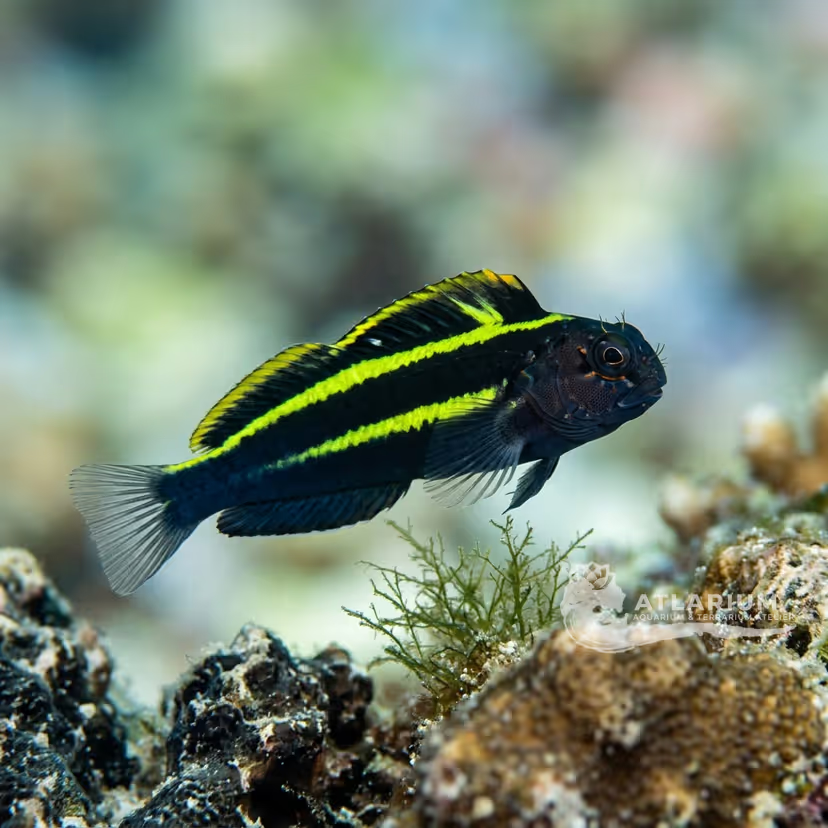
Striped fangblenny

Striped fangblenny

Meiacanthus grammistes
View details->
Bundoon blenny

Bundoon blenny

Meiacanthus bundoon

View details->
Kamohara Blenny

Kamohara Blenny

Meiacanthus kamoharai

View details->
Brown Coral Blenny

Brown Coral Blenny

Atrosalarias fuscus

View details->
Red-streaked blenny

Red-streaked blenny

Cirripectes stigmaticus

View details->
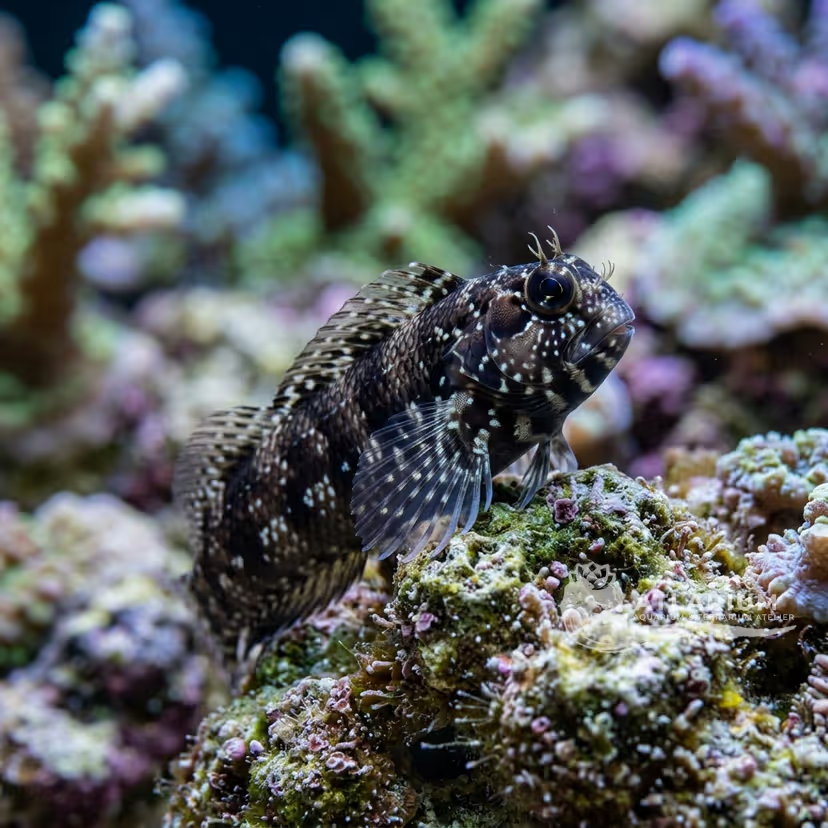
Orange-spotted Blenny

Orange-spotted Blenny

Blenniella chrysospilos
View details->
Springer's Blenny

Springer's Blenny

Ecsenius springeri

View details->
Gravier's Blenny

Gravier's Blenny

Ecsenius gravieri

View details->
Starry blenny

Starry blenny

Salarias ramosus

View details->
Two-spot bimaculatus blenny

Two-spot bimaculatus blenny

Ecsenius bimaculatus
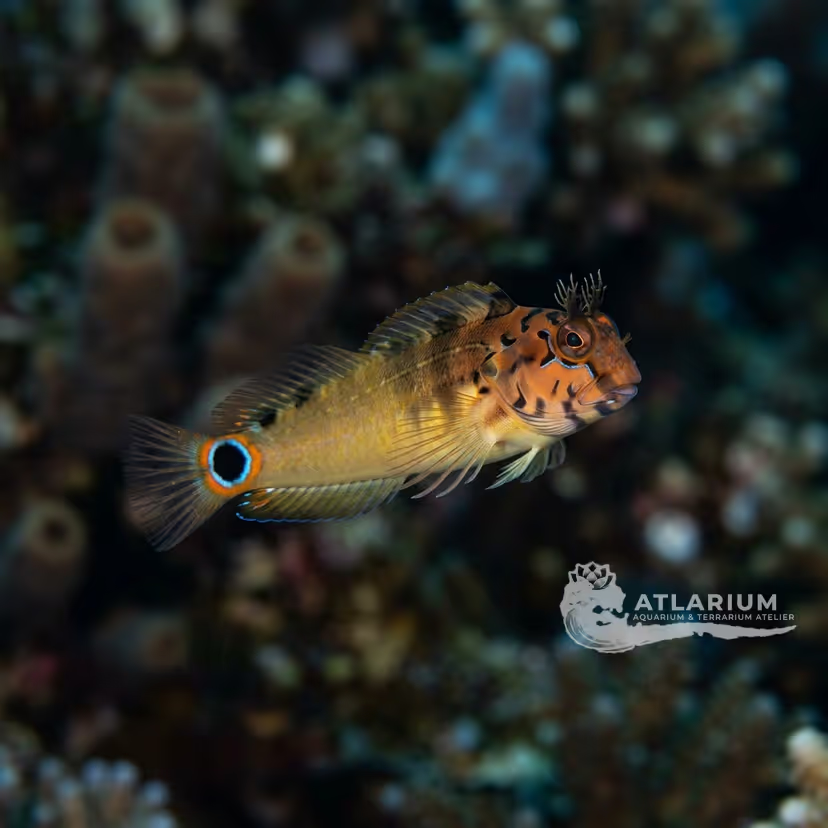
View details->
Tailspot blenny

Tailspot blenny

Ecsenius stigmatura

View details->
Allen's blenny

Allen's blenny

Ecsenius alleni

View details->
Aron's blenny

Aron's blenny

Ecsenius aroni

View details->

Recommended companions

Compatible cards from coherent ecosystems with matching parameters.

Grape caulerpa
Plant

Grape caulerpa

Caulerpa racemosa

View details->
Caulerpa prolifera
Plant

Caulerpa prolifera

Caulerpa prolifera
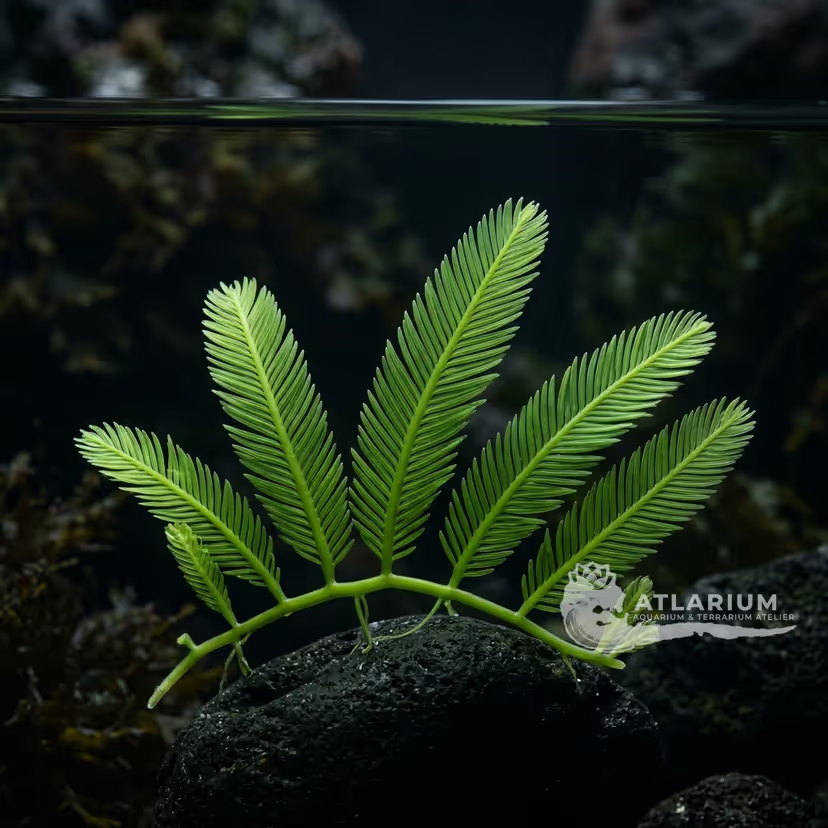
View details->
Caulerpa taxifolia
Plant

Caulerpa taxifolia

Caulerpa taxifolia
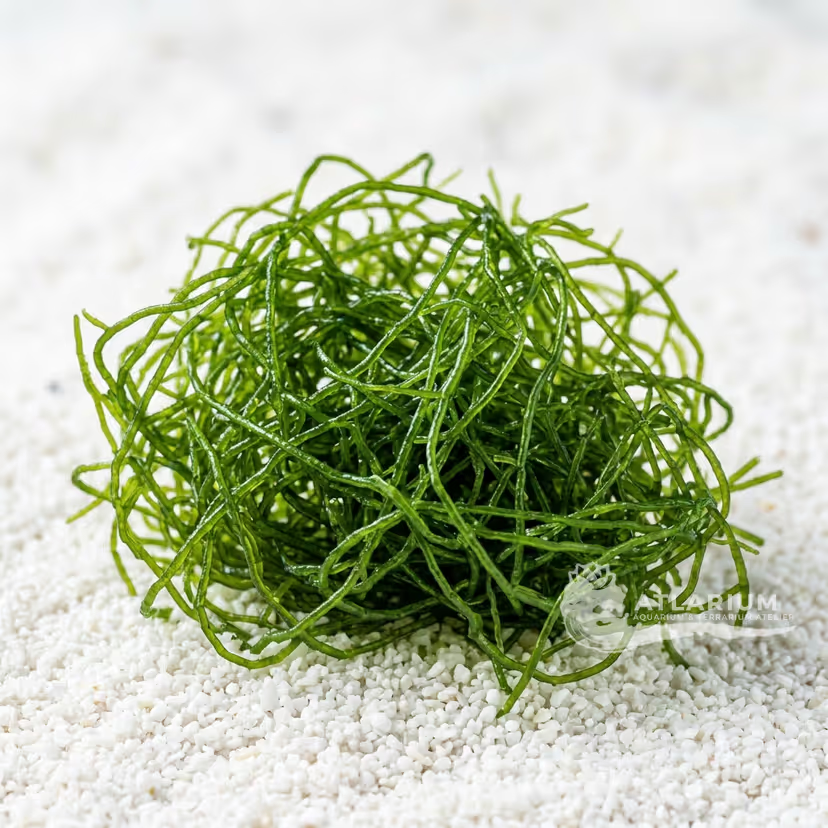
View details->
Chaetomorpha macroalgae
Plant

Chaetomorpha macroalgae

Chaetomorpha linum

View details->
Dead man fingers algae
Plant

Dead man fingers algae

Codium fragile

View details->
Halimeda macroalgae
Plant

Halimeda macroalgae

Halimeda opuntia

View details->
Peacock tail algae
Plant

Peacock tail algae

Padina pavonica

View details->
Red gracilaria
Plant

Red gracilaria

Gracilaria parvispora

View details->
Red grape algae
Plant

Red grape algae

Botryocladia uvaria

View details->
Sea lettuce
Plant

Sea lettuce

Ulva lactuca

View details->
Red Mangrove
Plant

Red Mangrove

Rhizophora mangle

View details->

Similar care

Cards with similar requirements, difficulty, habitat, and husbandry profile.

Wolf fangblenny

Wolf fangblenny

Petroscirtes lupus

View details->
Black combtooth blenny

Black combtooth blenny

Ecsenius namiyei
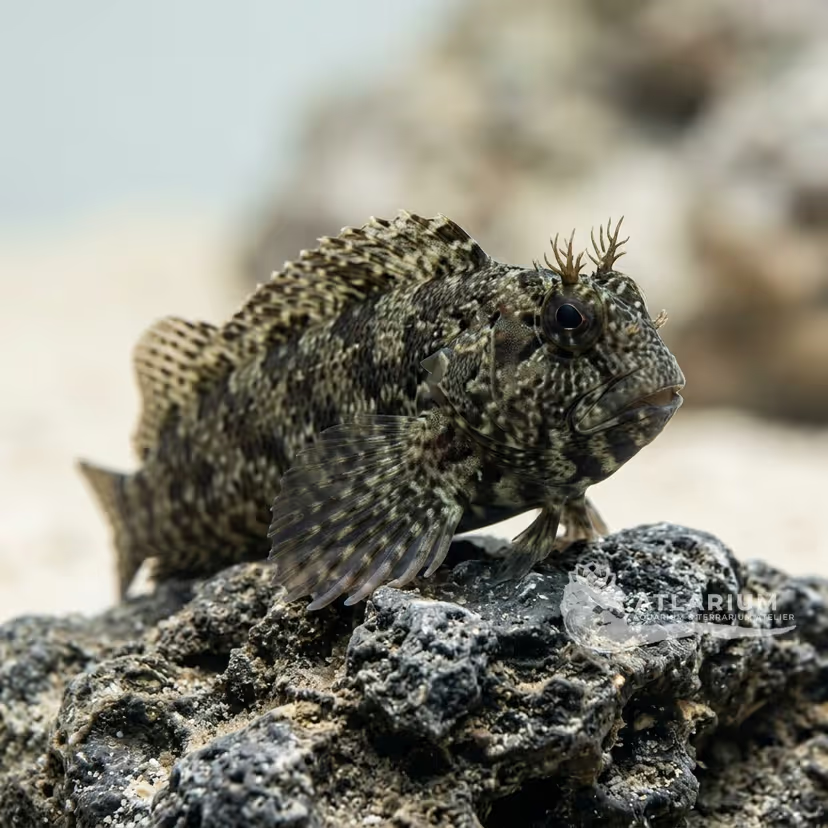
View details->
Lawnmower Blenny

Lawnmower Blenny

Salarias fasciatus

View details->
Ocular Blenny

Ocular Blenny

Ecsenius oculus

View details->
Shorthead fangblenny

Shorthead fangblenny

Petroscirtes breviceps
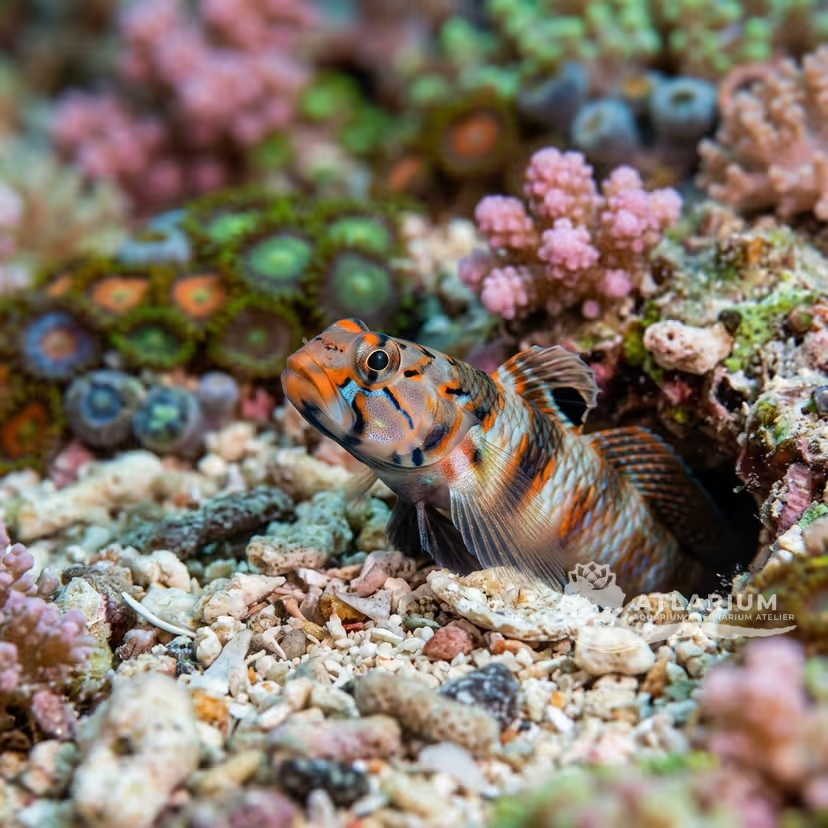
View details->
Aurora Goby

Aurora Goby

Amblyeleotris aurora

View details->
Barber Goby

Barber Goby

Elacatinus figaro

View details->
Banded-head Shrimpgoby

Banded-head Shrimpgoby

Amblyeleotris cephalotaenius

View details->
Chestnut Eyelash Blenny

Chestnut Eyelash Blenny

Cirripectes castaneus
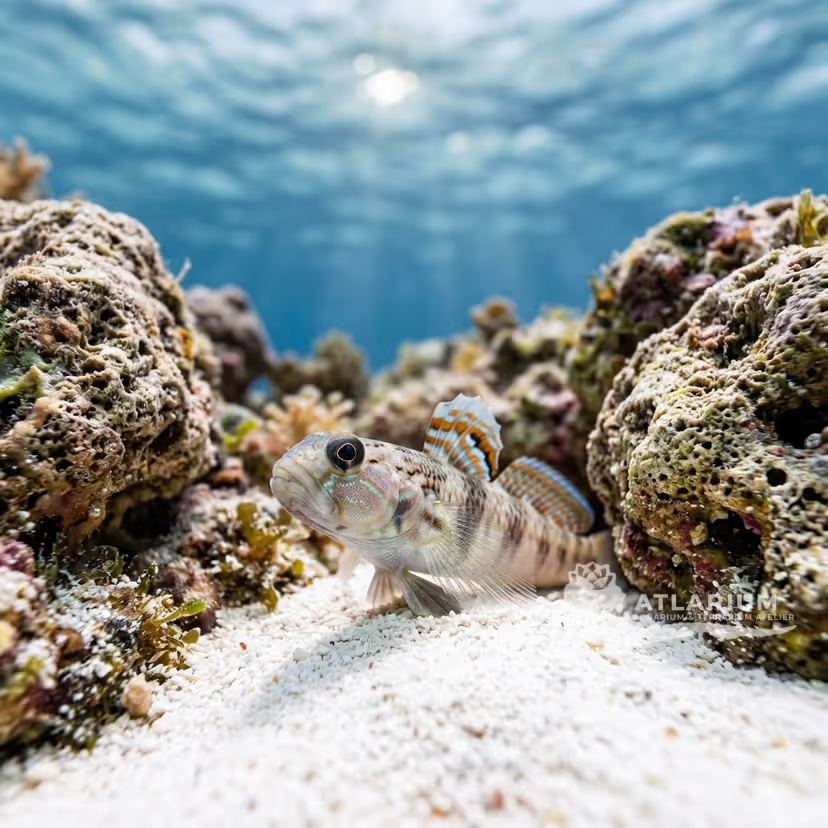
View details->
Downing's Shrimpgoby

Downing's Shrimpgoby

Amblyeleotris downingi

View details->
Linear Blenny

Linear Blenny

Ecsenius lineatus

View details->
Many-spotted blenny

Many-spotted blenny

Ecsenius polystictus

View details->
Yellowtail Clown Blenny

Yellowtail Clown Blenny

Ecsenius melarchus

View details->
Blue assessor

Blue assessor

Assessor macneilli

View details->
Dilemma Blenny

Dilemma Blenny

Ecsenius dilemma

View details->
Beautiful Blenny

Beautiful Blenny

Ecsenius pulcher

View details->
Last updated: 06/30/2026
Canary fangblenny (Meiacanthus oualanensis) Care Guide & Tank Setup | Atlarium