Lyretail Anthias
Pseudanthias squamipinnis
The High-Metabolism Schooler (6 inches / 15 cm). The ultimate Reef Tank schooling fish. A dominant purple male will control a harem of orange females.
Water Temperature
24 - 27 °C
pH Value
8.1 - 8.4
Water type
Marine
Tank level
Middle
Adult size
15 cm
Minimum tank volume
>= 180 L
Minimum group
>= 1
KH
7 - 15 dKH

Species description
Geographical Origin and Habitat: Red Sea, Indian Ocean and western Pacific. They inhabit spectacular reef drop-offs and coral pinnacles exposed to strong ocean currents, forming clouds of thousands of individuals.
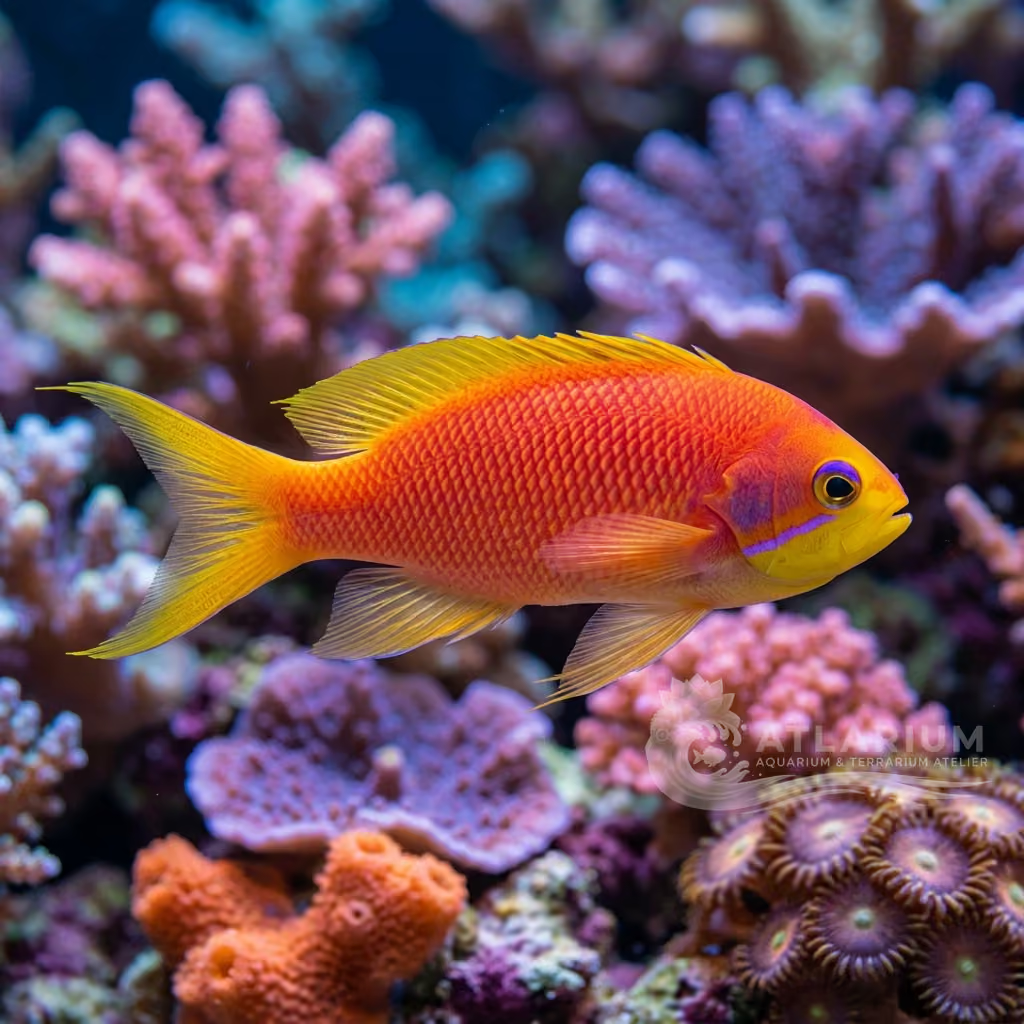
Taxonomy and Morphology: Lyretail Anthias (Pseudanthias squamipinnis). The queen of the reef (Serranidae). Hydrodynamic body, terminal mouth to catch plankton on the run. The name "Lyretail" derives from the majestic lyre-shaped tail (forked with long extensions).
Social Behavior: Hierarchical and diurnal school. They are not solitary fish: they need a group (Harem) of at least 5-8 specimens. The dominant male hovers above the females, performing continuous choreographies (U-Dives) to defend the territory.
Coloration and Sexual Dimorphism: Protogynous hermaphrodites (sex change). Females are bright sunny orange-yellow with a blue-purple line (eyeshadow) across the eye. The dominant male changes radically: he becomes intense fuchsia-reddish, with the first ray of the dorsal fin extended like an antenna and a square spot on the pectoral.

Care, breeding and tankmates
Aquarium Setup: Large and turbulent Reef (Minimum 120 cm / 48 inches). They need a huge amount of space for free swimming in the column and currents generated by very powerful wavemakers. Open rockwork with crevices to sleep at night.
Diet and Feeding: The Planktivore's Curse. In nature they pick plankton every 5 minutes. In the tank they MUST be fed at least 3-4 times a day with Mysis, Calanus, lobster eggs or brine shrimp nauplii. If fed only once a day, they waste away rapidly and die (Fading).
Water Quality: The water must be pristine (very low nitrates and phosphates), which conflicts with the need to throw huge amounts of food into the tank 4 times a day. High-performance Skimmers are the only solution.
Compatibility and Cohabitation: Perfect community fish (100% Reef Safe). They ignore corals and invertebrates. The only aggression is intraspecific: NEVER insert two males in the same tank, they will kill each other for control of the females.
Aquarium Breeding: Very complicated. Although they form stable harems and lay pelagic eggs in the aquarium at sunset (darting to the surface), raising the microscopic larvae requires live copepod cultures almost impossible to manage at home.
Risks and Diseases: Hierarchy Collapse. If you buy a group of only "juveniles", the largest female will turn into a male in 2-3 weeks. But if the dominant male dies, another female will change sex. During this transition, the new leader becomes ruthlessly aggressive, sometimes causing the subordinate females to die of stress.

Geographic origin and distribution
Red Sea, Indian Ocean and western Pacific. They inhabit spectacular reef drop-offs and coral pinnacles exposed to strong ocean currents, forming clouds of thousands of individuals.
Origin
Tropical oceans and reefsSouth and Southeast Asia

Fish profile
- Temperament
- Semi-aggressive
- They are generally peaceful but can show mild aggression within their own species to establish a pecking order. The dominant male will often display and occasionally chase females to keep them in line. Towards other fish species, they remain indifferent and docile.
- Diet
- Omnivore
- As active carnivores, they primarily hunt for small crustaceans and plankton in their natural habitat. Provide them with a mix of mysis shrimp, enriched brine shrimp, and high-quality carnivore flakes. A varied diet is essential to maintain their vibrant coloration.
- Life expectancy
- 5-7 years
- Adult size
- 15 cm
- Sex ratio
- Harem
- To prevent aggression, they should be kept in a harem consisting of one male and several females. An optimal group includes one male alongside four to eight females. Multiple males in the same tank will fight intensely unless the aquarium is massive.
- Feeding frequency
- Twice daily
- Because of their active nature, they require multiple feedings throughout the day. It is generally recommended to feed them small portions at least three times daily. Utilizing an automatic feeder can greatly assist in meeting their dietary schedule.
- Bioload
- Medium
- This fish generates a significant bioload due to its frequent feeding schedule. Managing this waste requires robust filtration systems. Regular maintenance and water changes are vital to keep nitrates in check.
- Flow
- Moderate
- Pseudanthias squamipinnis needs steady, moderate circulation distributed across the aquarium rather than a narrow, forceful jet. Large and turbulent Reef (Minimum 120 cm / 48 inches). They need a huge amount of space for free swimming in the column and currents generated by very powerful wavemakers. This preserves useful water exchange while retaining calmer shelter for rest and feeding.
- Jump risk
- Yes
- These fish have a known tendency to jump out of open aquariums. A secure lid or a fine mesh cover is an absolute requirement to prevent fatal accidents. Avoid sudden lighting changes or aggressive tank mates to minimize startle responses.
- Reproduction
- Oviparous
- They are protogynous hermaphrodites, meaning all individuals are born female and the most dominant will transition to male. They reproduce via pelagic spawning, releasing eggs and sperm into the water column. Rearing the fry in captivity is remarkably difficult due to their specific planktonic food needs.
- Compatibility & tankmates
- Peaceful
- They are relatively peaceful community fish that are considered excellent for reef tanks. They coexist beautifully with other non-aggressive marine species. It is best to avoid keeping them with overly aggressive predators or large species that could swallow them.
- Tank level
- Middle
- They are predominantly open-water swimmers that utilize the middle and upper levels of the tank. They need plenty of unobstructed swimming space to be happy. They will also use rockwork to sleep in and retreat when they feel threatened.

Scientific Parameters & Models
FishBase
Window to the official scientific data of the species
FishBase v25.04Data synced on: 06/15/2026
- Trophic level
- 3.4 ± 0.45 se
- Resilience
- High (less than 15 months)
- Generation time
- 1.8 years
- Phylogenetic uniqueness (PD50)
- 0.5
- Bayesian Length-Weight
- a = 0.01862, b = 2.96
- VulnerabilityLow vulnerability (23 / 100)

Related species
Recommendations grouped by close relatives, companion choices, and similar care.