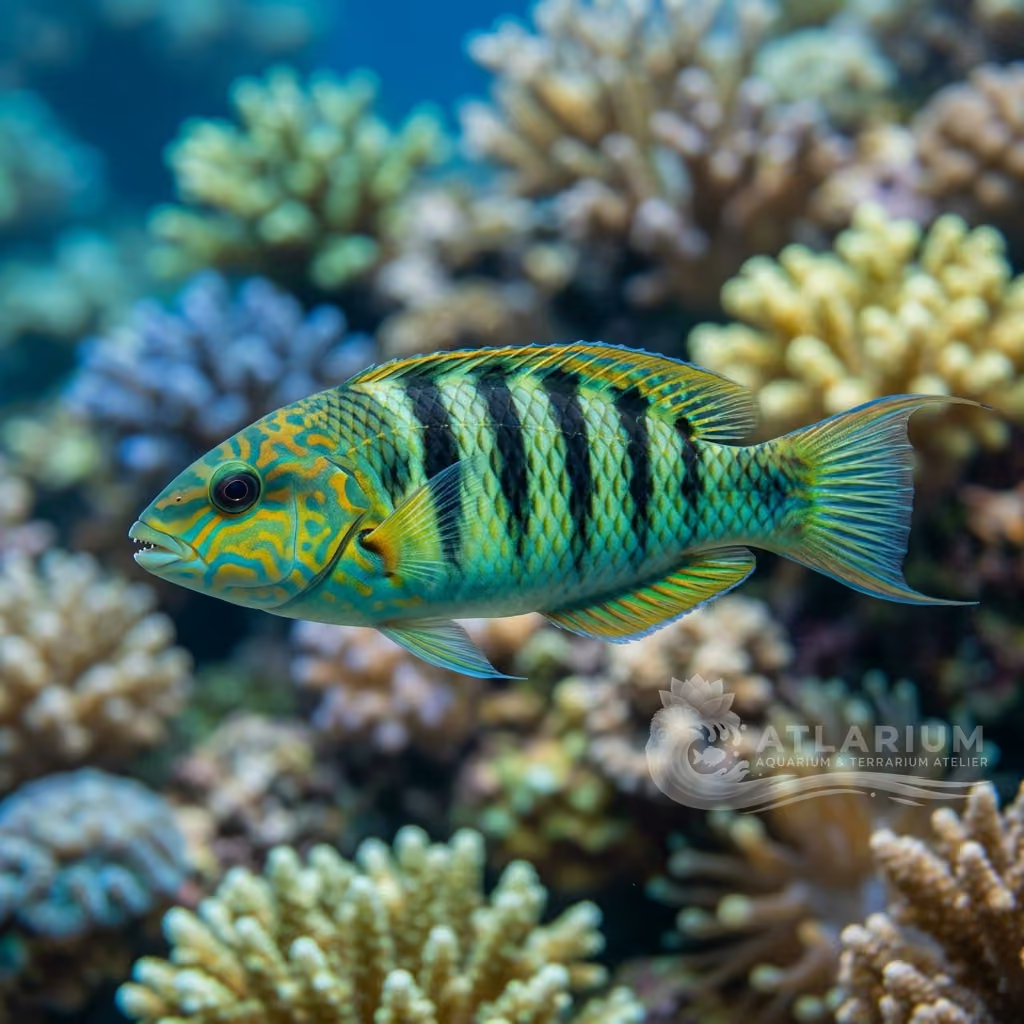
Fantail filefish
Pervagor spilosoma
The Fantail Filefish is a spectacular Hawaiian endemic boasting a yellow-orange body and a large, fan-shaped red tail. Requires a specialized reef layout with mature live rock.
Water Temperature
24 - 27 °C
pH Value
8.1 - 8.4
Water type
Marine
Tank level
Bottom and middle
Adult size
12 cm
Minimum tank volume
>= 280 L
Minimum group
>= 1
KH
8 - 12 dKH

Species description
Geographical Origin and Habitat: Pervagor spilosoma is a marine fish endemic to the Hawaiian Islands and Johnston Atoll in the Central Pacific. It inhabits shallow coral reefs, rocky areas, and zones with dense growth of branching corals (particularly of the genus Pocillopora), at depths ranging from 5 to 30 meters. It is closely associated with reef structures, where it seeks food or shelter among coral branches, avoiding open sand flats.
Taxonomy and Morphology: It belongs to the family Monacanthidae (filefishes) and the genus Pervagor. It features a laterally compressed body with a pointed snout and a thick, leathery skin covered in tiny rough scales. It possesses a strong, serrated first dorsal spine above the eye, which it can erect and lock vertically for defense or to wedge itself into crevices. The caudal fin is large and fan-shaped. It grows to 12-15 cm.
Social Behavior: This is a mostly solitary species, though adults are sometimes seen in stable pairs. It exhibits shy and cautious behavior, moving slowly among corals and rocks. It displays intraspecific territoriality toward members of the same sex or similar filefish species, but is peaceful toward other families. It spends the day exploring the rockwork for food.
Coloration and Sexual Dimorphism: Its coloration is highly vibrant and distinctive: the body has a yellow or light orange background color, entirely covered with numerous small black spots. Its most striking feature is the large, fan-shaped caudal fin of a bright orange-red or fire-red color, bordered by a sharp black margin. There is no visible external sexual dimorphism between males and females.

Care, breeding and tankmates
Aquarium Setup: Requires a medium-sized aquarium of at least 150-200 liters. The layout should replicate a reef environment with plenty of live rock arranged to form caves, crevices, and shaded passages, along with branching coral skeletons to mimic its natural habitat. It is important to maintain moderate water current, avoiding turbulent or high-velocity water flows.
Diet and Feeding: It is an opportunistic omnivore. In the wild, it feeds on algae, detritus, coral polyps, and small benthic invertebrates. In captivity, it must be offered a varied diet that includes high-quality frozen foods like mysis, brine shrimp, chopped clams, and shrimp. It is essential to feed dried nori sheets and spirulina-enriched dry foods to satisfy its herbivorous requirements.
Water Quality: Requires stable and clean water parameters: temperature 23-26 °C, pH 8.1-8.4, specific gravity 1.020-1.025, and KH 8-12. An efficient protein skimmer and regular water changes are recommended to keep nitrate and phosphate levels low, as the fish can show sensitivity to poor water quality over time.
Compatibility and Cohabitation: This species is not considered fully reef-safe. It may nip at and damage the polyps of stony corals (especially SPS) and soft corals, and it will consume small mobile invertebrates like micro-shrimp or feather dusters. It coexists peacefully with calm community fish of similar or larger size, such as tangs, clownfish, and wrasses. Avoid aggressive predators.
Aquarium Breeding: Breeding in home aquariums is extremely difficult, and no significant successes have been reported. In the wild, the pair deposits adhesive eggs on the substrate or filamentous algae, which are then fertilized and guarded until hatching. The larvae undergo a long pelagic phase in open ocean waters before settling.
Risks and Diseases: It is susceptible to common marine parasites like marine ich (Cryptocaryon) and velvet, particularly during the initial acclimation phase. An inadequate diet or lack of essential vegetable matter can lead to a weakened immune system and a loss of color intensity in the tail. A preventive quarantine period is highly recommended.

Geographic origin and distribution
Pervagor spilosoma is a marine fish endemic to the Hawaiian Islands and Johnston Atoll in the Central Pacific. It inhabits shallow coral reefs, rocky areas, and zones with dense growth of branching corals (particularly of the genus Pocillopora), at depths ranging from 5 to 30 meters. It is closely associated with reef structures, where it seeks food or shelter among coral branches, avoiding open sand flats.
Origin
Tropical oceans and reefs

Fish profile
- Temperament
- Territorial
- Peaceful but shy, especially when first introduced to a new environment. They can be easily intimidated by fast, aggressive tankmates and may refuse to eat if stressed. Once established, they are curious and deliberate in their movements around the live rock.
- Diet
- Omnivore
- Omnivorous with a specialized diet in the wild consisting of algae, sponges, and tunicates. In captivity, they must be offered a diverse mix of frozen mysis shrimp, brine shrimp, and high-quality marine algae or nori. Supplementing their diet with sponge-based commercial foods is highly recommended.
- Life expectancy
- 4-5 years
- Adult size
- 12 cm
- Sex ratio
- Solitary
- Best kept singly in most home aquariums. If a large enough tank is provided, a known mated male-female pair might coexist peacefully. Mixing multiple males or unsexed individuals usually results in lethal aggression.
- Feeding frequency
- Twice daily
- Needs to be fed small amounts 2 to 3 times per day. They are continuous grazers that do poorly if fed only once daily. Providing live rock for them to graze on between meals helps satisfy their natural foraging behavior.
- Bioload
- Medium to High
- Moderate bioload for a marine fish of its size. Requires a mature protein skimmer and good biological filtration to handle their waste. Consistent maintenance and water changes are essential for their long-term health in an aquarium.
- Flow
- Strong
- Prefers moderate water flow that mimics the currents found on natural coral reefs. They are not incredibly strong swimmers, so excessively turbulent areas should be avoided. A gentle, varied flow throughout the tank allows them to comfortably maneuver.
- Jump risk
- No
- Reproduction
- Oviparous
- Rarely bred in captivity. They are pelagic spawners that release their eggs and sperm into the water column. Raising the tiny fry requires specialized cultures of microscopic zooplankton, making it a challenge for home aquarists.
- Compatibility & tankmates
- Not reef safe
- Generally peaceful towards heterospecifics but may pick at slow-moving or long-finned tankmates. Not reef safe, as they will readily consume various corals, sponges, and small ornamental invertebrates. Best housed in a fish-only-with-live-rock (FOWLR) system with moderately peaceful companions.
- Tank level
- Middle/Bottom
- Mid-level to lower-level swimmers. They spend most of their day weaving in and out of rockwork inspecting surfaces for food. They appreciate an aquascape with plenty of caves, crevices, and hiding places.

Scientific Parameters & Models
FishBase
Window to the official scientific data of the species
FishBase v25.04Data synced on: 06/15/2026
- Trophic level
- 2.8 ± 0 se
- Resilience
- High (less than 15 months)
- Phylogenetic uniqueness (PD50)
- 0.5039
- Bayesian Length-Weight
- a = 0.01905, b = 2.93
- VulnerabilityLow vulnerability (10 / 100)

Related species
Recommendations grouped by close relatives, companion choices, and similar care.