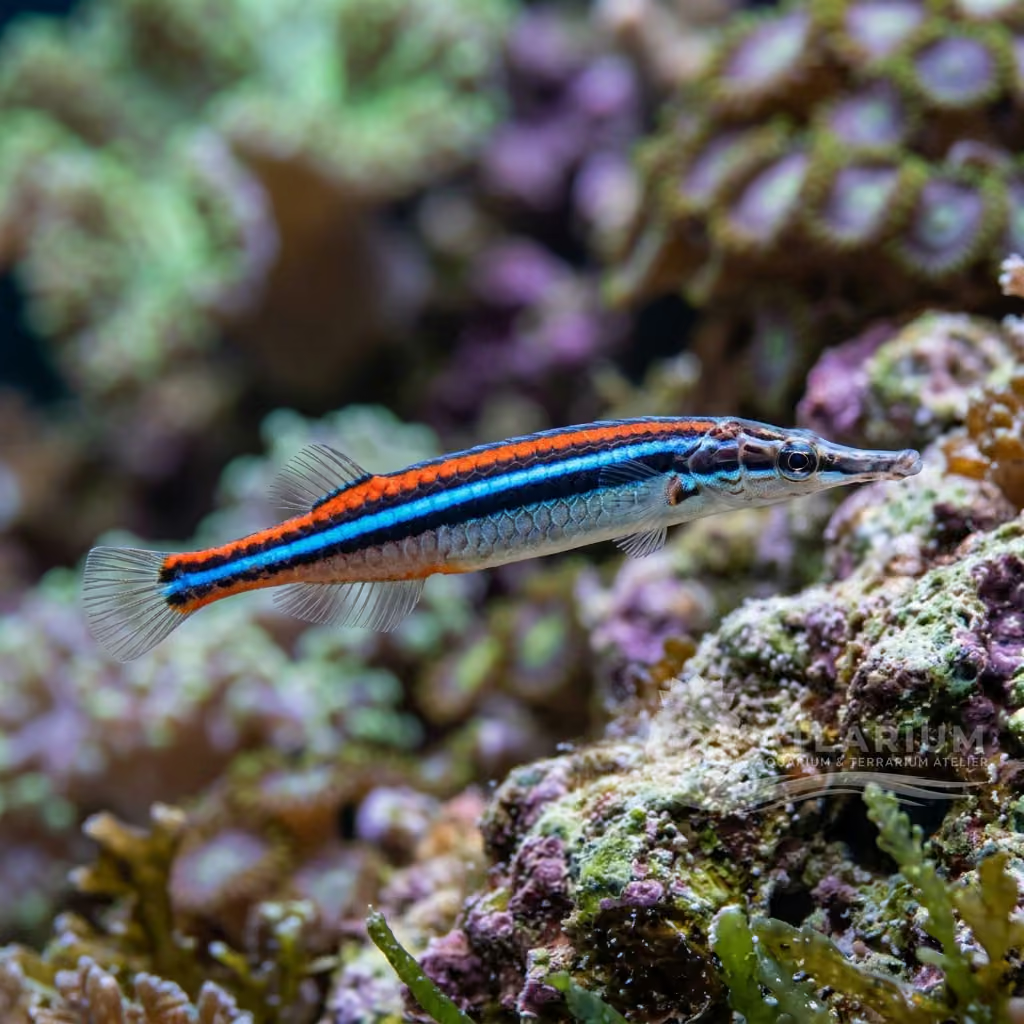
Whitespotted filefish
Cantherhines macrocerus
The whitespotted filefish is a remarkably adaptable Western Atlantic species. Peaceful and slow-moving, it demands a massive marine system with expansive rock formations and vast open swimming areas.
Water Temperature
22 - 26 °C
pH Value
8.1 - 8.4
Water type
Marine
Tank level
Bottom and middle
Adult size
45 cm
Minimum tank volume
>= 500 L
Minimum group
>= 1
KH
8 - 12 dKH

Species description
Geographical Origin and Habitat: Cantherhines macrocerus is native to the tropical and subtropical waters of the Western Atlantic Ocean. Its range extends from Bermuda and the Bahamas, through Florida and the Gulf of Mexico, and down the Caribbean Sea to the southern coasts of Brazil. It inhabits shallow coral reefs, rocky shores, and seagrass beds at depths ranging from 2 to 25 meters. It is often found associated with areas rich in sea fans (gorgonians), sponges, and soft corals.
Taxonomy and Morphology: It belongs to the family Monacanthidae (filefishes) and the genus Cantherhines. It features a deep, strongly compressed body covered with a tough, leathery skin containing tiny bristle-like scales. It possesses a strong, lockable first dorsal spine located above the eyes, which it uses to anchor itself inside rock crevices when threatened or during sleep. Adults can reach up to 40 cm in length.
Social Behavior: This is a slow-moving, cautious, and mostly solitary fish, although adults are frequently observed swimming in stable pairs. It has a peaceful temperament toward most other fish but is an active grazer that constantly inspects the substrate for food. It does not show territorial aggression except toward members of its own species or similar filefish in confined spaces.
Coloration and Sexual Dimorphism: It has the ability to change color rapidly (within seconds) to blend with its surroundings or express stress. The typical color pattern varies from orange-brown to olive-grey with prominent white spots. It can quickly shift to a uniform dark brown or pale grey. Mature males develop a dense patch of orange bristles (setae) on the caudal peduncle, which is much more pronounced than in females.

Care, breeding and tankmates
Aquarium Setup: Requires a large marine aquarium of at least 450-500 liters to accommodate an adult specimen. The layout should feature large rockwork formations with caves, arches, and tunnels for hiding, combined with a large open area for swimming. Because it is a slow swimmer, it does not appreciate turbulent water movement, preferring moderate, laminar currents.
Diet and Feeding: It is an omnivore with a very diverse diet. In the wild, it feeds on sponges, gorgonians, hydroids, benthic algae, and small invertebrates. In captivity, it must be offered a varied diet consisting of frozen foods such as mysis, krill, chopped clams, shrimp, and squid. It is essential to include dried nori sheets and herbivore preparations to satisfy its dietary need for plant matter.
Water Quality: Stable and clean water parameters are required: temperature 23-26 °C, pH 8.1-8.4, specific gravity 1.020-1.025, and KH 8-12. A powerful protein skimmer is essential, as this fish produces a high bioload due to its large size and frequent feeding. Nitrates and phosphates should be kept low to prevent health issues.
Compatibility and Cohabitation: This species is not reef-safe. In the aquarium, it will consume sponges, gorgonians, ornamental shrimp, small crabs, and will nip at the polyps of stony and soft corals. It is ideal for fish-only-with-live-rock (FOWLR) aquariums, where it can live with robust, peaceful tankmates like tangs, large wrasses, large angelfish, and calm triggerfish. Never house with other filefish.
Aquarium Breeding: Breeding in home aquariums has not been documented. In the wild, they are demersal spawners: the pair deposits adhesive eggs in a nest prepared on sandy or rocky substrate, which is guarded until hatching. The larvae undergo a pelagic phase in open ocean waters before settling onto shallow coastal reefs.
Risks and Diseases: It is susceptible to marine parasites such as marine ich (Cryptocaryon) and velvet, particularly during the acclimation phase. A diet lacking variety can lead to nutritional deficiencies and weight loss. Using a quarantine tank is highly recommended to ensure the fish is eating well and free of disease before introduction to the main tank.

Geographic origin and distribution
Cantherhines macrocerus is native to the tropical and subtropical waters of the Western Atlantic Ocean. Its range extends from Bermuda and the Bahamas, through Florida and the Gulf of Mexico, and down the Caribbean Sea to the southern coasts of Brazil. It inhabits shallow coral reefs, rocky shores, and seagrass beds at depths ranging from 2 to 25 meters. It is often found associated with areas rich in sea fans (gorgonians), sponges, and soft corals.
Origin
Tropical oceans and reefsExtra-Amazon South AmericaCentral America and CaribbeanNorth America

Fish profile
- Temperament
- Territorial
- Generally peaceful but exceedingly shy, this fish requires time and patience to properly acclimate. It is easily startled and will frequently retreat into rockwork if the aquarium is too chaotic. Once it feels completely safe, it will gently explore the open water with a curious demeanor.
- Diet
- Omnivore
- In the wild, its omnivorous diet includes a significant portion of marine sponges, algae, and small benthic invertebrates. Captive diets must recreate this variety with high-quality commercial sponge-based foods and fresh seaweed. Chopped meaty foods should also be offered regularly to ensure balanced nutrition.
- Life expectancy
- 5-7 years
- Adult size
- 45 cm
- Sex ratio
- Pair
- Sexual dimorphism is not outwardly apparent, making visually identifying pairs extremely challenging. While they can sometimes be kept in mated pairs, severe aggression may quickly emerge if they are simply two fish of the same sex. If attempting a pair, a large tank with plenty of visual barriers is required.
- Feeding frequency
- Twice daily
- This active species has a high metabolism and should be fed two to three times daily. Offering multiple smaller meals helps reduce aggression and prevents nutrient spikes in the tank. A varied schedule combining pellets and frozen food yields the best results.
- Bioload
- High
- The bioload for this species is moderately high, requiring a well-established filtration system. Oversized protein skimmers and frequent mechanical filter cleaning are recommended. Regular and substantial water changes are crucial to keep the water parameters completely stable.
- Flow
- Moderate
- A moderate, varied water flow perfectly simulates its natural reef environment. The flow should be strong enough to keep detritus suspended, but not so strong that the fish struggles to swim. Random, alternating currents are particularly appreciated.
- Jump risk
- No
- Reproduction
- Oviparous
- They typically scatter their adhesive eggs loosely over vegetation, algae, or rocky surfaces. Neither parent provides any care or protection for the eggs once spawning is fully complete. Consequently, eggs must be moved to a dedicated rearing setup to prevent them from being eaten.
- Compatibility & tankmates
- Reef safe
- This species is generally peaceful towards other fish but may occasionally nip at fleshy corals. It can be kept with a wide variety of non-aggressive tank mates in a community setup. Observation is key if housed in a reef tank, as some individuals are more prone to tasting corals than others.
- Tank level
- Middle/Bottom
- This species is an extremely active swimmer that constantly cruises through the middle to upper levels of the tank. It demands a vast amount of open swimming space to remain physically and psychologically healthy. While it may occasionally investigate the rocks, it prefers the open water column.

Related species
Recommendations grouped by close relatives, companion choices, and similar care.