Radial Filefish
Acreichthys radiatus
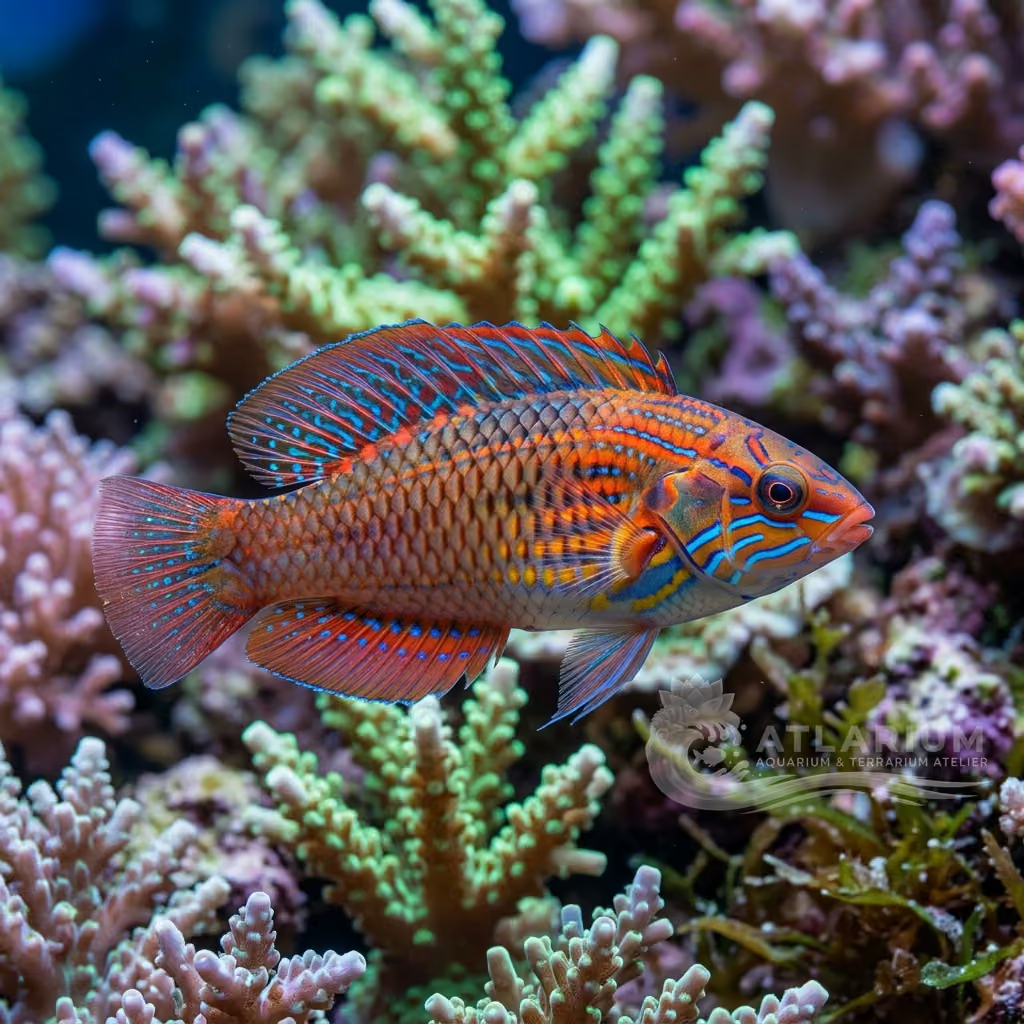
The radial filefish is a master of camouflage, seamlessly blending into soft corals and macroalgae. Small and peaceful, it needs gentle currents and abundant live rock to mimic its natural habitat.
Water Temperature
23 - 27 °C
pH Value
8.1 - 8.4
Water type
Marine
Tank level
Middle
Adult size
7 cm
Minimum tank volume
>= 100 L
Minimum group
>= 1
KH
8 - 12 dKH

Species description
Geographical Origin and Habitat: Acreichthys radiatus is widely distributed in the tropical waters of the Western Indo-Pacific. It is found from the South China Sea and the Ryukyu Islands (Japan) down to Indonesia, the Philippines, and the Australian Great Barrier Reef. It inhabits coral-rich coastal lagoons and shallow outer reefs, usually associated with soft coral beds (such as Xenia or Nephthea) and macroalgae.
Taxonomy and Morphology: It belongs to the family Monacanthidae, genus Acreichthys. It presents a body that is strongly compressed laterally and rhomboidal in shape. The skin is rough and covered with tiny spinous scales. It reaches a maximum adult length of about 7 centimeters. On the head, there is an erectile and lockable dorsal spine, used to wedge itself between rocks or intimidate predators.
Social Behavior: It is a shy, solitary, and exceptionally cryptic species. It swims slowly with precise movements of the dorsal and anal fins. It possesses an extraordinary ability to change color in a few seconds to blend perfectly with the surrounding environment and the soft corals among which it lives. It is not aggressive towards other fish, except with conspecifics of the same sex.
Coloration and Sexual Dimorphism: The background coloration varies from light brown to olive green or grayish, characterized by a pattern of radial white or cream stripes starting from the eye or distributed along the body. Adult males are distinguished by the presence of small bristles or short spines located on the sides of the caudal peduncle, which are absent or much less developed in females.

Care, breeding and tankmates
Aquarium Setup: It requires an aquarium of at least 100 liters. The tank must be set up with abundant live rock and a significant presence of soft corals (such as Xenia) or macroalgae, which recreate its natural environment and offer shelter. The water flow must be moderate or weak, as it is not a fast swimmer and suffers from excessively strong currents.
Diet and Feeding: It is a specialized carnivore. In nature, it feeds on small benthic invertebrates and the polyps of soft corals. In the aquarium, it must be fed frozen foods such as mysis, brine shrimp, chopped krill, and lobster eggs. It may nip or partially feed on soft corals and hard coral polyps (SPS/LPS), which is an aspect to consider in a reef aquarium.
Water Quality: It requires stable marine parameters and excellent filtration. Temperature: 22-26°C, pH: 8.1-8.4, specific gravity: 1.020-1.025, KH: 8-12. It is sensitive to the accumulation of organic substances, nitrates, and phosphates, which must be controlled regularly through partial water changes and the use of an efficient protein skimmer.
Compatibility and Cohabitation: It is a peaceful fish that can coexist with quiet, small tankmates like gobies, clownfishes, and anthias. It is not completely reef-safe as it may nip the polyps of various corals (especially Xenia and large-polyp stony corals). Avoid cohabitation with aggressive or very fast fish that could intimidate it.
Aquarium Breeding: Breeding in the aquarium is documented but complex. It lays adhesive eggs inside nests prepared on algae or the substrate. Both parents, or mainly the male, guard the nest until hatching. Fry are born tiny and require live rotifers and microalgae in specific growth tanks without mechanical filters.
Risks and Diseases: The main risk is related to initial feeding: newly imported wild specimens may refuse dry or frozen food and die of starvation; the use of live soft corals as an initial food source may be necessary. It is sensitive to skin parasites like Oodinium or Cryptocaryon irritans under severe stress.

Geographic origin and distribution
Acreichthys radiatus is widely distributed in the tropical waters of the Western Indo-Pacific. It is found from the South China Sea and the Ryukyu Islands (Japan) down to Indonesia, the Philippines, and the Australian Great Barrier Reef. It inhabits coral-rich coastal lagoons and shallow outer reefs, usually associated with soft coral beds (such as Xenia or Nephthea) and macroalgae.
Origin
Tropical oceans and reefsSouth and Southeast AsiaEast AsiaAustralia, New Guinea, and Oceania

Fish profile
- Temperament
- Peaceful
- Known for being peaceful and cryptic, this fish is an interesting and quirky addition to a peaceful community tank. They may start off quite shy when newly introduced, often hiding among the rocks. Once acclimated, they become more outgoing and will actively patrol their territory. They generally ignore other fish but may show aggression towards similar-looking filefish.
- Diet
- Omnivore
- Being primarily carnivorous, the Radial filefish requires a varied diet to maintain optimal health and coloration. Offer them a mix of high-quality marine flakes, frozen mysis shrimp, and enriched brine shrimp. They also benefit greatly from having plenty of live rock to graze upon throughout the day. Occasionally offering live foods can stimulate their natural hunting instincts.
- Life expectancy
- 3-5 years
- Adult size
- 7 cm
- Sex ratio
- Solitary
- There are no highly obvious external differences between males and females of this species, making sexing quite difficult. They are usually found singly or in pairs in their natural habitat. In an aquarium setting, it is generally recommended to keep a single individual unless a known bonded pair is acquired. Keeping two males together in a small space can lead to territorial disputes.
- Feeding frequency
- Twice daily
- To replicate their natural continuous grazing behavior, it is best to feed them small amounts multiple times a day. Feeding three to four times daily ensures they receive adequate nutrition without overloading the filtration. Providing an established aquarium with copepods and microalgae allows for supplemental foraging between meals. Consistent feeding helps prevent them from nipping at corals out of hunger.
- Bioload
- Low to Medium
- The Radial filefish produces a moderate bioload that is quite manageable for most well-maintained aquariums. They constantly pick at live rock, which means they produce a steady but small stream of waste. A standard filtration setup combined with a good protein skimmer will easily keep water parameters stable. Regular partial water changes are still recommended to ensure optimal water quality.
- Flow
- Moderate
- The Radial filefish prefers moderate water flow that mimics the gentle currents found on coastal reefs. Extremely strong flow can quickly exhaust them, given their unique body shape and swimming style. It is important to provide calmer resting areas within the rockwork where they can retreat. A varied flow pattern utilizing wavemakers works best to keep the environment dynamic.
- Jump risk
- No
- Reproduction
- Oviparous
- Breeding the Radial filefish in a home aquarium is extremely rare and very difficult to achieve. In the wild, they typically scatter their eggs in the water column or hide them in vegetation. The resulting larvae are planktonic, making them incredibly challenging to raise without specialized commercial setups. Consequently, almost all specimens in the hobby are sustainably collected from the ocean.
- Compatibility & tankmates
- Reef safe
- This species is generally peaceful but is considered 'with caution' for reef tanks as it may nip at soft corals and small invertebrates. The Radial filefish should be housed with other peaceful, non-aggressive tank mates. Avoid keeping them with fast, boisterous fish that might outcompete them for food. They thrive best in a fish-only with live rock (FOWLR) environment.
- Tank level
- Middle
- The Radial filefish is a demersal species that spends most of its time near the bottom and middle levels of the tank. They are closely associated with reefs and will constantly weave in and out of the live rock structures. You will rarely see them swimming in the open upper water column. Providing a complex rockscape with plenty of caves and overhangs is essential for their comfort.

Related species
Recommendations grouped by close relatives, companion choices, and similar care.