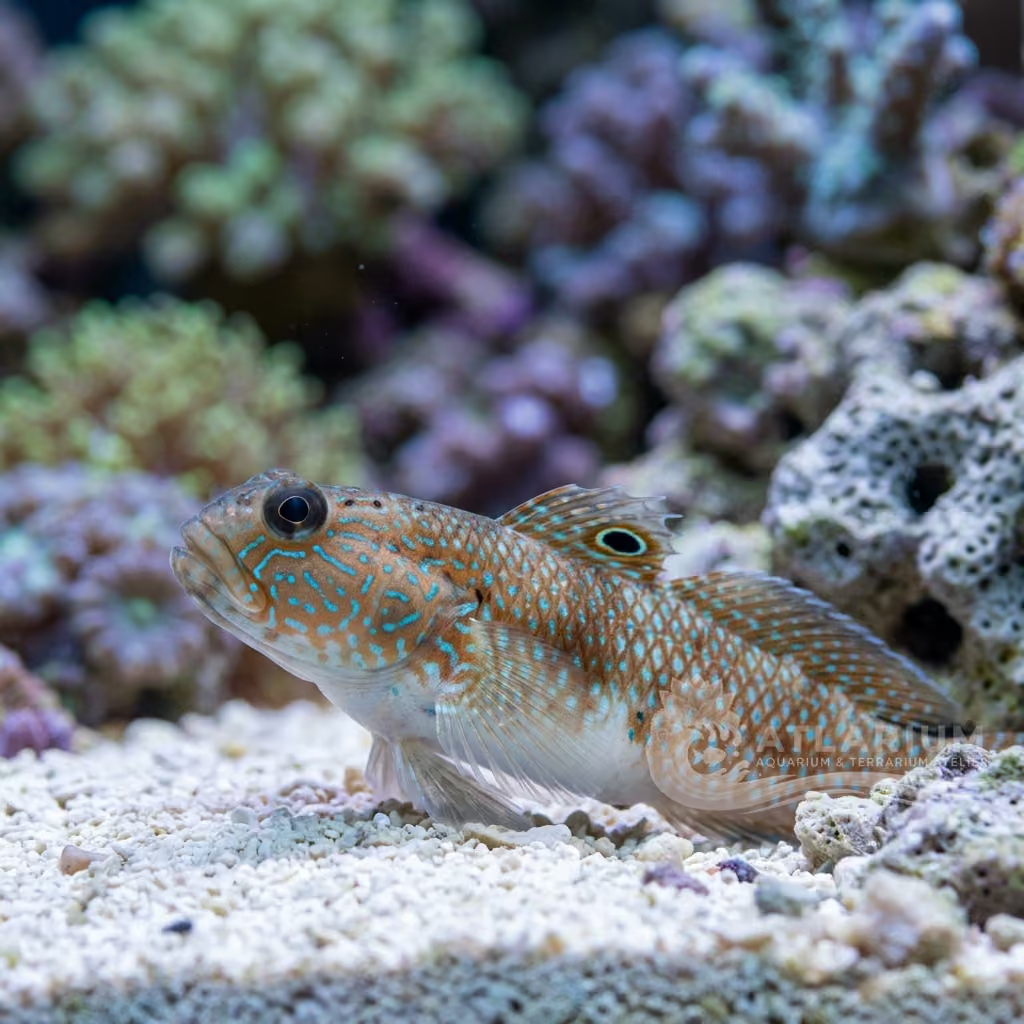
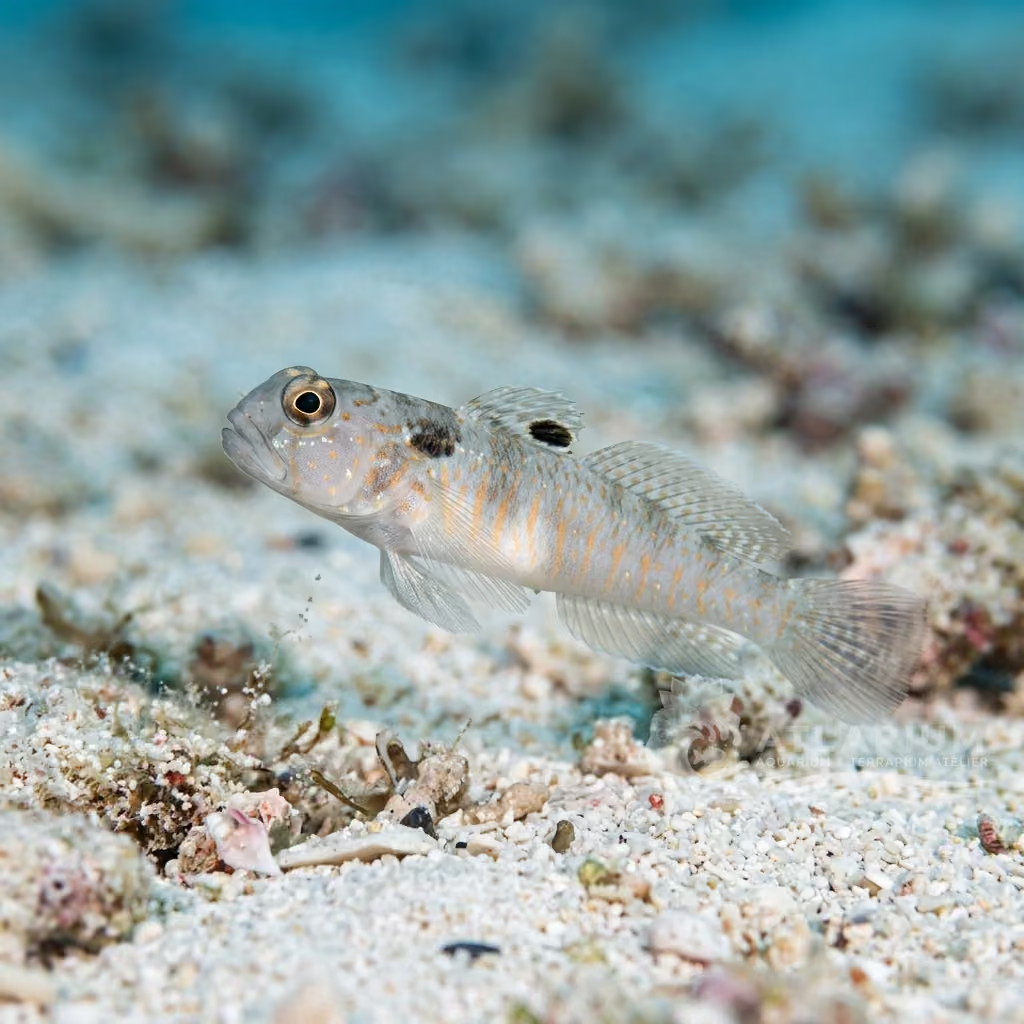
Greenbanded Goby
Tigrigobius multifasciatus
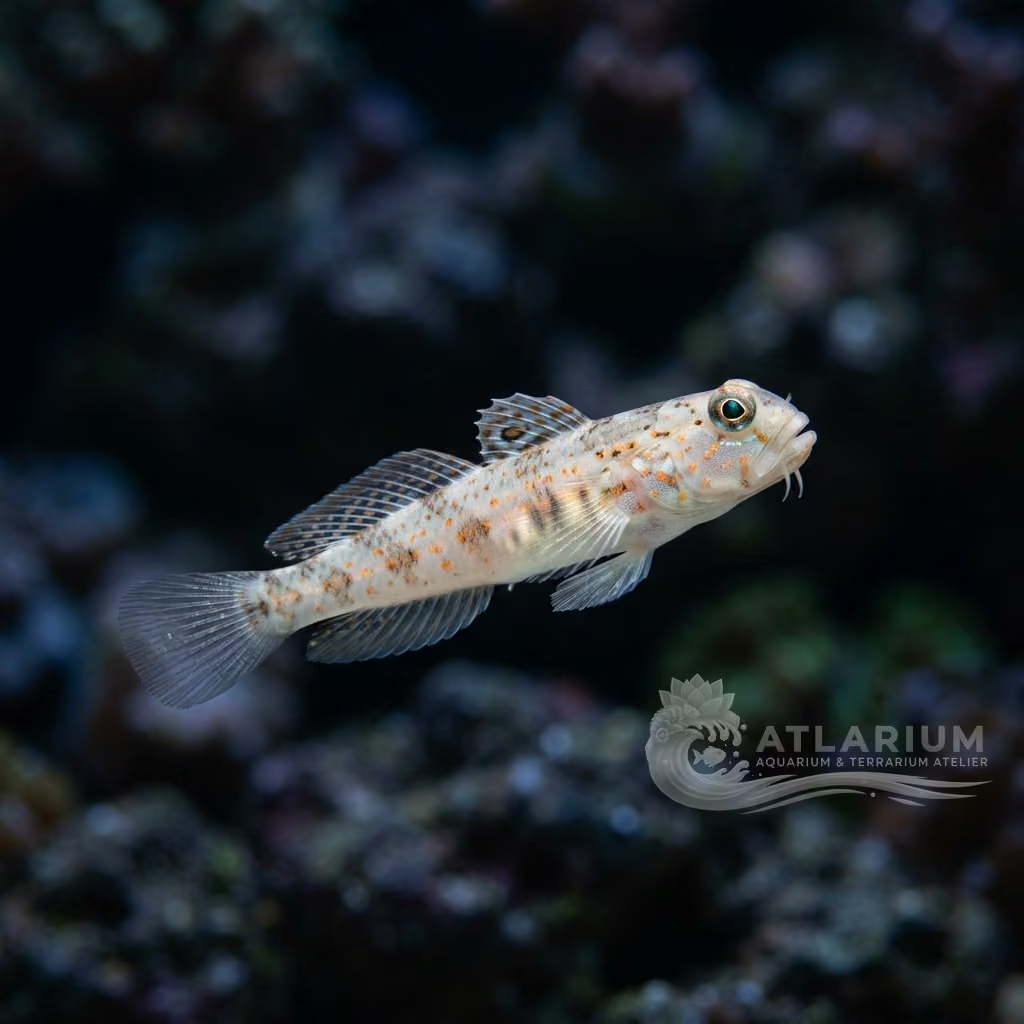
A tiny, striking marine goby native to the Caribbean, featuring vibrant green and white vertical bars and showing a fascinating association with sea urchins.
Water Temperature
23 - 27 °C
pH Value
8.1 - 8.4
Water type
Marine
Tank level
Bottom
Adult size
5 cm
Minimum tank volume
>= 40 L
Minimum group
>= 1
KH
8 - 12 dKH

Species description
Geographical Origin and Habitat: Elacatinus multifasciatus is native to the tropical Western Atlantic and Caribbean Sea, including the Florida Keys, the Bahamas, and coastal Central America. It lives in very shallow reef areas, rocky tide pools, and patch reefs, where it is frequently found in close proximity to or sheltering within long-spined sea urchins of the genus Diadema.
Taxonomy and Morphology: Belonging to the Gobiidae family, the Greenbanded Goby has a slender, elongated, cylindrical body. It features large dorsal eyes and fused pelvic fins that form a suction cup, allowing it to cling to vertical rocks or urchin spines. It is a miniature fish, with adults reaching a maximum length of only 3 to 3.5 centimeters.
Social Behavior: It is a peaceful, shy, and mostly benthic fish, although males can display territorial behavior toward same-sex conspecifics. It spends its time perching on rock surfaces or hovering close to its host sea urchin, rarely swimming in open water. It is highly suitable for dedicated nano-reef aquariums.
Coloration and Sexual Dimorphism: Displays a beautiful coloration characterized by a translucent or off-white body marked by 15-20 vertical emerald-green stripes that fade into yellow or reddish tones around the head. There is no major external sexual dimorphism, though gravid females will appear noticeably rounder than males.

Care, breeding and tankmates
Aquarium Setup: An aquarium of at least 40 to 50 liters (nano-reef) is sufficient. The tank should feature clean live rocks with tiny cracks, caves, and crevices. Introducing a long-spined sea urchin (such as Diadema) is highly recommended to encourage its natural symbiotic shelter behavior.
Diet and Feeding: It is a micro-carnivore. In captivity, it must be fed fine frozen foods such as baby brine shrimp, cyclops, copepods, and finely minced mysis. It can be challenging to transition to dry foods; offer high-quality micro-pellets or powder diets, and feed 2-3 times daily in small quantities near its retreat.
Water Quality: Requires clean, stable water conditions: temperature 22°C to 26°C, pH between 8.1 and 8.4, specific gravity between 1.023 and 1.025, and low nutrient levels (nitrates close to zero). Provide moderate water flow and efficient aeration to maintain high dissolved oxygen levels.
Compatibility and Cohabitation: Reef-safe and harmless to corals and ornamental invertebrates. It should be kept with other tiny, peaceful species such as neon gobies, dartfish, or small cardinalfish. Avoid housing it with larger or aggressive fish (such as wrasses, hawkfish, or dottybacks) that would easily eat it.
Aquarium Breeding: Breeding in home aquariums is possible and has been achieved. The pair spawns in small crevices or hollow tubes, and the male guards the clutch until hatching. Raising the tiny fry requires dedicated cultures of s-strain rotifers and specialized greenwater setups.
Risks and Diseases: The main threat is starvation due to competition with faster, larger fish; ensure it receives food directly. They can be sensitive to copper-based medications and are vulnerable to marine ich or velvet if stressed by poor water quality or aggressive tankmates.

Geographic origin and distribution
Elacatinus multifasciatus is native to the tropical Western Atlantic and Caribbean Sea, including the Florida Keys, the Bahamas, and coastal Central America. It lives in very shallow reef areas, rocky tide pools, and patch reefs, where it is frequently found in close proximity to or sheltering within long-spined sea urchins of the genus Diadema.
Origin
Tropical oceans and reefsExtra-Amazon South AmericaCentral America and CaribbeanNorth AmericaEast Asia

Fish profile
- Temperament
- Peaceful
- They are deeply peaceful, wonderfully curious, and highly endearing little fish. They love to sit at the entrance of their caves observing the outside world. Their bright green stripes and comical perching behavior make them highly desirable.
- Diet
- Carnivore
- This small carnivore requires a diet specifically tailored to its tiny mouth size. Daily offerings of frozen cyclops, baby brine shrimp, and crushed flakes are optimal. They will diligently hunt for naturally occurring microscopic copepods among the live rock.
- Life expectancy
- 2-3 years
- Adult size
- 5 cm
- Sex ratio
- Flexible
- They can be kept singly or in small, peaceful groups within a nano tank. Purchasing a small group often allows a bonded male-female pair to form naturally. Once paired, they will generally share a tiny cave or shell harmoniously.
- Feeding frequency
- Twice daily
- Feed them one to two times daily to ensure they receive adequate nutrition. Because they stay near the bottom, targeted spot feeding is highly recommended. Ensure food reaches their area before aggressive surface feeders consume it all.
- Bioload
- Low
- The Greenband goby adds a functionally zero bioload to the overall aquarium ecosystem. It is an exceptional choice for heavily stocked nano or pico reefs. Standard, routine water changes are perfectly sufficient for maintaining high water quality.
- Flow
- Moderate
- They prefer a low to moderate water flow that mimics calm, protected reef crevices. High flow will stress them and make it difficult for them to comfortably perch. A gentle current allows them to carefully watch for passing microscopic food particles.
- Jump risk
- Yes
- Being an obligate bottom-dweller, the jump risk is considered incredibly low. They instinctively seek cover under rocks or shells when they feel threatened. A standard aquarium lid is always beneficial but not strictly necessary for preventing jumps.
- Reproduction
- Oviparous
- This species will regularly spawn in home aquariums if a healthy pair is established. They lay small, hidden clutches of eggs inside empty snail shells or tiny caves. The resulting larvae are microscopic, making them exceedingly difficult for hobbyists to rear.
- Compatibility & tankmates
- Peaceful
- It is remarkably peaceful and entirely safe to keep with all corals and ornamental shrimp. It must be housed exclusively with other very peaceful, similarly sized micro-fish. Keep it far away from predatory fish that could easily fit it in their mouths.
- Tank level
- Bottom
- They spend their entire lives in the lower third of the aquarium near the substrate. They constantly hop between small rocks, empty shells, and the sand bed. Providing ample rubble and intricate rockwork is essential for their psychological comfort.

Scientific Parameters & Models
FishBase
Window to the official scientific data of the species
FishBase v25.04Data synced on: 06/15/2026
- Trophic level
- 3.2 ± 0.3 se
- Resilience
- High (less than 15 months)
- Phylogenetic uniqueness (PD50)
- 0.5
- Bayesian Length-Weight
- a = 0.00741, b = 3.09
- VulnerabilityLow vulnerability (10 / 100)

Related species
Recommendations grouped by close relatives, companion choices, and similar care.