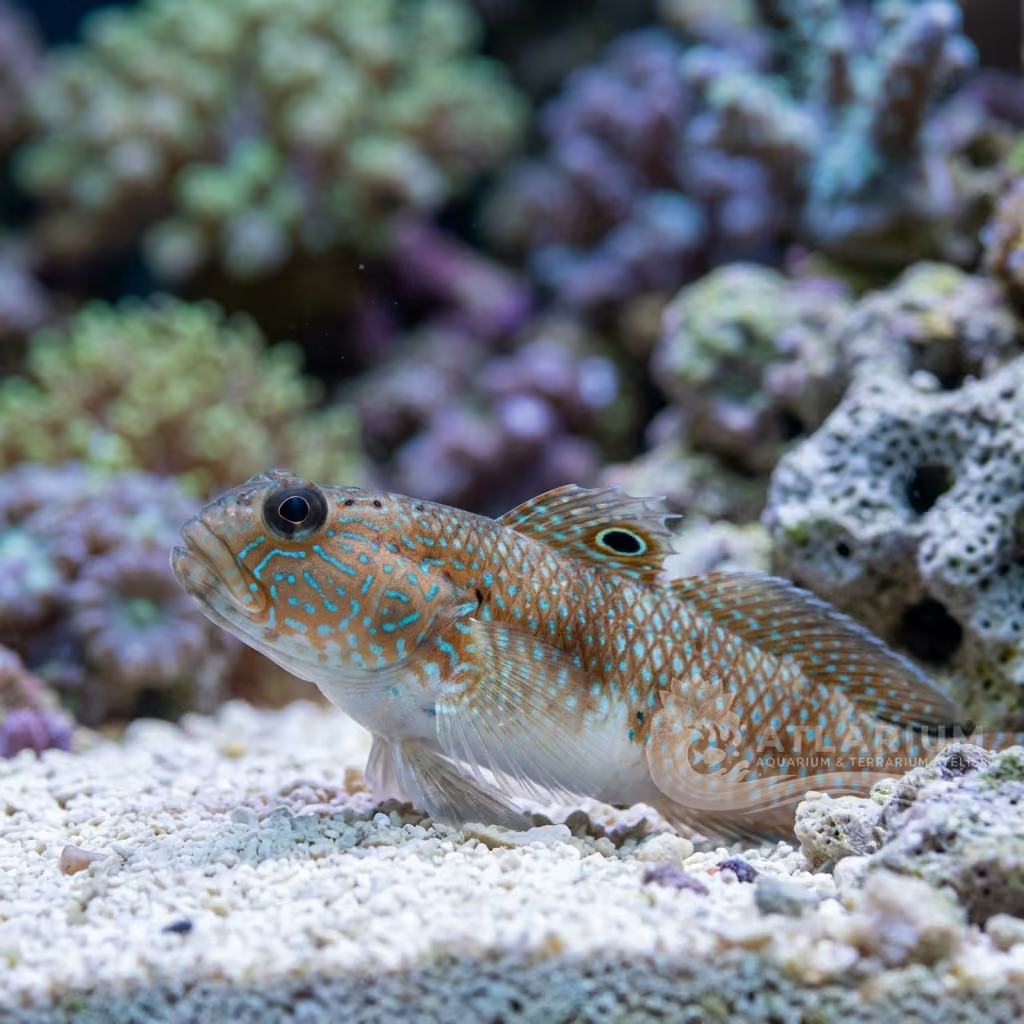
Two-stripe Goby
Eviota bifasciata
Among the smallest vertebrates on Earth, this glassy pygmy goby sports twin dark stripes. Highly social and defenseless, it is entirely reliant on the safety of Acropora coral branches to survive.
Water Temperature
23 - 27 °C
pH Value
8 - 8.4
Water type
Marine
Tank level
Bottom
Adult size
2.5 cm
Minimum tank volume
>= 30 L
Minimum group
>= 3
KH
8 - 12 dKH

Species description
Geographical Origin and Habitat: Western Indo-Pacific, common in Indonesia, Philippines, and Papua New Guinea. Inhabits protected coral reefs and shallow lagoons among soft corals. This tiny goby inhabits sheltered coral reefs of the Indo-Pacific, frequently associated with branching Acropora corals.
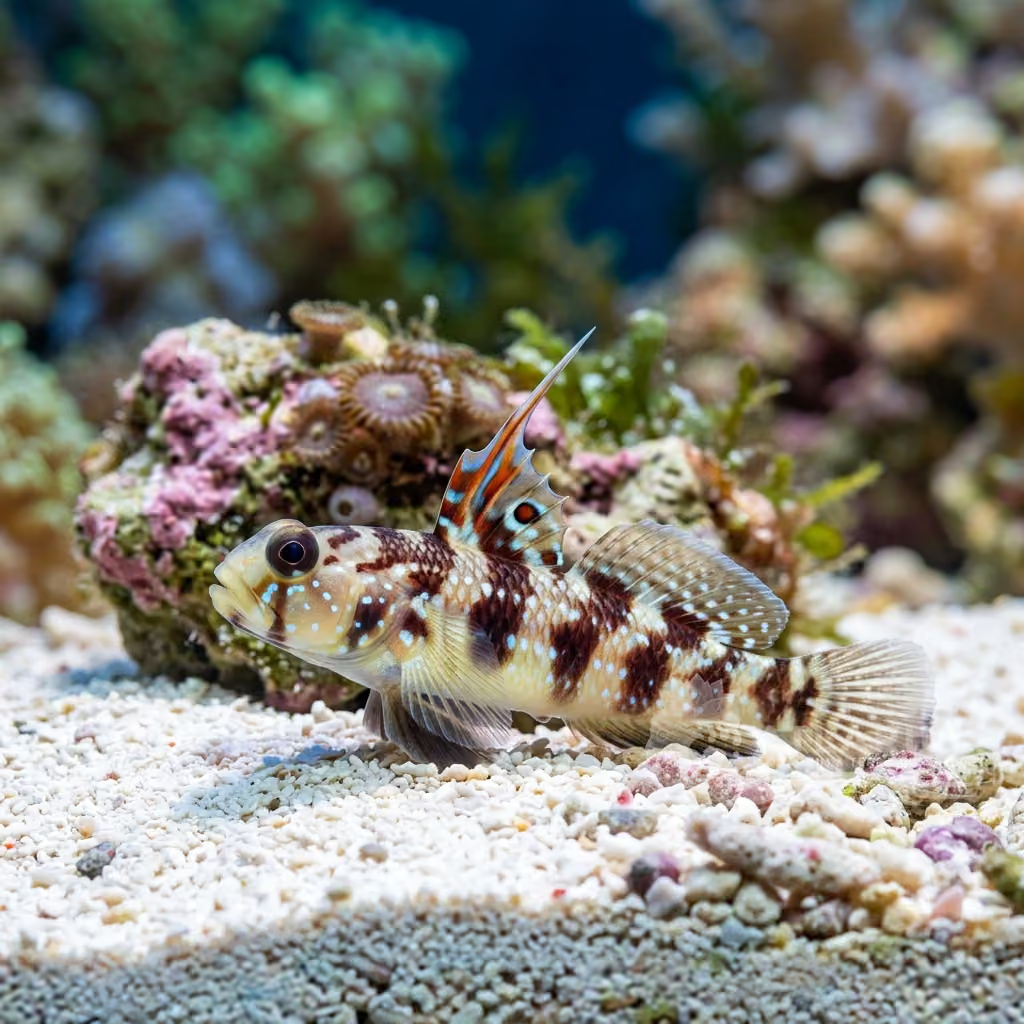
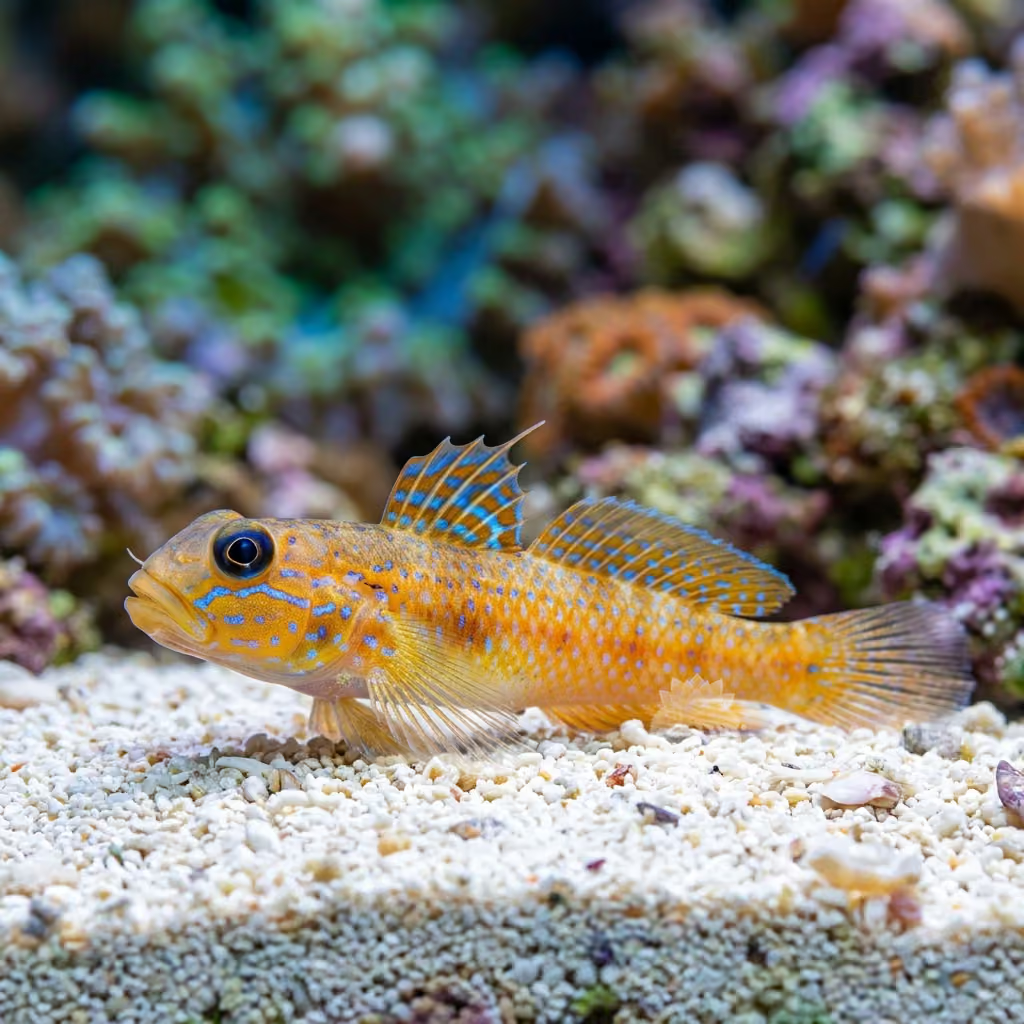
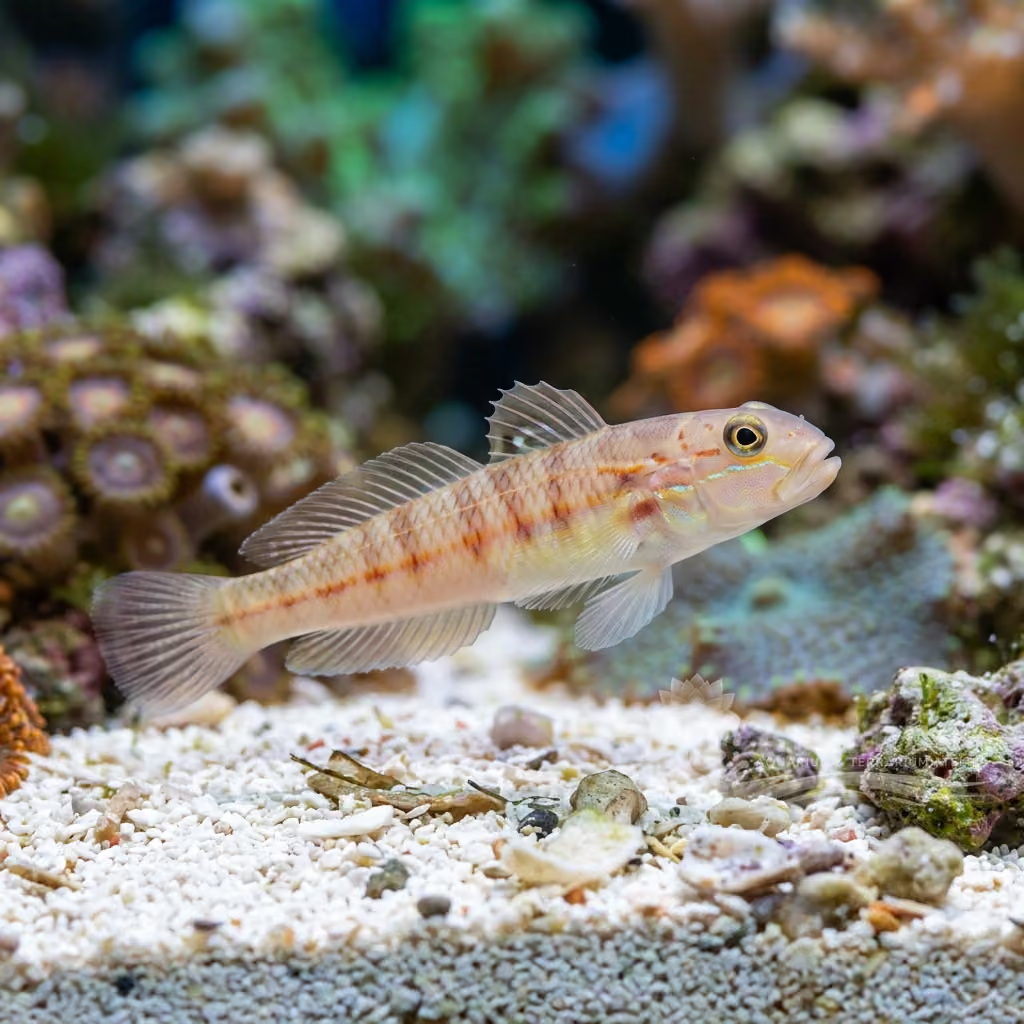
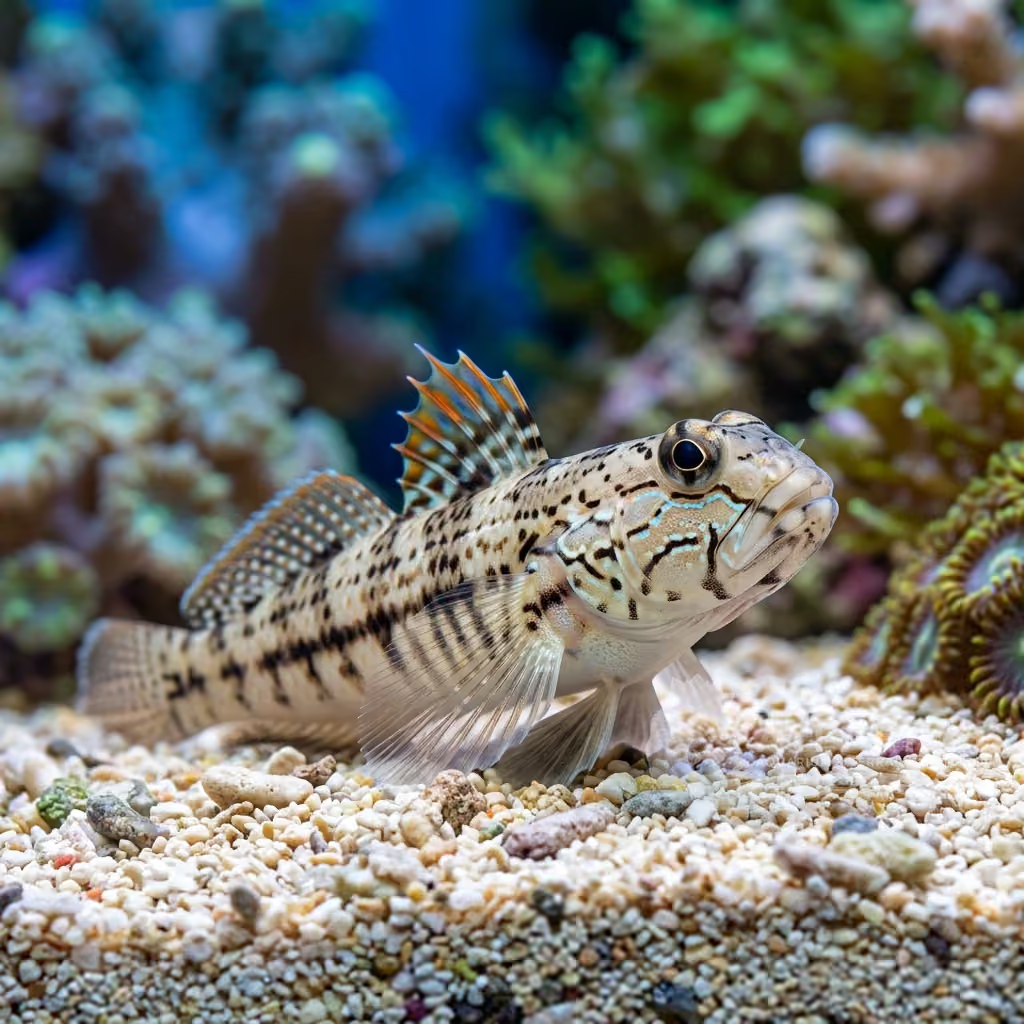
Taxonomy and Morphology: Family Gobiidae. Genus Eviota. One of the shortest fish species in nature, barely reaching 2.5 cm in size. Glassy, compressed body. Its morphology is extremely small, featuring a translucent body that provides excellent camouflage among living coral branches.
Social Behavior: Peaceful, shy, and highly gregarious. Spends its time resting on coral branches or small stones. Must live in small groups. It displays a peaceful and social behavior, forming small groups that hover a few centimeters above their host coral.
Coloration and Sexual Dimorphism: Glassy, semi-transparent body, characterized by two dark black or reddish longitudinal stripes running from snout to tail. No obvious sexual dimorphism. The coloration is defined by two thin longitudinal dark stripes running along a semi-transparent body with iridescent hues.

Care, breeding and tankmates
Aquarium Setup: Requires a small aquarium of at least 30 liters. Include fine sand and porous rock fragments to allow them to find shelters. Ideal for nano reefs of 30-40 liters, stocked with branching corals and live rocks to provide secure micro-shelters.
Diet and Feeding: Carnivore. Feeds on fine zooplankton. Supply live or frozen copepods, cyclops, rotifers, and fine powder foods. Feed multiple times daily with microscopic foods such as rotifers, cyclops, and high-quality newly hatched brine shrimp.
Water Quality: Stable parameters: temperature 23-27°C, pH 8.0-8.4, salinity 1.020-1.025. Requires very clean water. Requires stable water parameters and gentle currents, taking special care to prevent temperature or salinity fluctuations.
Compatibility and Cohabitation: Highly defenseless. Avoid predatory, fast, or intrusive fish. Well-suited for cohabitation with small, non-aggressive shrimp. Compatible only with other very small, peaceful fish species, as medium or aggressive fish will easily view it as prey.
Aquarium Breeding: Not documented in captivity at the hobbyist level. In the wild, they have an extremely short lifespan. Breeding in home aquariums is rare and challenging due to the microscopic size and developmental needs of the newly hatched larvae.
Risks and Diseases: High sensitivity to unscreened powerheads. Risk of starvation if placed in aquariums with competitive fish. Main risks include getting sucked into unprotected powerheads and the difficulty of ensuring adequate food intake in large tanks.

Geographic origin and distribution
Western Indo-Pacific, common in Indonesia, Philippines, and Papua New Guinea. Inhabits protected coral reefs and shallow lagoons among soft corals. This tiny goby inhabits sheltered coral reefs of the Indo-Pacific, frequently associated with branching Acropora corals.
Origin
Tropical oceans and reefsAfrica and MadagascarSouth and Southeast AsiaAustralia, New Guinea, and Oceania

Fish profile
- Temperament
- Peaceful
- They are utterly peaceful, inquisitive, and highly engaging to observe in a properly designed nano tank. While initially shy, they become quite bold once they realize they are in a safe environment. Their interactive group dynamics make them a fantastic centerpiece for desktop reefs.
- Diet
- Carnivore
- Their diet primarily consists of minute zooplankton, copepods, and other tiny invertebrates found in the aquarium. They should be offered appropriately sized meaty foods like baby brine shrimp, cyclops, and finely crushed flakes. Ensuring constant access to small, suspended food particles is crucial.
- Life expectancy
- 1-2 years
- Adult size
- 2.5 cm
- Sex ratio
- Group
- They are highly social for gobies and actually do best when kept in small colonies. A group of four to six individuals will peacefully interact and establish a charming micro-community. The sex ratio is not strictly important, as they rarely exhibit problematic aggression.
- Feeding frequency
- Twice daily
- Due to their diminutive size, they require tiny portions of food offered multiple times a day. Feeding them two to three times daily helps maintain their high energy requirements. Culturing a sustainable population of live copepods in the display tank is highly recommended.
- Bioload
- Low
- The Twostripe dwarfgoby has a virtually negligible bioload, making it ideal for the smallest marine setups. Standard nano-reef filtration and live rock are more than sufficient to process their minimal waste. Regular, small-scale water changes ensure they remain healthy and vibrant.
- Flow
- Moderate
- They strongly prefer a gentle, indirect water flow that allows them to perch comfortably on the hardscape. Heavy currents will easily sweep them away, causing undue stress and exhaustion. Positioning them in sheltered areas of the reef provides an optimal environment.
- Jump risk
- Yes
- Like most nano gobies, they are easily startled and possess a significant jumping risk. A carefully fitted mesh screen or tight glass lid is strictly necessary for their aquarium. Even the smallest gaps around equipment cords can provide an escape route.
- Reproduction
- Oviparous
- While they may spawn in a well-established aquarium, raising the microscopic fry is extremely difficult. They typically lay their eggs in tiny, hidden crevices where the male takes over guard duties. The hatched larvae require specialized, microscopic live foods to survive their initial stages.
- Compatibility & tankmates
- Peaceful
- They are exclusively suited for peaceful nano aquariums alongside other micro-gobies, pipefish, or small shrimp. They cannot compete for food with larger, more aggressive tank mates and are easily bullied. Any predatory fish will quickly view these tiny gobies as an easy meal.
- Tank level
- Bottom
- They are predominantly bottom to lower-midwater inhabitants that love to perch on exposed live rock. They use their specialized pectoral fins to hold onto surfaces while scanning the water for food. Providing a complex rockscape with ledges and overhangs is ideal.

Scientific Parameters & Models
FishBase
Window to the official scientific data of the species
FishBase v25.04Data synced on: 06/15/2026
- Trophic level
- 3.2 ± 0.3 se
- Resilience
- High (less than 15 months)
- Phylogenetic uniqueness (PD50)
- 0.5
- Bayesian Length-Weight
- a = 0.00692, b = 3.09
- VulnerabilityLow vulnerability (10 / 100)

Related species
Recommendations grouped by close relatives, companion choices, and similar care.