Mural Sleeper Goby
Valenciennea muralis
The Mural Sleeper Goby is an industrious substrate dweller sporting subtle linear patterns. It rigorously filters mouthfuls of fine aragonite sand, requiring a peaceful community and well-established microfauna.
Water Temperature
22 - 26 °C
pH Value
8.1 - 8.4
Water type
Marine
Tank level
Bottom
Adult size
14 cm
Minimum tank volume
>= 110 L
Minimum group
>= 1
KH
8 - 12 dKH

Species description
Geographical Origin and Habitat: Indo-West Pacific. Inhabits shallow lagoons, muddy coastal zones, and sandy flats near coral reefs down to depths of 15 meters. This sand-sifting goby is native to the sandy flats and shallow lagoons of the Western Pacific Ocean.
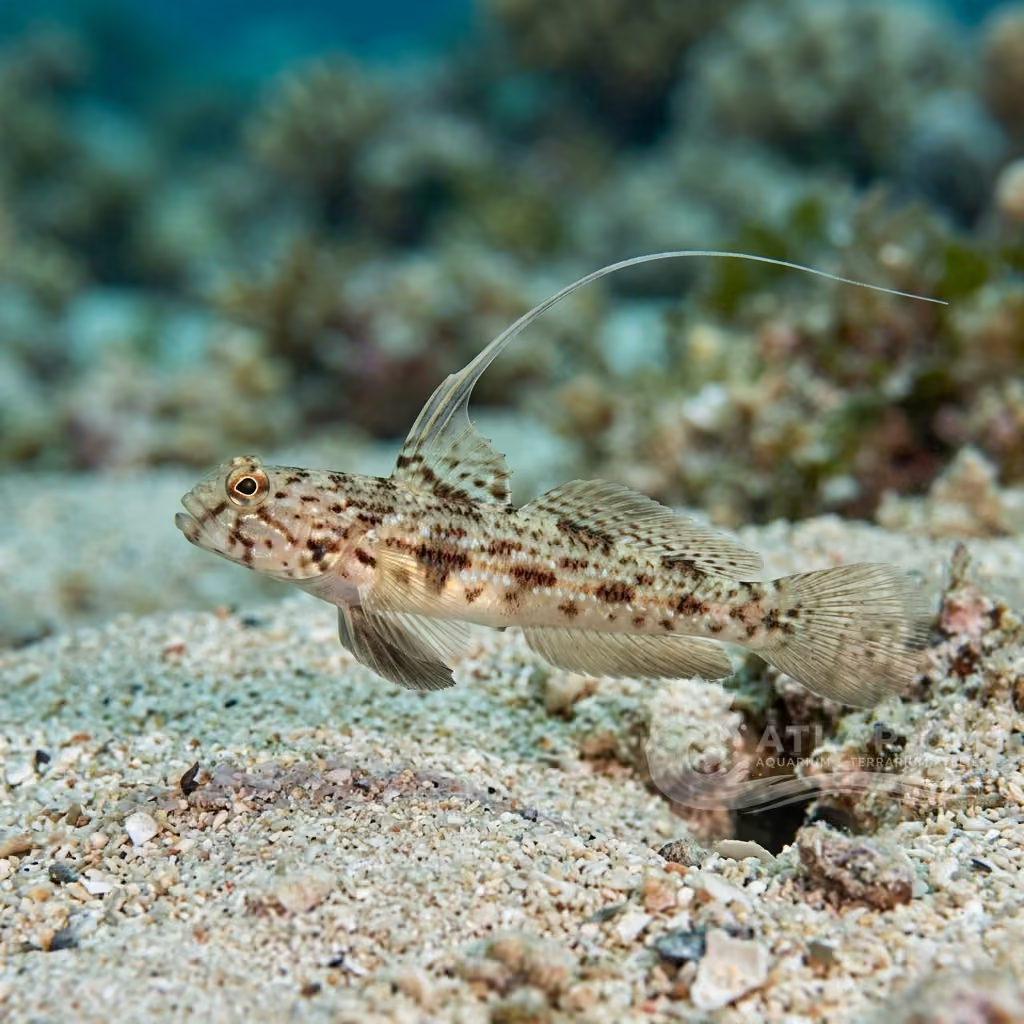
Taxonomy and Morphology: Member of the family Gobiidae. Reaches about 14 cm. Elongated and cylindrical body with a large head, high-set eyes, and a rounded tail. It has a slender, elongated body shape and eyes placed high on the head, giving it a wide field of view.
Social Behavior: Peaceful and hard-working fish. Digs deep tunnels under rocks, lifting and sifting sand continuously to feed. They are monogamous burrow-dwellers that spend the daytime constantly filtering sand and retreat to their home at night.
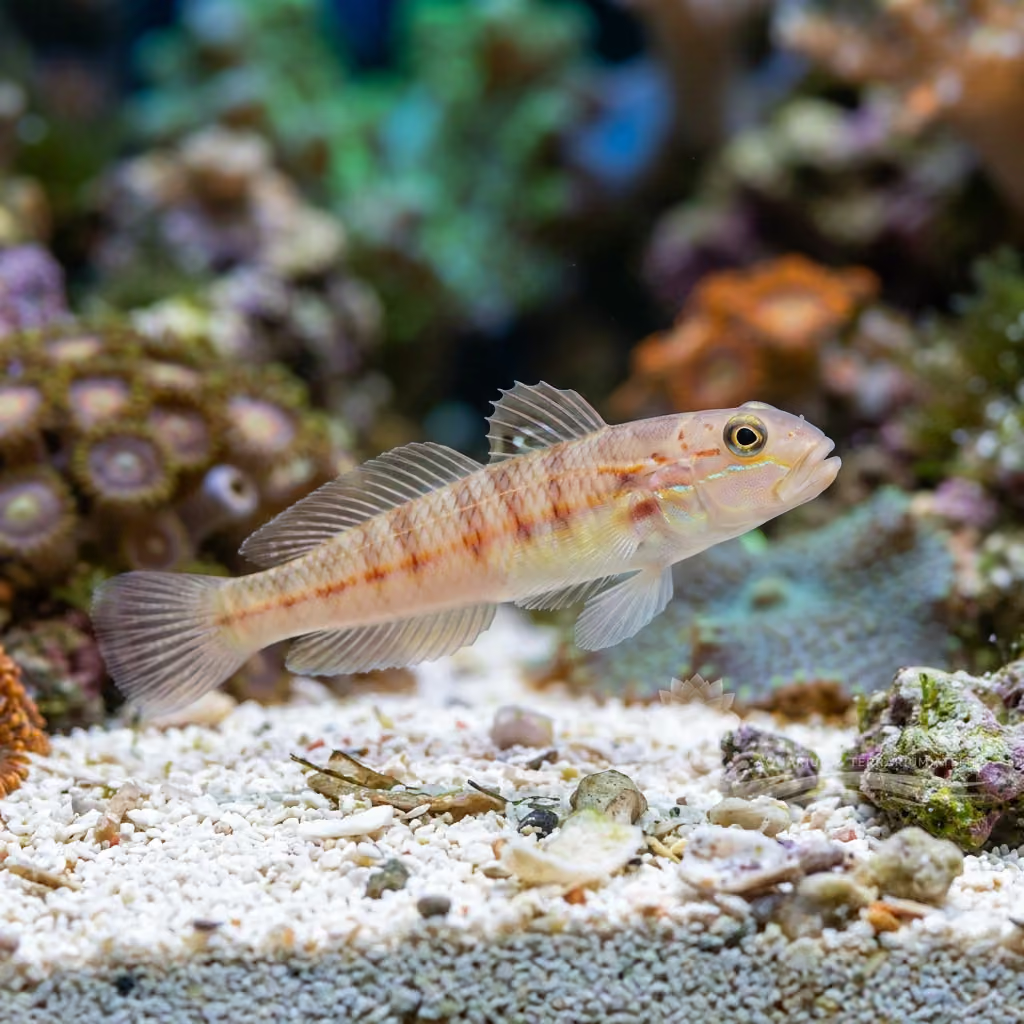
Coloration and Sexual Dimorphism: Light beige or sand background coloration marked by three characteristic longitudinal orange or red stripes and small metallic neon-blue spots on the head. Displays horizontal orange-red stripes running along a pale background, with a prominent dark spot on the first dorsal fin.

Care, breeding and tankmates
Aquarium Setup: Requires a tank of at least 110 liters (30 gallons) with a fine sand bed at least 5-10 cm (2-4 inches) deep. Place live rocks firmly on the bottom glass. Provide a thick layer of fine, soft sand substrate (at least 5-8 cm deep) to support their continuous sifting behavior.
Diet and Feeding: Carnivore. Sifts sand. Supplement with mysis, brine shrimp, and small sinking pellets for carnivores multiple times daily. Supplement their diet with frequent feedings of frozen mysis, brine shrimp, and small sinking pellets, as the sand alone may deplete.
Water Quality: Maintain temperature at 22-26°C (72-78°F), pH 8.1-8.4, specific gravity 1.020-1.025. Use good mechanical filtration to capture suspended sand. Maintain high water quality with efficient skimming to support oxygenation and prevent the accumulation of waste in the substrate.
Compatibility and Cohabitation: Reef-safe. Does not harm corals, but its digging activity can cover bottom-dwelling corals with sand. Best kept as a mated pair; they are peaceful toward other species but will fight with other sand-sifting gobies in small tanks.
Aquarium Breeding: Reproduction is not common in the hobby. Pairs lay adhesive eggs inside the tunnels, defending the nesting site vigorously. Spawning occurs inside their excavated burrows, but rearing the pelagic larvae is difficult due to filtration systems.
Risks and Diseases: Salta frequently if startled or at night. Cover the aquarium. Risk of starvation in aquariums with a sterile sand bed. A tight-fitting lid is mandatory, as this species is known to jump when startled or during the night.

Geographic origin and distribution
Indo-West Pacific. Inhabits shallow lagoons, muddy coastal zones, and sandy flats near coral reefs down to depths of 15 meters. This sand-sifting goby is native to the sandy flats and shallow lagoons of the Western Pacific Ocean.
Origin
Tropical oceans and reefsSouth and Southeast AsiaEast AsiaAustralia, New Guinea, and Oceania

Fish profile
- Temperament
- Peaceful
- Overall, it has a timid and peaceful temperament toward completely different fish species. It tends to ignore other tank inhabitants, focusing entirely on its sand-sifting duties. It can be easily intimidated by aggressive or hyperactive tank mates, which may cause it to hide and refuse food. A calm environment allows its natural, industrious behavior to shine.
- Diet
- Carnivore
- This species is a carnivorous sand-sifter that relies heavily on benthic microfauna. It constantly scoops mouthfuls of sand, sifting out small crustaceans, worms, and organic matter through its gills. While they will accept prepared frozen foods like mysis and brine shrimp, a mature sandbed teeming with copepods is essential for long-term survival. Supplementary feeding multiple times a day may be required if the tank lacks sufficient natural food.
- Life expectancy
- 1-1.5 years
- Adult size
- 14 cm
- Sex ratio
- Flexible
- They are best kept individually or in confirmed male-female pairs. Two males will inevitably fight, often to the death, over territory in the same tank. Pairing them can be tricky since they are not strongly sexually dimorphic. Acquiring an established pair from a reputable source is the safest way to house two individuals together.
- Feeding frequency
- Twice daily
- Due to their active metabolism and constant foraging, these gobies need to feed frequently. They should be offered small amounts of food at least two to three times daily if the natural microfauna is limited. A well-established refugium can help supply a continuous source of pods. Without adequate feedings, they are prone to slowly starving in captivity.
- Bioload
- Medium
- This marine goby has a relatively low bioload compared to larger predatory fish. Its constant sand-sifting behavior actually helps process detritus and uneaten food in the substrate. Maintaining a healthy sandbed is crucial for biological filtration with this species. Therefore, a mature aquarium with a deep sand bed will easily handle the minimal waste it produces.
- Flow
- Strong
- These gobies appreciate moderate to gentle water flow that does not disturb the sandbed excessively. High, sweeping currents can blow away their carefully constructed burrows and strip the sand of organic matter. A steady but diffused flow helps oxygenate the water while keeping their benthic environment stable. Ensuring lower flow near the bottom of the tank is highly recommended.
- Jump risk
- Yes
- Like most gobies, this species is notorious for its jumping abilities, especially when startled. They can easily launch themselves out of an open-top aquarium or through small gaps in the lid. A tight-fitting lid or fine mesh screen is absolutely mandatory to prevent tragedy. Extra caution should be taken during the first few weeks of acclimation when they are most skittish.
- Reproduction
- Oviparous
- Breeding in captivity is possible but rearing the fry is extremely challenging. They are demersal spawners, typically laying their adhesive eggs on the ceiling of a burrow or a protected cave. The male guards and aerates the clutch until they hatch into pelagic larvae. Because the larvae are microscopic and require specialized rotifer diets, few successfully raise them in home aquariums.
- Compatibility & tankmates
- Peaceful
- It is generally peaceful and reef-safe, ignoring corals and most other fish. However, it can be fiercely territorial toward other sand-sifting gobies or fish with a similar body shape. Keeping them in established male-female pairs is recommended to avoid conspecific aggression. They make excellent tank mates for quiet, non-aggressive species.
- Tank level
- Bottom
- This fish is almost exclusively a bottom-dweller, spending its day hovering just above the substrate. It continuously interacts with the sandbed, digging and sifting to find food. It will construct a burrow under liverock, where it retreats when threatened and sleeps at night. Providing plenty of open sandy areas and secure rockwork is essential.

Scientific Parameters & Models
FishBase
Window to the official scientific data of the species
FishBase v25.04Data synced on: 06/15/2026
- Trophic level
- 3.5 ± 0.37 se
- Resilience
- High (less than 15 months)
- Generation time
- 0.4 years
- Phylogenetic uniqueness (PD50)
- 0.5
- Bayesian Length-Weight
- a = 0.00676, b = 3.03
- VulnerabilityLow vulnerability (10 / 100)

Related species
Recommendations grouped by close relatives, companion choices, and similar care.