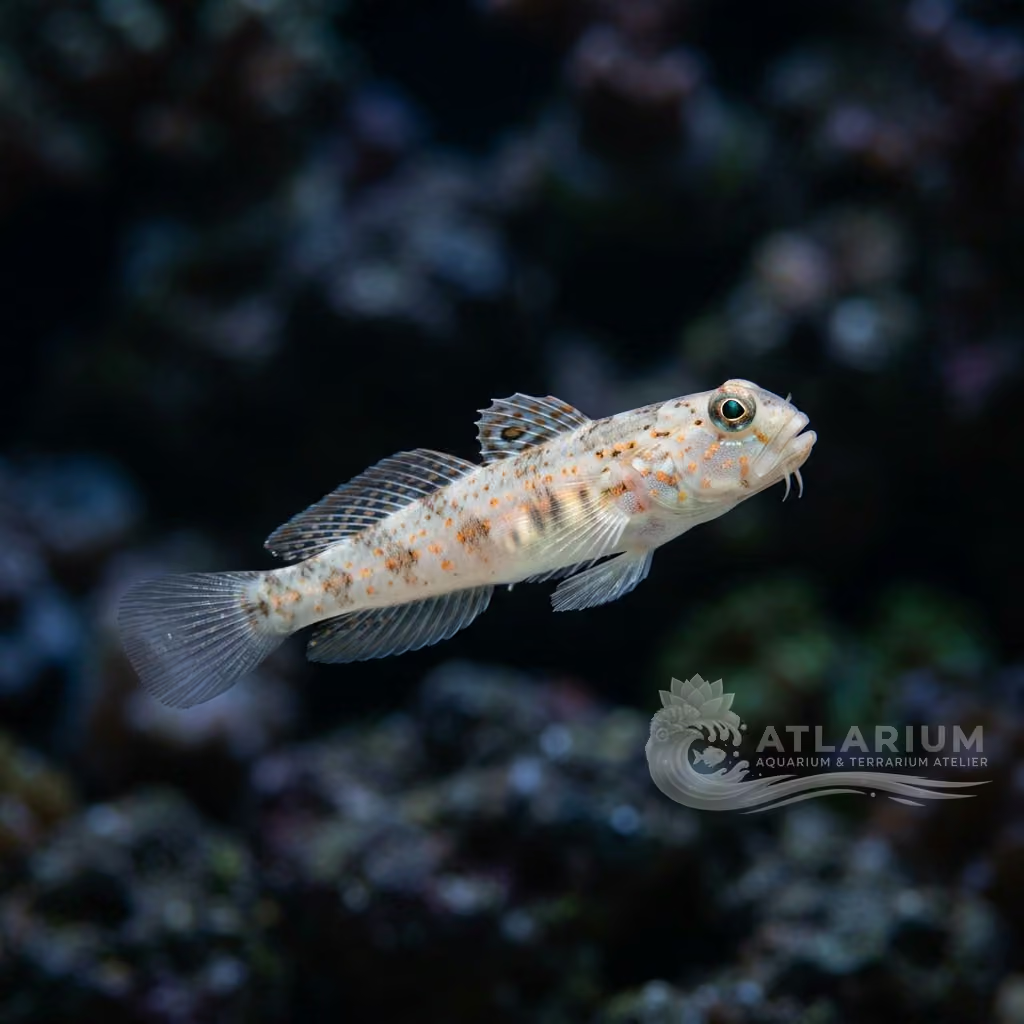
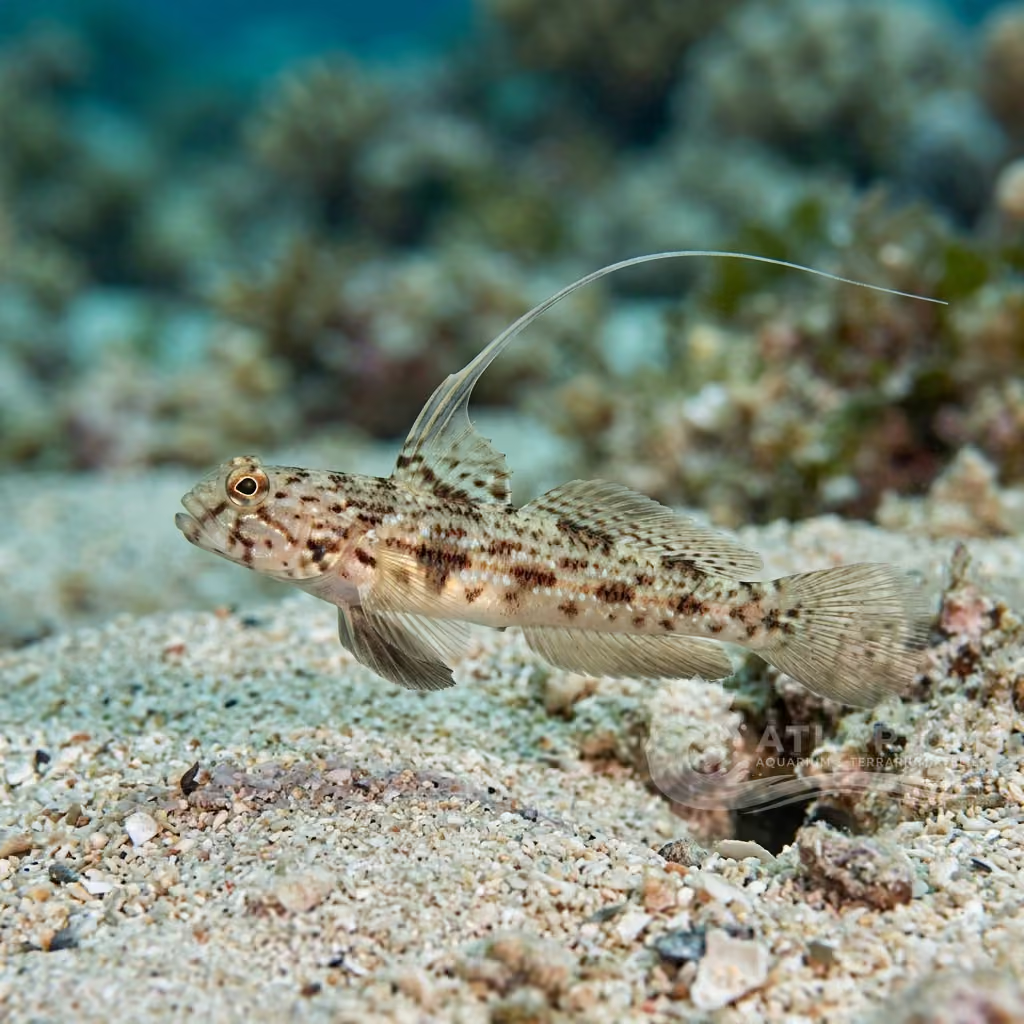
Redspotted Clown Goby
Gobiodon erythrospilus
A small, compressed goby with a toxic mucus coat, inhabiting shallow Indo-Pacific reefs. It requires healthy Acropora colonies and regular zooplankton feedings.
Water Temperature
24 - 28 °C
pH Value
8.1 - 8.4
Water type
Marine
Tank level
Bottom
Adult size
4 cm
Minimum tank volume
>= 40 L
Minimum group
>= 1
KH
8 - 12 dKH

Species description
Geographical Origin and Habitat: Gobiodon erythrospilus is widely distributed across the Indo-Pacific, from the Red Sea and East Africa to Japan, Australia, and the Tuamotu Islands. It is strictly tied to shallow coral reefs, living exclusively among branching Acropora colonies.
Taxonomy and Morphology: Classified within the Gobiidae family. It features a scale-less, compressed body coated in a toxic mucus that protects it from larger fish. Its pelvic fins are modified into a sucking disc to hold onto corals. Adult size is about 1.5 inches (4 cm).
Social Behavior: Sedentary and host-specific. These gobies spend their lives nestled between coral branches. They form monogamous pairs that defend their host coral from rivals, but they are entirely peaceful towards fish that swim in the open water.
Coloration and Sexual Dimorphism: Body is pale greenish-blue to light grey, covered with rows of distinct red-to-orange spots on the head and flanks. They are bidirectional hermaphrodites, meaning they can change sex in either direction to form compatible breeding pairs.

Care, breeding and tankmates
Aquarium Setup: Best suited for established SPS reef aquariums of 10 gallons (40 liters) or more. The tank must contain healthy, large colonies of branching stony corals (specifically Acropora) for the goby to live on and lay eggs.
Diet and Feeding: Carnivorous. Feeds on zooplankton, copepods, and occasionally the mucus of the host coral. Feed multiple times a day with very small frozen foods like oyster eggs, cyclops, rotifers, baby brine shrimp, and finely minced mysis.
Water Quality: Requires the high-quality water parameters necessary for keeping SPS corals: stable temperature of 24-28°C (75-82°F), pH of 8.1-8.4, salinity at 1.023-1.025, near-zero nitrates/phosphates, and moderate to high water flow.
Compatibility and Cohabitation: Reef safe, but their presence can cause Acropora corals to retract their polyps or lose tissue where eggs are laid. Keep with small, non-aggressive reef species such as neon gobies, cardinalfish, and small blennies.
Aquarium Breeding: Spawns regularly in aquaria if a pair is established. They clear a small patch of tissue from a coral branch to deposit a ring of adhesive eggs, which the male guards. Raising the tiny, fragile larvae is extremely difficult.
Risks and Diseases: Highly dependent on healthy corals; if the host coral dies, the goby will suffer severe stress. Because it lacks scales, it is highly sensitive to copper-based medications and quick changes in water chemistry.

Geographic origin and distribution
Gobiodon erythrospilus is widely distributed across the Indo-Pacific, from the Red Sea and East Africa to Japan, Australia, and the Tuamotu Islands. It is strictly tied to shallow coral reefs, living exclusively among branching Acropora colonies.
Origin
Tropical oceans and reefsSouth and Southeast AsiaAustralia, New Guinea, and Oceania

Fish profile
- Temperament
- Territorial
- They are highly peaceful, incredibly sedentary, and remarkably observant fish. They spend the entire day sitting quietly, displaying their beautiful red spots. They only exhibit aggression when defending their specific coral branch from other gobies.
- Diet
- Carnivore
- They are dedicated carnivores requiring a diet of small, meaty marine foods. High-quality frozen preparations like cyclops, rotifers, and minced mysis are completely ideal. They will also eagerly accept appropriately sized high-protein sinking micro-pellets.
- Life expectancy
- 2-5 years
- Adult size
- 4 cm
- Sex ratio
- Pair
- They are best kept as a single individual or as an established male-female pair. Thanks to bi-directional sex change, any two individuals will typically form a pair eventually. Keeping multiple pairs requires a very large tank with numerous coral colonies.
- Feeding frequency
- Twice daily
- Target feed them one to two times daily using a dedicated pipette. They are reluctant to swim far from their coral perches to aggressively chase food. Consistent, gentle feeding ensures they remain healthy and beautifully colored.
- Bioload
- Low to Medium
- This stunning little goby has an exceptionally small bioload. It is perfectly adapted for very small aquariums where nutrient control is paramount. Standard water changes easily keep the system in perfect balance.
- Flow
- Strong
- They strongly prefer a moderate, consistent water flow across their perching areas. Extreme flow will stress them, causing them to hide deep within the coral colony continuously. Proper flow delivers small planktonic food directly into their immediate striking range.
- Jump risk
- No
- Reproduction
- Oviparous
- They are known to spawn in captivity if conditions are incredibly stable. The pair will systematically clear a small patch of coral to securely attach their eggs. Successfully rearing the fry is extremely difficult due to their microscopic size upon hatching.
- Compatibility & tankmates
- Peaceful
- It is completely peaceful and poses absolutely no threat to other fish or invertebrates. It must be kept away from large predators that might mistakenly swallow it. It coexists perfectly with all corals, making it an ideal reef safe species.
- Tank level
- Bottom
- They spend almost their entire lives perched in the mid to upper levels of the tank. They demand branching SPS corals to serve as their permanent resting and hiding places. You will almost never see them resting on the sand bed.

Scientific Parameters & Models
FishBase
Window to the official scientific data of the species
FishBase v25.04Data synced on: 06/15/2026
- Trophic level
- 3.4 ± 0.5 se
- Resilience
- High (less than 15 months)
- Phylogenetic uniqueness (PD50)
- 0.5
- Bayesian Length-Weight
- a = 0.01995, b = 3.01
- VulnerabilityLow vulnerability (10 / 100)

Related species
Recommendations grouped by close relatives, companion choices, and similar care.