Green clown goby
Gobiodon histrio
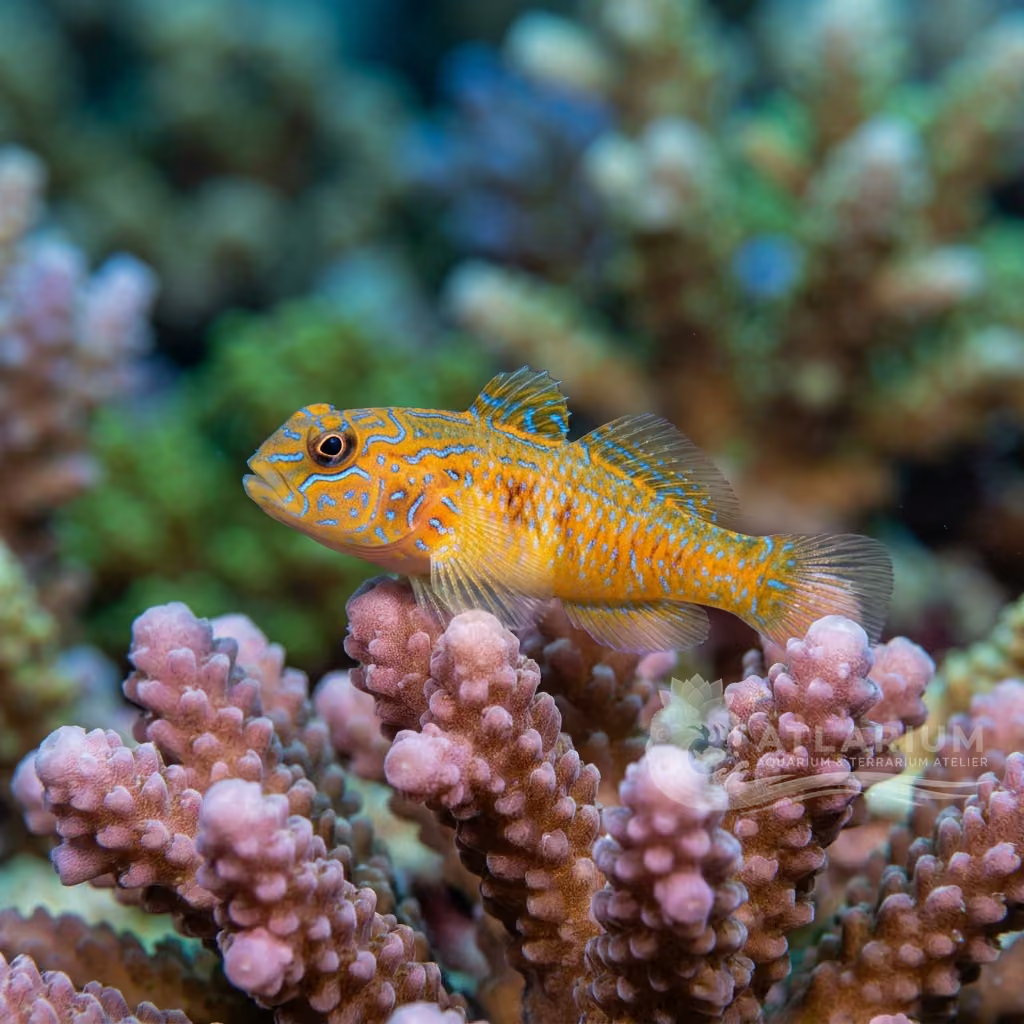
The Green Clown Goby playfully hops among live coral branches, adorned with an emerald body and striking red patterns. It is an ideal, stationary nano-reef resident that strongly depends on Acropora hosts.
Water Temperature
22 - 27 °C
pH Value
8.1 - 8.4
Water type
Marine
Tank level
Bottom and middle
Adult size
3.5 cm
Minimum tank volume
>= 50 L
Minimum group
>= 1
KH
8 - 12 dKH

Species description
Geographical Origin and Habitat: Gobiodon histrio, commonly known as the green clown goby, is native to the tropical waters of the Indo-Pacific region. Its range extends from the Red Sea and East Africa eastward to Samoa, reaching north to southern Japan and south to the Great Barrier Reef of Australia. It is found on shallow coral reefs and sheltered lagoons at depths of 1 to 15 meters, residing exclusively among the branches of live Acropora stony corals.
Taxonomy and Morphology: It belongs to the family Gobiidae and the subfamily Gobiinae. It is a very small fish, with adults reaching a maximum length of only 3.5 cm (1.4 inches). The body is robust, laterally compressed, and completely scaleless, protected by a slippery skin layer covered in bitter, toxic mucus that deters predators. Its pelvic fins are modified into a sucking disc, allowing it to cling tightly to coral branches.
Social Behavior: It has a mutualistic relationship with its host coral. It is a highly sedentary fish, spending its entire life perched on a single Acropora colony and defending it against other gobies of the same species. It is peaceful toward other fish families and makes an excellent inhabitant for nano-reef aquariums. It should be housed singly or as a mated pair.
Coloration and Sexual Dimorphism: Its coloration is striking, consisting of an emerald-green or bright blue-green base body color, marked with bold reddish-orange vertical and horizontal stripes. The head features irregular red dots. There is no visible sexual dimorphism to the naked eye; however, males tend to be slightly larger than females and show distinct courtship behaviors during the breeding season.

Care, breeding and tankmates
Aquarium Setup: Due to its tiny size and inactive nature, it is well-suited for small aquariums and nano-reefs starting from 50 liters (13 gallons). It is highly recommended to provide healthy branching small polyp stony (SPS) corals, particularly Acropora, for perching and shelter. If live corals are not available, realistic artificial corals or stable live rock can be used.
Diet and Feeding: It is a carnivore that feeds on passing zooplankton in the water column and occasionally nips at the mucus of the host coral. In captivity, feed a varied diet of small frozen foods such as cyclops, calanus, finely chopped brine shrimp, mysis, and high-quality micro pellets. Feed twice daily in small portions.
Water Quality: Requires the high water quality standard of a marine reef aquarium. Maintain a stable water temperature between 22°C and 27°C (72-81°F), pH between 8.1 and 8.4, specific gravity between 1.020 and 1.025, and KH between 8 and 12. Moderate water flow is preferred to mimic their natural lagoon environments.
Compatibility and Cohabitation: Perfect for peaceful community nano-reefs. It can be safely housed with other small, calm species such as other gobies, blennies, firefish, and clownfish. Avoid large or predatory tankmates that may consume it. Spawning pairs may clear a tiny area of coral tissue to lay eggs, which causes minimal harm to a healthy coral colony.
Aquarium Breeding: They are bidirectional hermaphrodites, meaning they can change sex in either direction to form a breeding pair. They lay adhesive eggs in a band around the base of a coral branch. The parents defend and fan the clutch. Raising the microscopic larvae is highly challenging and requires specific live rotifers.
Risks and Diseases: Highly resistant to external skin parasites like marine ich (Cryptocaryon) due to their bitter, toxic skin mucus. The main risk in captivity is starvation, especially in tanks with aggressive, fast-feeding tankmates that outcompete the goby for food. Ensure they receive enough food.

Geographic origin and distribution
Gobiodon histrio, commonly known as the green clown goby, is native to the tropical waters of the Indo-Pacific region. Its range extends from the Red Sea and East Africa eastward to Samoa, reaching north to southern Japan and south to the Great Barrier Reef of Australia. It is found on shallow coral reefs and sheltered lagoons at depths of 1 to 15 meters, residing exclusively among the branches of live Acropora stony corals.
Origin
Tropical oceans and reefsAfrica and MadagascarEast AsiaAustralia, New Guinea, and Oceania

Fish profile
- Temperament
- Semi-aggressive
- They are peaceful, quirky, and full of personality. They will act aggressively only toward competing clown gobies. Otherwise, they happily ignore the rest of the community.
- Diet
- Carnivore
- They thrive on a meaty carnivorous diet. Frozen cyclops, mysis, and finely chopped seafood work well. Vitamin-enriched foods help maintain their vibrant markings.
- Life expectancy
- 2-5 years
- Adult size
- 3.5 cm
- Sex ratio
- Flexible
- Capable of bidirectional sex change depending on social status. Simply buying two fish almost guarantees a compatible pair. It is fascinating to observe their pair bonding.
- Feeding frequency
- Twice daily
- Feed them multiple small meals every day. Two to three feedings keep their metabolism stable. Ensure food pieces are small enough to swallow whole.
- Bioload
- Low
- This goby adds virtually no bioload to a mature reef. They are extremely small and eat proportionally tiny amounts. Regular tank maintenance easily offsets their presence.
- Flow
- Moderate
- They appreciate moderate, indirect water flow. They prefer sticking to coral branches rather than swimming open water. Flow helps bring suspended food directly to them.
- Jump risk
- No
- Reproduction
- Oviparous
- They are demersal spawners that lay eggs on cleared coral patches. Males will aggressively guard the nest site until hatching. Fry rearing in home aquariums is exceedingly rare.
- Compatibility & tankmates
- Peaceful
- Very peaceful towards dissimilar fish species. They are generally reef safe but may irritate SPS corals. Do not mix them with predatory or highly aggressive tank mates.
- Tank level
- Middle/Bottom
- They primarily dwell in the upper to middle rockwork. They spend their entire lives perched on or in corals. They exhibit zero interest in the tank's lower substrate.

Scientific Parameters & Models
FishBase
Window to the official scientific data of the species
FishBase v25.04Data synced on: 06/15/2026
- Trophic level
- 3.2 ± 0.4 se
- Resilience
- High (less than 15 months)
- Phylogenetic uniqueness (PD50)
- 0.5
- Bayesian Length-Weight
- a = 0.01995, b = 3.01
- VulnerabilityLow vulnerability (10 / 100)

Related species
Recommendations grouped by close relatives, companion choices, and similar care.