Encyclopaedia

FishMarineEasy
©AI Generated·Proprietary

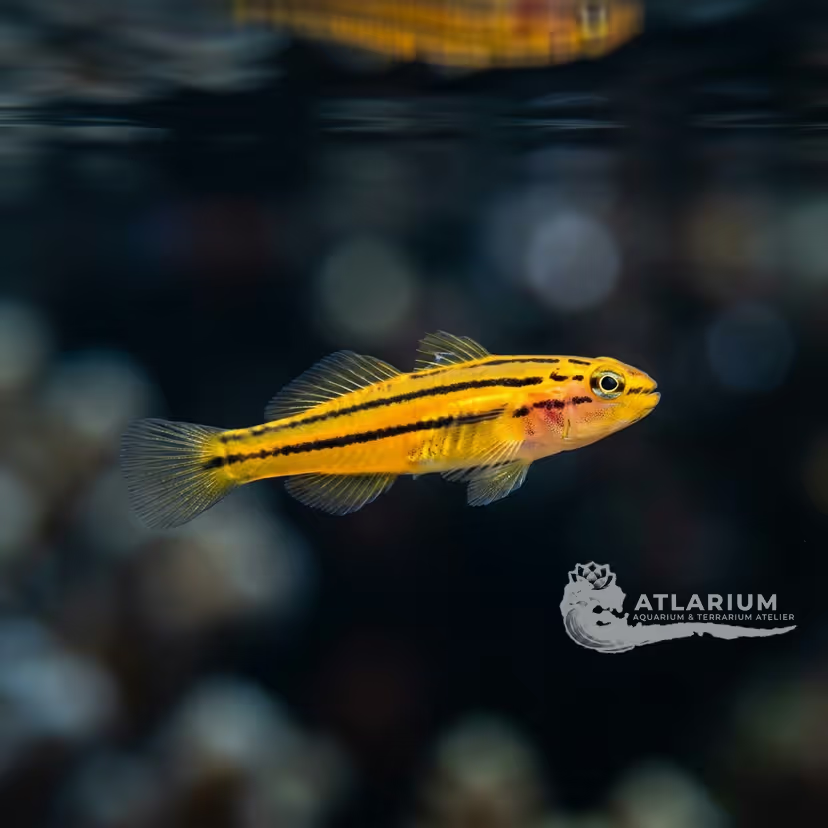
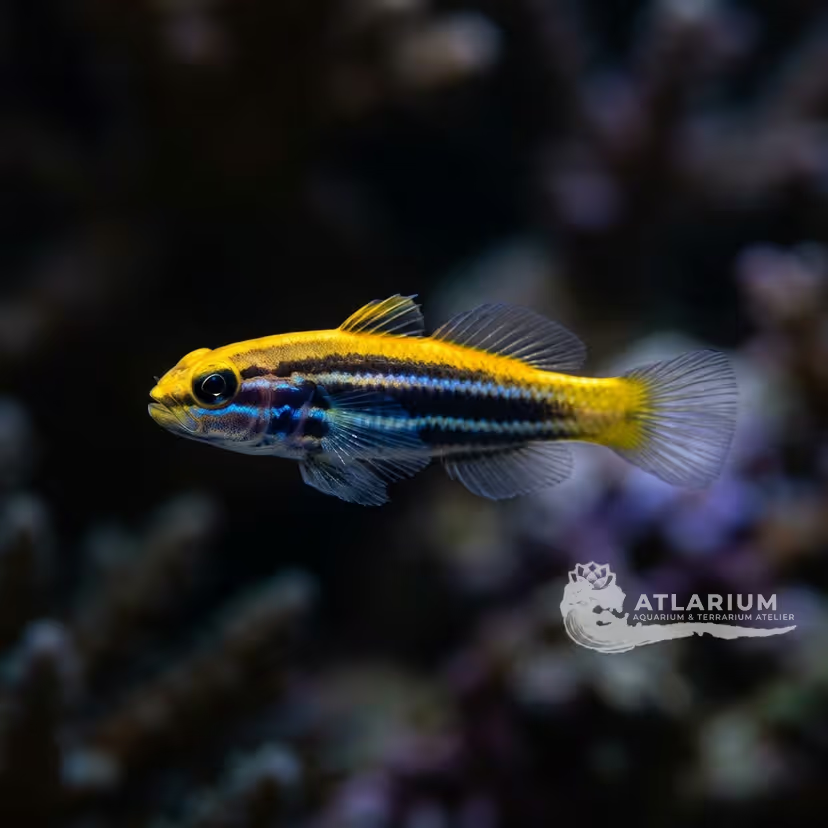
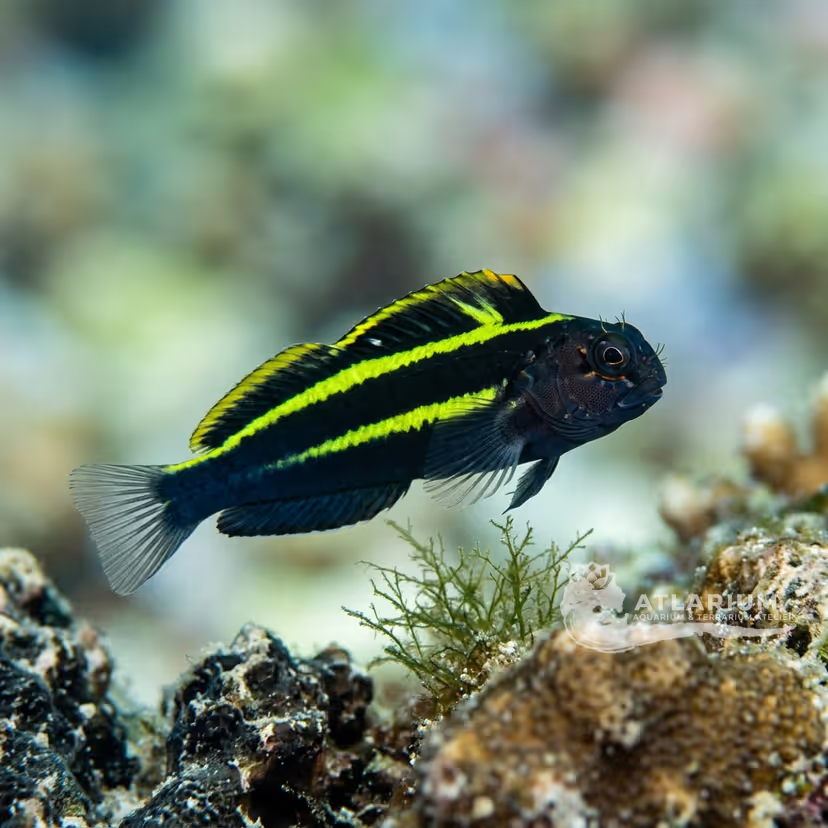
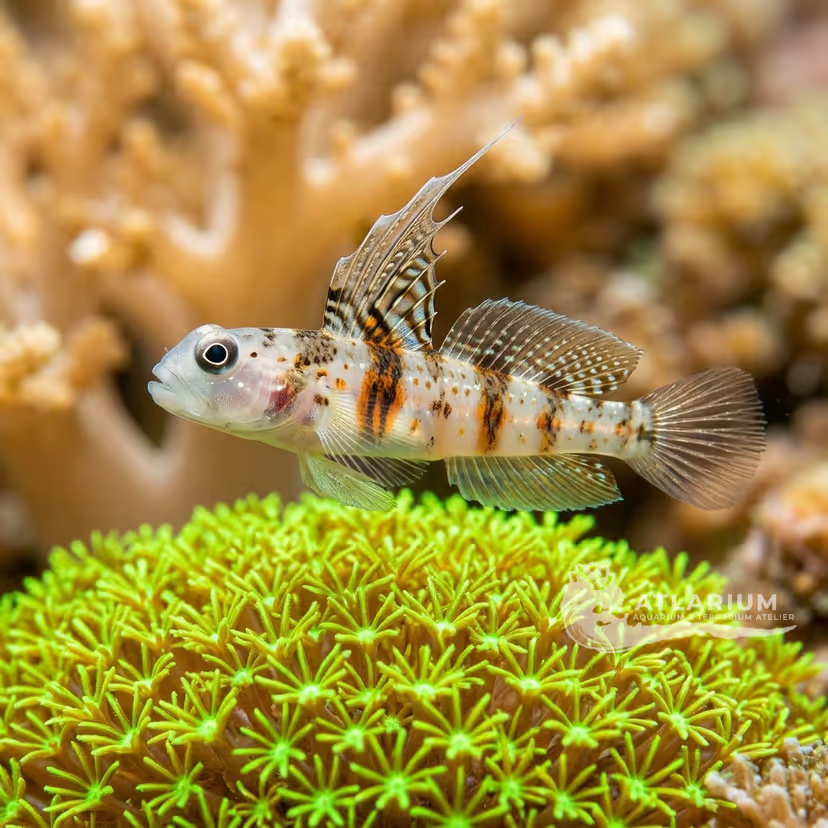
Five-lined Coral Goby

Gobiodon quinquestrigatus

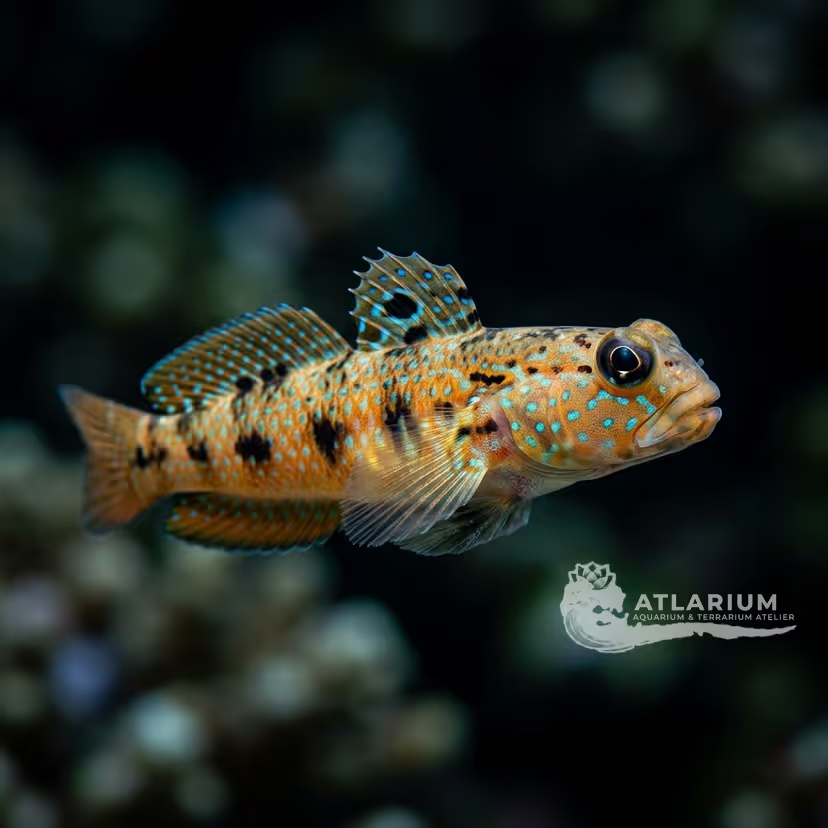
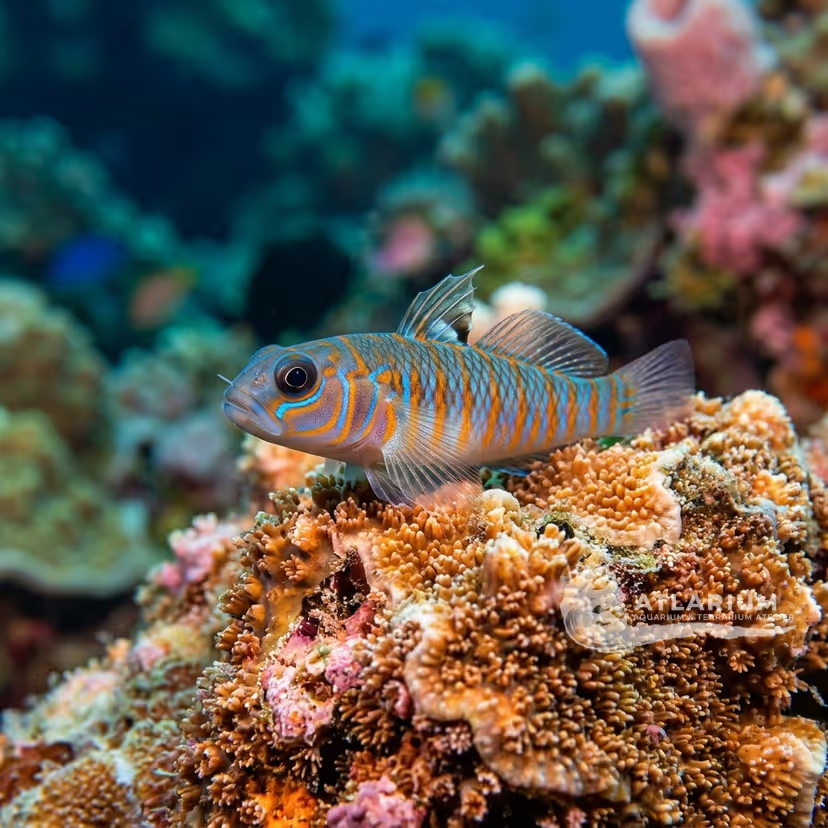
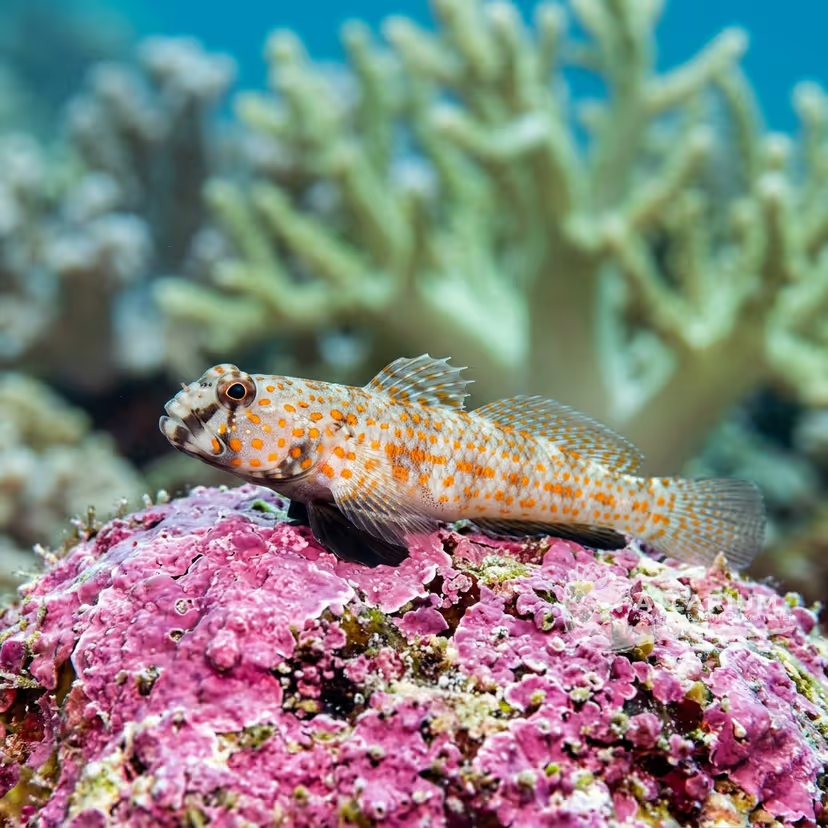
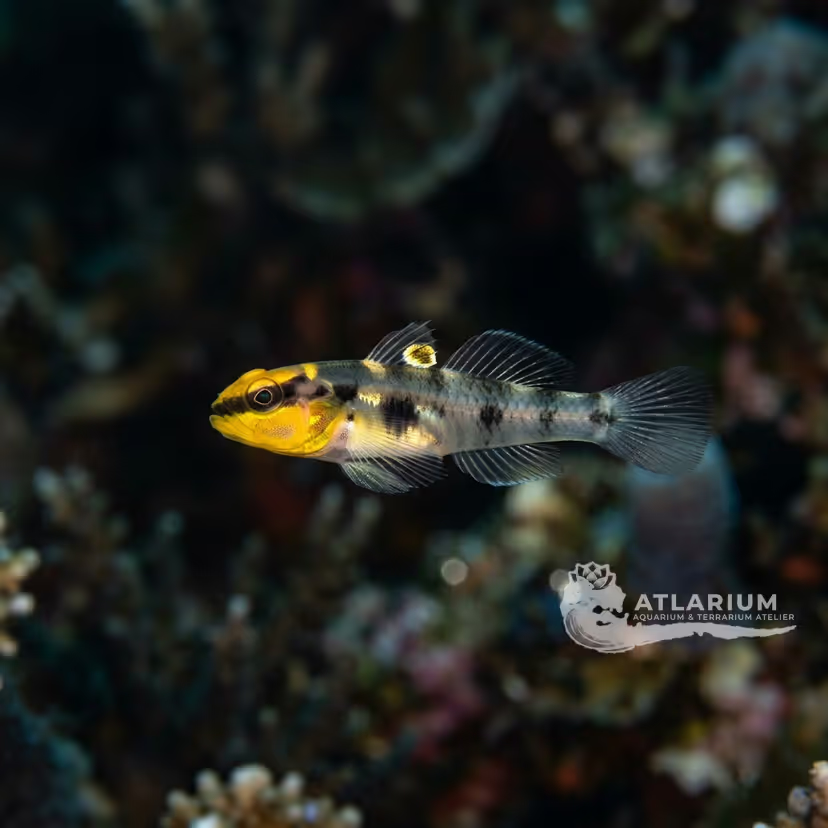
The Five-lined Coral Goby is a small, scale-less fish with a toxic mucus layer, residing in Acropora corals. Perfect for nano-reefs, it requires small meaty foods and stable marine parameters.

Taxonomy
Class:Actinopteri
Order:Perciformes
Family:Gobiidae
Subfamily:Gobiinae
Genus:Gobiodon
Species:Gobiodon quinquestrigatus

Share

Check out Five-lined Coral Goby on Atlarium

PracticeRecognition quizzesPhotos, names, origins, and puzzles to review Atlas species.Open quizzes
Water Temperature

24 - 28 °C

pH Value

8.1 - 8.4

Water type

Marine

Tank level

All levels

Adult size

4.5 cm

Minimum tank volume

>= 60 L

Minimum group

>= 1

KH

8 - 12 dKH

Species description

Geographical Origin and Habitat: Indo-Pacific: Philippines to the Society Islands, north to southern Japan, south to Australia and Tonga. Lives commensally among branching Acropora corals. Endemic to the tropical Indo-Pacific, this goby lives in close association with Acropora corals in shallow lagoons.
Taxonomy and Morphology: Member of the family Gobiidae. Reaches a maximum size of 4.5 cm. Features a compressed, scale-less body with a toxic mucus layer. As a scaleless goby, its skin is covered in a thick, bitter mucus layer that deters predators and prevents skin infections.
Social Behavior: Coral-commensal species. Lives in monogamous pairs or small groups within the branches of branching corals for protection. It exhibits a highly sedentary lifestyle, rarely leaving the protective branches of its host coral colony.
Coloration and Sexual Dimorphism: Body is dark reddish-brown to grayish, featuring five prominent vertical blue-white lines on the head. Bi-directional hermaphrodite. The body color ranges from dark reddish-brown to green, with five glowing vertical blue lines visible on the head and cheeks.

Care, breeding and tankmates

Aquarium Setup: Minimum 60 liters. Must be provided with branching Acropora stony corals to live and hide in, simulating its natural reef habitat. Best suited for nano reef aquariums containing branching stony corals which serve as the fish's natural habitat and shelter.
Diet and Feeding: Carnivore. Offer small, meaty foods such as cyclops, copepods, rotifers, and finely minced frozen mysis twice daily. Feed a variety of small, meaty foods such as cyclops, oyster eggs, and baby brine shrimp, distributed directly into the coral branches.
Water Quality: Maintain stable marine parameters: temperature 24-28°C, pH 8.1-8.4, salinity 1.020-1.025 SG. Good filtration is necessary. Maintain pristine water conditions with low nutrient levels, similar to the requirements for keeping delicate SPS corals.
Compatibility and Cohabitation: Peaceful towards other fish. May argue with other clown gobies for breeding space. Completely safe with invertebrates. Generally peaceful with non-related species, but territorial disputes will occur if multiple coral gobies share a single host coral.
Aquarium Breeding: Lays adhesive eggs on the branches of corals, clearing a small patch of tissue. The male guards the nest. Rearing larvae is difficult. Spawning is common in mature tanks, but raising the microscopic larvae requires specialized live foods and rotifer cultures.
Risks and Diseases: Small size makes it vulnerable to being sucked into open filter intakes. Coral polyp nipping occurs during nesting but rarely kills the coral. Avoid introducing to tanks with large, aggressive fish that might ignore the toxic mucus and swallow the goby.

Geographic Origin and Distribution

Indo-Pacific: Philippines to the Society Islands, north to southern Japan, south to Australia and Tonga. Lives commensally among branching Acropora corals. Endemic to the tropical Indo-Pacific, this goby lives in close association with Acropora corals in shallow lagoons.

Origin

Tropical oceans and reefsSouth and Southeast AsiaEast AsiaAustralia, New Guinea, and Oceania

Fish profile

Temperament
Territorial
They have a highly peaceful and calm demeanor. They can be territorial toward visually similar gobies. Overall, they are an absolute joy in a mixed reef.
Diet
Carnivore
They are dedicated carnivores needing meaty foods. Supply a varied mix of frozen zooplankton and mysis shrimp. They are voracious eaters once comfortable in their environment.
Sex ratio
Flexible
They easily pair up by changing sex as needed. Any two non-paired individuals will generally sort out a bond. This flexibility makes them very easy to keep in couples.
Feeding frequency
Twice daily
At least two small feedings a day are recommended. They metabolize their food rapidly. Regular feeding keeps their immune system robust.
Bioload
This micro-goby produces a very low bioload. They are an excellent addition to small, well-maintained reefs. They do not put any strain on filtration systems.
Flow
Strong
Moderate water flow is perfectly fine for them. They rely on the water column to deliver food to their perch. They do not thrive in high-velocity wavemaker streams.
Jump risk
Yes
Jump risk is generally considered to be low. They much prefer to retreat into the rocks if threatened. Using a tank cover is still a smart preventative measure.
Reproduction
Oviparous
They are known to breed within the protective arms of branching corals. Eggs are laid in a circular pattern on a stripped branch. Captive breeding is rare but entirely possible.
Compatibility & tankmates
Peaceful
They are a peaceful species that blends into any docile tank. They ignore almost all other fish and invertebrates. Like other Gobiodon, they might slightly nip SPS coral branches.
Tank level
All levels
They are middle to top dwellers. They hop from branch to branch to survey their territory. They rarely ever touch the bottom substrate.

Window to the official scientific data of the species

Data synced on: 06/15/2026

Scientific Parameters & Models

Trophic level
3.4 ± 0.5 se
Resilience
High (less than 15 months)
Phylogenetic uniqueness (PD50)
0.5
Bayesian Length-Weight
a = 0.01995, b = 3.01
VulnerabilityLow vulnerability (10 / 100)

Image gallery

Licensed images linked to the species or, when marked, to the closest representative taxon.

Related species

Recommendations grouped by close relatives, companion choices, and similar care.

Variants and close relatives

Same atlas type, nearby scientific identity, genus, or family.

Banded Prawn Goby

Banded Prawn Goby

Cryptocentrus fasciatus

View details->
Barber Goby

Barber Goby

Elacatinus figaro

View details->
Barsnout goby

Barsnout goby

Elacatinus illecebrosus

View details->
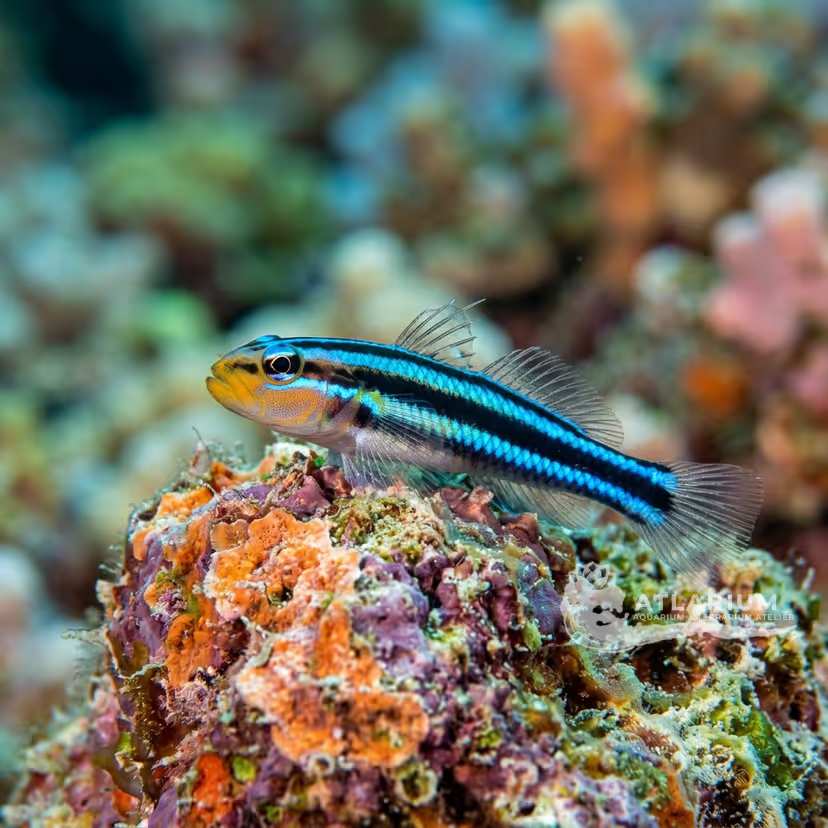
Beautiful-cheek shrimpgoby

Beautiful-cheek shrimpgoby

Amblyeleotris callopareia
View details->
Cleaner Goby

Cleaner Goby

Elacatinus genie

View details->
Linesnout Goby

Linesnout Goby

Elacatinus lori

View details->
Luther's Goby

Luther's Goby

Cryptocentrus lutheri

View details->
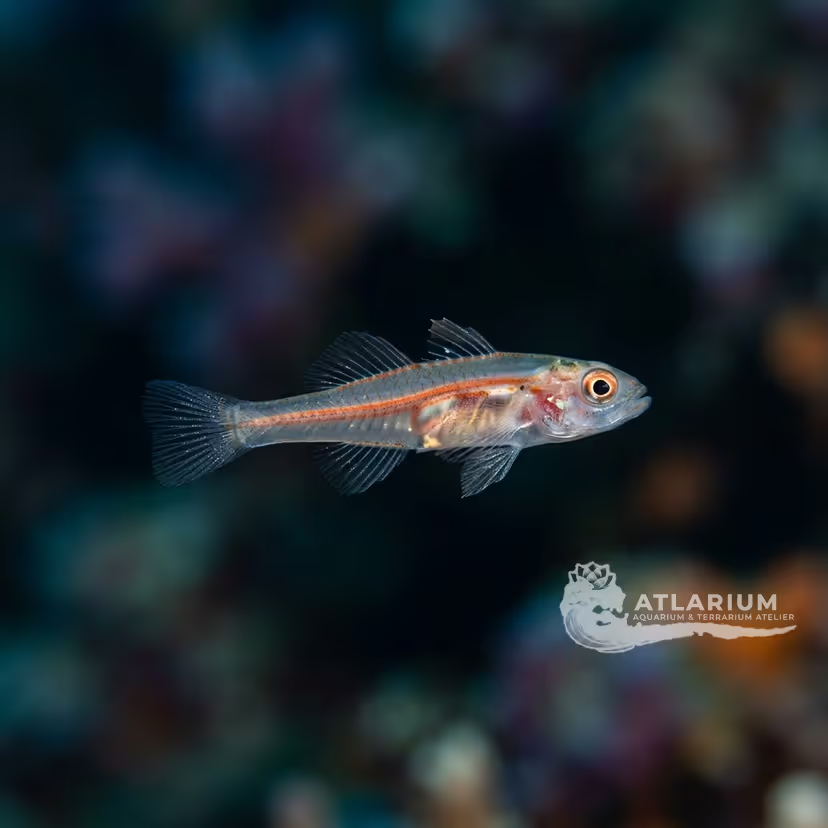
Randall's Neon Goby

Randall's Neon Goby

Elacatinus randalli
View details->
Gold Neon Eviota Goby

Gold Neon Eviota Goby

Eviota pellucida

View details->
Neon Goby

Neon Goby

Elacatinus oceanops

View details->
Orange-spotted Prawn-goby

Orange-spotted Prawn-goby

Amblyeleotris guttata

View details->
Pinkspotted Shrimp Goby

Pinkspotted Shrimp Goby

Cryptocentrus leptocephalus

View details->
Randall's Shrimp Goby

Randall's Shrimp Goby

Amblyeleotris randalli

View details->
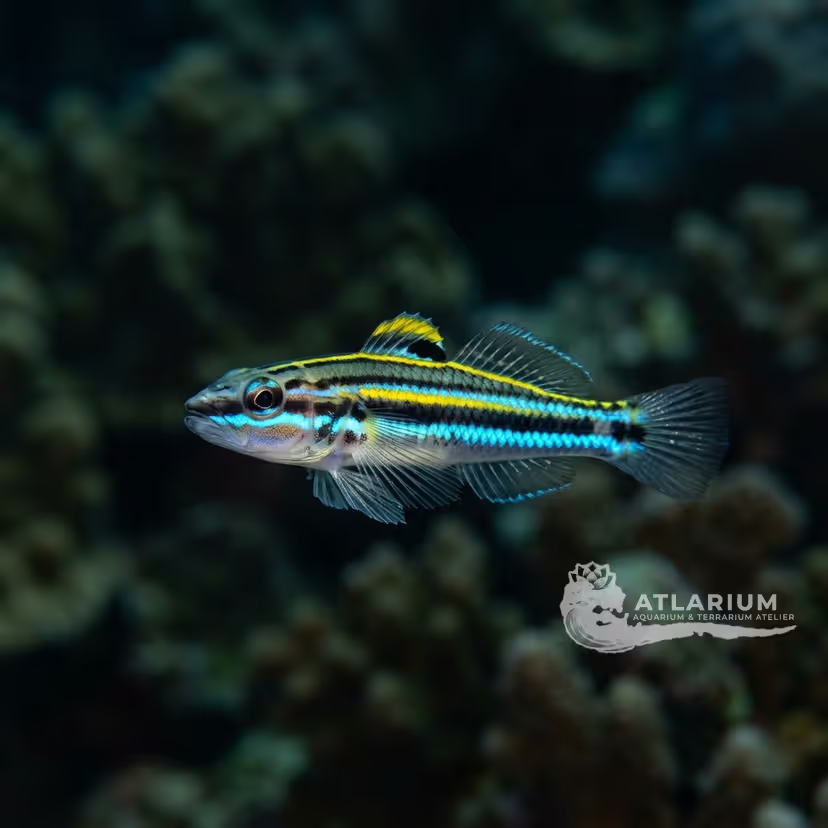
Redhead Goby

Redhead Goby

Elacatinus puncticulatus
View details->
Sharknose Goby

Sharknose Goby

Elacatinus evelynae

View details->
Shortstripe goby

Shortstripe goby

Elacatinus chancei

View details->

Recommended companions

Compatible cards from coherent ecosystems with matching parameters.

Grape caulerpa
Plant

Grape caulerpa

Caulerpa racemosa

View details->
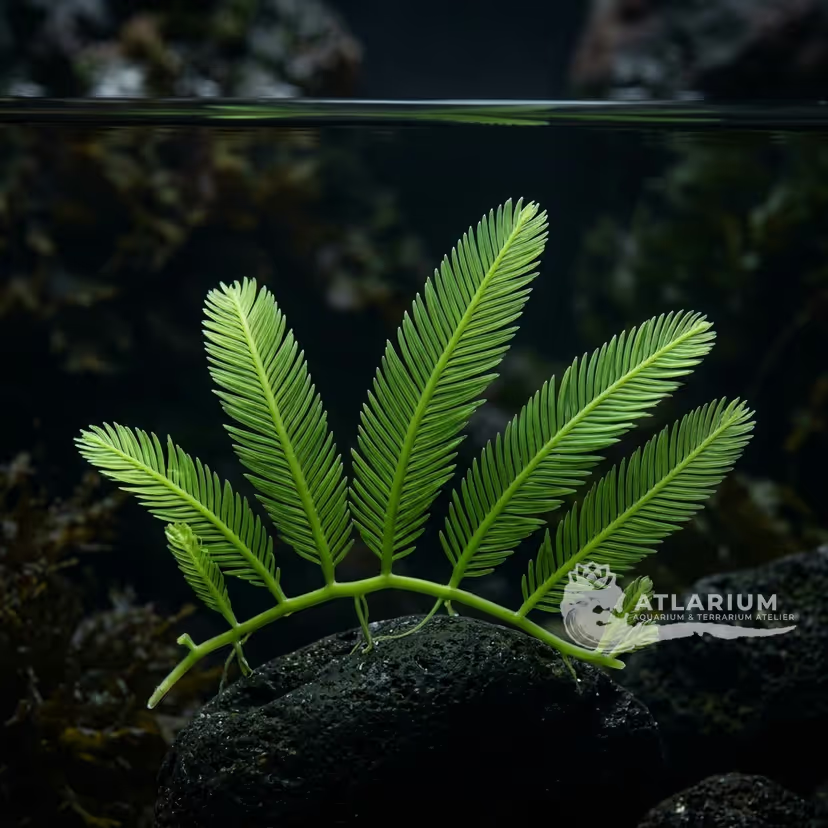
Caulerpa prolifera
Plant

Caulerpa prolifera

Caulerpa prolifera
View details->
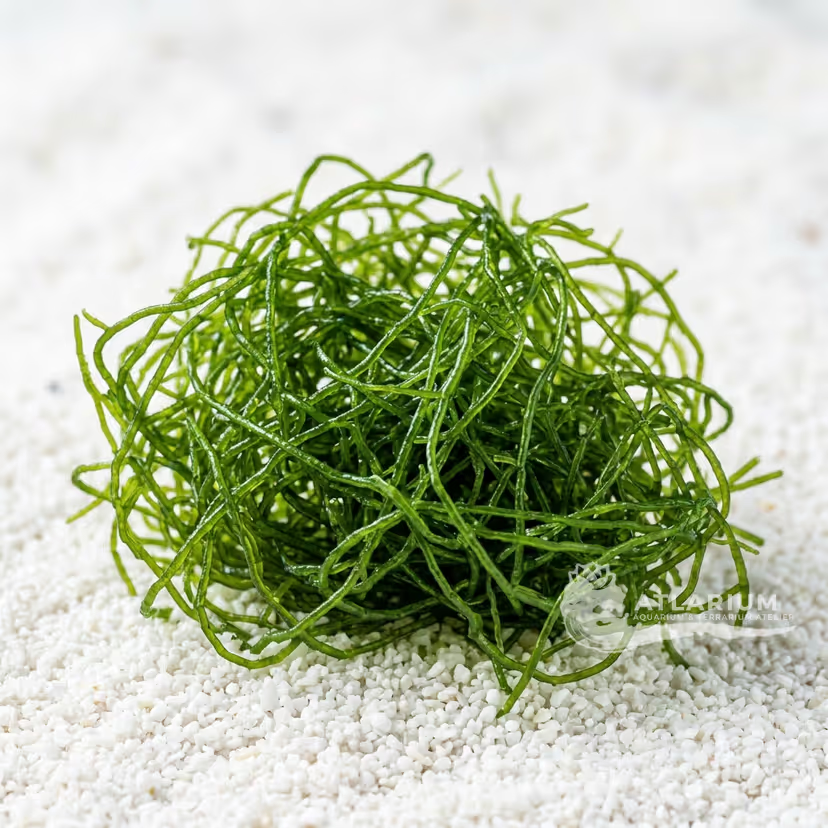
Caulerpa taxifolia
Plant

Caulerpa taxifolia

Caulerpa taxifolia
View details->
Chaetomorpha macroalgae
Plant

Chaetomorpha macroalgae

Chaetomorpha linum

View details->
Dead man fingers algae
Plant

Dead man fingers algae

Codium fragile

View details->
Halimeda macroalgae
Plant

Halimeda macroalgae

Halimeda opuntia

View details->
Peacock tail algae
Plant

Peacock tail algae

Padina pavonica

View details->
Red gracilaria
Plant

Red gracilaria

Gracilaria parvispora

View details->
Red grape algae
Plant

Red grape algae

Botryocladia uvaria

View details->
Sea lettuce
Plant

Sea lettuce

Ulva lactuca

View details->
Red Mangrove
Plant

Red Mangrove

Rhizophora mangle

View details->

Similar care

Cards with similar requirements, difficulty, habitat, and husbandry profile.
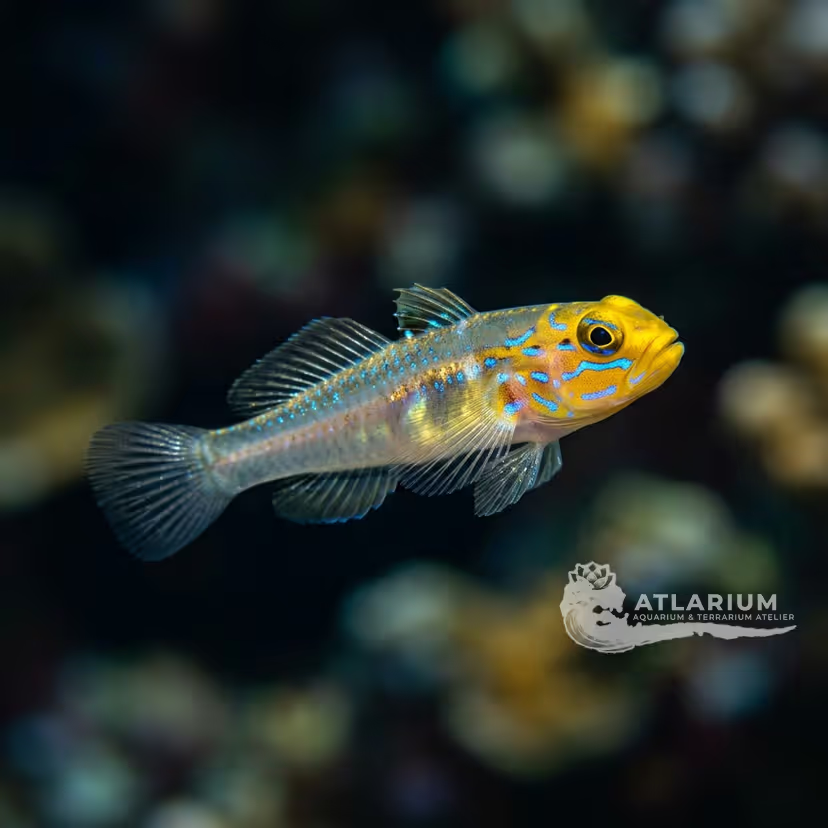
Key Goby

Key Goby

Elacatinus

View details->
Yellowline Goby

Yellowline Goby

Elacatinus horsti

View details->
Yellowprow Goby

Yellowprow Goby

Elacatinus xanthiprora

View details->
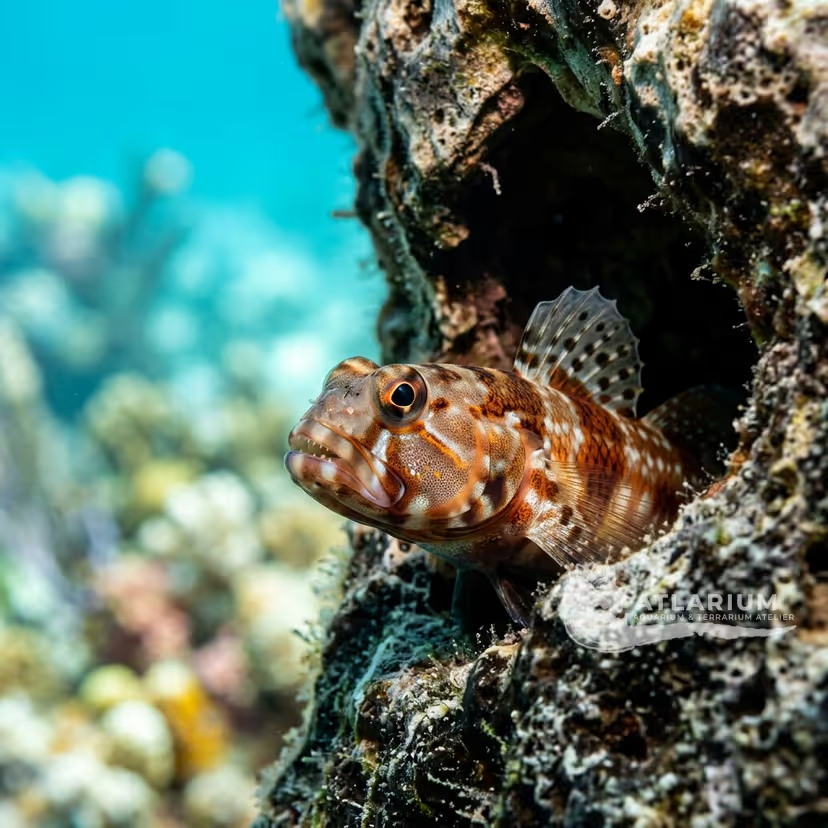
Spikefin goby

Spikefin goby

Discordipinna griessingeri
View details->
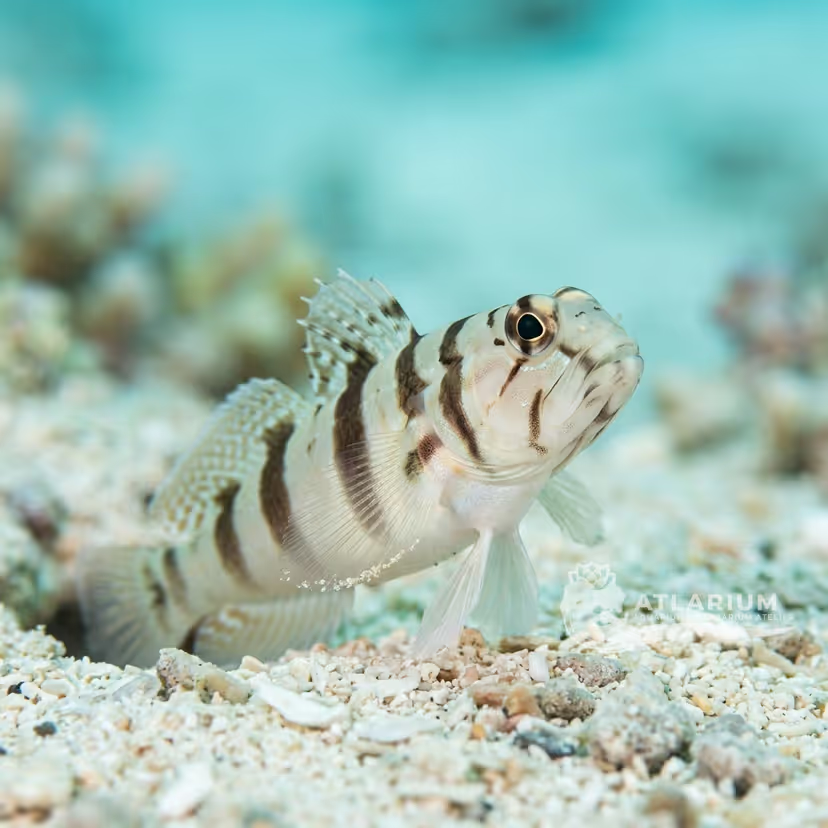
Ellipse shrimpgoby

Ellipse shrimpgoby

Amblyeleotris ellipse
View details->
New Caledonia Shrimpgoby

New Caledonia Shrimpgoby

Amblyeleotris novaecaledoniae

View details->
Red-banded Shrimpgoby

Red-banded Shrimpgoby

Amblyeleotris fasciata

View details->
Spotted-tail Shrimpgoby

Spotted-tail Shrimpgoby

Amblyeleotris bellicauda

View details->
Arch-fin shrimpgoby

Arch-fin shrimpgoby

Amblyeleotris arcupinna

View details->
Banded-head Shrimpgoby

Banded-head Shrimpgoby

Amblyeleotris cephalotaenius

View details->
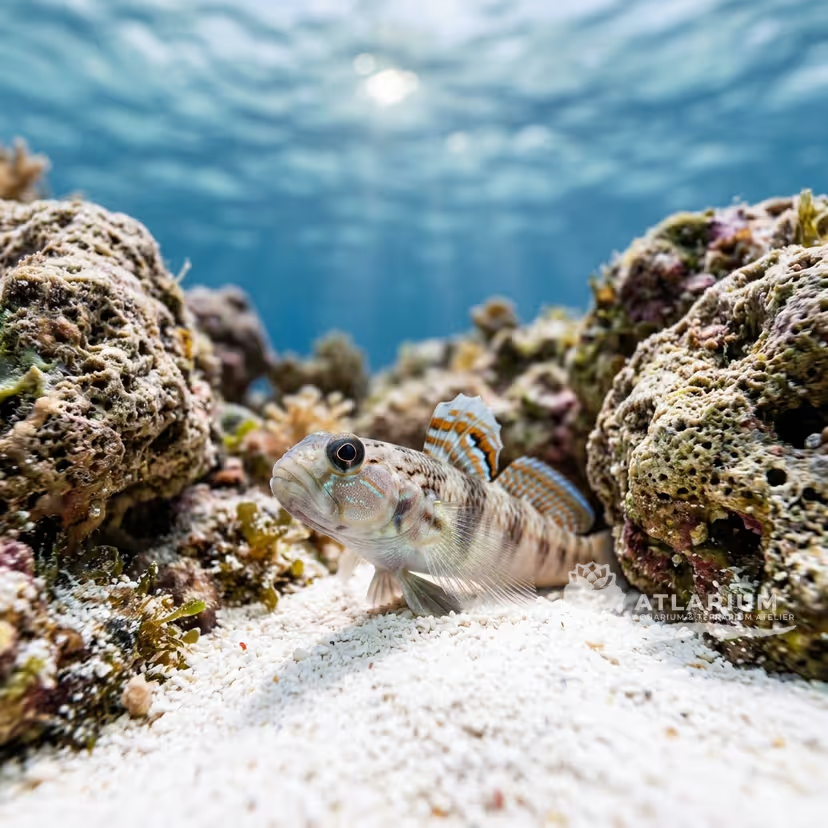
Convict Blenny

Convict Blenny

Pholidichthys leucotaenia
View details->
Downing's Shrimpgoby

Downing's Shrimpgoby

Amblyeleotris downingi

View details->
Blackcap Basslet

Blackcap Basslet

Gramma melacara

View details->
Bundoon blenny

Bundoon blenny

Meiacanthus bundoon

View details->
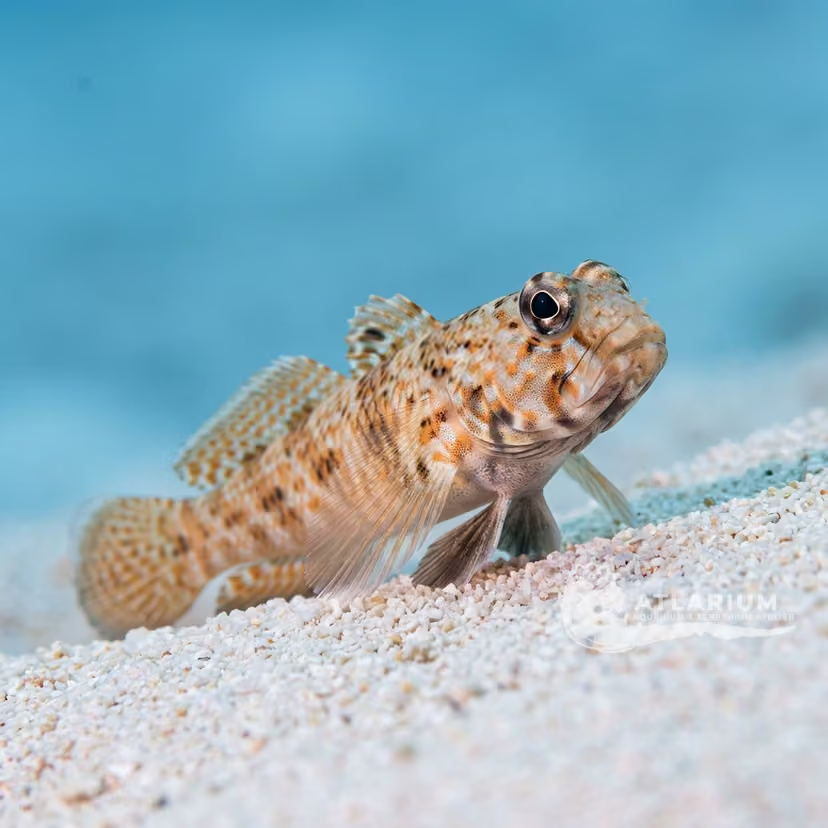
Naked-headed Shrimpgoby

Naked-headed Shrimpgoby

Amblyeleotris gymnocephala
View details->
Periophthalma Shrimp Goby

Periophthalma Shrimp Goby

Amblyeleotris periophthalma

View details->
Last updated: 06/30/2026
Five-lined Coral Goby (Gobiodon quinquestrigatus) Care Guide & Tank Setup | Atlarium