Encyclopaedia

FishMarineEasy
©AI Generated·Proprietary

Key Goby

Elacatinus

A tranquil, tiny marine goby equipped with a specialized ventral suction cup for clinging to reef surfaces. It acts as a dedicated parasite cleaner, bringing essential hygiene to its reef tankmates.

Taxonomy
Class:Actinopteri
Order:Perciformes
Family:Gobiidae
Subfamily:Gobiinae
Genus:Elacatinus
Species:Elacatinus
Formerly known as:Elacatinus dilectulus

Share

Check out Key Goby on Atlarium

PracticeRecognition quizzesPhotos, names, origins, and puzzles to review Atlas species.Open quizzes
Water Temperature

22 - 26 °C

pH Value

8.1 - 8.4

Water type

Marine

Tank level

All levels

Adult size

4.5 cm

Minimum tank volume

>= 40 L

Minimum group

>= 1

KH

8 - 12 dKH

Species description

Geographical Origin and Habitat: Western Atlantic: Florida Keys and the Bahamas. Found on shallow coral reefs, often associated with benthic sponges and rocky caves. This small goby lives in association with tubular sponges and sheltered coral reefs in the Caribbean Sea.
Taxonomy and Morphology: Member of the family Gobiidae. Grows up to 4.5 cm. Slim, cylindrical body with fused pelvic fins acting as a suction disk. Its elongated morphology features fused ventral fins that form a suction cup, useful for anchoring to surfaces in current zones.
Social Behavior: Mutualistic cleaner goby. Sets up cleaning stations on reef rocks, picking ectoparasites off larger host fish. It exhibits peaceful and stationary social behavior, establishing cleaning stations to remove parasites from larger fish species.
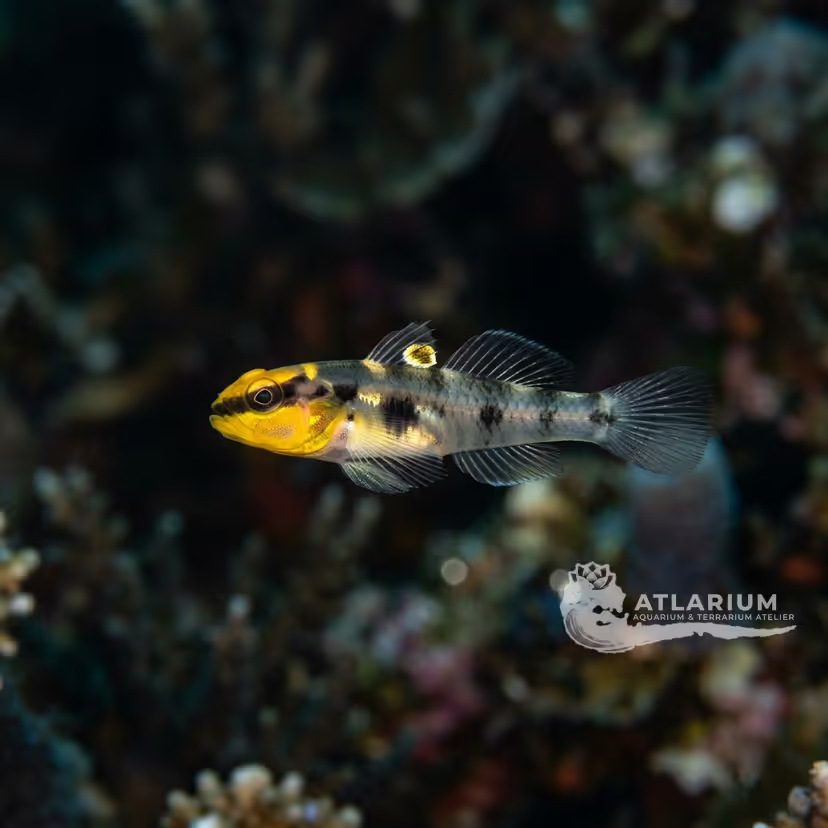
Coloration and Sexual Dimorphism: Dark grey-black body with a light gold to white snout stripe that ends near the eyes. Visual differences between sexes are absent. The body pattern features distinct longitudinal light and dark stripes that signal its cleaning service to potential predators.

Care, breeding and tankmates

Aquarium Setup: Minimum 40 liters. Provide reef rocks with tiny crevices. Sponge corals or artificial tubes are recommended to offer natural perches. Suitable for nano reef aquariums starting from 40 liters, with live rocks arranged to form small crevices and sheltered cracks.
Diet and Feeding: Carnivore. Feeds on skin parasites. In captivity, feed mysis, brine shrimp, cyclops, and high-quality fine flakes/pellets several times daily. Feed with finely minced frozen foods such as brine shrimp and cyclops, though it also readily accepts micro-granule foods.
Water Quality: Keep temperature at 22-26°C, pH 8.1-8.4, and salinity at 1.020-1.025 SG. Stable marine conditions are vital. Requires high water quality with efficient filtration, maintaining stable pH, salinity, and tropical temperature parameters.
Compatibility and Cohabitation: Peaceful cleaner. Great for community reef tanks. Do not house with large predatory fish that could swallow the goby. Fully reef-safe and peaceful, it coexists perfectly with most invertebrates and small reef-dwelling fish species.
Aquarium Breeding: Cave spawner. Eggs are guarded by the male. Breeding is possible but raising pelagic larvae is difficult due to food size. Breeding in home aquariums is documented; it deposits small eggs inside cavities which the male guards until hatching.
Risks and Diseases: Jumping hazard; a tight lid is mandatory. Vulnerable to rapid changes in salinity and copper medications. Main risks include jumping out of the tank (requires a tight lid) and food competition with faster, more active tankmates.

Geographic Origin and Distribution

Western Atlantic: Florida Keys and the Bahamas. Found on shallow coral reefs, often associated with benthic sponges and rocky caves. This small goby lives in association with tubular sponges and sheltered coral reefs in the Caribbean Sea.

Origin

Tropical oceans and reefsCentral America and CaribbeanNorth America

Fish profile

Temperament
Territorial
The {sp} is famous for its bold, industrious, and completely peaceful temperament. Despite its tiny size, it shows no fear of massive fish, eagerly swimming up to clean their gills and scales. It is fascinating to watch it interact with tank mates, setting up cleaning stations and performing its natural duties. It is a highly beneficial and entertaining addition to any marine setup.
Diet
Carnivore
While it performs a cleaning function by picking parasites and dead skin off larger fish, this alone cannot sustain it in captivity. Its diet must be heavily supplemented with small, meaty foods like frozen cyclops, baby brine shrimp, and finely chopped mysis. They will also readily accept high-quality micro-pellets and crushed flakes. Ensuring they receive enough food directly is crucial, as they can be outcompeted by faster swimmers.
Sex ratio
Flexible
There are no significant visual differences between the sexes, making them difficult to pair based on appearance alone. They can be kept singly or in pairs, though buying an established mated pair is the easiest way to ensure harmony. Two males may fight in smaller tanks, so caution is advised if keeping multiple individuals in a confined space. In large tanks, a small group may establish a peaceful hierarchy.
Feeding frequency
Twice daily
Because of their small stomachs and high metabolism, they should be fed multiple small meals a day. Two to three targeted feedings are ideal to keep them healthy and active. If kept in a tank with larger fish that they actively clean, they may supplement their own diet, but direct feeding is still necessary. Turning off the flow briefly during feeding helps them catch the food.
Bioload
The Elacatinus adds an extremely minimal bioload to the marine aquarium due to its tiny size. It produces almost imperceptible amounts of waste, making it perfect for nano reefs or heavily stocked larger tanks. Regular, standard filtration systems will handle its biological impact without any issues. It is one of the most environmentally friendly fish to keep in terms of water quality management.
Flow
Strong
They prefer moderate water flow that allows them to swim easily between their perching spots. Too strong a current can blow them around, making it difficult for them to establish a cleaning station or catch food. They often sit on prominent rocks or coral heads in areas of gentle flow to advertise their cleaning services. Ensure there are low-flow crevices for them to sleep in at night.
Jump risk
Yes
Like most gobies, the {sp} is a known jumper, especially when startled by a sudden movement or aggressive tank mate. Because of their tiny, slender bodies, they can find their way through remarkably small gaps in an aquarium canopy. A perfectly fitted mesh screen lid is an absolute requirement to keep them safe. Uncovered tanks will almost inevitably result in the fish jumping out over time.
Reproduction
Oviparous
This species can be bred in the home aquarium with dedicated effort and proper conditioning. The female lays a clutch of adhesive eggs in a small cave or crevice, which the male then aggressively guards until they hatch. The primary challenge lies in rearing the extremely tiny fry, which require microscopic live foods like rotifers immediately after hatching. Successful breeding often requires a dedicated rearing tank.
Compatibility & tankmates
Peaceful
This goby is exceptionally peaceful and completely reef-safe, making it a stellar community fish. In the wild, it operates as a cleaner fish, and larger predatory fish in the aquarium will often recognize this and allow it to clean them. It gets along with almost all peaceful and even moderately aggressive fish that respect its cleaner status. It will not bother corals, clams, or small ornamental shrimp.
Tank level
All levels
This goby is a benthic species that spends most of its time perched on live rock, corals, or the glass. It establishes a specific territory, often a prominent 'cleaning station', where it waits for other fish to approach. It rarely swims in the open water column unless darting out to grab a piece of food. You will often see it clinging vertically to the aquarium glass or tank decor.

Image gallery

Licensed images linked to the species or, when marked, to the closest representative taxon.

Related species

Recommendations grouped by close relatives, companion choices, and similar care.

Variants and close relatives

Same atlas type, nearby scientific identity, genus, or family.

Neon Goby

Neon Goby

Elacatinus oceanops

View details->
Redhead Goby

Redhead Goby

Elacatinus puncticulatus
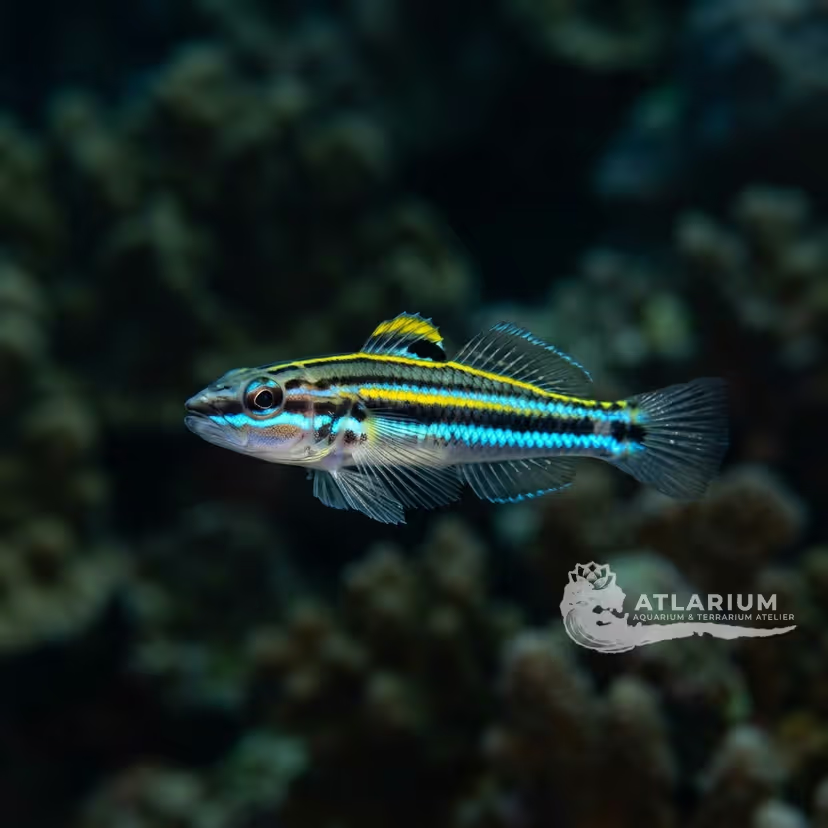
View details->
Sharknose Goby

Sharknose Goby

Elacatinus evelynae

View details->
Shortstripe goby

Shortstripe goby

Elacatinus chancei

View details->
Yellowline Goby

Yellowline Goby

Elacatinus horsti

View details->
Yellowprow Goby

Yellowprow Goby

Elacatinus xanthiprora

View details->
Barber Goby

Barber Goby

Elacatinus figaro

View details->
Barsnout goby

Barsnout goby

Elacatinus illecebrosus
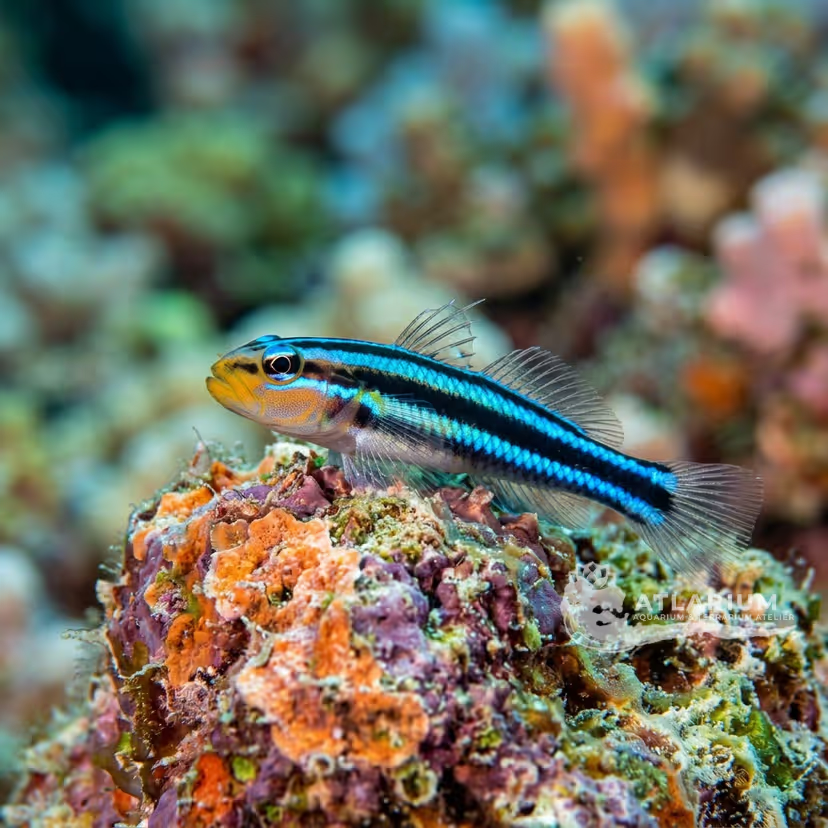
View details->
Cleaner Goby

Cleaner Goby

Elacatinus genie

View details->
Linesnout Goby

Linesnout Goby

Elacatinus lori

View details->
Randall's Neon Goby

Randall's Neon Goby

Elacatinus randalli

View details->
Banded-head Shrimpgoby

Banded-head Shrimpgoby

Amblyeleotris cephalotaenius
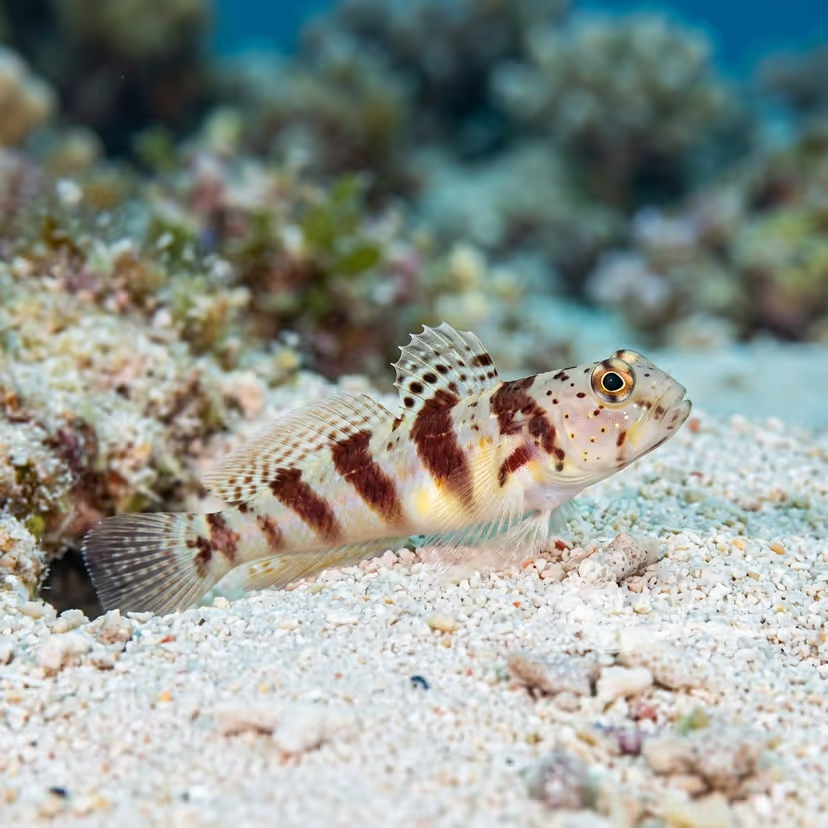
View details->
Diagonal-bar Shrimpgoby

Diagonal-bar Shrimpgoby

Amblyeleotris diagonalis
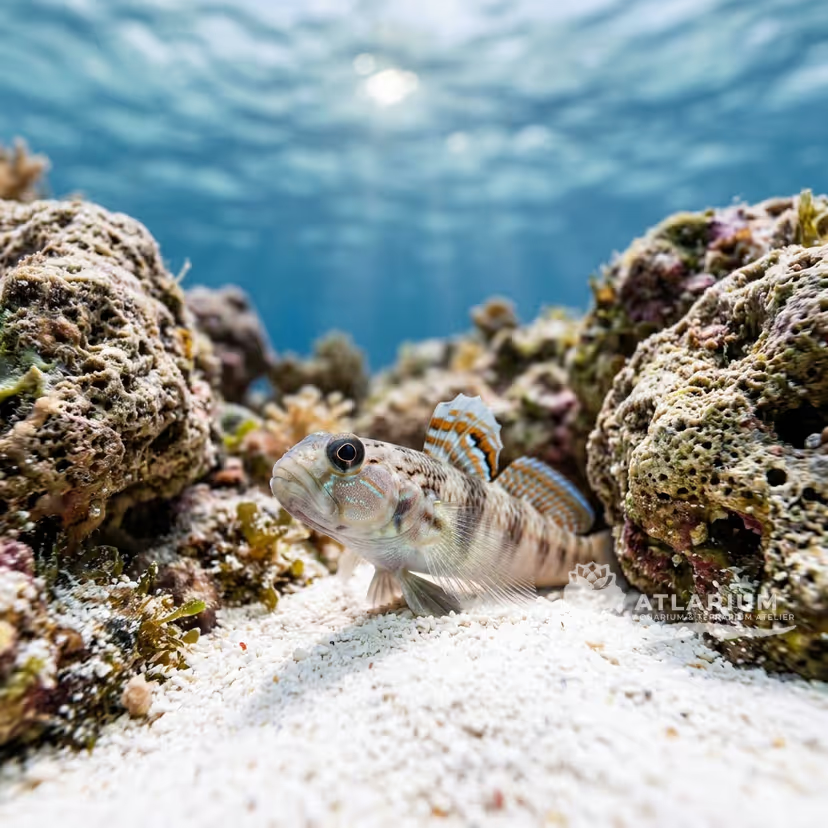
View details->
Downing's Shrimpgoby

Downing's Shrimpgoby

Amblyeleotris downingi
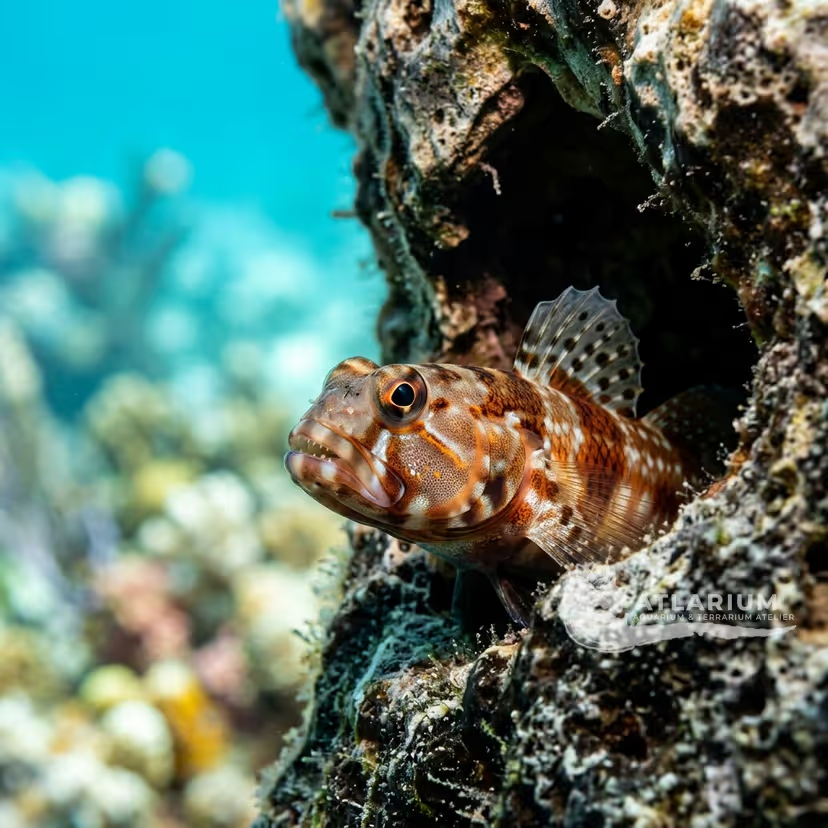
View details->
Ellipse shrimpgoby

Ellipse shrimpgoby

Amblyeleotris ellipse
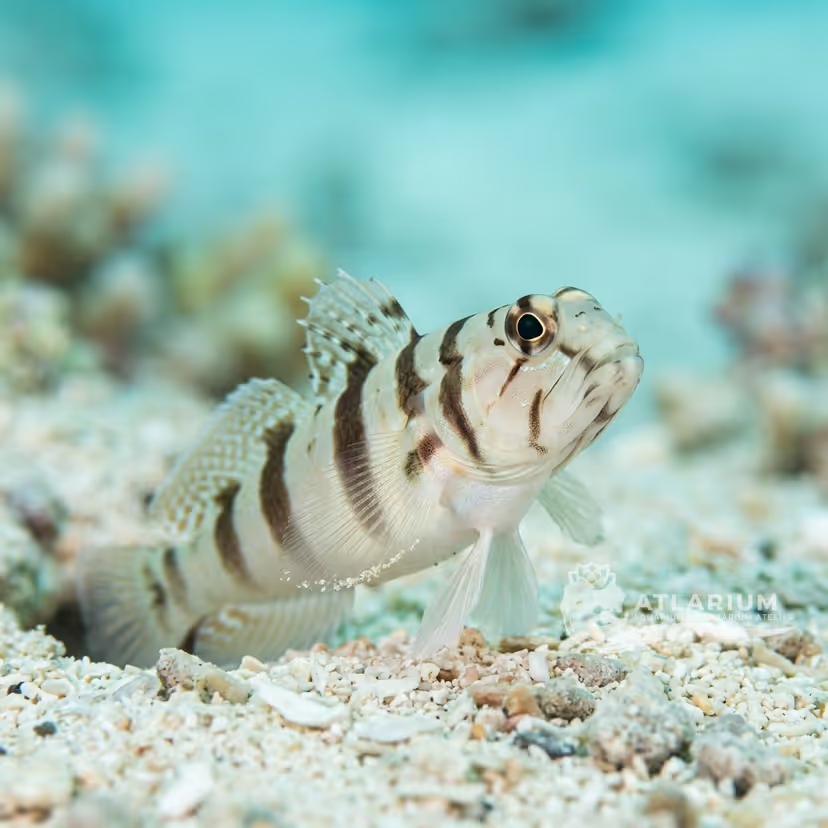
View details->
New Caledonia Shrimpgoby

New Caledonia Shrimpgoby

Amblyeleotris novaecaledoniae

View details->

Recommended companions

Compatible cards from coherent ecosystems with matching parameters.

Grape caulerpa
Plant

Grape caulerpa

Caulerpa racemosa

View details->
Caulerpa prolifera
Plant

Caulerpa prolifera

Caulerpa prolifera
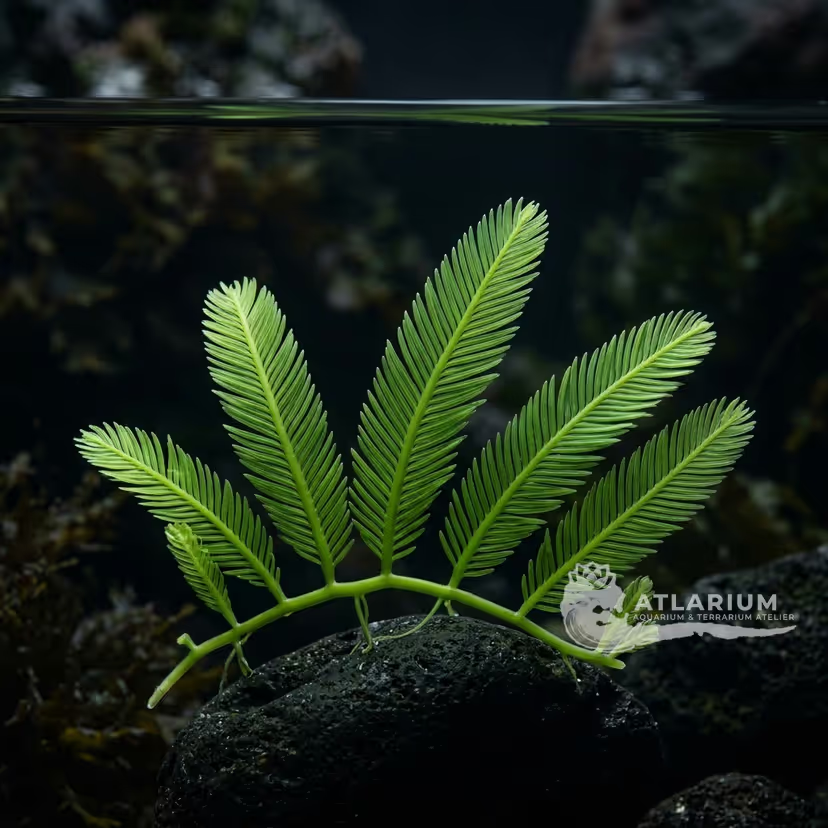
View details->
Caulerpa taxifolia
Plant

Caulerpa taxifolia

Caulerpa taxifolia
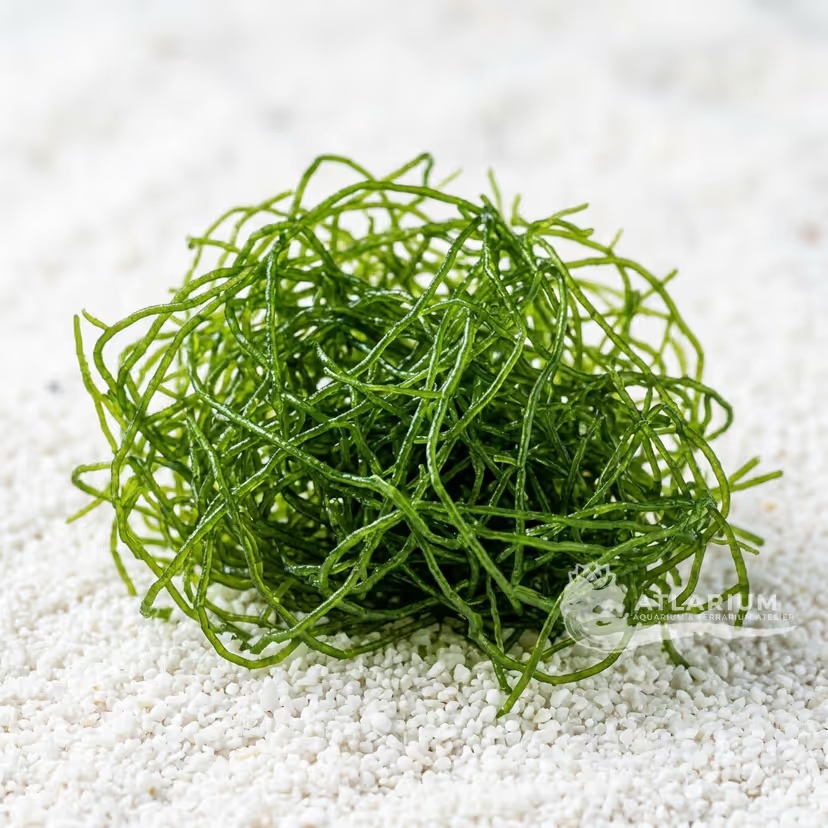
View details->
Chaetomorpha macroalgae
Plant

Chaetomorpha macroalgae

Chaetomorpha linum

View details->
Dead man fingers algae
Plant

Dead man fingers algae

Codium fragile

View details->
Halimeda macroalgae
Plant

Halimeda macroalgae

Halimeda opuntia

View details->
Peacock tail algae
Plant

Peacock tail algae

Padina pavonica

View details->
Red gracilaria
Plant

Red gracilaria

Gracilaria parvispora

View details->
Red grape algae
Plant

Red grape algae

Botryocladia uvaria

View details->
Sea lettuce
Plant

Sea lettuce

Ulva lactuca

View details->
Red Mangrove
Plant

Red Mangrove

Rhizophora mangle

View details->

Similar care

Cards with similar requirements, difficulty, habitat, and husbandry profile.

Spikefin goby

Spikefin goby

Discordipinna griessingeri

View details->
Five-lined Coral Goby

Five-lined Coral Goby

Gobiodon quinquestrigatus

View details->
Red-banded Shrimpgoby

Red-banded Shrimpgoby

Amblyeleotris fasciata

View details->
Spotted-tail Shrimpgoby

Spotted-tail Shrimpgoby

Amblyeleotris bellicauda

View details->
Randall's Shrimp Goby

Randall's Shrimp Goby

Amblyeleotris randalli

View details->
Beautiful-cheek shrimpgoby

Beautiful-cheek shrimpgoby

Amblyeleotris callopareia

View details->
Harris's Shrimpgoby

Harris's Shrimpgoby

Amblyeleotris harrisorum
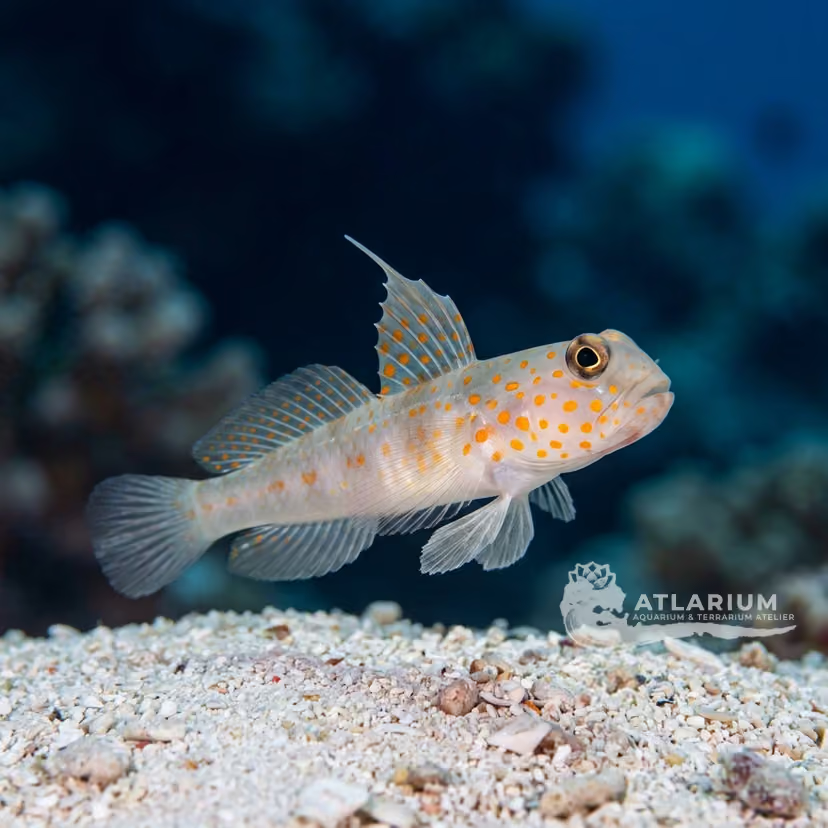
View details->
Neumann's prawn-goby

Neumann's prawn-goby

Amblyeleotris neumanni
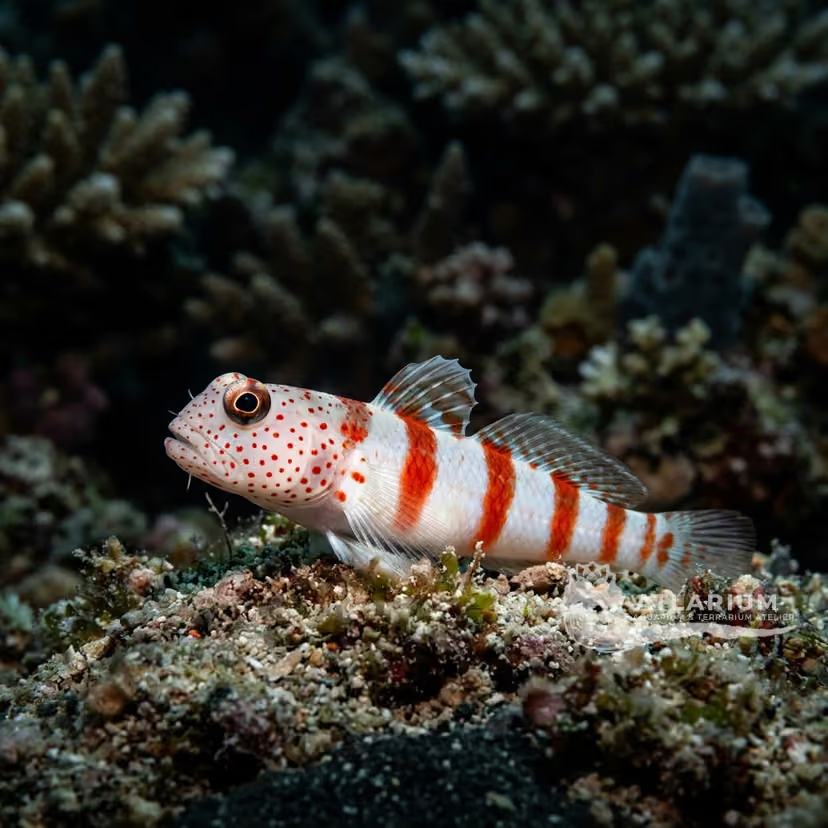
View details->
Redspotted shrimpgoby

Redspotted shrimpgoby

Amblyeleotris ogasawarensis
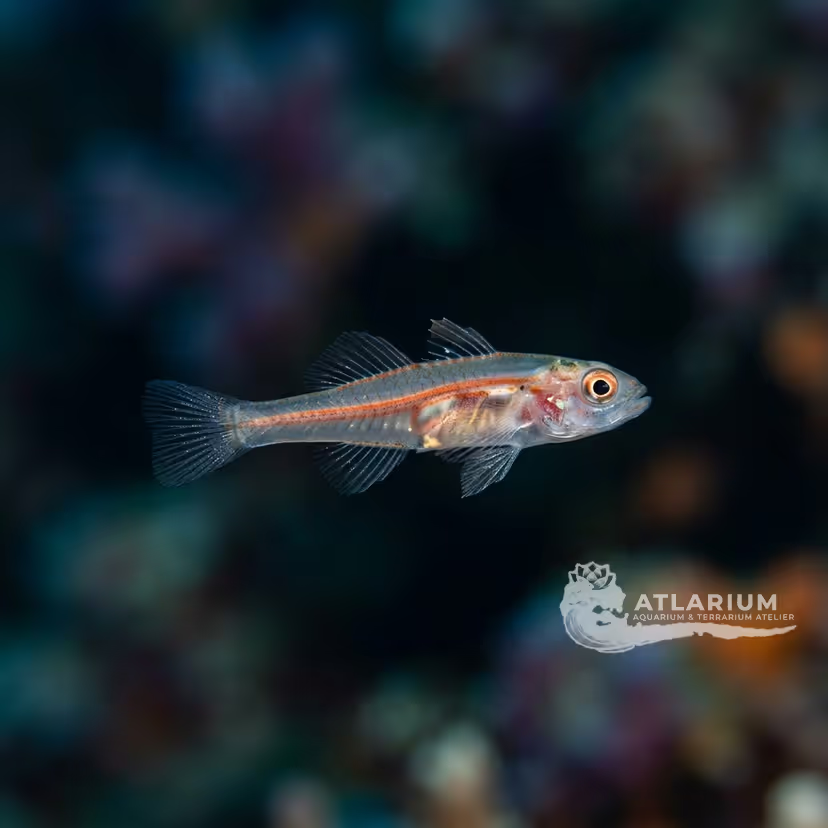
View details->
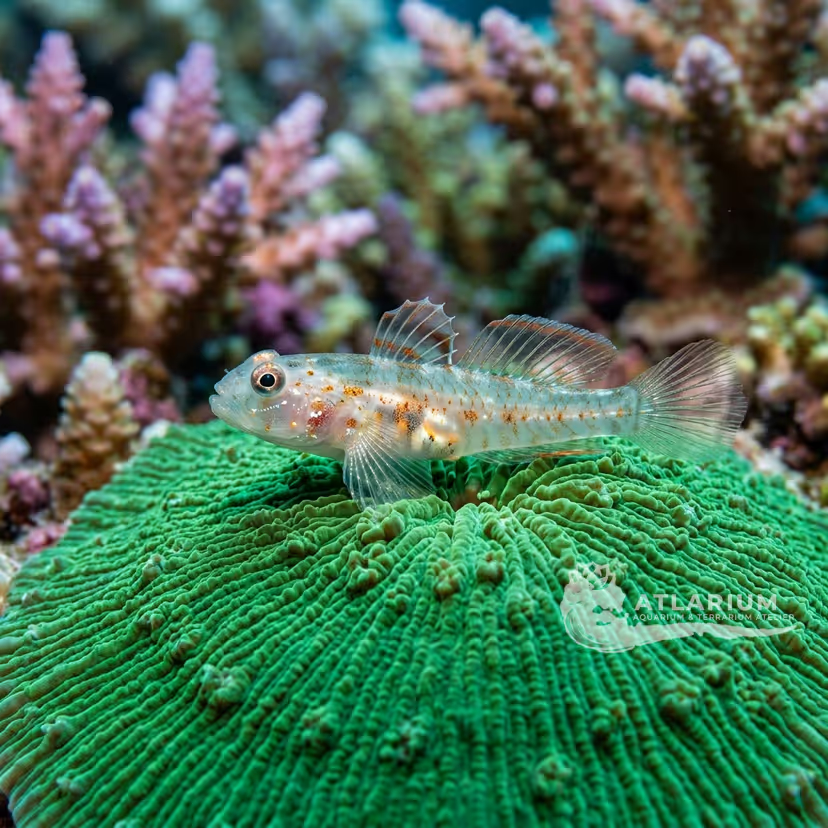
Gold Neon Eviota Goby

Gold Neon Eviota Goby

Eviota pellucida
View details->
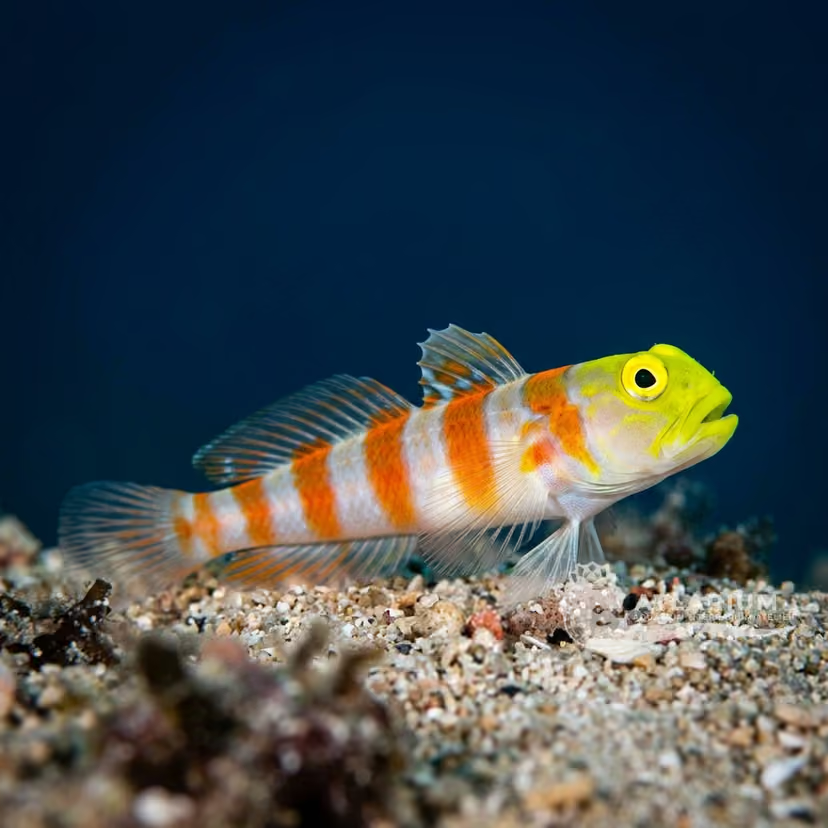
Delicate Shrimpgoby

Delicate Shrimpgoby

Amblyeleotris delicatulus
View details->
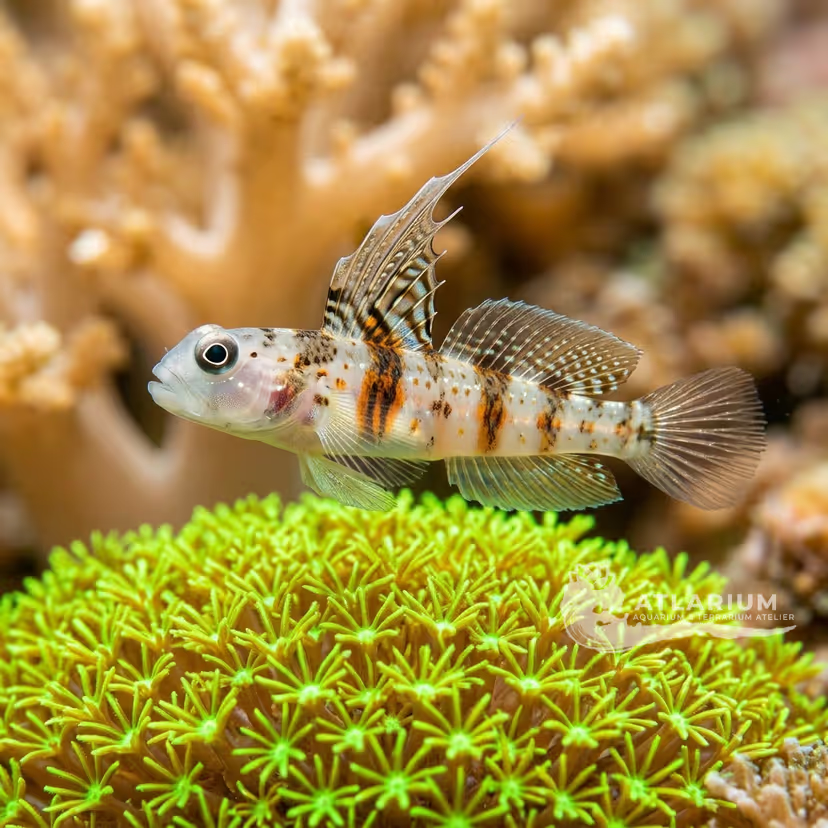
Yano's Shrimp Goby

Yano's Shrimp Goby

Amblyeleotris yanoi
View details->
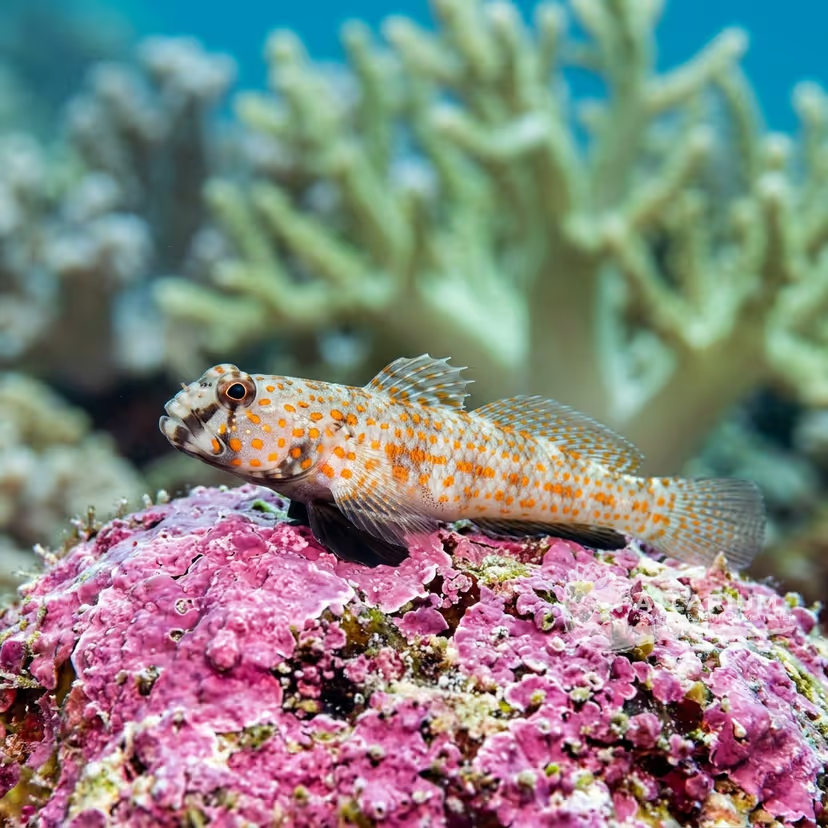
Naked-headed Shrimpgoby

Naked-headed Shrimpgoby

Amblyeleotris gymnocephala
View details->
Orange-spotted Prawn-goby

Orange-spotted Prawn-goby

Amblyeleotris guttata
View details->
Periophthalma Shrimp Goby

Periophthalma Shrimp Goby

Amblyeleotris periophthalma
View details->
Marquesas Shrimpgoby

Marquesas Shrimpgoby

Amblyeleotris marquesas

View details->
Last updated: 06/30/2026
Key Goby (Elacatinus) Care Guide & Tank Setup | Atlarium