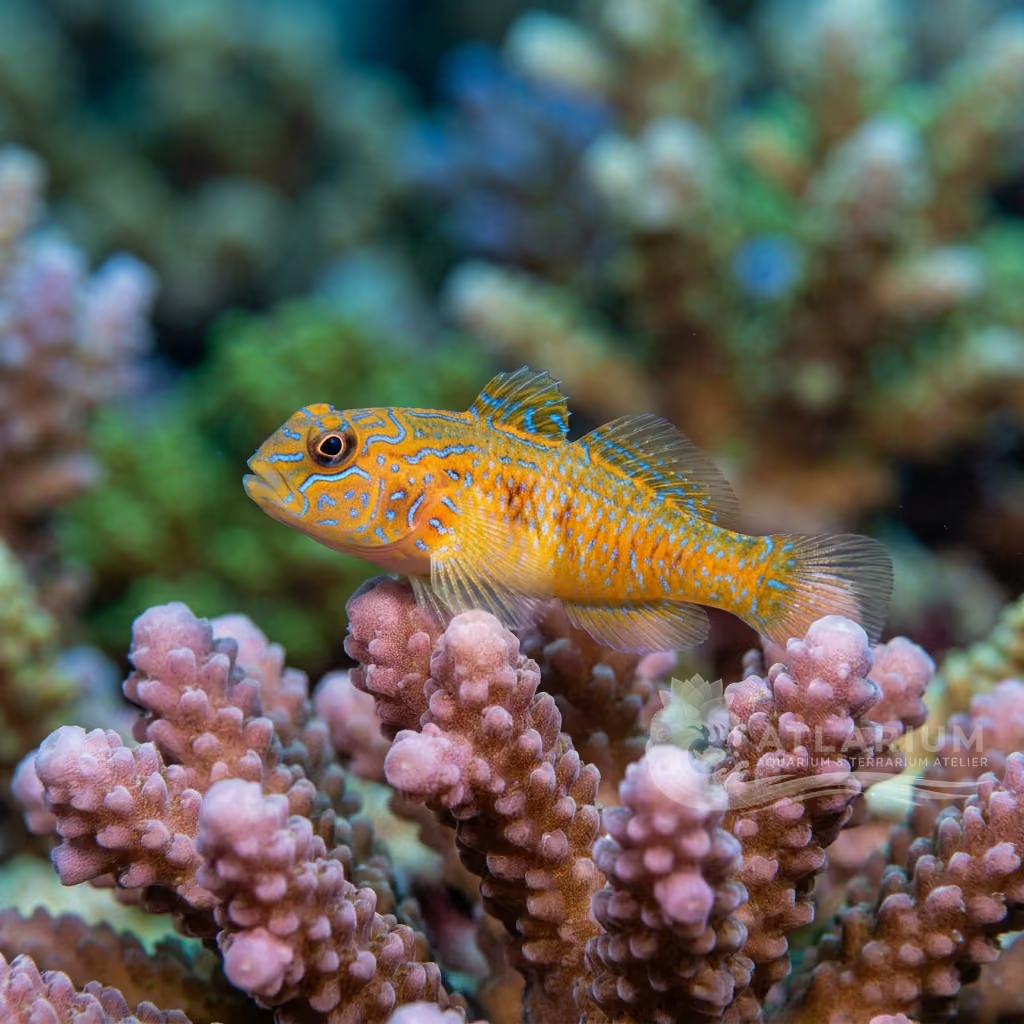
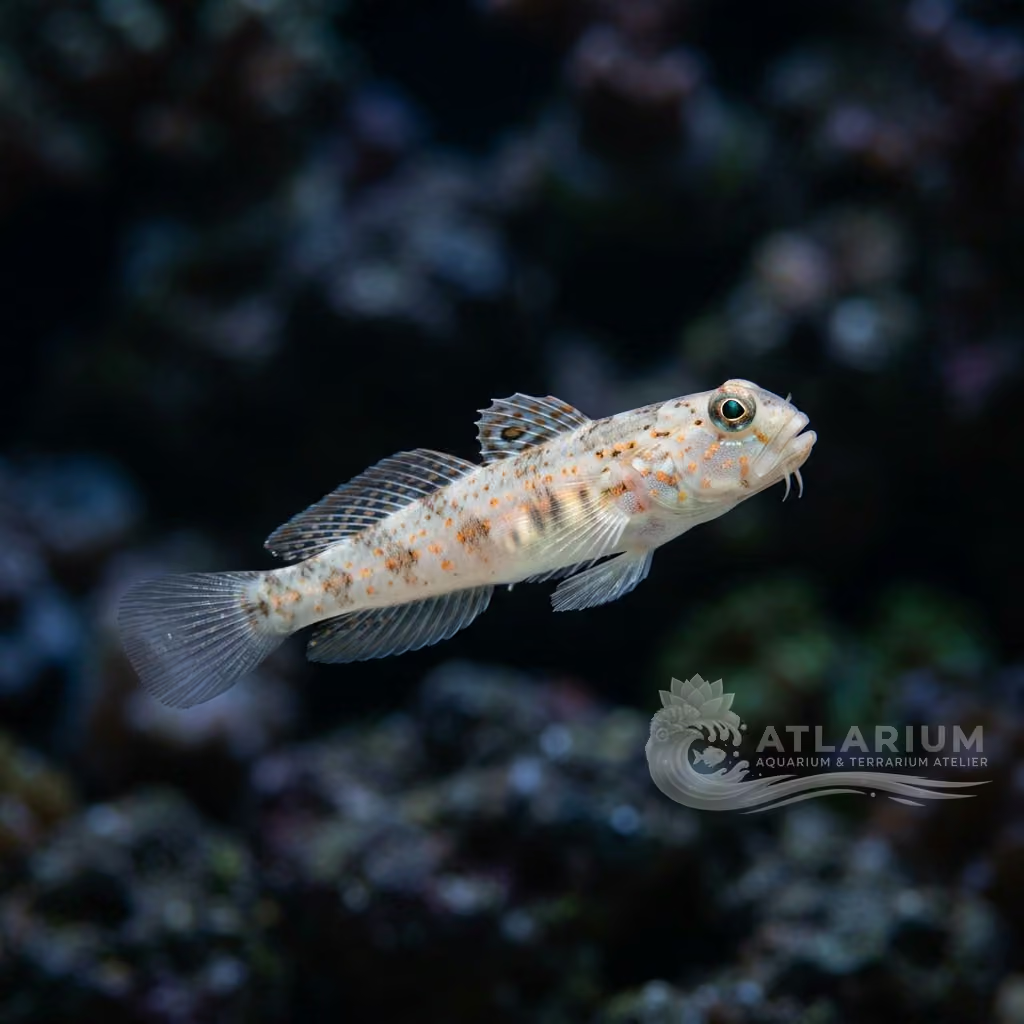
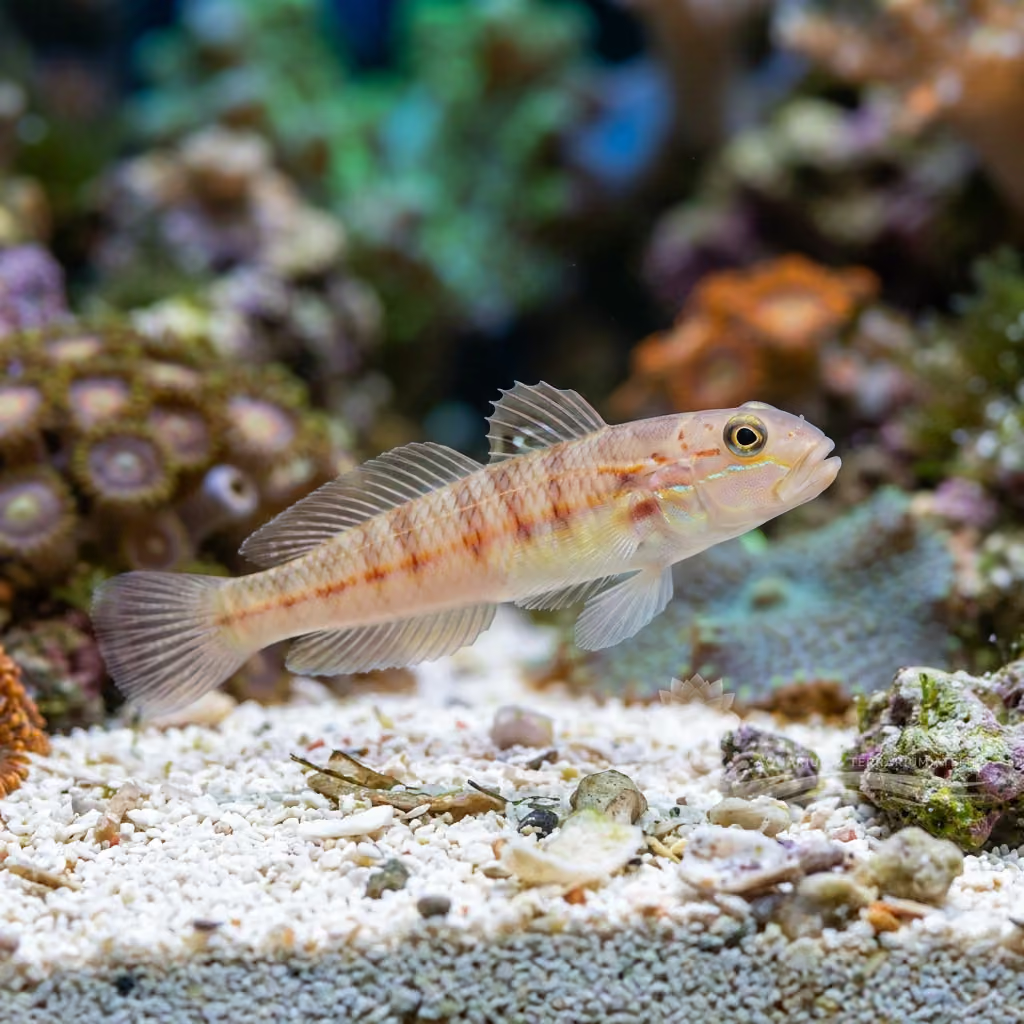
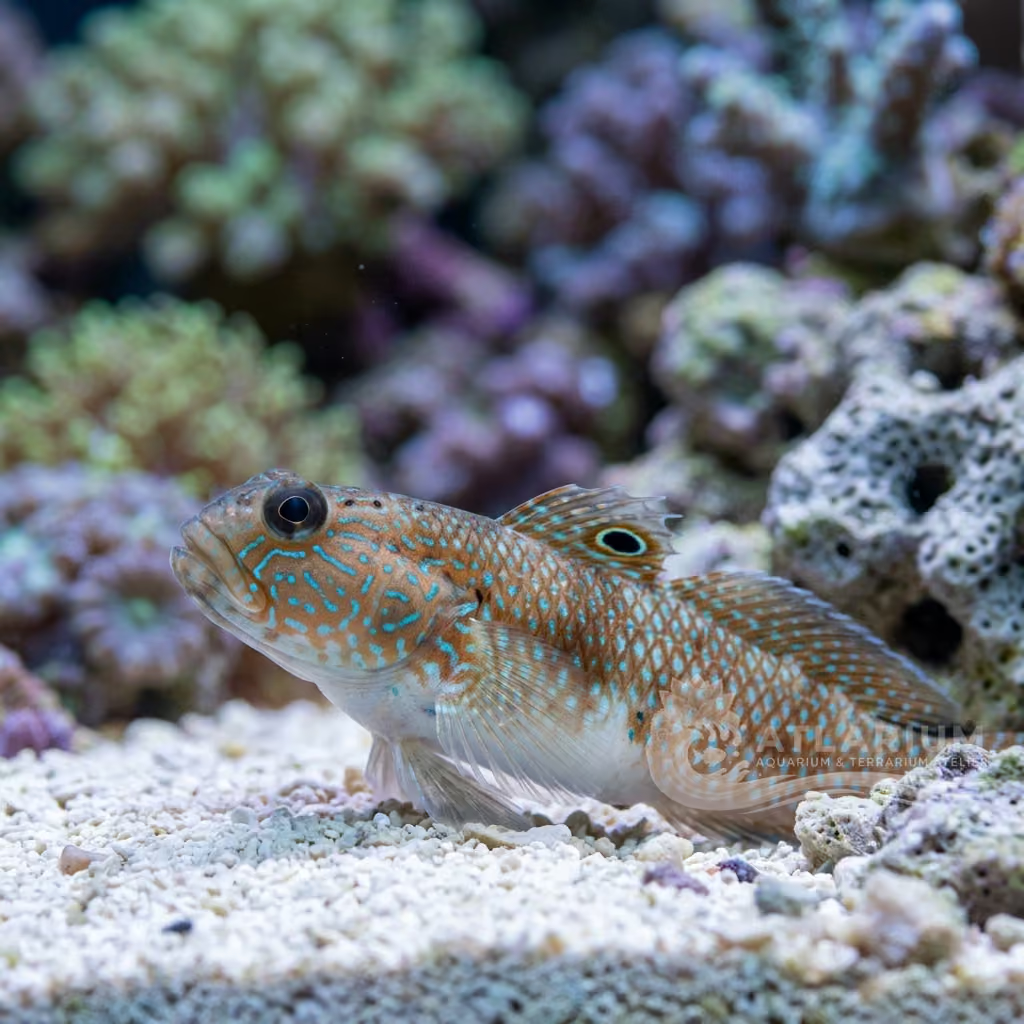
Broad-barred coral goby
Gobiodon ceramensis
A tiny, scaleless goby that lives in obligate association with branching Acropora corals. It is perfect for nano reefs and completely peaceful towards other fish.
Water Temperature
24 - 28 °C
pH Value
8.1 - 8.4
Water type
Marine
Tank level
Bottom
Adult size
3.5 cm
Minimum tank volume
>= 40 L
Minimum group
>= 1
KH
8 - 12 dKH

Species description
Geographical Origin and Habitat: Gobiodon ceramensis, commonly known as the broad-barred coral goby or ceramic goby, is native to the Western Pacific Ocean, ranging from Indonesia and the Philippines to Papua New Guinea, the Great Barrier Reef, and Fiji. It inhabits shallow, protected lagoons and seaward reefs at depths of 1 to 12 meters. This species is an obligate coral dweller, living exclusively within the branches of live Acropora stony corals.
Taxonomy and Morphology: Belongs to the family Gobiidae and the genus Gobiodon. It is a tiny fish, reaching a maximum length of only 3.5 to 4 cm. Like all coral gobies, its body is deep and laterally compressed, entirely lacking scales. Its skin is covered in a thick, toxic mucus that has a bitter taste, protecting it from predatory reef fish.
Social Behavior: Benthic, quiet, and highly sedentary, spending almost all its time resting on coral branches. It is territorial toward other Gobiodon species, defending its host coral colony from rivals, but remains peaceful toward non-competitor species. It relies on its host coral for shelter, feeding, and breeding.
Coloration and Sexual Dimorphism: Displays a uniform dark brown, olive, or nearly black body coloration, occasionally showing faint vertical bars or green highlights on the head. There is no visible external dimorphism. The species is a bi-directional facultative hermaphrodite, allowing any two individuals to form a pair by adjusting their sex.

Care, breeding and tankmates
Aquarium Setup: Suitable for nano reefs of 50 liters or larger. The presence of live, branching stony corals (specifically Acropora species) is highly recommended to provide a natural habitat, though they can adapt to other coral types. Provide moderate water movement and a reliable filtration system to maintain water quality.
Diet and Feeding: Carnivorous. In the wild, they feed on zooplankton and occasionally coral mucus or tissue. In aquariums, they should be fed small frozen foods such as copepods, baby brine shrimp, rotifers, and finely minced mysis. Feed small amounts at least twice a day due to their high metabolic rate.
Water Quality: Keep water parameters stable: temperature of 24 °C to 28 °C, pH of 8.1 to 8.4, and specific gravity of 1.020 to 1.025. Nitrates and phosphates should be kept low to ensure the health of both the goby and its coral host. Regular partial water changes are essential.
Compatibility and Cohabitation: Excellent community reef fish. Compatible with other small, peaceful reef inhabitants like firefish, small wrasses, and cardinals. Avoid large, aggressive predatory fish. The goby may nip at the polyps of its host coral, but this behavior rarely harms a healthy, fast-growing coral colony.
Aquarium Breeding: Spawning occurs within the branches of the host coral. The pair clears a small patch of coral tissue to lay adhesive eggs, which the male then guards. Raising the pelagic larvae is extremely difficult, requiring specialized cultures of microscopic live foods (like copepod nauplii).
Risks and Diseases: Their toxic mucus coat provides natural resistance to external parasites like Ich. The primary risk is starvation if they fail to feed on introduced foods or are outcompeted by faster fish. Ensure they are actively feeding during maintenance checks.

Geographic origin and distribution
Gobiodon ceramensis, commonly known as the broad-barred coral goby or ceramic goby, is native to the Western Pacific Ocean, ranging from Indonesia and the Philippines to Papua New Guinea, the Great Barrier Reef, and Fiji. It inhabits shallow, protected lagoons and seaward reefs at depths of 1 to 12 meters. This species is an obligate coral dweller, living exclusively within the branches of live Acropora stony corals.
Origin
Cosmopolitan or introducedAfrica and MadagascarSouth and Southeast AsiaAustralia, New Guinea, and OceaniaTropical oceans and reefs

Fish profile
- Temperament
- Peaceful
- They are incredibly peaceful, highly observant, and very sedentary little fish. They show virtually no aggression except possibly towards competing goby species. Their comical, perched appearance adds wonderful character to any intricate reef display.
- Diet
- Carnivore
- This micro-predator requires a diet of very finely chopped meaty foods. Feed them cyclops, baby brine shrimp, and crushed high-quality marine flakes. Ensure the food particles are small enough to fit into their tiny mouths.
- Life expectancy
- 2-5 years
- Adult size
- 3.5 cm
- Sex ratio
- Pair
- They can easily be kept as a proven male-female pair in small tanks. They have the remarkable ability to change sex to form a breeding pair. Keeping two dominant males together in a tiny tank should be avoided.
- Feeding frequency
- Twice daily
- Feed them very small amounts once or twice daily to keep them plump. Because they rarely leave their coral perches, spot feeding with a pipette is highly recommended. Target feeding ensures they do not get outcompeted by faster swimming tankmates.
- Bioload
- Low
- This tiny goby produces an incredibly minimal bioload on the system. It can comfortably be housed in very small nano reef aquariums. Standard routine maintenance is more than enough to handle its microscopic waste.
- Flow
- Strong
- Low to moderate water flow is absolutely ideal for these delicate fish. Extremely high flow will effortlessly blow them right off their chosen coral resting spots. Gentle currents allow them to easily pluck small zooplankton directly from the water.
- Jump risk
- No
- Reproduction
- Oviparous
- They are known to lay small clutches of eggs at the base of coral branches. Captive breeding is very possible if a mated pair is successfully established. Raising the microscopic fry is the primary and significant challenge for hobbyists.
- Compatibility & tankmates
- Reef safe
- It is a perfectly peaceful fish ideal for nano reef tanks. It should never be housed with large, aggressive, or predatory fish that could swallow it. It is entirely safe with corals and all ornamental invertebrates.
- Tank level
- Bottom
- They heavily favor the middle to upper levels where SPS corals are normally placed. They lack a functional swim bladder, so they rarely swim in the open. They literally spend their days sitting motionlessly among the dense coral branches.

Scientific Parameters & Models
FishBase
Window to the official scientific data of the species
FishBase v25.04Data synced on: 06/15/2026
- Trophic level
- 3.2 ± 0.4 se
- Resilience
- High (less than 15 months)
- Phylogenetic uniqueness (PD50)
- 0.5
- Bayesian Length-Weight
- a = 0.01995, b = 3.01
- VulnerabilityLow vulnerability (10 / 100)

Related species
Recommendations grouped by close relatives, companion choices, and similar care.