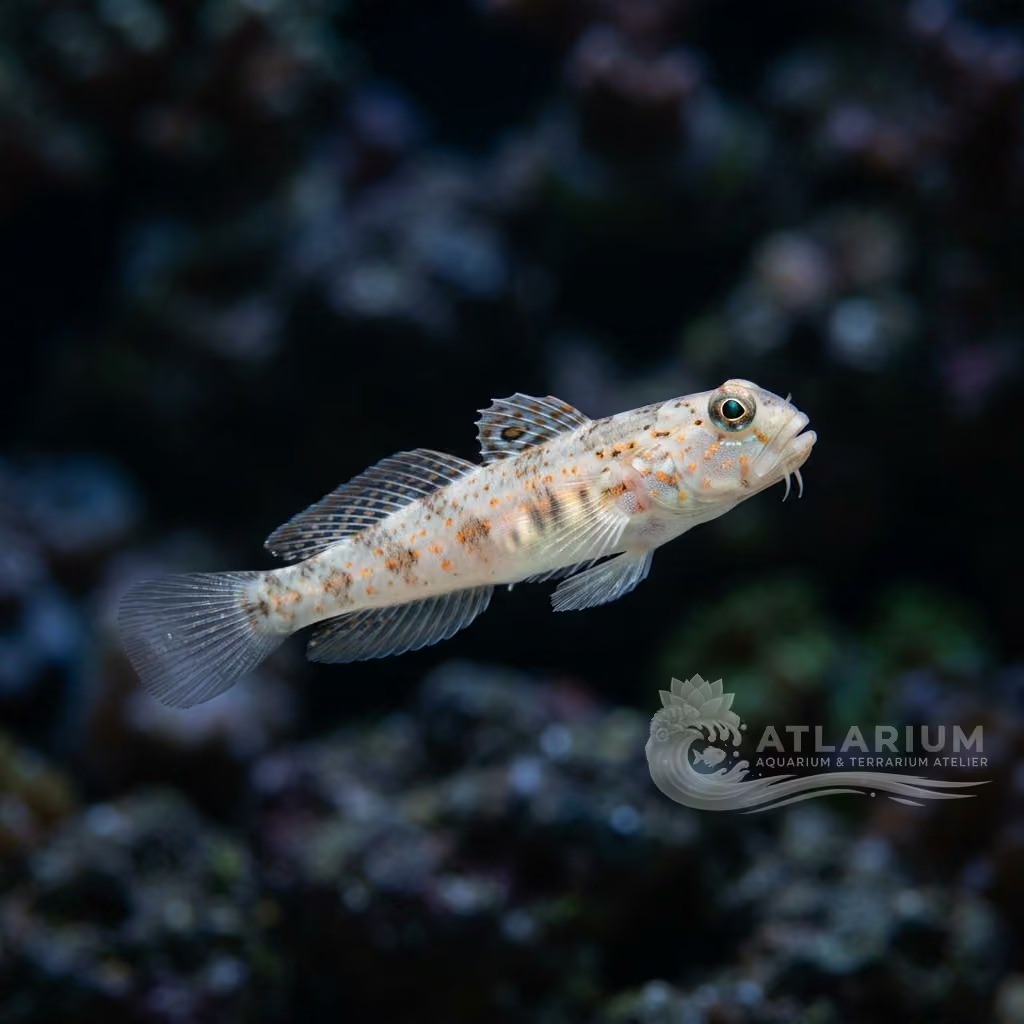
Ripple Clown Goby
Gobiodon rivulatus
This tiny clown goby features wavy facial lines and relies on branching Acropora for shelter. Ideal for nano tanks, it must be fed micro-carnivore foods daily.
Water Temperature
24 - 28 °C
pH Value
8.1 - 8.4
Water type
Marine
Tank level
Bottom
Adult size
5 cm
Minimum tank volume
>= 40 L
Minimum group
>= 1
KH
8 - 12 dKH

Species description
Geographical Origin and Habitat: This species is widely distributed across the tropical Indo-Pacific, ranging from the Red Sea and East African coast to the Tuamotu Islands. It is strictly reef-associated, inhabiting shallow lagoons and seaward reefs, living exclusively within the branches of live Acropora corals.
Taxonomy and Morphology: A member of the Gobiidae family, genus Gobiodon. It features a deep, laterally compressed body that is completely scaleless. The skin is protected by a toxic, bitter mucus layer that deters predators. It reaches a maximum total length of 5.0 cm, with pelvic fins fused into a suction disc.
Social Behavior: Highly sedentary and territorial towards other clown gobies. It spends its life perched within the branches of a host coral. It defends its home coral from competitors and will rarely leave the shelter of the branches, except for short darting movements to catch drifting zooplankton.
Coloration and Sexual Dimorphism: Body color varies from greenish-olive to dark reddish-brown, highlighted by thin, wavy vertical blue or pink lines on the head and anterior portion of the body. They are bidirectional hermaphrodites, meaning individuals can change sex in either direction. No sexual dimorphism is visible.

Care, breeding and tankmates
Aquarium Setup: Highly suited for nano reef aquariums starting from 40-50 liters. The presence of live branching Acropora corals (or branching skeletons) is critical to provide the natural substrate required for the goby's security, territorial boundaries, and spawning sites.
Diet and Feeding: Carnivorous. In nature, it feeds on plankton and nips at the host coral's mucus and tissue. In captivity, it must be fed fine frozen foods, such as copepods, cyclops, and baby brine shrimp, several times a day. It rarely accepts dry food formulations.
Water Quality: Demands pristine reef parameters: temperature 24°C to 28°C (75-82°F), pH 8.1 to 8.4, and specific gravity 1.020 to 1.025. Standard reef filtration with low levels of nitrates and phosphates is vital to keep the host Acropora corals healthy and thriving.
Compatibility and Cohabitation: Exceptionally peaceful towards open-water fish and invertebrates. However, in small aquariums, it will clash with other members of the Gobiodon genus. Its perching behavior and tissue nipping can cause polyps to retract or cause minor localized damage to stressed corals.
Aquarium Breeding: Monogamous pairs spawn by clearing a circular band of tissue from a coral branch to expose the skeleton, where they lay adhesive eggs. Both parents guard the clutch. Larvae are pelagic and require specialized, microscopic live feeds (rotifers and green water) to survive.
Risks and Diseases: Starvation is the leading cause of mortality in home aquariums due to insufficient feeding frequency. While highly resistant to external skin parasites (like ich) due to its thick toxic mucus coat, it is sensitive to copper-based treatments.

Geographic origin and distribution
This species is widely distributed across the tropical Indo-Pacific, ranging from the Red Sea and East African coast to the Tuamotu Islands. It is strictly reef-associated, inhabiting shallow lagoons and seaward reefs, living exclusively within the branches of live Acropora corals.
Origin
Tropical oceans and reefsNorth AmericaAfrica and Madagascar

Fish profile
- Temperament
- Territorial
- They are profoundly peaceful and mostly remain entirely motionless while observing their surroundings. They only show brief bursts of energy to grab food or chase away rivals. Their quirky, sedentary nature makes them a favorite among dedicated reefkeepers.
- Diet
- Carnivore
- As a micro-carnivore, it requires tiny, meaty morsels to survive. Nutritious foods like cyclops, rotifers, and very finely crushed flakes are ideal. They will also naturally hunt for microscopic copepods living within the coral branches.
- Life expectancy
- 2 years
- Adult size
- 5 cm
- Sex ratio
- Pair
- They are best kept as a single individual or as a mated pair. Like other coral gobies, they possess bidirectional sex change capabilities to form pairs. Avoid keeping multiple unpaired individuals in anything less than a massive tank.
- Feeding frequency
- Twice daily
- Feed them one to two times daily using a targeted approach. Turning off the water flow during feeding helps them catch their tiny food. A turkey baster gently squeezing food near their perch works absolute wonders.
- Bioload
- Low to Medium
- This minuscule fish adds practically zero bioload to the overall aquarium system. It is perfectly suited for highly sensitive nano and pico reef environments. Regular, small water changes easily mitigate the tiny amount of waste produced.
- Flow
- Strong
- They strongly prefer gentle to moderate laminar flow over their coral homes. Blasting them with heavy powerheads will cause them intense stress and exhaustion. A calm environment allows them to safely dart out to catch passing food.
- Jump risk
- No
- Reproduction
- Oviparous
- Captive spawning is occasionally documented when a true pair is comfortably established. They clear a tiny patch on a coral branch to lay their adhesive eggs. Unfortunately, successfully rearing the incredibly small fry is exceptionally difficult.
- Compatibility & tankmates
- Not reef safe
- It is completely reef safe and entirely peaceful toward all other tank inhabitants. Keep it exclusively with other tiny, peaceful fish like small blennies or firefish. Large predators will view this tiny goby as a very quick snack.
- Tank level
- Bottom
- They are highly dedicated perching fish, usually found in the mid-to-upper tank regions. They require complex, branching SPS corals, such as Acropora, to serve as their homes. They will refuse to sit on the sand or flat rocks.

Scientific Parameters & Models
FishBase
Window to the official scientific data of the species
FishBase v25.04Data synced on: 06/15/2026
- Trophic level
- 3.5 ± 0.5 se
- Resilience
- High (less than 15 months)
- Phylogenetic uniqueness (PD50)
- 0.5
- Bayesian Length-Weight
- a = 0.01995, b = 3.01
- VulnerabilityLow vulnerability (10 / 100)

Related species
Recommendations grouped by close relatives, companion choices, and similar care.