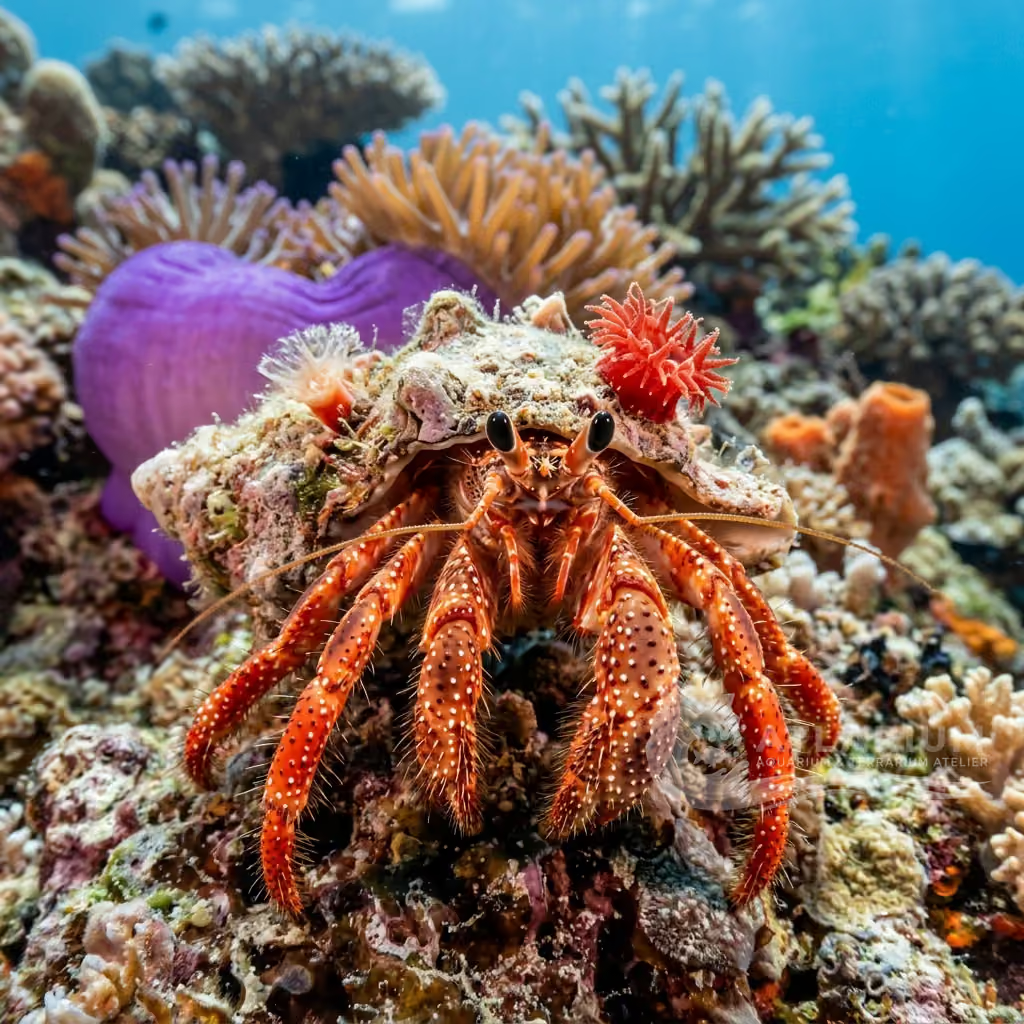
Peacock Mantis Shrimp
Odontodactylus scyllarus
The Peacock Mantis Shrimp is a spectacularly colored marine crustacean with powerful smashing claws and complex eyes. It requires a dedicated, species-only setup.
Water Temperature
24 - 28 °C
pH Value
8 - 8.4
Water type
Marine
Invertebrate type
Mantis shrimp
Adult size
15 cm
Minimum group
>= 1
KH
8 - 12 dKH
Ecological role
Predator
Copper sensitivity
High

Species description
Geographical Origin and Habitat: Odontodactylus scyllarus is widely distributed across the tropical Indo-Pacific, from East Africa and the Red Sea to Japan, Guam, and northern Australia. It inhabits sandy, muddy, and rubble zones of coral reefs at depths of 3 to 40 meters, building complex U-shaped burrows.
Taxonomy: Belonging to the family Odontodactylidae, this stomatopod is a large crustacean growing to 15-18 cm. It features highly modified second maxillipeds known as dactyl clubs (smashers). These clubs strike with the acceleration of a bullet to shatter shells. It has the most complex eyes in the animal kingdom.
Social Behavior: Solitary, highly territorial, and aggressive. They will defend their burrow against any intruder. They do not tolerate conspecifics or tankmates, making them unsuitable for community setups. They are highly intelligent, observing their surroundings constantly.
Coloration and Sexual Dimorphism: Extremely colorful, displaying brilliant metallic shades of green, red, orange, and blue. Sexual dimorphism is anatomically clear: males possess external copulatory organs (gonopods) at the base of the last pair of walking legs.

Care, breeding and tankmates
Tank Setup: Requires a dedicated species-only aquarium of at least 100-120 liters. Provide a thick substrate composed of sand and mixed coral rubble for burrowing.
CRITICAL WARNING: Large specimens are capable of breaking thin aquarium glass with their strikes; thick glass or acrylic tanks are highly recommended.
Diet and Feeding: Obligate carnivores specializing in hard-shelled prey. Feed a variety of fresh or frozen shellfish: whole snails, crabs, clams, mussels, and unshelled shrimp. Offering live hard-shelled food regularly is important to keep their striking clubs healthy.
Water Quality: Requires stable marine parameters: temperature 24-26°C, specific gravity 1.023-1.025, pH 8.1-8.4, and low nitrites/nitrates. Efficient protein skimming is necessary due to the heavy organic waste from feeding. Copper is highly toxic.
Compatibility and Tankmates: Must be kept in a species-only tank. Any fish, crabs, shrimp, or snails will be hunted, smashed, and eaten. Even fast-moving fish are vulnerable to ambush attacks near the mantis shrimp's burrow entrance.
Aquarium Breeding: Extremely difficult. Mating is risky and adults may kill each other if not receptive. The female carries a large mass of eggs held in her front appendages for several weeks. The hatched larvae are planktonic and fail to survive in standard filtration.
Risks and Diseases: Glass breakage by large smashers is a potential hazard. Shell disease (black spots on the carapace) can occur due to high organics or poor water flow. Molting failures are a major threat if calcium or iodine levels are depleted.

Geographic origin and distribution
Odontodactylus scyllarus is widely distributed across the tropical Indo-Pacific, from East Africa and the Red Sea to Japan, Guam, and northern Australia. It inhabits sandy, muddy, and rubble zones of coral reefs at depths of 3 to 40 meters, building complex U-shaped burrows.
Origin
Tropical oceans and reefsAfrica and MadagascarEast AsiaAustralia, New Guinea, and Oceania

Invertebrate profile
- Diet
- Carnivore
- Carnivorous predator (smasher). Feeds on crabs, snails, clams, and other hard-shelled invertebrates. In captivity, feed meaty marine foods like frozen shrimp, clams on the half shell, and crab legs.
- Ecological role
- Predator
- Apex predator in its microhabitat. Controls populations of small crustaceans and mollusks.
- Adult size
- 15 cm
- Jump risk
- Yes
- Can jump or climb out. Requires a tight, secure lid.
- Shock sensitivity
- Low
- Moderately hardy once established, but sensitive to poor water quality and sudden parameter changes.
- Calcium and minerals
- Extreme
- Needs sufficient calcium and trace elements (like iodine) to support healthy molting and rebuilding of its smashing appendages.
- Molting
- Yes
- Requires a secure burrow or PVC pipe hiding spot to molt safely. It is extremely vulnerable during this time and should not be disturbed.
- Reproduction
- Not bred in captivity
- Difficult to breed in captivity. Females brood eggs and aggressively defend them.
- Compatibility & tankmates
- Extremely aggressive
- Aggressive and solitary. Will eat other invertebrates and small fish. Best kept alone in a species-specific tank. Can break thin glass with its strike; acrylic or thick-glass aquariums are recommended.

Related species
Recommendations grouped by close relatives, companion choices, and similar care.