Coral banded shrimp
Stenopus hispidus
Coral banded shrimp: marine gambero marino in the family Stenopodidae, included for reef role, behavior, or aquarium utility. Geographical Origin and Habitat: Widely distributed across a...
Water Temperature
24 - 28 °C
pH Value
8.1 - 8.4
Water type
Marine
Invertebrate type
Marine shrimp
Adult size
7 cm
Minimum group
>= 1
Ecological role
Scavenger
Copper sensitivity
High

Species description
Geographical Origin and Habitat: Widely distributed across a massive, circumtropical geographical range, natively colonizing virtually all warm, shallow coral reefs across the Indo-Pacific Ocean, the Red Sea, and the Western Atlantic Ocean (including the Caribbean). Stenopus hispidus (the Coral Banded Shrimp, or Boxer Shrimp) is a highly specialized marine invertebrate. It naturally inhabits the deeply shaded, complex overhangs, dark coral caves, and massive sponge formations of the outer reef slopes (typically 2-30 meters deep). These environments provide essential darkness and thousands of deep crevices to hide its massive antennae.
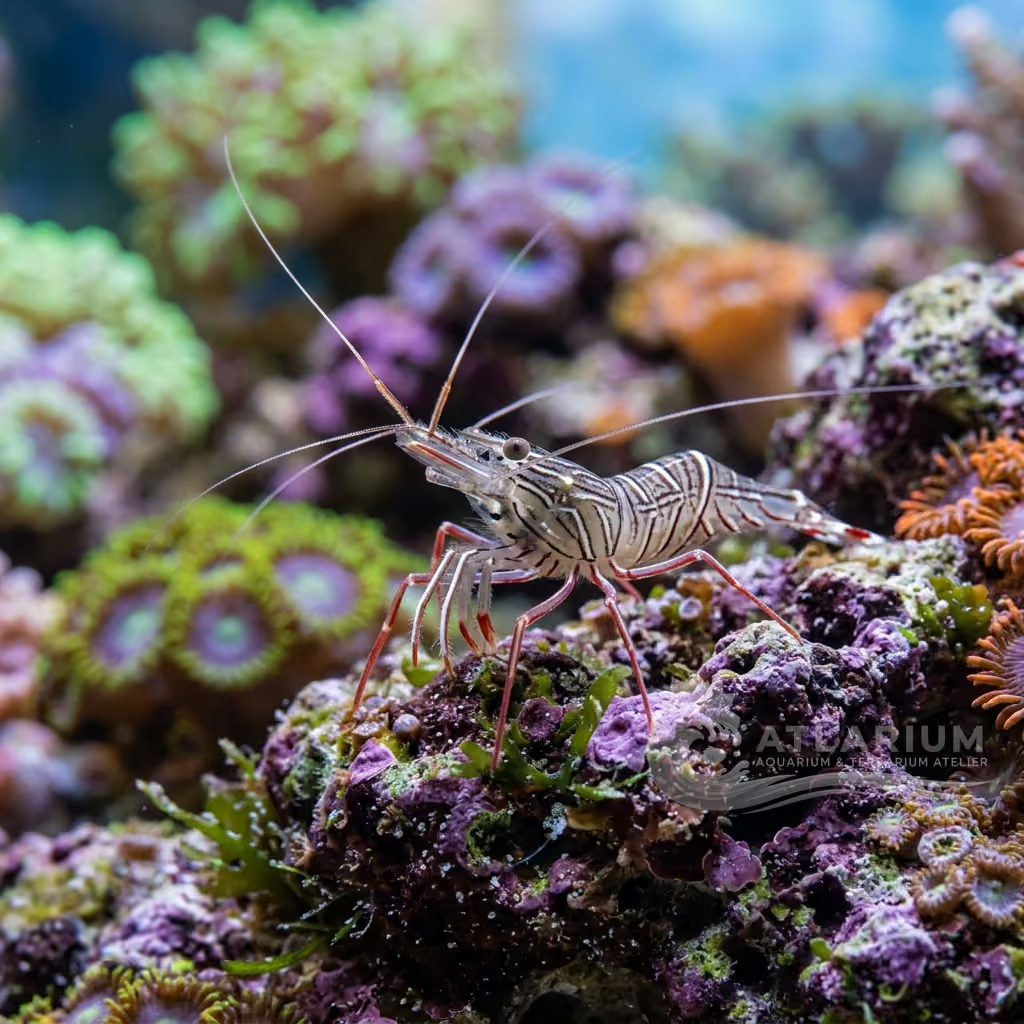
Taxonomy: Scientifically classified within the Stenopodidae family, it is not actually a "true shrimp" (Caridea) but rather a unique infraorder closely related to lobsters and crabs. Morphologically, it possesses a spectacular, deeply armored body, reaching 6 to 9 centimeters (2.5-3.5 inches) in length, but its total span exceeds 20 centimeters due to its impossibly long, sweeping white antennae. Its defining evolutionary adaptation is its massive, disproportionately large, powerful front claws (pincers), thickly covered in sharp, forward-pointing spines, designed to violently punch and grapple with predators or rival shrimp.
Social Behavior: They are highly aggressive, fiercely territorial, and strictly solitary or monogamous invertebrates. Unlike peaceful cleaner shrimp that congregate in massive groups, the Coral Banded Shrimp is intensely intolerant of its own kind. If two males, two females, or two unbonded shrimp are placed in the same tank, they will engage in brutal, gladiator-style combat, systematically tearing off each other's limbs until one is dead. They spend their days hanging entirely upside-down from the ceiling of a dark cave, aggressively waving their massive white antennae to attract passing fish for cleaning.
Coloration and Sexual Dimorphism: Sexual dimorphism is visually distinct in mature adults; the female is always significantly larger and notably plumper than the male. Furthermore, mature females frequently display a bright blue or greenish saddle-like ovary mass visible through their translucent carapace directly behind the head. The coloration is globally famous and strikingly beautiful. The body and massive claws are completely translucent, but brilliantly bisected by stark, thick, alternating bands of blazing snow-white and intense, deep crimson-red, giving them a spectacular "barber pole" appearance.

Care, breeding and tankmates
Tank Setup: The aquarium architecture must flawlessly accommodate their massive antennae and aggressive territoriality. A minimum 120-liter (30-gallon) saltwater tank is required. The absolute, most critical requirement is the hardscape: you MUST construct a massive, highly stable labyrinth of premium porous live rock, specifically arranged to create deep, dark, overhanging caves and caverns. The shrimp requires a cave large enough to comfortably contain its entire 20cm antennae span without touching the sides. They will spend 90% of their time hanging upside-down in this cave.
Diet and Feeding: In their dark reef caves, they are highly opportunistic scavengers, aggressive carnivores, and occasional specialized cleaners. While they will pick dead skin and parasites from large fish (like Moray Eels), they are primarily nocturnal hunters. In captivity, they are ravenous, aggressive eaters that eagerly accept all meaty foods. Their staple diet MUST consist of large, high-quality marine sinking pellets. This MUST be heavily supplemented with large pieces of frozen meaty foods: whole mysis shrimp, chopped krill, chopped squid, and fresh clam meat fed directly near their cave.
Water Quality: Originating from pristine tropical reefs, they demand flawless marine water chemistry and possess zero tolerance for poor conditions. They thrive in warm tropical saltwater (24-27°C / 75-80°F). Crucially, they strictly require a stable specific gravity (salinity) of 1.023 - 1.026, and high alkalinity (pH 8.1 - 8.4) heavily saturated with calcium and iodine to ensure successful molting. Like all marine invertebrates, they are incredibly sensitive to deteriorating water quality; extreme protein skimming and weekly water changes are mandatory. Absolute zero tolerance for ammonia or nitrates.
Compatibility and Tankmates: Compatibility requires extreme caution due to their highly aggressive, predatory nature. They MUST NEVER be housed with other Coral Banded Shrimp (unless a guaranteed bonded male/female pair), or they will fight to the death. They MUST NEVER be housed with small, delicate ornamental shrimp (like Sexy Shrimp, Peppermint Shrimp, or Skunk Cleaners), as the Boxer Shrimp will aggressively hunt and eat them. Excellent tankmates are medium-to-large, peaceful marine fish. Do NOT house them with large Triggers, Pufferfish, or Hawkfish, which will instantly hunt the shrimp.
Aquarium Breeding: Breeding in captivity is possible but rearing the larvae is extraordinarily difficult. A bonded pair will mate shortly after the female molts. The female carries hundreds of tiny, bright green or blue eggs attached to the pleopods (swimmerets) under her abdomen for 14-20 days. She meticulously fans and cleans the eggs. Upon hatching, the microscopic, pelagic larvae are released into the water column at night. These larvae pass through up to 9 complex, prolonged planktonic stages (lasting months) before settling as miniature shrimp, making them nearly impossible to raise in home aquariums.
Risks and Diseases: The absolute greatest physical risk is lethal combat; never house more than one specimen per tank unless they are a confirmed, bonded breeding pair. The second major risk is "molting failure" (getting stuck in their old exoskeleton and dying) caused by low levels of iodine or calcium, or drastically fluctuating salinity. Medically, as marine invertebrates, they possess absolute zero tolerance for any copper-based medications; treating the main display tank with copper for fish diseases will kill the shrimp instantly in 100% of cases.

Geographic origin and distribution
Widely distributed across a massive, circumtropical geographical range, natively colonizing virtually all warm, shallow coral reefs across the Indo-Pacific Ocean, the Red Sea, and the Western Atlantic Ocean (including the Caribbean). Stenopus hispidus (the Coral Banded Shrimp, or Boxer Shrimp) is a highly specialized marine invertebrate. It naturally inhabits the deeply shaded, complex overhangs, dark coral caves, and massive sponge formations of the outer reef slopes (typically 2-30 meters deep). These environments provide essential darkness and thousands of deep crevices to hide its massive antennae.
Origin
Tropical oceans and reefsCentral America and CaribbeanNorth AmericaAfrica and Madagascar

Invertebrate profile
- Diet
- Carnivore
- They are voracious, opportunistic scavengers and carnivores that will readily consume leftover meaty foods, detritus, and occasionally bristle worms. While they sometimes attempt to clean parasites off larger, willing fish, they cannot survive on this alone and require direct feeding. Providing them with mysis shrimp, chopped clam, and sinking carnivore pellets will keep them healthy and satiated.
- Ecological role
- Scavenger
- In their natural reef habitat, they often set up 'cleaning stations' in rocky crevices, picking dead skin and parasites from cooperative fish. In the home aquarium, they are highly effective scavengers that diligently clean the rockwork and substrate of uneaten food and decaying organic matter. They are also highly prized by hobbyists for their ability to hunt and consume nuisance bristle worms.
- Adult size
- 7 cm
- Jump risk
- Yes
- Banded coral shrimp are benthic creatures that strongly prefer to hang upside down in rocky caves and crevices, presenting no jumping risk. They rely entirely on their legs to scurry across the rockwork and lack the physical mechanics to leap from the water. However, a secure lid is always recommended for a marine tank to prevent the loss of fish and minimize evaporation.
- Shock sensitivity
- High
- Stenopus hispidus is notoriously sensitive to sudden changes in water parameters, particularly rapid fluctuations in specific gravity (salinity) and temperature. Improper acclimation can easily result in osmotic shock, immediate death, or the spontaneous dropping of their large claws. A slow, meticulous drip acclimation process over several hours is strictly necessary before releasing them into a new tank.
- Calcium and minerals
- Medium
- Proper levels of calcium, iodine, and magnesium are vital for the successful growth and structural integrity of their calcified exoskeleton. If these trace elements are deficient, the shrimp will struggle immensely during the molting process, often leading to fatal complications. Maintaining standard reef water parameters through regular water changes and careful supplementation is essential.
- Molting
- Yes
- The molting process is a highly stressful and vulnerable period where the shrimp sheds its entire rigid exoskeleton to allow for physical growth. Following a molt, they are completely soft and defenseless, requiring secure rocky caves to hide in until their new shell hardens. It is absolutely critical to leave the shed exoskeleton in the tank, as the shrimp will consume it to reabsorb essential minerals.
- Reproduction
- Oviparous
- While mating and spawning frequently occur in home aquariums if a mated pair is present, successfully raising the larvae is incredibly difficult. The female will carry a bright green mass of eggs beneath her swimmerets until they hatch into planktonic larvae. In a standard setup, these tiny larvae are almost immediately consumed by fish, corals, and the aquarium's filtration system.
- Compatibility & tankmates
- Verify
- They are fiercely territorial and aggressive toward other banded coral shrimp, and typically only a single specimen or a bonded mated pair should be kept in a tank. They may also exhibit aggressive behavior toward smaller, delicate ornamental shrimp, occasionally hunting them if not well-fed. They are generally safe with fish and corals, but caution is advised when housing them with very slow-moving or sleeping fish.

Image gallery
Licensed images linked to the species or, when marked, to the closest representative taxon.

Related species
Recommendations grouped by close relatives, companion choices, and similar care.