Trochus snail
Rochia nilotica
Trochus snail: marine lumaca marina in the family Trochidae, included for reef role, behavior, or aquarium utility. Geographical Origin and Habitat: The Trochus Snail (Trochus niloticus),...
Water Temperature
24 - 28 °C
pH Value
8.1 - 8.4
Water type
Marine
Invertebrate type
Marine snail
Adult size
12 cm
Minimum group
>= 1
Ecological role
Scavenger
Copper sensitivity
High

Species description
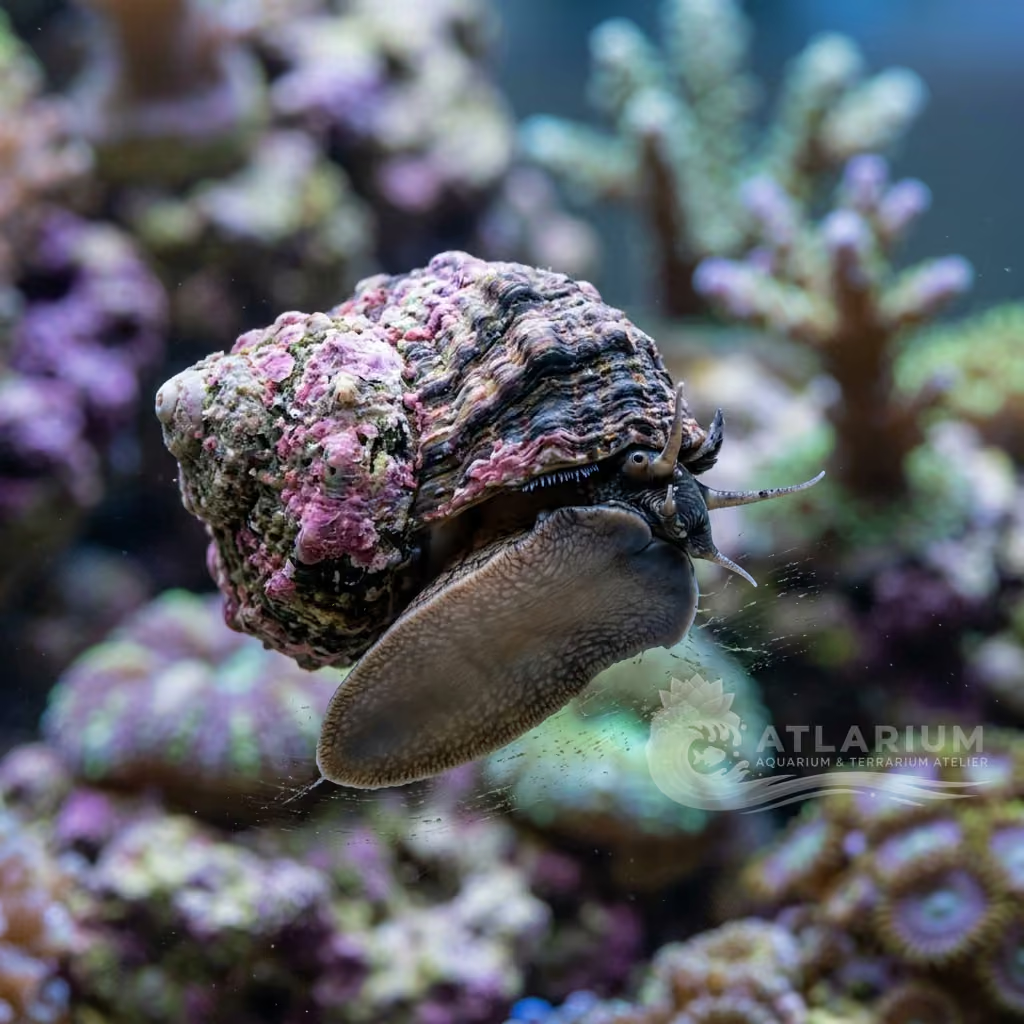
Geographical Origin and Habitat: The Trochus Snail (*Trochus niloticus*), often simply called the Banded Trochus Snail, is a highly desirable, reef-safe marine gastropod natively endemic to the warm, sunlit coral reefs, rocky intertidal zones, and shallow lagoons of the vast Indo-Pacific Ocean. Their natural biotope is defined by heavily structured coral rock and bright, clear water, where they graze relentlessly on microscopic film algae and diatoms covering the rock and glass surfaces.
Taxonomy: Scientifically classified within the Trochidae (Top Snails) family, they possess a distinct and highly advantageous morphology. Fully mature adults reach a base diameter of 2.5 to 5.0 centimeters (1.0-2.0 inches). Their defining feature is a steeply pitched, perfectly conical or "top-shaped" calcareous shell.
CRITICAL ADVANTAGE: Unlike the heavily flawed *Astrea* snail, the *Trochus* snail possesses a highly muscular, prehensile foot that allows it to easily flip itself back over if it falls off the glass upside-down.
Social Behavior: They are peaceful, entirely solitary, and strictly herbivorous benthic grazers. They are somewhat faster moving than Astrea snails and will spend their entire day systematically cleaning the aquarium glass and live rock using their rasping radula. They are non-aggressive toward all other invertebrates. They are generally crepuscular or nocturnal, becoming highly active shortly after the aquarium lights go out to scour the reef for fresh algae growth.
Coloration and Sexual Dimorphism: Sexual dimorphism is visually non-existent. Their coloration is highly variable but generally features a pale, off-white or grayish base color overlaid with thick, striking, vertical zigzag bands of deep red, maroon, or reddish-brown running down the steep slopes of the conical shell. The fleshy foot and mantle are mottled white and black with tiny, hair-like sensory tentacles extending from the base of the shell to detect predators.

Care, breeding and tankmates
Tank Setup: The aquarium architecture MUST accommodate their need to graze on hard surfaces. A minimum 40-liter (10-gallon) marine aquarium is sufficient.
CRITICAL REQUIREMENT: The tank MUST feature established live rock and glass surfaces covered in film algae or diatoms. They are entirely unsuited for completely sterile, newly cycled tanks. They will happily scale the glass to the very top, but rarely crawl out of the water like some intertidal Nerite snails.
Diet and Feeding: They are absolute masters of consuming microscopic film algae and brown diatoms.
CRITICAL FEATURE: While Turbo snails excel at eating long, thick hair algae, Trochus snails strictly prefer the thin, green/brown film that clouds aquarium glass and coats rocks. If the glass is perfectly clean, they WILL slowly starve. They MUST be supplemented with sinking algae wafers or dried Nori seaweed if the tank's natural algae production is insufficient to sustain them.
Water Quality: As calcifying marine mollusks, they are devastatingly sensitive to water chemistry fluctuations. They demand stable tropical heat (24-27°C / 75-81°F). Specific gravity (salinity) MUST be maintained precisely between 1.023 and 1.025. They require hard, highly alkaline water (pH 8.1 - 8.4) with pristine Calcium (400-450 ppm) and Magnesium levels to grow and repair their conical shells. Rapid changes in salinity during acclimation will cause instantaneous, lethal osmotic shock.
Compatibility and Tankmates: Compatibility is universally absolute for peaceful reef tanks. They are 100% reef-safe, entirely ignoring all corals, zoanthids, and fish. Because of their ability to right themselves, they are vastly superior to Astrea snails.
CRITICAL WARNING: They MUST NEVER be housed with predatory fish (Pufferfish, Triggerfish, Hawkfish) or aggressive, large hermit crabs (Electric Blue, Hairy Hermits) that will violently rip them out of their shells to steal their home.
Aquarium Breeding: Breeding the Trochus Snail in a home aquarium is surprisingly common. They are broadcast spawners. Males and females will crawl to the highest point in the tank and simultaneously release massive clouds of sperm and eggs, temporarily clouding the water. Unlike many snails, Trochus larvae have a very short pelagic phase and will rapidly settle onto the rocks. It is highly common for aquarists to suddenly discover dozens of tiny, baby Trochus snails cleaning their reef.
Risks and Diseases:
CRITICAL TOXICITY WARNING: Like all marine snails, they are immediately and fatally hypersensitive to COPPER (Cu) and heavy metals. They will die instantly in tanks treated with copper medications. The second major risk is lethal starvation; they are frequently purchased in massive quantities ("Clean-Up Crew packages") for small tanks, resulting in mass starvation once the initial algae is consumed. Maintain a realistic ratio of 1 snail per 2-3 gallons.

Geographic origin and distribution
The Trochus Snail (*Trochus niloticus*), often simply called the Banded Trochus Snail, is a highly desirable, reef-safe marine gastropod natively endemic to the warm, sunlit coral reefs, rocky intertidal zones, and shallow lagoons of the vast Indo-Pacific Ocean. Their natural biotope is defined by heavily structured coral rock and bright, clear water, where they graze relentlessly on microscopic film algae and diatoms covering the rock and glass surfaces.
Origin
Tropical oceans and reefsNorth AmericaAfrica and Madagascar

Invertebrate profile
- Diet
- Carnivore
- The primary diet of Rochia nilotica consists of various types of algae, biofilm, and decaying plant matter found on aquarium surfaces. It is an excellent clean-up crew member but may require supplemental feeding. Sinking algae wafers and blanched vegetables should be provided if natural food sources are depleted.
- Ecological role
- Scavenger
- In its natural habitat, Rochia nilotica plays a crucial role as a detritivore and primary consumer, helping to process organic waste. By constantly grazing on algae and detritus, it prevents excessive nutrient buildup and keeps surfaces clean. This ecological function translates perfectly into the closed ecosystem of a home aquarium.
- Adult size
- 12 cm
- Jump risk
- Yes
- While Rochia nilotica lacks the ability to physically jump, it is known to occasionally climb above the water line or out of the tank entirely. This wandering behavior can sometimes lead to fatal desiccation if they fall onto the floor. A tightly fitted lid or a wide rim is highly recommended to keep them safely enclosed.
- Shock sensitivity
- High
- Rochia nilotica is remarkably sensitive to sudden fluctuations in water parameters, particularly temperature, pH, and hardness. Rapid changes can induce osmotic shock, leading to lethargy, shell damage, or death. A slow drip acclimation process over several hours is highly recommended when introducing it to a new tank.
- Calcium and minerals
- Medium
- Adequate calcium levels are absolutely critical for Rochia nilotica to develop and maintain a strong, healthy shell. Soft, acidic water will gradually erode the shell, exposing the snail to infection and premature death. Hobbyists should supplement the water column or diet with cuttlebone, coral skeleton, or specialized mineral blocks.
- Molting
- No
- Unlike crustaceans, Rochia nilotica is a gastropod and does not undergo a molting process to grow. Instead, it continuously adds new calcified layers to the aperture of its existing shell as it matures. Therefore, observing continuous, healthy shell growth lines without pitting or cracks is the best indicator of its well-being.
- Reproduction
- Oviparous
- The reproductive strategy of Rochia nilotica varies, but many require specific conditions such as brackish water to successfully yield viable offspring. While they may lay eggs frequently in a freshwater aquarium, the larvae often fail to develop without the proper salinity. This trait makes them ideal for aquarists who wish to avoid overpopulation issues.
- Compatibility & tankmates
- Verify
- Rochia nilotica is entirely peaceful and possesses no means to harm other tank inhabitants, making it perfect for community setups. It should not, however, be kept with aggressive loaches, pufferfish, or large crayfish that will prey on it. Ideal tank mates include small tetras, rasboras, and dwarf shrimp.

Scientific Parameters & Models
SeaLifeBase
Window to the official scientific data of the species
SeaLifeBase v26.04Data synced on: 06/15/2026
- Resilience
- Medium (1.4 - 4.4 years)

Image gallery
Licensed images linked to the species or, when marked, to the closest representative taxon.

Related species
Recommendations grouped by close relatives, companion choices, and similar care.