Lieutenant surgeonfish
Acanthurus tennentii
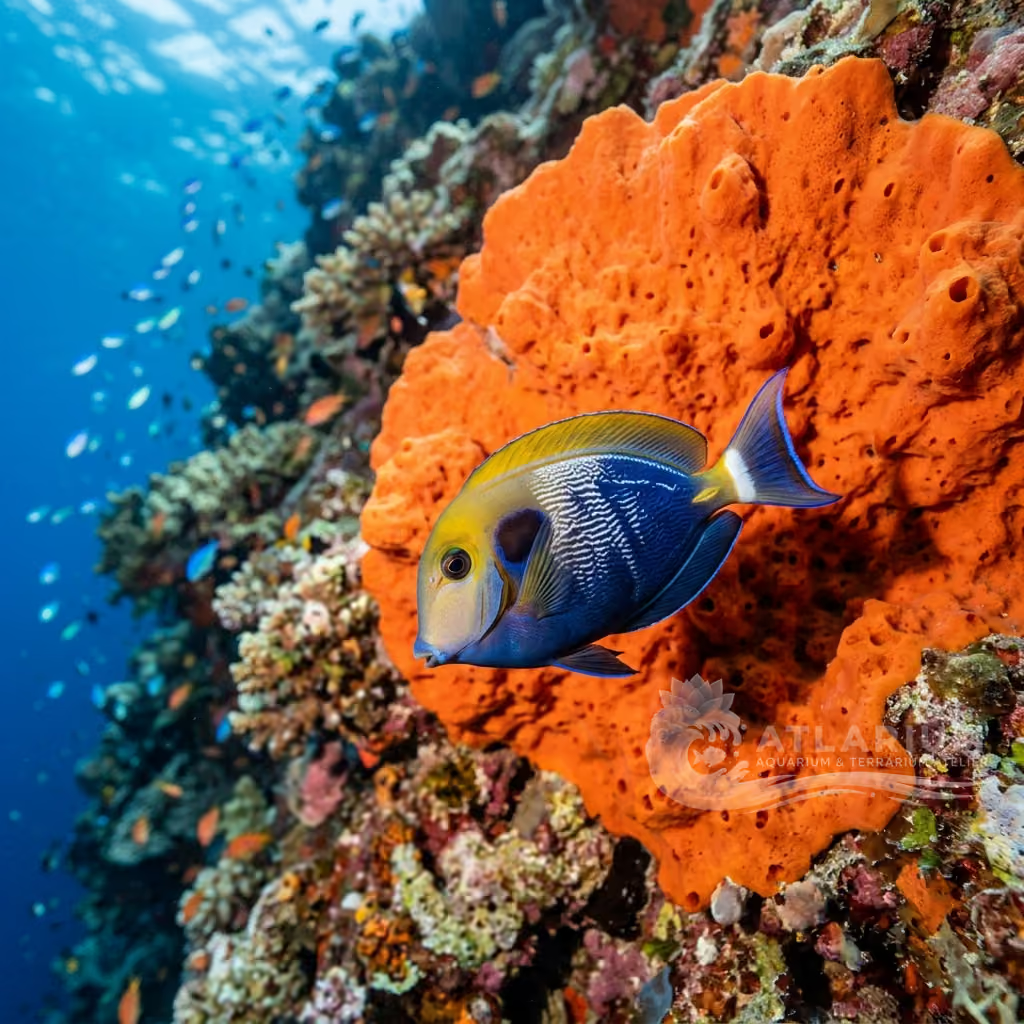
The lieutenant surgeonfish dwells in seaward reefs of the Indian Ocean. Favoring moderate currents, it spends daylight hours actively grazing on benthic algae on rocky substrates.
Water Temperature
24 - 28 °C
pH Value
8.1 - 8.4
Water type
Marine
Tank level
All levels
Adult size
31 cm
Minimum tank volume
>= 500 L
Minimum group
>= 1
KH
8 - 12 dKH

Species description
Geographical Origin and Habitat: The lieutenant surgeonfish is widely distributed in the tropical Indian Ocean, ranging from the eastern coasts of Africa and Madagascar to Sri Lanka, the Maldives, and western Indonesia, particularly along the coast of Bali. It primarily inhabits seaward reefs and clear shallow lagoons at depths ranging from 1 to 25 meters. This fish prefers areas exposed to moderate or strong currents, characterized by abundant growth of benthic algae on rocky and rubble substrates, where it actively grazes during daylight hours.
Taxonomy and Morphology: Acanthurus tennentii belongs to the family Acanthuridae. Morphologically, it has an oval and strongly compressed lateral body, with a small terminal mouth equipped with comb-like teeth adapted for scraping algal turf. The species can reach a maximum total length of about 31 centimeters in the wild, though it usually remains slightly smaller in aquarium environments. Like all acanthurids, it has a sharp, retractable caudal spine (scalpel) on each side of the caudal peduncle.
Social Behavior: This is an active, diurnal, and constant swimmer. In the wild, it is often seen in small groups or mixed schools grazing with other herbivorous fish, though adults can show solitary and highly territorial behavior. In an aquarium, it displays strong territoriality and intraspecific aggression toward other members of the genus Acanthurus or species with similar shapes and coloration, while remaining peaceful toward fish from other families that do not compete for food.
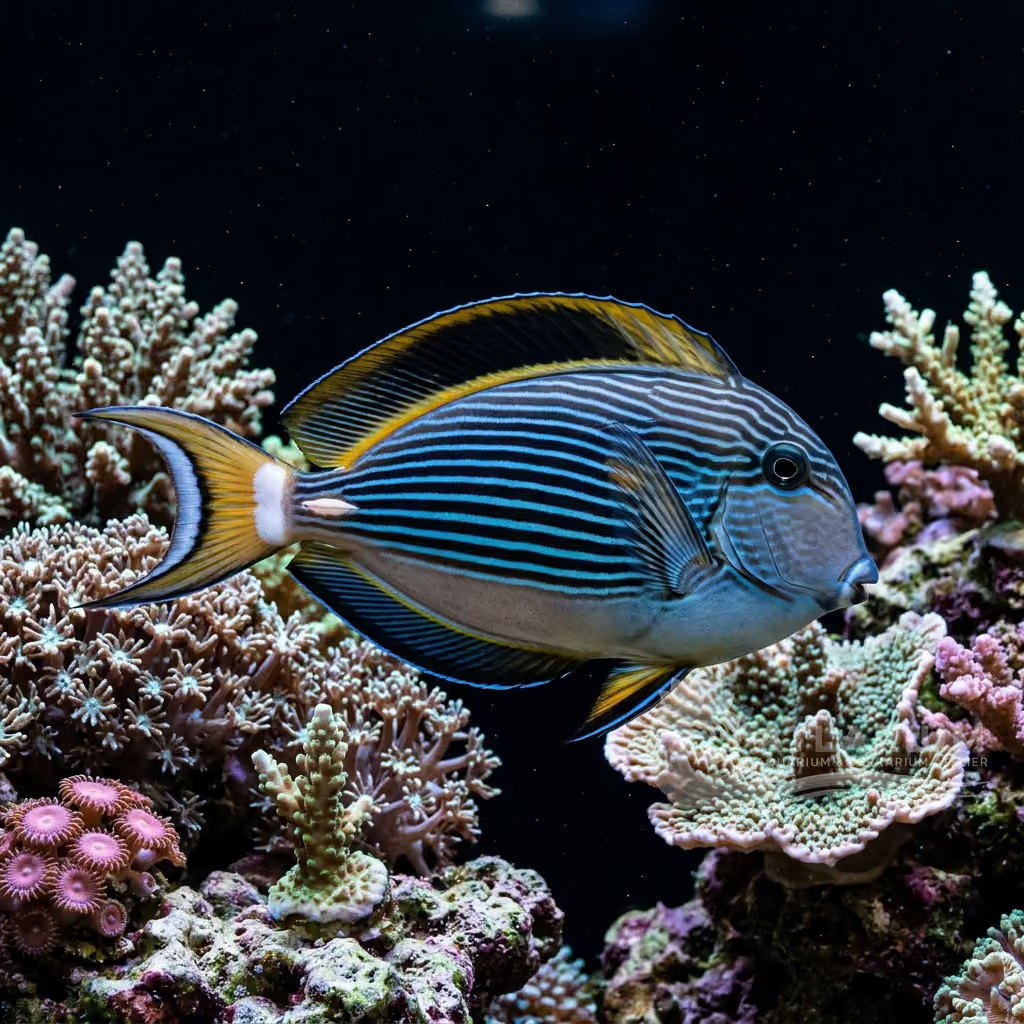
Coloration and Sexual Dimorphism: The base coloration of the body ranges from light bluish-grey to olive-brown, decorated with thin longitudinal wavy lines. The key distinguishing feature is the presence of two dark horseshoe-shaped markings (resembling a lieutenant's insignia) located right behind the operculum. The caudal fin is strongly lunate, with bluish-white margins and elongated lobes in mature males. There is no obvious chromatic sexual dimorphism, but males tend to grow slightly larger than females.

Care, breeding and tankmates
Aquarium Setup: It requires a very large aquarium with a minimum capacity of 500 liters to ensure sufficient open swimming space for this active fish. The aquascape should include a sturdy structure of live rocks with plenty of caves and crevices where the fish can hide at night or when startled. It is essential to install powerful water pumps to simulate the strong ocean currents of its native habitat and to keep the water highly oxygenated.
Diet and Feeding: Although it will accept meaty foods like mysis and brine shrimp, its diet must be predominantly herbivorous. It is crucial to feed it daily with dried seaweed (nori), spirulina flakes or pellets specific for herbivorous fish, and blanched fresh vegetables like spinach and zucchini. A constant supply of algae ensures the health of its long digestive tract and keeps its body coloration vibrant.
Water Quality: It needs extremely stable chemical and physical parameters and excellent water quality. The optimal values are a temperature between 24°C and 28°C, a stable pH between 8.1 and 8.4, specific gravity between 1.021 and 1.025, and nitrate and phosphate levels close to zero. An efficient protein skimmer and regular water changes are essential to prevent the accumulation of organic pollutants.
Compatibility and Cohabitation: Co-habitation with other surgeonfish, especially from the genus Acanthurus, is highly problematic and requires massive tanks with numerous visual barriers. It is advisable to add the lieutenant surgeonfish last to mitigate territorial aggression. It is compatible with most peaceful reef fish such as clownfish, damsels, and angelfish, and is considered reef safe as it does not harm corals.
Aquarium Breeding: Breeding in home aquariums is extremely difficult and is currently considered virtually impossible due to the pelagic spawning habits of the species. In the wild, surgeonfish gather in large groups, releasing eggs and sperm simultaneously into the open water column. The fertilized eggs float, and the larvae undergo a long planktonic phase before settling onto the reef.
Risks and Diseases: Like all surgeonfish, it has a very thin protective mucus layer and is highly susceptible to external parasitic skin infections such as Marine Ich (Cryptocaryon irritans) and Velvet (Oodinium). It is highly recommended to quarantine new specimens before introducing them to the display tank. It is also sensitive to Head and Lateral Line Erosion (HLLE), often caused by nutritional deficiencies or poor water quality.

Geographic origin and distribution
The lieutenant surgeonfish is widely distributed in the tropical Indian Ocean, ranging from the eastern coasts of Africa and Madagascar to Sri Lanka, the Maldives, and western Indonesia, particularly along the coast of Bali. It primarily inhabits seaward reefs and clear shallow lagoons at depths ranging from 1 to 25 meters. This fish prefers areas exposed to moderate or strong currents, characterized by abundant growth of benthic algae on rocky and rubble substrates, where it actively grazes during daylight hours.
Origin
Tropical oceans and reefsAfrica and MadagascarSouth and Southeast Asia

Fish profile
- Temperament
- Semi-aggressive
- Acanthurus tennentii exhibits a semi-aggressive temperament, showing peaceful behavior toward most unrelated tankmates while being highly territorial toward other tangs. It establishes a home territory in the aquarium and will actively defend it against fish of similar body shape, color, or feeding habits. This surgeonfish possesses a sharp, venomous spine on its caudal peduncle, which it will use defensively or offensively during territorial disputes. To minimize aggression, it should be introduced to the aquarium last and provided with ample space and visual barriers.
- Diet
- Herbivore
- In the wild, Acanthurus tennentii is primarily a herbivore and detritivore, grazing continuously on benthic algae and associated organic matter. In captivity, its diet must consist predominantly of high-quality vegetable matter, such as dried seaweed sheets (nori), spirulina, and specialized herbivore pellets or flakes. While it will readily accept meaty foods like mysis shrimp or brine shrimp, these should only be offered as occasional treats rather than a primary diet. Providing a continuous supply of macroalgae ensures the fish maintains proper digestive health and vibrant coloration.
- Life expectancy
- 10-15 years
- Adult size
- 31 cm
- Sex ratio
- Solitary
- In the home aquarium, Acanthurus tennentii is best kept as a single individual due to its high territoriality towards conspecifics. In very large commercial systems or public aquariums, they may be maintained in groups or pairs, but in a standard home setup, keeping more than one will likely trigger intense aggression. There is no significant sexual dimorphism that allows for easy sexing of individuals in captivity, making pair selection difficult. Therefore, a stocking ratio of one specimen per tank is the safest and most recommended approach for most aquarists.
- Feeding frequency
- 3-4 times daily
- Because Acanthurus tennentii has a high metabolic rate and a digestive system adapted for constant grazing, it should be fed multiple times a day. It is highly recommended to offer small portions of food 3 to 4 times daily, rather than one large feeding. Additionally, placing dried seaweed sheets on a veggie clip allows the fish to graze continuously throughout the day, mimicking its natural feeding behavior. Ensuring a steady food supply helps reduce territorial aggression and keeps the fish in peak physical condition.
- Bioload
- High
- Acanthurus tennentii is a relatively large, active surgeonfish that consumes a substantial amount of food, resulting in a high bioload. To manage its waste output, a robust filtration system, including a high-capacity protein skimmer and regular water changes, is absolutely essential. A large aquarium of at least 150-180 gallons is required to help dilute the organic load and maintain pristine water parameters. Neglecting water quality can quickly lead to stress and compromise the fish's immune system, making it susceptible to diseases like marine ich.
- Flow
- Strong
- Acanthurus tennentii inhabits shallow reef environments, surge zones, and seaward reefs where they are exposed to strong and constant water movement. In the aquarium, they thrive in moderate to strong water flow, which keeps the water highly oxygenated and mimics their natural habitat. High-volume powerheads or wavemakers should be used to create varied currents that challenge the fish and promote active swimming. Adequate flow also helps keep detritus in suspension, allowing the filtration system to remove waste efficiently.
- Jump risk
- Yes
- While not traditionally classified as high-risk jumpers compared to wrasses, Acanthurus tennentii is a powerful, fast-swimming fish that can easily leap out of the water if startled. Sudden movements around the tank, turning lights off abruptly, or aggression from tankmates can cause the fish to panic and jump. To prevent tragic accidents, a tight-fitting glass lid or a fine mesh screen top is highly recommended for the aquarium. Ensuring that all gaps around equipment are sealed will provide peace of mind and keep this active swimmer safe.
- Reproduction
- Egg scatterer
- In the wild, Acanthurus tennentii is a pelagic spawner, engaging in mass spawning events where groups of fish rise into the water column to release eggs and sperm simultaneously. Due to their complex spawning behavior, large spatial requirements, and the planktonic stage of the larvae, reproducing this species in home aquariums is extremely difficult and currently not viable. Almost all specimens available in the aquarium hobby are wild-caught. Breeding them successfully requires massive public aquarium setups and specialized larval rearing protocols.
- Compatibility & tankmates
- Peaceful
- Acanthurus tennentii is generally compatible with a wide variety of reef fish, including peaceful species like clownfish, wrasses, anthias, and gobies. However, it will display aggressive and territorial behavior towards other surgeonfish, especially members of the Acanthurus genus or fish with similar shapes and colors. They are completely reef-safe, making them excellent additions to coral aquariums as they do not bother corals or sessile invertebrates. Any potential tankmates should be chosen carefully, and the surgeonfish should ideally be the final addition to the tank.
- Tank level
- All levels
- Acanthurus tennentii is an incredibly active and open-swimming species that utilizes all levels of the water column, though it spends most of its time in the middle and bottom zones. It frequently patrols the aquarium searching for algae to graze on live rock, which makes the lower half of the tank its primary feeding ground. Providing a large, open swimming area in the middle section of the aquarium is critical for this species to swim freely. A structured aquascape with plenty of caves and rockwork at the bottom allows it to rest and seek shelter when needed.

Scientific Parameters & Models
FishBase
Window to the official scientific data of the species
FishBase v25.04Data synced on: 06/15/2026
- Trophic level
- 2 ± 0 se
- Resilience
- High (less than 15 months)
- Phylogenetic uniqueness (PD50)
- 0.5
- Bayesian Length-Weight
- a = 0.02291, b = 2.96
- VulnerabilityLow vulnerability (21 / 100)

Related species
Recommendations grouped by close relatives, companion choices, and similar care.