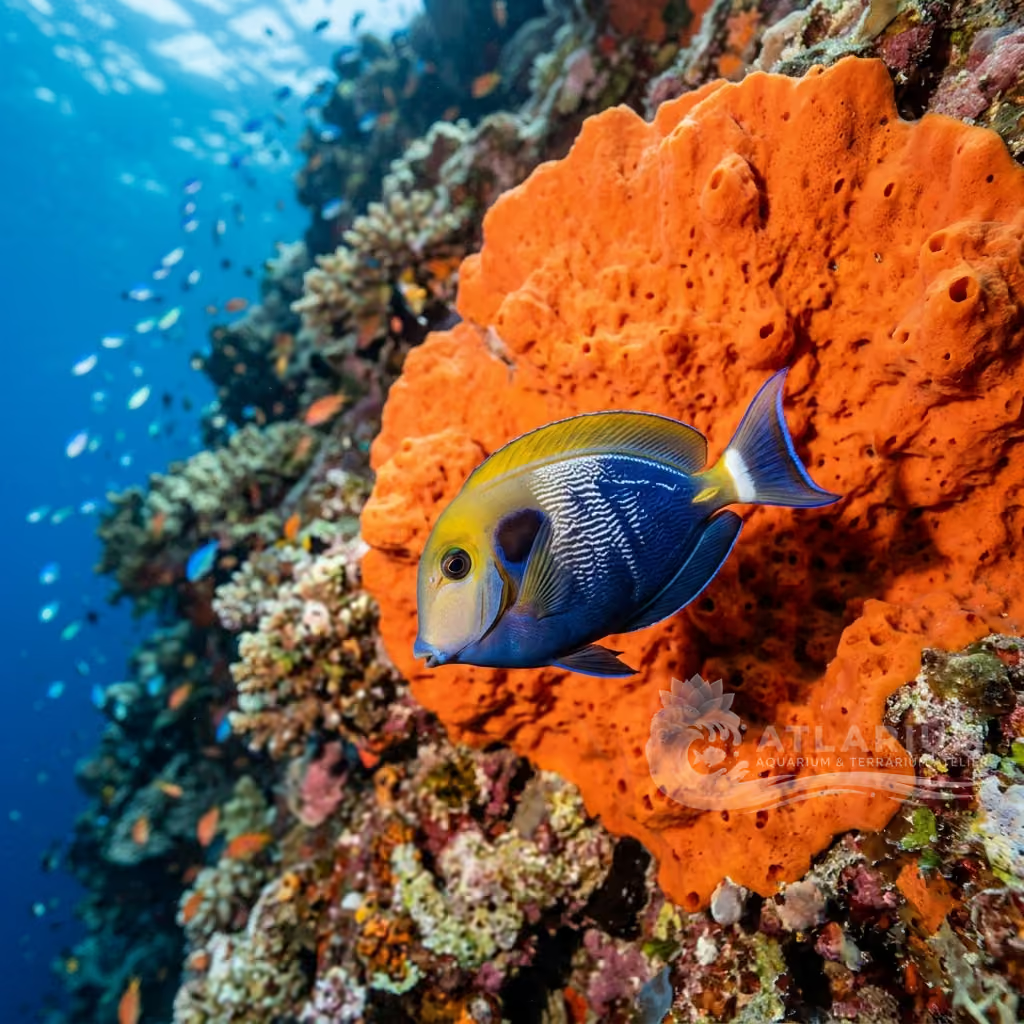
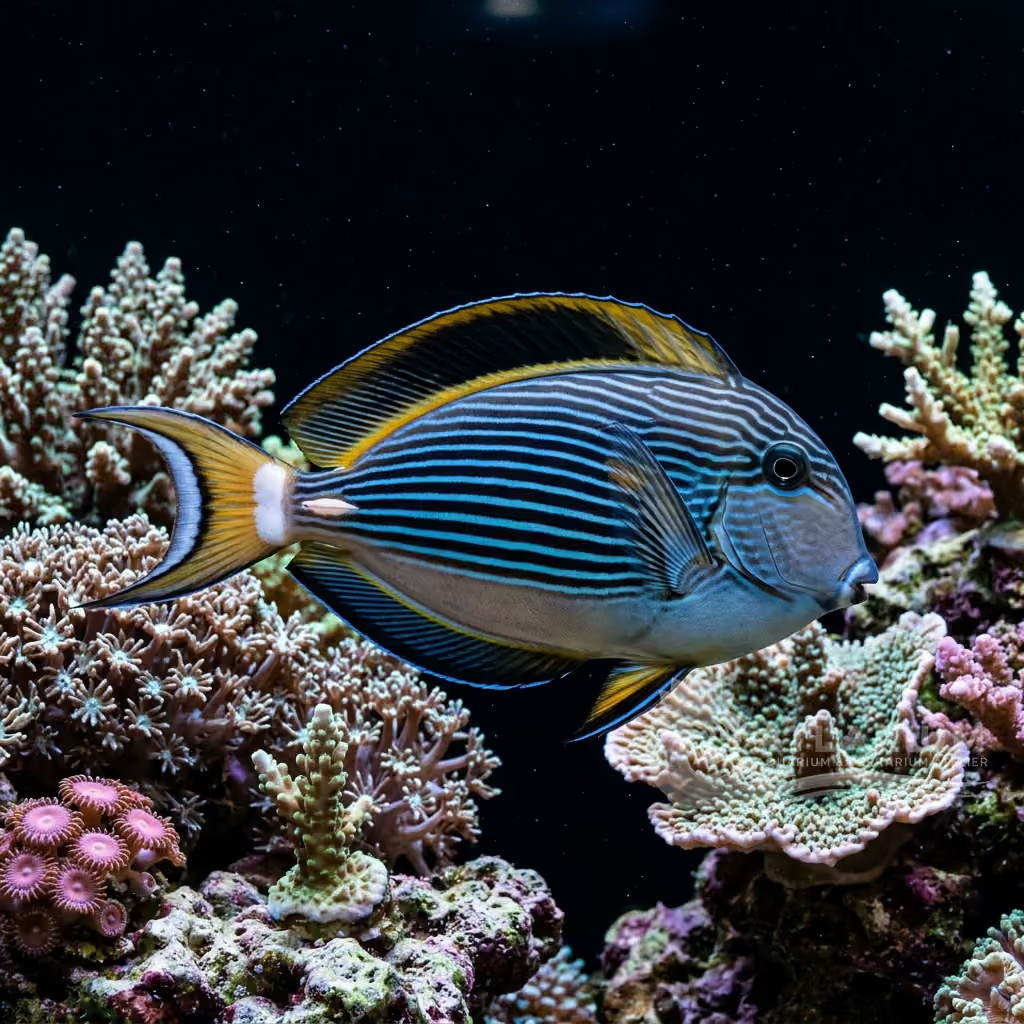
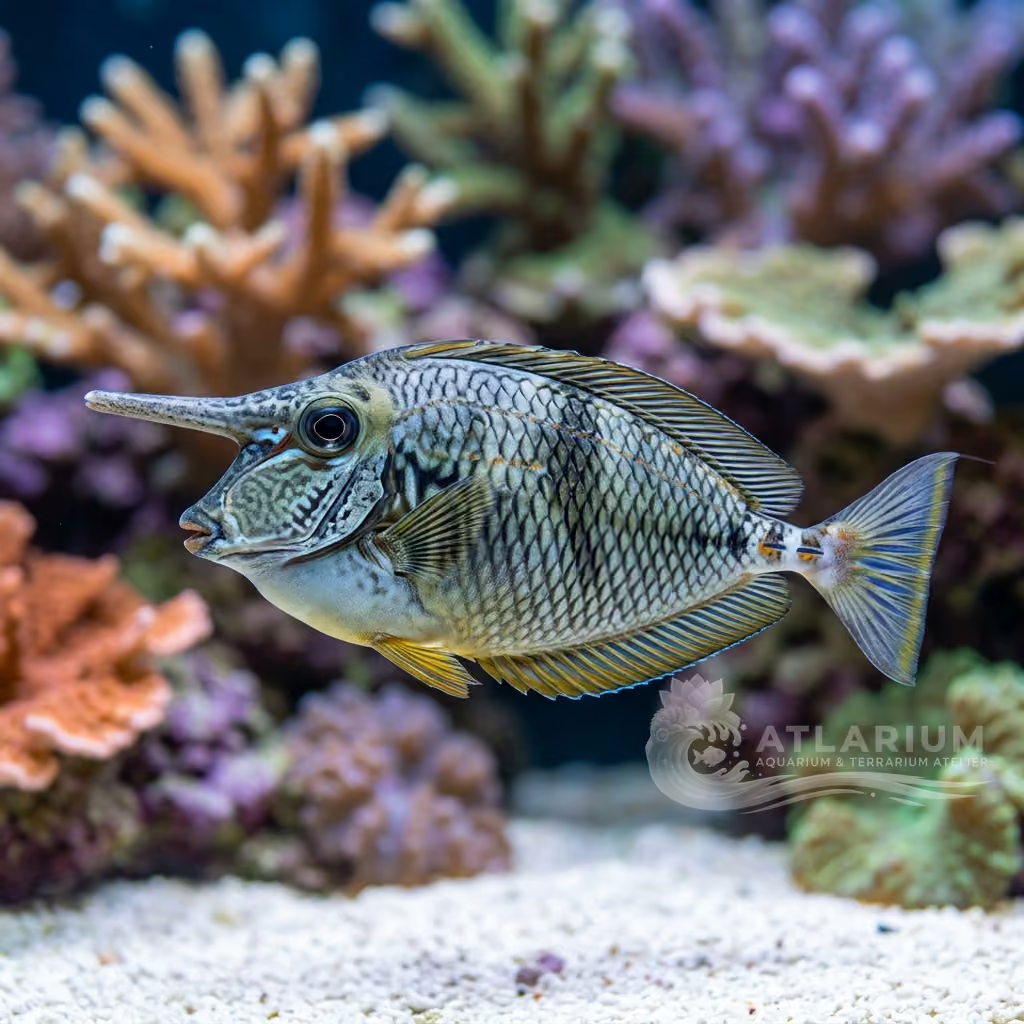
Orange Shoulder Surgeonfish
Acanthurus olivaceus
The orange-band surgeonfish frequents sandy Indo-Pacific reef slopes exposed to strong currents. It features sharp caudal spines and actively grazes on benthic organisms.
Water Temperature
22 - 28 °C
pH Value
8.1 - 8.4
Water type
Marine
Tank level
All levels
Adult size
35 cm
Minimum tank volume
>= 680 L
Minimum group
>= 1
KH
8 - 12 dKH

Species description
Geographical Origin and Habitat: Tropical Indo-Pacific. Inhabits reef flats and sandy rocky reef slopes exposed to strong currents down to depths of 45 meters. Widely distributed in the tropical Indo-Pacific, it inhabits sandy and rubble areas of coral reefs exposed to strong currents down to 45 meters.
Taxonomy and Morphology: Belongs to the family Acanthuridae. Reaches about 35 cm. Elongated oval body, mouth equipped with small scraping teeth, and sharp caudal spines. Belongs to the family Acanthuridae. Reaches approximately 35 cm in length. Features an elongated oval body and sharp caudal spines on the peduncle.
Social Behavior: Very active and tireless swimmer. Displays moderate territoriality toward conspecifics and other similarly shaped surgeonfish. A tireless and active swimmer that requires massive amounts of open swimming space. Displays moderate territoriality toward similar surgeonfish.
Coloration and Sexual Dimorphism: Distinct color metamorphosis. Juveniles are uniform lemon-yellow. Adults feature a split body: light gray front and dark olive-gray back. Characterized by a prominent neon-orange stripe bordered with blue on the shoulder. No sexual dimorphism. Juveniles are solid lemon-yellow. Adults exhibit a split-toned body with a light gray head and dark olive-gray rear, plus an orange shoulder stripe.

Care, breeding and tankmates
Aquarium Setup: Requires very large tanks of at least 680 liters (180 gallons) with powerful wavemakers to simulate reef waves. Ample open space. Requires a large aquarium of at least 600-700 liters with strong powerheads to simulate the high water movement of seaward coral reefs.
Diet and Feeding: Herbivore. Grazes constantly on sand and rocks. Provide large daily quantities of nori seaweed, spirulina, and veggie pellets. Specialized herbivore. Spends its day grazing on rocks and sand scraping algae. Offer daily sheets of nori, spirulina, and high-quality veggie pellets.
Water Quality: Temperature 22-28°C (72-82°F), pH 8.1-8.4, specific gravity 1.020-1.025. Efficient skimming and high water oxygenation are critical. Keep temperature at 22-28°C, pH 8.1-8.4, and salinity at 1.020-1.025. Strong protein skimming and high oxygenation are absolutely necessary.
Compatibility and Cohabitation: Herbivore. Grazes constantly on sand and rocks. Provide large daily quantities of nori seaweed, spirulina, and veggie pellets. 100% reef-safe. Does not harm corals or sessile invertebrates. Avoid housing with similar-looking Acanthurus species to prevent territorial fights.
Aquarium Breeding: 100% reef-safe. Does not touch corals or large invertebrates. Avoid other Acanthurus surgeonfish of similar pattern or shape to prevent fights. Breeding is not achievable in home aquariums. Their pelagic spawning habits require specific water column conditions not possible in captivity.
Risks and Diseases: Equipped with a sharp retractable caudal spine. Handle with caution. Species prone to stress and Marine Ich (Cryptocaryon). Equipped with sharp, retractable caudal spines that can cause deep cuts. Handle with care. Prone to Marine Ich (Cryptocaryon) when stressed.

Geographic origin and distribution
Tropical Indo-Pacific. Inhabits reef flats and sandy rocky reef slopes exposed to strong currents down to depths of 45 meters. Widely distributed in the tropical Indo-Pacific, it inhabits sandy and rubble areas of coral reefs exposed to strong currents down to 45 meters.
Origin
Tropical oceans and reefsEast Asia

Fish profile
- Temperament
- Territorial
- Compared to other members of the *Acanthurus* genus, the Orangeshoulder Surgeonfish is relatively peaceful and docile, making it a popular choice for reef tanks. However, it will still defend its established territory and can exhibit aggression toward other surgeonfish, especially those with a similar shape or coloration. It is generally peaceful toward unrelated, non-surgeonfish tankmates. To minimize territorial behavior, it is recommended to introduce this fish as one of the last additions to the aquarium and to ensure there are plenty of hiding places.
- Diet
- Herbivore
- The diet of *Acanthurus olivaceus* is primarily herbivorous, consisting of marine algae, detritus, and diatoms that they scrape from rocks and sand. In captivity, they must be provided with high-quality algae-based foods, such as dried nori, spirulina flakes, and specialized herbivore pellets. Although they will eagerly consume meaty foods like mysis or brine shrimp, these should only be offered as occasional treats to prevent digestive issues. A constant supply of vegetable matter is crucial for maintaining their immune system, coloration, and overall health.
- Life expectancy
- 10-15 years
- Adult size
- 35 cm
- Sex ratio
- Harem
- In a standard home aquarium, the Orangeshoulder Surgeonfish is best kept as a single specimen to avoid intense conspecific aggression. If a hobbyist wishes to keep a pair, a massive aquarium of several hundred gallons is required, and they should be introduced simultaneously as juveniles. In very large public exhibits, they can be maintained in small groups where a natural hierarchy can form, though this is rarely feasible for average home reef keepers. Establishing a harem or multiple surgeonfish of similar body shapes typically results in territorial battles unless ample swimming space and visual barriers are provided.
- Feeding frequency
- Twice daily
- In the wild, surgeonfish graze continuously throughout the day to support their high energy needs. In the aquarium, they should be fed small amounts multiple times a day, ideally three to four times, rather than one large meal. Using an algae clip to secure dried seaweed (nori) allows them to graze naturally over several hours, mimicking their wild behavior. Consistent access to food helps reduce territorial aggression and keeps their digestive tract functioning optimally.
- Bioload
- High
- Acanthurus olivaceus produces a significant biological load due to its large size (up to 14 inches) and high metabolic rate. To maintain this active grazer, frequent feedings of algae-based foods are necessary, which quickly accumulates organic waste. Consequently, a robust filtration system, including a powerful protein skimmer and regular water changes, is crucial. High water turnover and efficient mechanical filtration are highly recommended to keep nitrate levels low and water chemistry stable.
- Flow
- Strong
- This species inhabits seaward reefs and shallow lagoons where water movement is constant and strong. In captivity, they thrive in moderate to strong water flow, which helps keep the water highly oxygenated and mimics their natural environment. A high flow rate also encourages active swimming, helping the fish maintain muscle tone and burn off energy. Utilizing wavemakers or powerheads to create turbulent, non-laminar flow is highly beneficial for their overall health and well-being.
- Jump risk
- Yes
- The Orangeshoulder Surgeonfish presents a moderate to high risk of jumping, particularly when startled or during acclimation. Like many large surgeonfish, they can be skittish and may bolt toward the surface when lights turn off suddenly or during routine maintenance. A secure lid or tight-fitting mesh cover is essential to prevent these active fish from jumping out of the aquarium. Additionally, minimizing sudden movements around the tank and using a dimming lighting system can help reduce startle responses.
- Reproduction
- Oviparous
- Breeding the Orangeshoulder Surgeonfish in captivity is extremely difficult and has not been successfully achieved for commercial purposes. In their natural habitat, they are pelagic spawners, releasing eggs and sperm into the water column during group or pair spawning events, where the fertilized eggs drift with ocean currents. The long and complex planktonic larval stage makes rearing the fry under aquarium conditions nearly impossible with current technology. Consequently, all specimens available in the marine aquarium trade are wild-harvested.
- Compatibility & tankmates
- Semi-aggressive
- The Orangeshoulder Surgeonfish is generally compatible with a wide variety of reef fish, including clownfish, wrasses, damselfish, and anthias. However, caution should be exercised when keeping them with other surgeonfish, especially those from the same *Acanthurus* genus or species with similar shapes and coloration. They are reef-safe and will not harm corals, though they may graze on benthic invertebrates and algae growing around coral bases. Adequate space and multiple feeding locations are key to maintaining harmony in a community reef tank.
- Tank level
- All levels
- This species is an extremely active swimmer that utilizes all levels of the aquarium, constantly patrolling the tank in search of algae. However, because its natural grazing behavior is focused on rocks and sandy substrates, it spends much of its time in the bottom to middle zones of the tank. Providing plenty of open space in the middle for swimming, along with a structure of live rock at the bottom, allows the fish to express both its active swimming and grazing habits. A well-designed aquascape with arches and caves is ideal to accommodate their movement across these depths.

Scientific Parameters & Models
FishBase
Window to the official scientific data of the species
FishBase v25.04Data synced on: 06/15/2026
- Trophic level
- 2.3 ± 0.17 se
- Resilience
- Very low (more than 14 years)
- Generation time
- 1 years
- Phylogenetic uniqueness (PD50)
- 0.5
- Bayesian Length-Weight
- a = 0.0257, b = 3.01
- VulnerabilityLow vulnerability (18 / 100)

Related species
Recommendations grouped by close relatives, companion choices, and similar care.