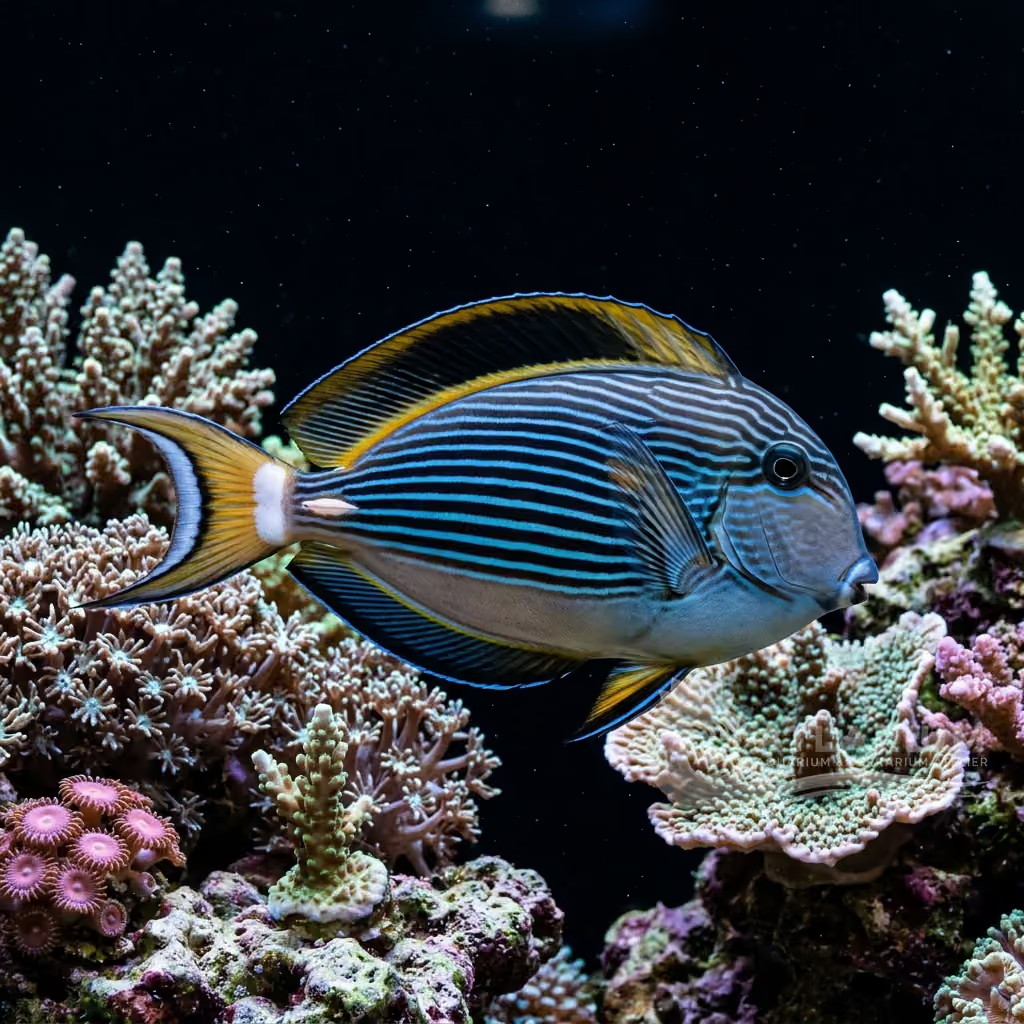
Two-spot bristletooth
Ctenochaetus binotatus
The Two-spot Bristletooth Tang is a highly active Indo-Pacific surgeonfish that excels at clearing film algae and detritus. It requires spacious setups with intense flow and abundant live rock.
Water Temperature
24 - 27 °C
pH Value
8.1 - 8.4
Water type
Marine
Tank level
All levels
Adult size
20 cm
Minimum tank volume
>= 250 L
Minimum group
>= 1
KH
8 - 12 dKH

Species description
Geographical Origin and Habitat:
Ctenochaetus binotatus, commonly known as the two-spot bristletooth tang, is widely distributed throughout the tropical waters of the Indo-Pacific. It is found from East Africa, the Red Sea, and the Mascarene Islands, east to the Tuamotu Islands, north to southern Japan, and south to the Great Barrier Reef. It inhabits deep lagoons and outer reef slopes at depths of 10 to 50 meters, preferring areas with mixed coral and rubble.
Taxonomy and Morphology:
Belonging to the family Acanthuridae and the genus Ctenochaetus, this fish is characterized by a specialized mouth equipped with flexible, comb-like teeth designed for scraping detritus and microalgae. The body is oval and laterally compressed, with a sharp caudal spine (scalpel) on each side of the caudal peduncle. Adults reach a maximum length of 20 to 22 centimeters.
Social Behavior:
In an aquarium, this species is active and constantly swimming. It displays peaceful behavior toward most non-tang tankmates but can be aggressive and territorial toward other surgeonfish, especially those within the same genus Ctenochaetus or sharing similar feeding habits. It is a solitary fish that requires space to prevent territorial clashes.
Coloration and Sexual Dimorphism:
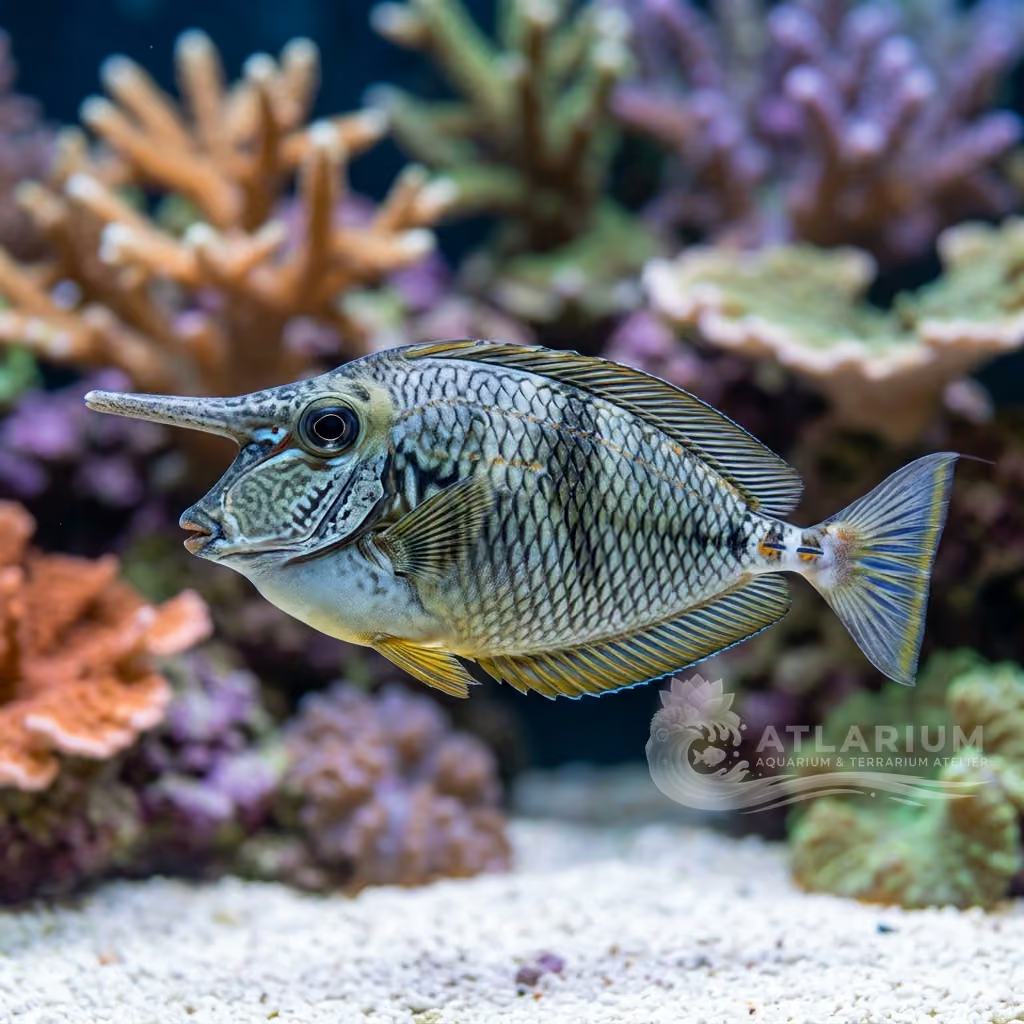
The body coloration is brownish-red to olive, decorated with fine blue longitudinal lines. The face is peppered with small blue spots. The defining features are a vivid blue ring around the eyes and two black spots at the rear bases of the dorsal and anal fins on the caudal peduncle. There is no visible external sexual dimorphism.

Care, breeding and tankmates
Aquarium Setup:
Requires a mature marine aquarium of at least 300 liters (approx. 80 gallons) to accommodate their active swimming behavior. Provide an abundance of live rock with natural algae film for grazing. Movement pumps must deliver strong water flow and high oxygenation. A secure screen cover is necessary to prevent jumping.
Diet and Feeding:
It is a specialized detritivore and herbivore. In captivity, it spends its time scraping rocks and glass, feeding on diatoms, cyanobacteria, and organic film. Its diet must include dried nori sheets, spirulina flakes or pellets, and herbivore preparations. Accept frozen foods like mysis or brine shrimp to supplement protein, but vegetable matter must dominate.
Water Quality:
Demands pristine and highly oxygenated water conditions. Keep temperatures between 24°C and 28°C (75°F to 82°F), with pH between 8.1 and 8.4 and specific gravity stable between 1.021 and 1.025. Ammonia and nitrites must be zero, and nitrates kept below 15 ppm. An efficient skimmer and regular water changes are required.
Compatibility and Cohabitation:
It is reef-safe and compatible with most corals and marine invertebrates. It coexists well with peaceful reef fish like clownfish, wrasses, anthias, and damselfish. Avoid housing with other Ctenochaetus species or highly aggressive tangs in smaller systems. Introduce this tang as one of the final additions to the tank.
Aquarium Breeding:
Captive breeding is currently not achieved in home aquariums. In the wild, they are pelagic spawners, releasing eggs and sperm into the water column during group spawning events. The larvae go through a complex planktonic stage before transforming and settling onto the reef crest.
Risks and Diseases:
Like other Acanthuridae, it has a thin skin layer with reduced scales, making it highly susceptible to parasites like Cryptocaryon irritans (ich) and Oodinium, particularly after shipping stress. A strict quarantine period is advised. A steady diet of greens is essential to prevent Head and Lateral Line Erosion (HLLE).

Geographic origin and distribution
Ctenochaetus binotatus, commonly known as the two-spot bristletooth tang, is widely distributed throughout the tropical waters of the Indo-Pacific. It is found from East Africa, the Red Sea, and the Mascarene Islands, east to the Tuamotu Islands, north to southern Japan, and south to the Great Barrier Reef. It inhabits deep lagoons and outer reef slopes at depths of 10 to 50 meters, preferring areas with mixed coral and rubble.
Origin
Tropical oceans and reefsAfrica and MadagascarEast Asia

Fish profile
- Temperament
- Semi-aggressive
- They are highly active, industrious, and beautiful fish that are peaceful to most tankmates but fiercely aggressive to other tangs. They spend their entire day grazing, making them excellent, natural cleaners for a reef tank. They require a large volume of water to satisfy their swimming needs and minimize stress. They are best suited for experienced marine aquarists due to their specific dietary and water quality needs.
- Diet
- Herbivore
- They are specialized detritivores and herbivores that utilize their unique bristle-like teeth to sift detritus and scrape microalgae from rocks and sand. In captivity, they need a constant supply of marine algae and vegetable matter, such as Nori, spirulina, and specialized herbivore pellets. They should also be offered meaty foods like mysis shrimp to round out their diet. A heavily leaning herbivorous diet is crucial to prevent Head and Lateral Line Erosion (HLLE).
- Life expectancy
- 5-12 years
- Adult size
- 20 cm
- Sex ratio
- Solitary
- They should strictly be kept as a single specimen per aquarium. Adding multiple tangs of the same genus, or even different tangs in a smaller tank, will likely result in severe, often fatal, aggression. In massive, public-sized aquariums, small groups might be possible, but for the home aquarist, one per tank is the golden rule. Sexing them visually is generally not possible.
- Feeding frequency
- Twice daily
- As constant grazers, they should have access to algae sheets or natural rock algae throughout the day. Supplemental feedings of prepared foods should be offered 2 to 3 times daily in small amounts. Their high activity level requires a constant intake of calories to maintain a healthy weight. A thin tang is a sign of severe underfeeding or internal parasites.
- Bioload
- Medium to High
- The Blue-eyed Tang produces a moderate to high bioload, typical of actively grazing surgeonfish. They require excellent water quality with zero ammonia and nitrites, and very low nitrates. A powerful protein skimmer and efficient biological filtration are absolutely necessary to handle their waste. Regular, large water changes are required to maintain the pristine conditions they demand.
- Flow
- Strong
- They demand strong, turbulent water flow that mimics the highly oxygenated surge zones of natural reefs. Powerful wavemakers and circulation pumps are essential to keep them active and healthy. High flow also helps keep detritus suspended so the filtration system can process it, which benefits the tang's grazing habits. Areas of lower flow should be available behind rockwork for resting.
- Jump risk
- No
- Reproduction
- Oviparous
- Captive breeding of Ctenochaetus binotatus is incredibly rare and has not been achieved on a commercial scale. They are pelagic spawners, releasing eggs and sperm into the water column. The resulting larvae have a long, complex planktonic stage that is extremely difficult to sustain in a closed system. All specimens in the trade are wild-caught.
- Compatibility & tankmates
- Territorial
- They are generally peaceful toward non-tang species and make excellent reef tank inhabitants. However, they can be highly aggressive and territorial toward other tangs, particularly those of a similar shape or from the same genus. They will completely ignore corals and most invertebrates, focusing solely on grazing algae. They should be one of the last fish added to a community to minimize territorial claims.
- Tank level
- All levels
- They utilize all levels of the aquarium but are most often seen swimming actively through the middle and lower sections. They constantly patrol the rockwork and substrate, searching for detritus and microalgae to graze upon. They require a large tank with plenty of open swimming space as well as complex rock structures for grazing and hiding.

Scientific Parameters & Models
FishBase
Window to the official scientific data of the species
FishBase v25.04Data synced on: 06/15/2026
- Trophic level
- 2 ± 0 se
- Resilience
- High (less than 15 months)
- Phylogenetic uniqueness (PD50)
- 0.502
- Bayesian Length-Weight
- a = 0.03311, b = 2.93
- VulnerabilityLow vulnerability (12 / 100)

Related species
Recommendations grouped by close relatives, companion choices, and similar care.