Bariene Surgeonfish
Acanthurus bariene
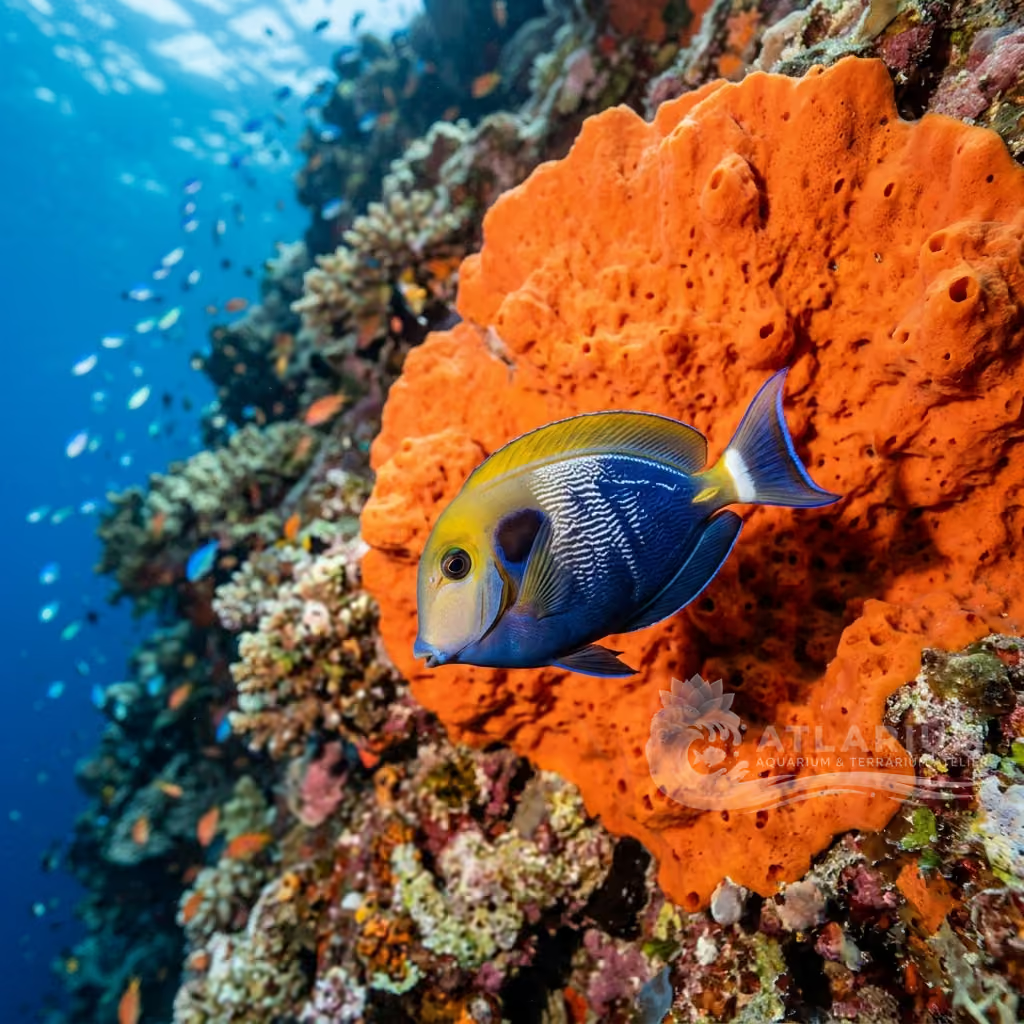
The bariene surgeonfish (Acanthurus bariene) is an herbivorous marine tang found in clear seaward reefs of the Indo-Pacific. It is easily identified by a prominent black spot at the upper gill opening and a yellow bar just behind it. They graze primarily on algal films using a single, sharp peduncular spine for defense.
Water Temperature
24 - 27 °C
pH Value
8 - 8.4
Water type
Marine
Tank level
All levels
Adult size
50 cm
Minimum tank volume
>= 1,200 L
Minimum group
>= 1
KH
8 - 12 dKH

Species description
Geographical Origin and Habitat: Tropical Indo-Pacific: distributed from East Africa and the Seychelles to the Philippines, Ryukyu Islands, the Great Barrier Reef of Australia, and Samoa. It inhabits outer seaward reef slopes and deep reef drop-offs, typically found at depths ranging between 4 and 50 meters.
Taxonomy and Morphology: Belongs to the family Acanthuridae, genus Acanthurus. It features an elongated, oval, and laterally compressed body shape. It is one of the largest surgeonfish species, capable of reaching a maximum length of approximately 50 centimeters. Possesses sharp, scalpel-like spines on the caudal peduncle.
Social Behavior: An active, fast-swimming open-water fish. It is solitary as an adult, occupying the waters above the reef structures. It exhibits strong territorial behavior, defending its grazing areas from other herbivorous competitors and related surgeonfish species.
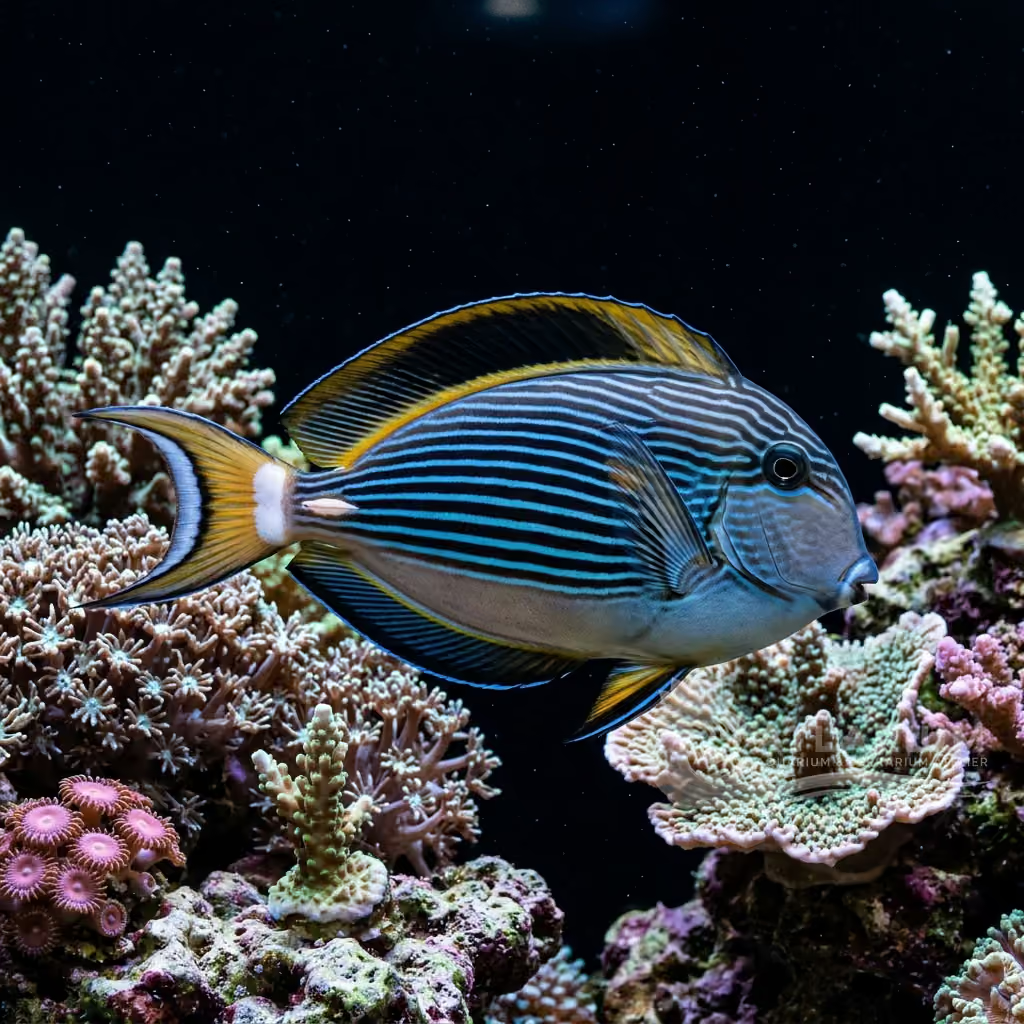
Coloration and Sexual Dimorphism: The body is dark brown with fine, wavy blue lines running along the sides. It is distinguished by a prominent black spot behind the upper operculum and a yellow-orange bar on the shoulder. The caudal fin is bluish with a white base, and the dorsal fin is yellow. No visible sexual dimorphism.

Care, breeding and tankmates
Aquarium Setup: Requires a giant marine aquarium of at least 1200 liters due to its substantial adult size and open-water swimming needs. Furnish with a minimal central rockwork pile of mature live rock for grazing, leaving the vast majority of the tank volume free for fast swimming.
Diet and Feeding: Specialist herbivore. In the wild, it spends its day grazing on benthic microalgae. In captivity, it must be fed daily with nori sheets, spirulina tablets, veggie pellets, and blanched greens. Supplement the diet with small portions of frozen mysis shrimp to support the immune system.
Water Quality: Demands pristine water quality and highly stable parameters: water temperature of 24-27°C, pH from 8.0 to 8.4, specific gravity (SG) of 1.020-1.025, and a KH of 8-12 dKH. Exceptionally strong water flow and high oxygenation are critical.
Compatibility and Cohabitation: Reef-safe and compatible with all corals and sessile invertebrates. However, due to its highly aggressive and territorial nature, it should not be housed with conspecifics or similarly looking tangs (such as Acanthurus dussumieri). Coexists well with active wrasses or angelfish.
Aquarium Breeding: Captive breeding has never been achieved in home aquariums. In their natural habitat, they are broadcast spawners that release pelagic eggs into the water column. The eggs drift with ocean currents and undergo a long, complex larval phase that cannot be replicated in captivity.
Risks and Diseases: Highly susceptible to marine ich (Cryptocaryon irritans) and marine velvet (Oodinium) due to its very thin protective mucus layer. It is also prone to Head and Lateral Line Erosion (HLLE) if its diet lacks vitamins or if water quality is poor. Quarantine is advised.

Geographic origin and distribution
Tropical Indo-Pacific: distributed from East Africa and the Seychelles to the Philippines, Ryukyu Islands, the Great Barrier Reef of Australia, and Samoa. It inhabits outer seaward reef slopes and deep reef drop-offs, typically found at depths ranging between 4 and 50 meters.
Origin
Tropical oceans and reefsAfrica and MadagascarSouth and Southeast AsiaEast AsiaAustralia, New Guinea, and Oceania

Fish profile
- Temperament
- Aggressive
- Like many large surgeonfish, Acanthurus bariene is highly territorial and can be aggressive, especially toward other tangs or species with similar shapes and coloration. It is generally peaceful toward unrelated, non-competitive tank mates that occupy different niches. A well-structured aquascape with plenty of visual barriers helps minimize territorial behavior.
- Diet
- Herbivore
- This species is primarily herbivorous and requires a diet rich in plant matter to maintain health and color. Its main diet should consist of high-quality dried seaweed (nori), spirulina, and specialized herbivore pellets. While it will readily consume meaty foods offered to other fish, these should be limited to prevent nutritional deficiencies like lateral line erosion.
- Life expectancy
- 15-20 years
- Adult size
- 50 cm
- Sex ratio
- Solitary
- In the home aquarium, it is highly recommended to keep Acanthurus bariene singly to avoid severe conspecific aggression. In extremely large public systems, they may be kept in mated pairs if introduced simultaneously. Attempting to group multiple individuals in standard aquarium setups will likely result in territorial battles.
- Feeding frequency
- Twice daily
- To satisfy its high metabolic rate and continuous grazing nature, Acanthurus bariene should be fed multiple times daily. Offering small portions of seaweed or herbivore flakes 2 to 3 times a day is ideal. Leaving a seaweed clip with nori in the tank allows the fish to graze naturally throughout the day.
- Bioload
- High
- Due to its potential size of up to 50 cm and its continuous grazing habits, Acanthurus bariene produces a significant amount of biological waste. A robust filtration system, including a powerful protein skimmer and efficient mechanical filtration, is absolutely essential to maintain water quality. Frequent water changes are also necessary to control nitrate and phosphate accumulation in a system housing this large surgeonfish.
- Flow
- Strong
- Originating from wave-swept seaward reef slopes, this surgeonfish thrives in strong water movement. High flow rates are essential to keep the water highly oxygenated and to simulate the natural currents they navigate in the wild. Strong, turbulent flow also provides the necessary exercise for this active swimmer.
- Jump risk
- Yes
- Although not typically classified as an obligate jumper, Acanthurus bariene can easily leap out of the tank when startled or during active swimming bursts. A secure, tight-fitting lid or mesh cover is strongly recommended to prevent accidental jumps. Additionally, providing sufficient hiding spots in the aquascape can help reduce startle responses.
- Reproduction
- Rare / not documented
- Breeding Acanthurus bariene in home aquariums is currently extremely difficult and has not been reliably achieved. They are broadcast spawners that release their gametes into the water column, requiring specialized, massive systems to trigger spawning. Additionally, the pelagic larval stage is exceptionally challenging to raise in captive conditions.
- Compatibility & tankmates
- Territorial
- This surgeonfish is compatible with a wide range of robust, peaceful reef fish, such as wrasses, clownfish, and larger damselfish. However, it should not be housed with other tangs, particularly from the genus Acanthurus, unless the aquarium is exceptionally large. It is considered reef-safe, though under-fed individuals might occasionally nip at stony corals.
- Tank level
- All levels
- This species is an exceptionally active open-water swimmer that utilizes all levels of the aquarium. It requires vast, unobstructed swimming spaces in the middle and upper water columns to mimic its natural reef habitat. However, it also spends considerable time near the bottom, actively grazing on algae growing on live rocks and substrate.

Scientific Parameters & Models
FishBase
Window to the official scientific data of the species
FishBase v25.04Data synced on: 06/15/2026
- Trophic level
- 2 ± 0 se
- Resilience
- Medium (1.4 - 4.4 years)
- Phylogenetic uniqueness (PD50)
- 0.5
- Bayesian Length-Weight
- a = 0.02291, b = 2.96
- VulnerabilityModerate vulnerability (40 / 100)

Related species
Recommendations grouped by close relatives, companion choices, and similar care.