Lined Surgeonfish
Acanthurus lineatus
The lined surgeonfish features venomous caudal spines and striking stripes. Found in wave-swept Indo-Pacific reefs, it fiercely defends its territory while controlling algae.
Water Temperature
24 - 28 °C
pH Value
8.1 - 8.4
Water type
Marine
Tank level
All levels
Adult size
38 cm
Minimum tank volume
>= 950 L
Minimum group
>= 1
KH
8 - 12 dKH

Species description
Geographical Origin and Habitat: Tropical Indo-Pacific. Inhabits wave-swept outer reefs and shallow lagoon passages rich in corals and algae down to 15 meters. They are key ecological players on shallow reefs, keeping algae growth under control. They inhabit high-energy surge zones where wave action is intense.
Taxonomy and Morphology: Belongs to the family Acanthuridae. Reaches about 38 cm in the wild (often around 30 cm in captivity). Elliptical, laterally compressed body with venomous, sharp caudal spines. The genus Acanthurus represents the typical surgeonfish, characterized by their scalpel-like spines. Their skeletal structure is highly adapted for rapid swimming.
Social Behavior: Extremely aggressive and territorial fish. Fiercely defends large sections of algal reef, brutally attacking any competing surgeonfish. They establish dominant hierarchies in the aquarium, which must be managed carefully. They are highly active and require vast open areas.
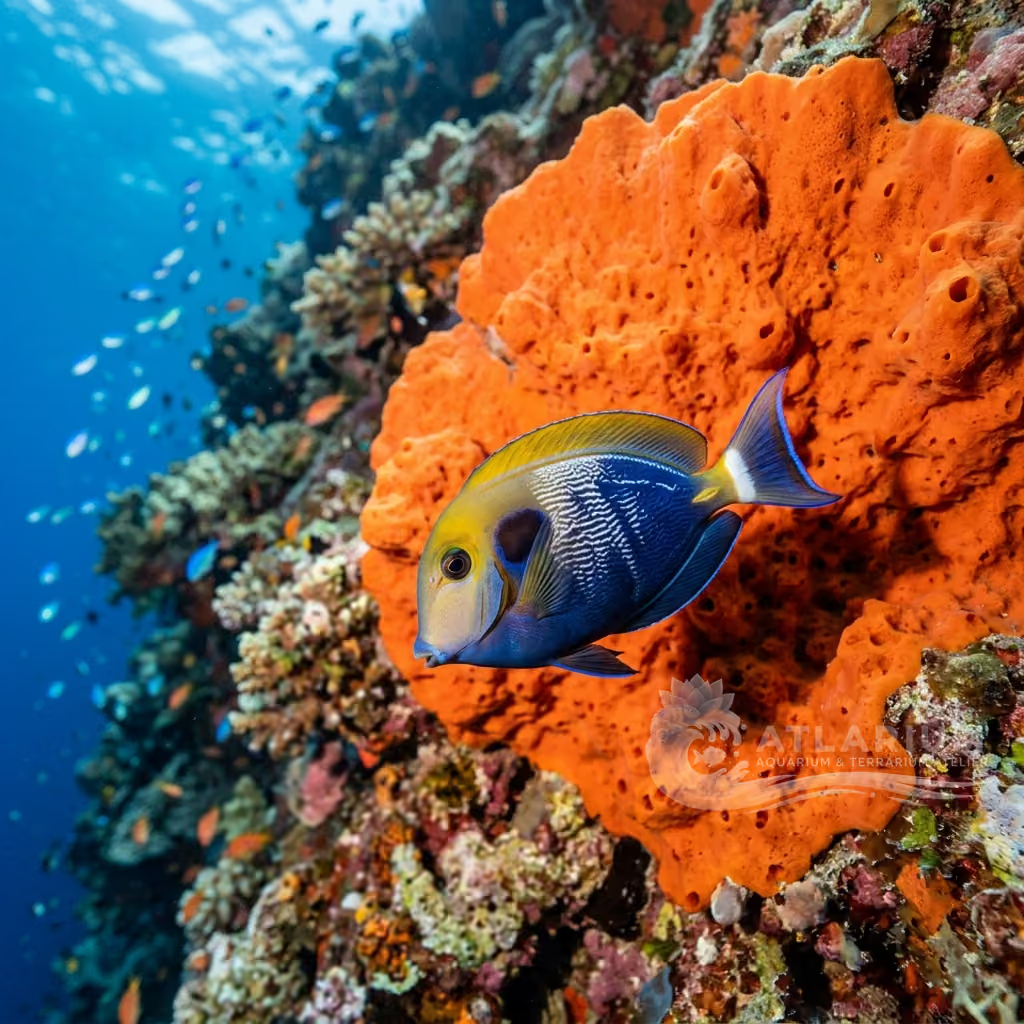
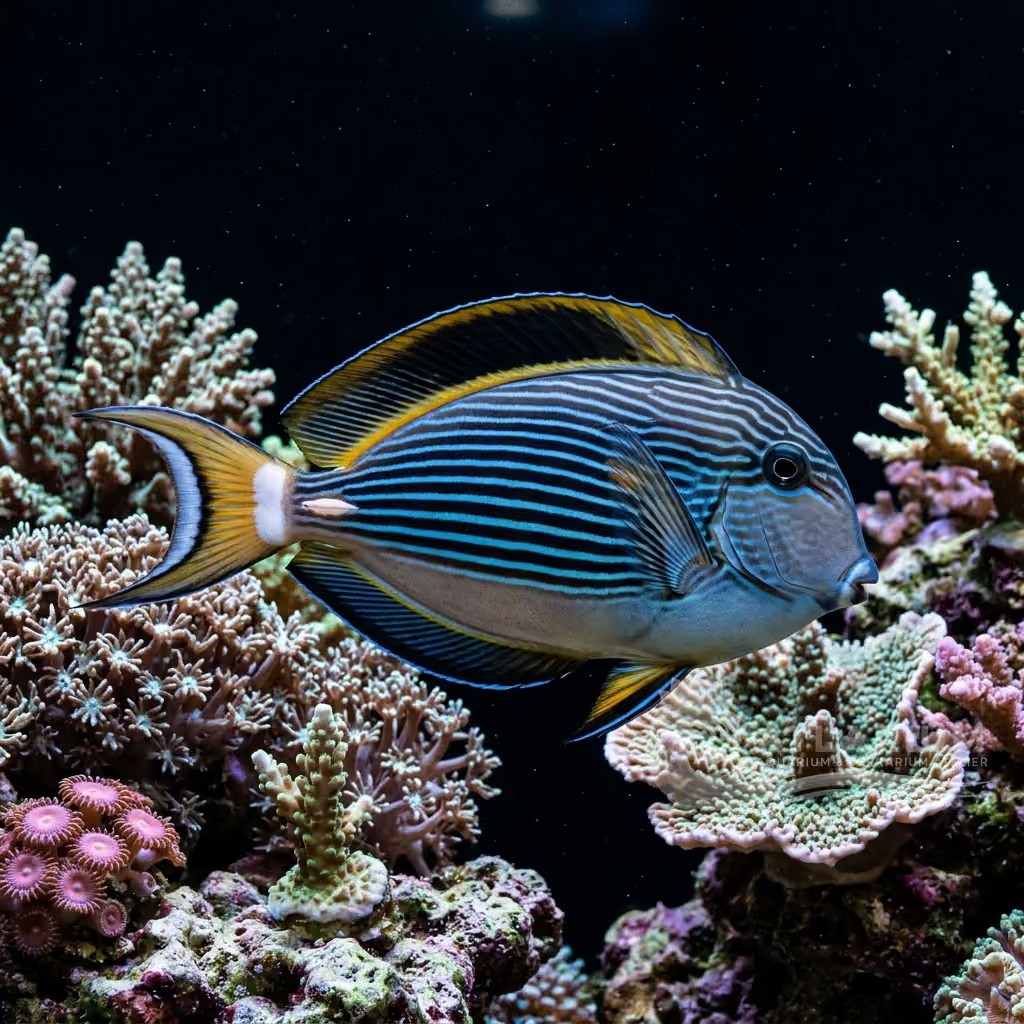
Coloration and Sexual Dimorphism: Spectacular coloration: yellow and electric-blue longitudinal stripes bordered by thin black lines across the body. Light blue-gray belly. No visible dimorphism. Their caudal spine is venomous and can inflict painful wounds if handled carelessly. The blue and yellow striped pattern is highly warning.

Care, breeding and tankmates
Aquarium Setup: Requires a massive tank of at least 950 liters (250 gallons) with very strong water movement and excellent oxygenation. Open space is essential to reduce stress. A minimum tank length of 6 feet is strongly recommended to support their swimming habits. The aquarium must be securely covered to prevent jumping.
Diet and Feeding: Herbivore. Diet must have a very high plant content: nori, spirulina, enriched dry foods, and blanched vegetables. Grazes constantly on rocks. Provide a varied diet rich in spirulina, marine algae, and high-quality flake foods. Supplement with frozen foods to ensure protein intake.
Water Quality: Stable temperature 24-28°C (75-82°F), pH 8.1-8.4, specific gravity 1.020-1.025. Maximum skimming and filtration are indispensable to manage the bioload. Use active carbon filtration to maintain water clarity and remove chemical waste. Keep water temperature stable between 24-28°C (75-82°F).
Compatibility and Cohabitation: 100% reef-safe. Does not touch corals. However, due to its extreme aggression, it must be the only surgeonfish in the aquarium. Introduce this fish last to the aquarium to prevent it from establishing a dominant territory. Avoid tankmates with similar color patterns.
Aquarium Breeding: Reproduction is not feasible in home aquariums. Spawning pairs and groups release pelagic eggs that float in ocean currents. They are pelagic spawners, releasing their gametes into the water column where fertilization occurs. Captive rearing of larvae is exceptionally rare.
Risks and Diseases: Caudal spines are razor-sharp and contain venom glands. Exercise extreme caution during handling. Highly prone to parasites. They are highly susceptible to skin parasites under stress, requiring quarantine procedures. Ensure you wear thick gloves if catching the fish.

Geographic origin and distribution
Tropical Indo-Pacific. Inhabits wave-swept outer reefs and shallow lagoon passages rich in corals and algae down to 15 meters. They are key ecological players on shallow reefs, keeping algae growth under control. They inhabit high-energy surge zones where wave action is intense.
Origin
Tropical oceans and reefsAfrica and MadagascarEast Asia

Fish profile
- Temperament
- Aggressive
- Acanthurus lineatus is widely regarded as one of the most aggressive and territorial species among all surgeonfish. It establishes a dominant territory and will viciously attack other tangs, particularly those with similar shapes or coloration, using its sharp caudal spines. It exhibits highly assertive behavior and can become increasingly bellicose as it matures and grows larger. Because of this temperament, it should generally be introduced as the final resident to a large system to prevent it from claiming the entire tank as its territory.
- Diet
- Herbivore
- The diet of Acanthurus lineatus must be predominantly herbivorous to reflect its natural feeding habits of scraping benthic algae and detritus from reefs. In the aquarium, it should be offered high-quality dried seaweed (nori), spirulina, and specialized herbivore pellets or flakes on a daily basis. Although they will eagerly consume meaty foods like mysis and brine shrimp, these should only be fed occasionally as treats. An insufficient amount of plant matter in their diet can lead to nutritional deficiencies, digestive problems, and lateral line erosion.
- Life expectancy
- 10-20 years
- Adult size
- 38 cm
- Sex ratio
- Harem
- In the home aquarium, Acanthurus lineatus is strictly kept as a solitary specimen because of its extreme intraspecific aggression. Attempting to keep multiple individuals or pairs in standard tank sizes usually leads to lethal territorial fights, regardless of sex. In massive commercial or public aquarium installations of several thousand liters, it is occasionally possible to maintain a small group or harem. For home aquarists, stocking a single individual is the only safe and recommended approach.
- Feeding frequency
- Twice daily
- Due to its high metabolic rate and constant activity, Acanthurus lineatus needs to be fed multiple times throughout the day. Offering small portions of food three to four times daily, or utilizing an algae clip with nori sheets for continuous grazing, is highly recommended. This feeding schedule mimics their natural behavior of grazing on reef flats during daylight hours. Regular, frequent feedings also help reduce territorial aggression by ensuring the fish does not experience hunger-related stress.
- Bioload
- Medium to High
- Acanthurus lineatus has a high biological load in the aquarium due to its active lifestyle, large potential size of 38 cm, and high rate of metabolism. It requires constant feeding with vegetable matter, which quickly translates into significant organic waste. A robust filtration system, including a high-capacity protein skimmer, and frequent partial water changes are essential to maintain low nitrate and phosphate levels. Proper waste management is critical to prevent water quality degradation and keep this sensitive surgeonfish healthy.
- Flow
- Strong
- Acanthurus lineatus is native to shallow reef crests and surge channels, which are environments characterized by strong water movement and high oxygenation. In captivity, they require strong, turbulent water flow simulated by powerful wavemakers or powerheads. This flow not only mimics their natural habitat but also helps keep them active, healthy, and physically fit. High water flow also ensures the water column remains saturated with dissolved oxygen, which is critical for their high-energy respiration needs.
- Jump risk
- Yes
- Acanthurus lineatus is a high-speed swimmer capable of sudden bursts of acceleration when startled, presenting a significant jump risk. Sudden movements outside the tank, turning lights on or off abruptly, or aggression from tank mates can cause them to leap out of the water. To prevent tragic accidents, a tight-fitting, secure lid or mesh cover is mandatory on the aquarium. Additionally, providing adequate nocturnal lighting or a dimming cycle can help minimize startle responses during light transitions.
- Reproduction
- Oviparous
- In nature, Acanthurus lineatus is a broadcast spawner that forms large, synchronized groups to release eggs and sperm into the water column during specific lunar cycles. Unfortunately, reproducing this species in home aquaria is currently considered impossible due to their complex spawning aggregations, large spatial requirements, and the long pelagic larval phase of the offspring. There are no documented cases of successful commercial or private breeding of this species in captivity. All specimens available in the marine aquarium trade are wild-caught.
- Compatibility & tankmates
- Highly aggressive
- Due to its extreme aggression, finding compatible tank mates for Acanthurus lineatus is a major challenge. It should not be housed with other surgeonfish, especially those belonging to the genus Acanthurus or species with horizontal stripes. Compatible tank mates include fast-swimming, robust, and active fish such as larger wrasses, triggerfish, large angels, or groupers. It is reef-safe and will not harm corals or sessile invertebrates, but it may bully smaller, peaceful reef fish if introduced before them.
- Tank level
- All levels
- As an exceptionally active and agile swimmer, Acanthurus lineatus utilizes all levels of the water column, although it spends a substantial amount of time in the mid-to-upper zones. In the wild, they are typical inhabitants of shallow, high-energy reef flats and surge zones where they graze on sun-lit algae. In captivity, they require vast open swimming spaces across the entire length of the tank, combined with structured rockwork below for shelter. Ensuring they have unobstructed paths to swim dynamically is vital for their physical and psychological well-being.

Scientific Parameters & Models
FishBase
Window to the official scientific data of the species
FishBase v25.04Data synced on: 06/15/2026
- Trophic level
- 2 ± 0 se
- Resilience
- Very low (more than 14 years)
- Generation time
- 1.6 years
- Phylogenetic uniqueness (PD50)
- 0.5
- Bayesian Length-Weight
- a = 0.02239, b = 2.96
- VulnerabilityLow vulnerability (23 / 100)

Related species
Recommendations grouped by close relatives, companion choices, and similar care.