Monrovia Surgeonfish
Acanthurus monroviae
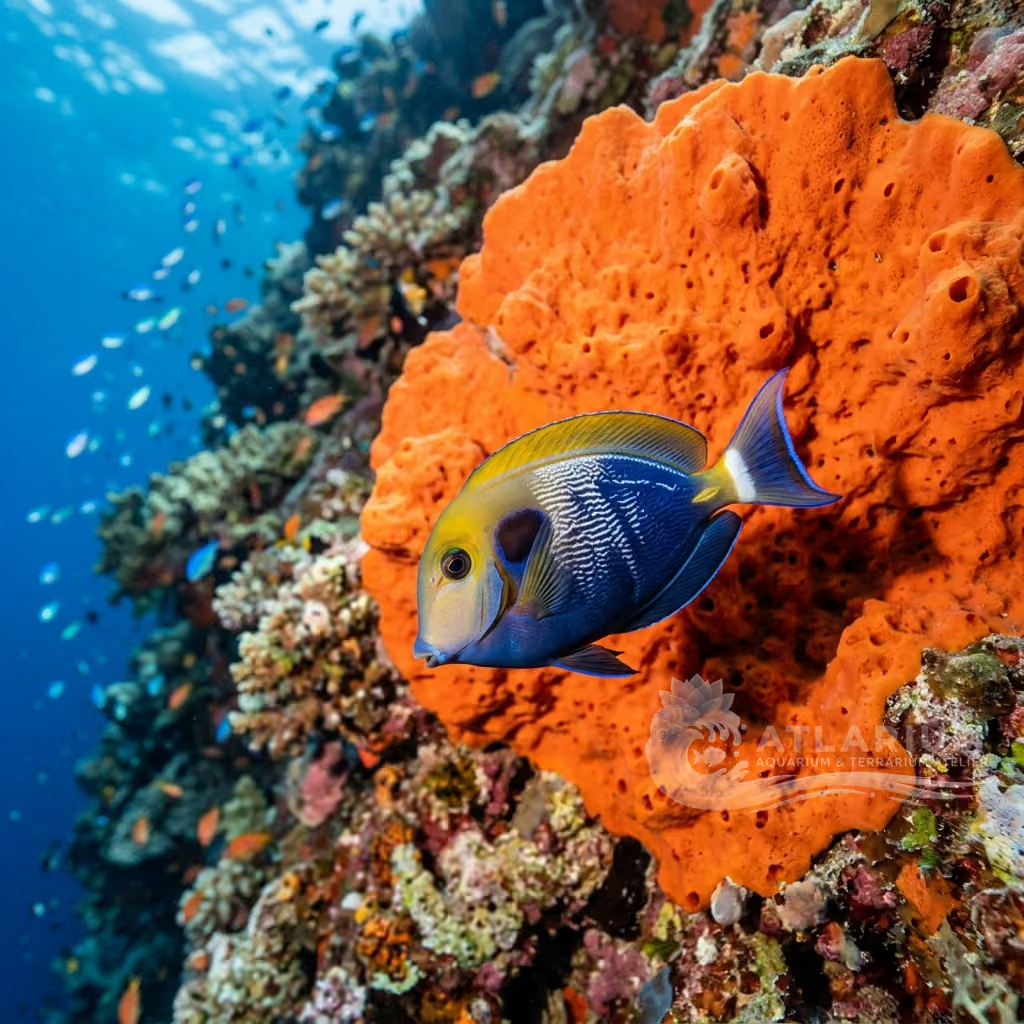
The Monrovia surgeonfish is native to the eastern Atlantic Ocean along Africa's coast. It grazes in shallow, wave-swept rocky reefs and has a distinctive disc-shaped body.
Water Temperature
22 - 27 °C
pH Value
8 - 8.5
Water type
Marine
Tank level
All levels
Adult size
45 cm
Minimum tank volume
>= 1,300 L
Minimum group
>= 1
KH
8 - 12 dKH

Species description
Geographical Origin and Habitat: Acanthurus monroviae is native to the eastern Atlantic Ocean, ranging along the western coast of Africa from Morocco down to Angola, including the oceanic islands of Cape Verde, São Tomé, and Príncipe. It inhabits shallow rocky reefs, coral habitats, and sandy coastal waters, typically at depths of 5 to 20 meters, in areas with strong wave action.
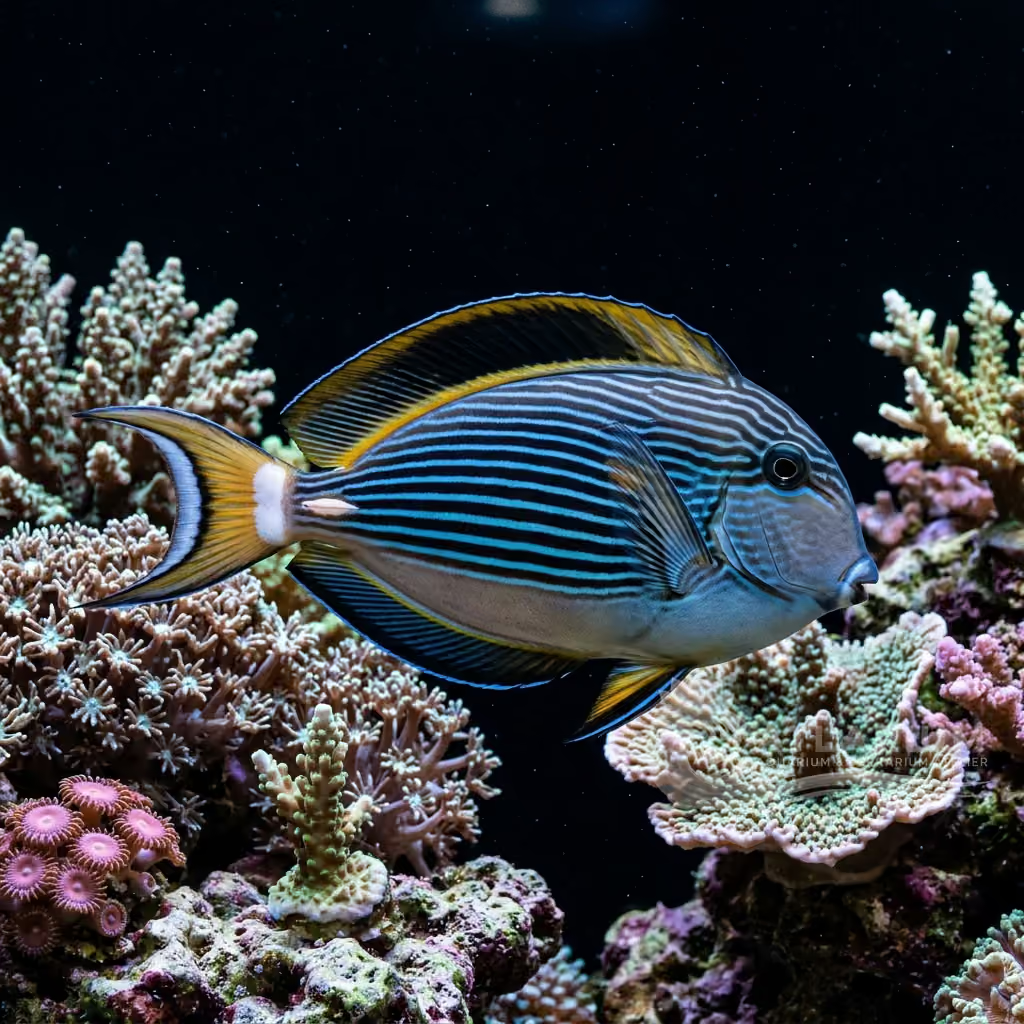
Taxonomy and Morphology: Belonging to the family Acanthuridae and the genus Acanthurus, it is commonly known as the Monrovia Surgeonfish. It possesses a laterally compressed, disc-shaped body with a steep head profile. Adults can grow up to 30-35 cm in length. It features a sharp, retractable spine on each side of the caudal peduncle, which is used for defense.
Social Behavior: An active, fast-swimming species that forms small schools or loose feeding groups in the wild to graze on algal flats. In captivity, it exhibits strong territoriality towards conspecifics and other surgeonfish. It requires a vast amount of open swimming space and will constantly patrol the aquarium throughout the day.
Coloration and Sexual Dimorphism: The body coloration is dark brown to charcoal grey or dark purplish-black, covered with fine, undulating lighter longitudinal lines. The defining feature is a large, vibrant yellow-orange oval patch on the caudal peduncle surrounding the caudal spine. There is no visible external sexual dimorphism between males and females.

Care, breeding and tankmates
Aquarium Setup: Due to its large size and active swimming behavior, it requires an aquarium of at least 400-500 liters. The tank layout must provide plenty of open swimming space in the front, combined with a sturdy live rock structure containing large caves and tunnels where the fish can hide and sleep at night.
Diet and Feeding: Primarily herbivorous. Its diet must consist mainly of marine algae and vegetable matter. Provide daily feedings of dried nori sheets, spirulina-based flakes or pellets, and occasional fresh blanched vegetables. Sinking herbivore pellets are excellent. Supplement with minor portions of frozen mysis and brine shrimp.
Water Quality: Requires pristine water conditions: temperature 24-28°C (75-82°F), pH 8.1-8.4, and specific gravity 1.020-1.025. Strong water movement and high dissolved oxygen levels are critical, requiring powerful powerheads and efficient protein skimming. Keep ammonia and nitrites at zero, and nitrates below 20 ppm.
Compatibility and Cohabitation: Suitable for large reef tanks or fish-only systems. It is territorial and aggressive towards conspecifics and other Acanthurus species. It can successfully cohabit with wrasses, angelfish, clownfish, and damsels. It is best to introduce this surgeonfish last to the aquarium to minimize territorial disputes.
Aquarium Breeding: Unreported in home aquaria. In the wild, they are broadcast spawners, releasing gametes into the water column during group spawning events. The resulting larvae float in the planktonic stage for a long period (acronurus stage), which is highly complex to rear and sustain in closed aquarium systems.
Risks and Diseases: Highly susceptible to skin parasites such as marine ich (Cryptocaryon irritans) and marine velvet (Amyloodinium ocellatum) due to having a thin protective mucus layer. Quarantine is strongly recommended. Prone to Head and Lateral Line Erosion (HLLE) if fed an inadequate diet or if carbon filtration is used improperly.

Geographic origin and distribution
Acanthurus monroviae is native to the eastern Atlantic Ocean, ranging along the western coast of Africa from Morocco down to Angola, including the oceanic islands of Cape Verde, São Tomé, and Príncipe. It inhabits shallow rocky reefs, coral habitats, and sandy coastal waters, typically at depths of 5 to 20 meters, in areas with strong wave action.
Origin
Tropical oceans and reefsAfrica and MadagascarEurope, Mediterranean, and West Asia

Fish profile
- Temperament
- Semi-aggressive
- Acanthurus monroviae exhibits a semi-aggressive temperament, which is typical for larger surgeonfish. While generally peaceful toward unrelated tankmates that do not compete for food or territory, it can become highly aggressive and territorial toward other tangs, especially those of similar shape or color. They establish a hierarchy and will defend their preferred grazing patches vigorously using the sharp spines on their tail. To manage this behavior, it is best to introduce them as the final addition to the aquarium and ensure the system is large enough to minimize territorial disputes.
- Diet
- Herbivore
- This species is primarily herbivorous, feeding on microalgae, filamentous algae, and detritus in its natural habitat, though it also consumes plankton. In the aquarium, their diet should consist mostly of high-quality vegetable matter, such as dried seaweed (nori), Spirulina, and specialized herbivore pellets. It is also beneficial to offer occasional frozen foods like mysis or brine shrimp to provide protein and mimic their opportunistic feeding on zooplankton. Providing live rock with a healthy growth of natural algae will allow them to engage in natural grazing behavior throughout the day.
- Life expectancy
- 10-15 years
- Adult size
- 45 cm
- Sex ratio
- Solitary
- Acanthurus monroviae is a highly territorial species that is best kept singly in all but the largest public aquariums. Attempting to keep multiple specimens or closely related surgeonfish in the same tank usually leads to intense conspecific aggression and potential fatalities. If a pair or group is to be attempted, it should only be done in massive systems with thousands of liters and plenty of visual barriers to break line of sight. For standard home aquariums, stocking a single individual is the safest and most recommended approach.
- Feeding frequency
- Twice daily
- Due to their high activity levels and specialized digestive tract, Acanthurus monroviae should be fed two to three times daily. Offering smaller, frequent meals helps sustain their rapid metabolism and prevents nutritional deficiencies. A constant supply of dried seaweed attached to a veggie clip is highly recommended, allowing the fish to graze continuously as they would in the wild. Regular feeding also helps reduce territorial aggression, as well-fed surgeonfish are generally less prone to resource guarding and skirmishes.
- Bioload
- High
- Due to its large adult size of up to 45 cm and high metabolic rate, Acanthurus monroviae produces a significant amount of biological waste. Maintaining this species requires a robust filtration system, including a high-performance protein skimmer and efficient mechanical filtration, to handle the heavy organic load. Regular water changes and frequent monitoring of nitrate and phosphate levels are essential to prevent water quality degradation. Without adequate filtration, the accumulation of waste can quickly stress the fish and lead to health issues like marine ich or lateral line erosion.
- Flow
- Strong
- Acanthurus monroviae thrives in aquariums with moderate to strong water flow, which mimics the turbulent conditions of their natural rocky reef habitats. Strong currents are essential for maintaining high dissolved oxygen levels, which this active swimmer requires to breathe easily and remain healthy. Utilizing multiple wavemakers or powerheads to create alternating, turbulent flow patterns will encourage natural swimming behaviors and exercise. Adequate flow also helps keep detritus in suspension, allowing the filtration system to remove it efficiently and keeping the grazing rocks clean.
- Jump risk
- Yes
- Like many large and active marine species, Acanthurus monroviae presents a moderate to high jump risk, especially when startled or stressed. Sudden movements outside the tank, turning lights on or off abruptly, or aggression from tankmates can trigger a panic response, causing the fish to leap from the water. It is highly recommended to secure the aquarium with a tight-fitting lid or a heavy-duty mesh cover to prevent accidental escapes. Providing nocturnal moonlighting can also help reduce the chances of night-time spooking and subsequent jumping.
- Reproduction
- Rare / not documented
- Like other surgeonfish, Acanthurus monroviae is an oviparous broadcast spawner, releasing pelagic eggs and sperm into the water column. In nature, spawning events are often synchronized with tidal cycles and involve large groups rising rapidly to release gametes near the surface. Because of this complex behavior, their large size, and the requirement for a long pelagic larval phase, successful captive breeding is extremely difficult and has not been reliably achieved in home aquariums. Almost all specimens available in the aquarium trade are wild-harvested.
- Compatibility & tankmates
- Territorial
- This species is generally compatible with large, active marine fish such as wrasses, angelfish, triggers, and groupers that inhabit reef environments. It is also safe to keep in reef aquariums, as it will not harm corals or most ornamental invertebrates, though it may clean algae off them. However, compatibility is highly problematic with other surgeonfish or tangs, particularly those of the same genus or similar appearance, unless the tank is exceptionally large. Small, very passive fish may also be intimidated by its rapid and large-scale swimming activities.
- Tank level
- All levels
- This active surgeonfish primarily inhabits the middle and bottom zones of the aquarium, where it continuously grazes on algae covering the rocks and substrate. However, because it is an exceptionally strong and energetic swimmer, it will frequently utilize the entire water column, including the upper areas of the tank. Aquarists must provide ample open swimming space across all levels of the aquarium, combined with structured rockwork near the bottom. A long tank layout is highly beneficial to accommodate its active horizontal swimming patterns.

Scientific Parameters & Models
FishBase
Window to the official scientific data of the species
FishBase v25.04Data synced on: 06/15/2026
- Trophic level
- 2.5 ± 0.24 se
- Resilience
- Medium (1.4 - 4.4 years)
- Phylogenetic uniqueness (PD50)
- 0.5
- Bayesian Length-Weight
- a = 0.02089, b = 2.92
- VulnerabilityModerate vulnerability (42 / 100)

Related species
Recommendations grouped by close relatives, companion choices, and similar care.