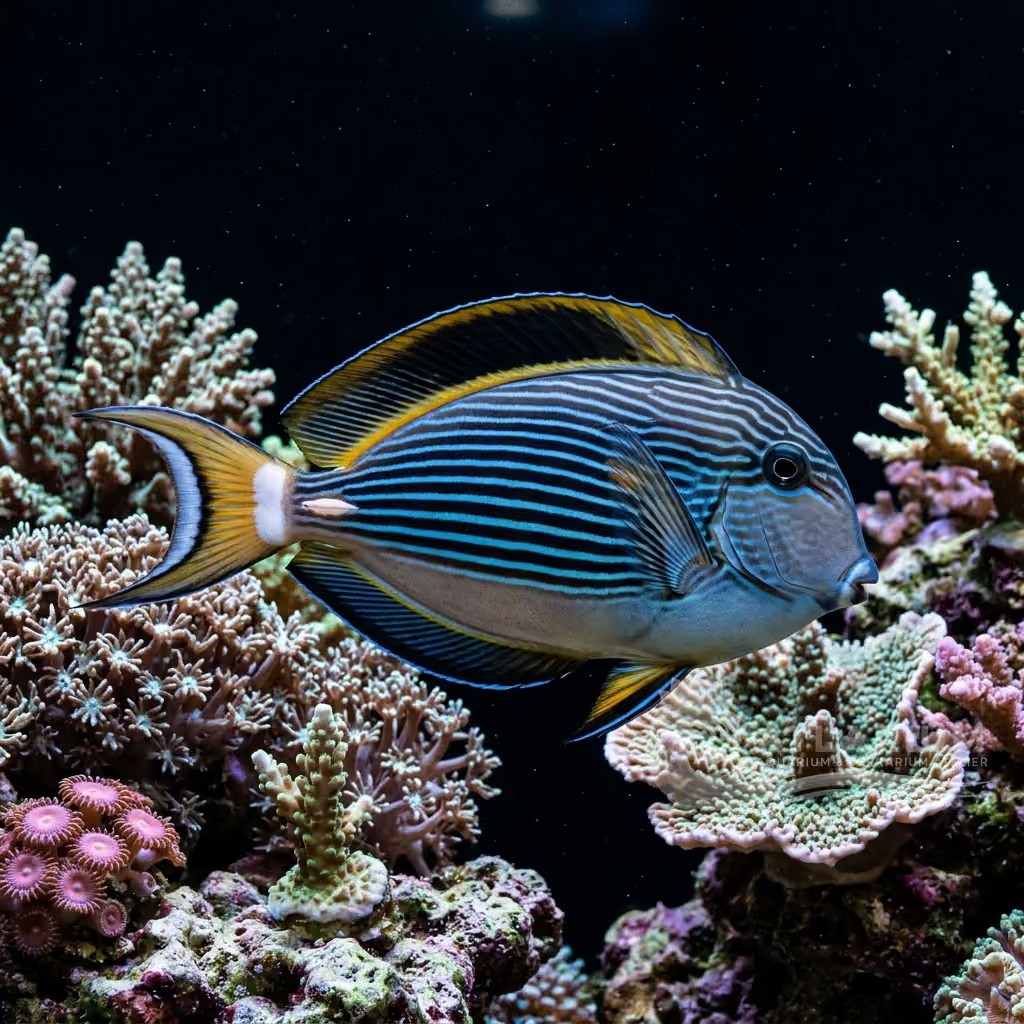
Mimic Surgeonfish
Acanthurus pyroferus
The chocolate surgeonfish's juveniles cleverly mimic dwarf angelfish to avoid predators. Found in mixed Indo-Pacific reefs, it changes color as it matures into an adult.
Water Temperature
22 - 28 °C
pH Value
8.1 - 8.4
Water type
Marine
Tank level
All levels
Adult size
25 cm
Minimum tank volume
>= 470 L
Minimum group
>= 1
KH
8 - 12 dKH

Species description
Geographical Origin and Habitat: Tropical Indo-Pacific. Inhabits mixed coral reefs and clear reef slopes down to depths of 60 meters.
Taxonomy and Morphology: Belongs to the family Acanthuridae. Reaches about 25 cm. Laterally compressed oval body with a sharp bony spine at the caudal base.
Social Behavior: Active and semi-aggressive swimmer. Juveniles mimic the appearance of dwarf angelfish Centropyge (e.g. Centropyge vrolikii or Centropyge heraldi) to escape predation.
Coloration and Sexual Dimorphism: Remarkable color variation. Juveniles mimic Centropyge (yellow or gray/orange). Adults are dark chocolate brown with a black band above the gill and a blue tail. No sexual dimorphism. This species exhibits a remarkable chromatic adaptability during the transition phases from juvenile to adult stages. The caudal spine, typical of acanthurids, is covered by a mucus layer that contains mild toxins.

Care, breeding and tankmates
Aquarium Setup: Needs a spacious aquarium of at least 470 liters (125 gallons) with strong water movement and ample open areas for fast swimming.
Diet and Feeding: Herbivore. In the aquarium, it must be fed abundantly with nori seaweed, spirulina, veggie pellets, and plant-based frozen foods.
Water Quality: Temperature 22-28°C (72-82°F), pH 8.1-8.4, specific gravity 1.020-1.025. Demands powerful skimming to keep oxygen levels high.
Compatibility and Cohabitation: 100% reef-safe. Does not damage corals but can compete aggressively for food with other similarly shaped surgeonfish.
Aquarium Breeding: Reproduction in the hobby is not successfully documented due to the complex pelagic larval phase.
Risks and Diseases: Equipped with a sharp, retractable caudal spine on the sides of the tail base. Exercise caution during handling. Highly sensitive to skin diseases. It is recommended to use an auxiliary aerator in case of protein skimmer failure, as it tolerates oxygen drops very poorly. A diet rich in vitamin C helps prevent marine ich and supports the fish's immune system.

Geographic origin and distribution
Tropical Indo-Pacific. Inhabits mixed coral reefs and clear reef slopes down to depths of 60 meters.
Origin
Tropical oceans and reefsAfrica and MadagascarEast Asia

Fish profile
- Temperament
- Semi-aggressive
- Acanthurus pyroferus exhibits a semi-aggressive temperament, which is typical for surgeonfish. They are generally peaceful toward non-tangs, corals, and sessile invertebrates, making them excellent candidates for reef systems. However, they can be highly territorial and aggressive toward other tangs, particularly those of the same genus or similar body shape and coloration. They are equipped with a sharp caudal spine (scalpel) at the base of their tail, which they will use defensively or during territorial disputes.
- Diet
- Herbivore
- This species is primarily herbivorous, feeding on benthic algae, detritus, and organic film in the wild. In captivity, their diet must consist largely of high-quality vegetable matter, such as dried Nori, Spirulina flakes, and specialized herbivore pellets. While they will readily accept meaty foods like mysis or brine shrimp, these should only be offered as occasional treats rather than a staple diet. A diet rich in marine algae is critical for maintaining their digestive health, coloration, and immune system.
- Life expectancy
- 8-15 years
- Adult size
- 25 cm
- Sex ratio
- Solitary
- In a home aquarium, Acanthurus pyroferus is almost always kept as a single specimen due to its territorial nature toward conspecifics. While they form pairs or small schools in their natural reef habitats, establishing a specific sex ratio in captivity is rarely feasible or recommended for standard tanks. Attempting to house multiple individuals requires an extremely large system with complex rockwork to break lines of sight. For the vast majority of hobbyists, keeping a single individual is the safest and most successful approach.
- Feeding frequency
- Twice daily
- To replicate their natural grazing behavior, Acanthurus pyroferus should be fed small amounts multiple times throughout the day, ideally three or more times. Providing Nori on an algae clip allows them to graze continuously over several hours, which helps reduce stress and aggression. Frequent, smaller feedings prevent digestive issues and ensure they receive constant nutrition, which is vital for their high-energy lifestyle. It is important to remove any uneaten food after a few hours to prevent water quality degradation.
- Bioload
- Medium to High
- As an active and relatively large species that grows up to 10 inches, Acanthurus pyroferus produces a significant biological load in the aquarium. Their continuous grazing behavior and fast metabolism result in a high volume of waste, which can quickly degrade water quality if not managed properly. A powerful filtration system, including a heavy-duty protein skimmer, is essential to keep up with their organic output. Regular water changes and mechanical filtration are highly recommended to keep nitrates and phosphates at low levels.
- Flow
- Strong
- Coming from shallow, oxygen-rich coral reefs, Acanthurus pyroferus thrives in aquariums with strong water movement. High flow rates not only simulate their natural environment but also ensure the water is highly oxygenated, which is crucial for their active lifestyle. Using wavemakers or powerheads to create dynamic currents will help the fish exercise and remain healthy. However, it is also important to provide some lower-flow areas where the fish can rest comfortably without constantly fighting the current.
- Jump risk
- Yes
- While not notorious jumpers compared to wrasses or firefish, Acanthurus pyroferus is a powerful, fast-swimming fish that can easily leap out of the water when startled. Sudden lighting changes, aggressive encounters, or maintenance activities can cause this fish to bolt and accidentally jump. Therefore, a secure, tight-fitting lid or mesh cover is highly recommended to prevent escape and potential injury. Creating a stress-free environment with plenty of hiding spots also helps minimize the risk of startle-induced jumping.
- Reproduction
- Oviparous
- Acanthurus pyroferus is a broadcast spawner that releases pelagic eggs and sperm into the water column during courtship. Successful reproduction in home aquaria is exceptionally rare and virtually impossible due to their complex courtship rituals and the difficulty of raising pelagic larvae. In the wild, spawning events are often synchronized with tidal or lunar cycles. Because of these demanding requirements, all specimens available in the aquarium hobby are wild-caught or harvested as post-larvae.
- Compatibility & tankmates
- Semi-aggressive
- This species is generally compatible with a wide variety of reef fish, including clownfish, wrasses, damselfish, and large dwarf angelfish. They are completely reef-safe and will not harm corals or ornamental invertebrates. However, they are highly incompatible with other surgeonfish of similar shape or color, especially members of the Acanthurus genus, unless the tank is exceptionally large. When introducing them to a community tank, it is often best to add the tang last to minimize territorial aggression.
- Tank level
- All levels
- This species is an exceptionally active swimmer that utilizes all levels of the aquarium. Although they spend considerable time near the bottom and middle sections grazing algae off the live rock, they also swim dynamically in open mid-to-top water columns. Providing ample open swimming space is just as crucial as ensuring plenty of rockwork for shelter and grazing. Their constant exploration of the tank makes them a highly visible and active presence throughout the entire display.

Scientific Parameters & Models
FishBase
Window to the official scientific data of the species
FishBase v25.04Data synced on: 06/15/2026
- Trophic level
- 2 ± 0 se
- Resilience
- Low (4.5 - 14 years)
- Phylogenetic uniqueness (PD50)
- 0.5
- Bayesian Length-Weight
- a = 0.02291, b = 2.96
- VulnerabilityLow vulnerability (19 / 100)

Related species
Recommendations grouped by close relatives, companion choices, and similar care.