Vlaming's unicornfish
Naso vlamingii
Naso vlamingii is a massive and beautiful surgeonfish famous for its color-changing abilities and prominent forehead hump. It requires an exceptionally large tank.
Water Temperature
24 - 28 °C
pH Value
8.1 - 8.4
Water type
Marine
Tank level
All levels
Adult size
60 cm
Minimum tank volume
>= 1,500 L
Minimum group
>= 1
KH
8 - 12 dKH

Species description
Geographical Origin and Habitat:
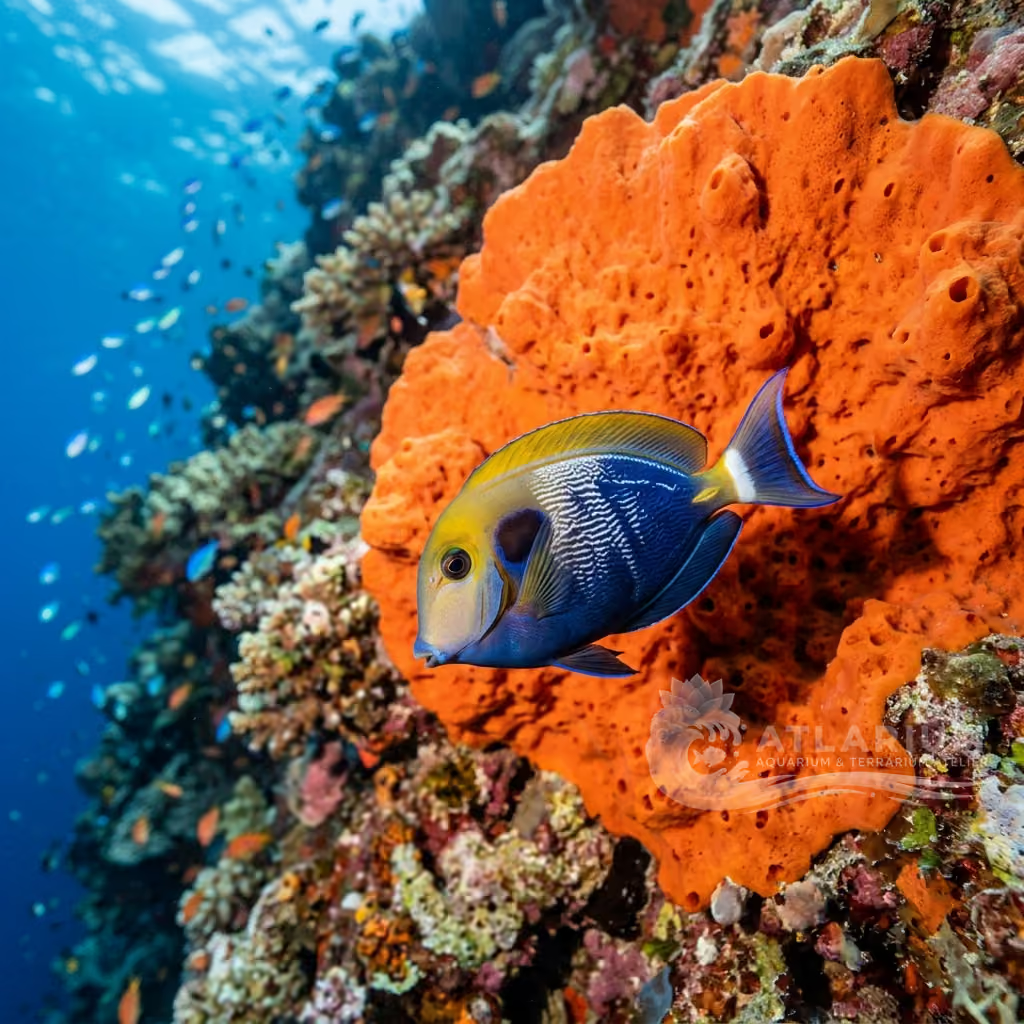
This species is widely distributed throughout the tropical Indo-Pacific region. Its range extends from the Red Sea and East Africa all the way to the Tuamotu Islands, reaching north to southern Japan and south to the Great Barrier Reef in Australia. It primarily inhabits deep outer reef walls, drop-offs, and current-swept channels at depths ranging from 1 to over 50 meters, often seen foraging in open water.
Taxonomy and Morphology:
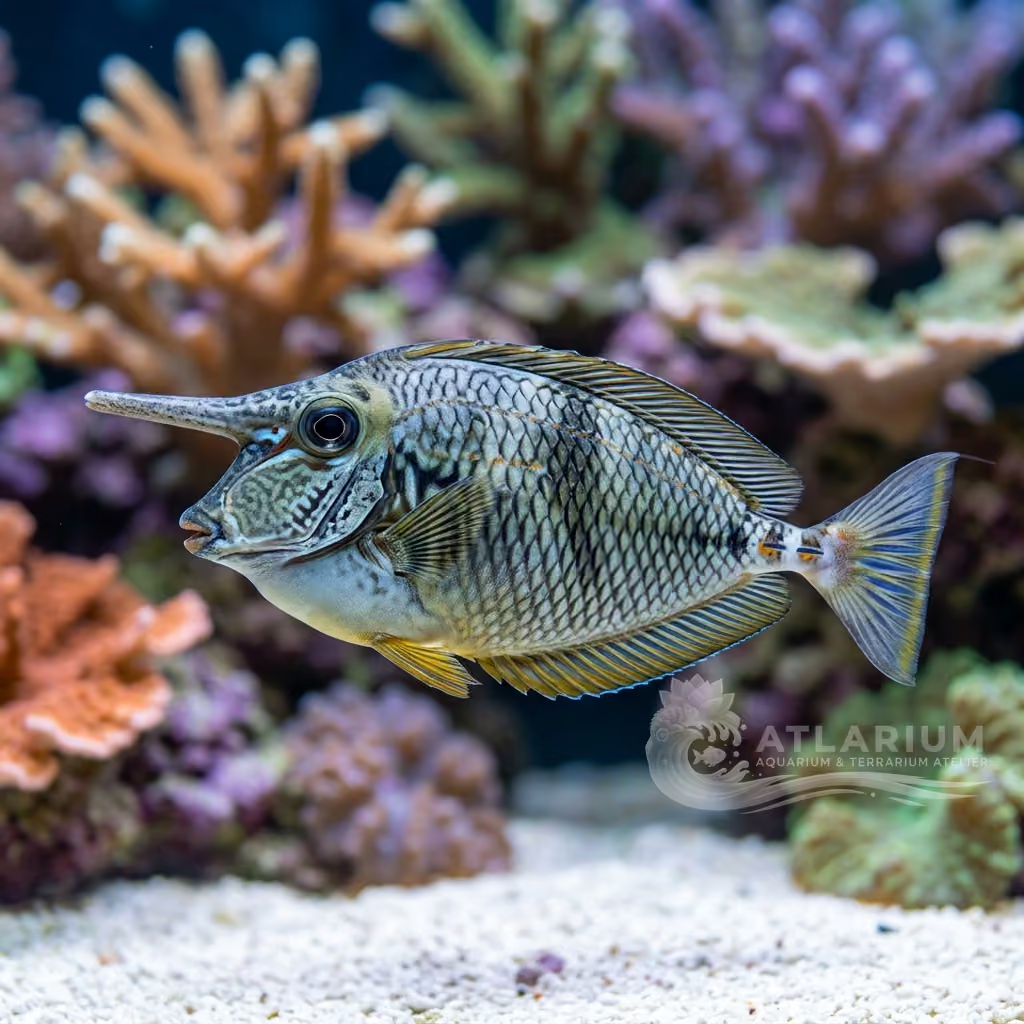
Belonging to the family Acanthuridae, Naso vlamingii develops a tall, laterally compressed body. Adults develop a distinct, rounded convex bump on the snout just above the eyes rather than a long, pointed horn. It is one of the largest surgeonfish, capable of reaching a total length of 60 centimeters. It possesses two fixed, scalpel-like spines on each side of the caudal peduncle, which turn bright blue in mature fish.
Social Behavior:
In the wild, it is a highly social species that forms large schools to feed on zooplankton in the water column above the reef. In the aquarium, due to its size, it behaves peacefully toward smaller fish, but it requires substantial swimming space and may become combative toward members of its own species or closely related Naso tangs.
Coloration and Sexual Dimorphism:
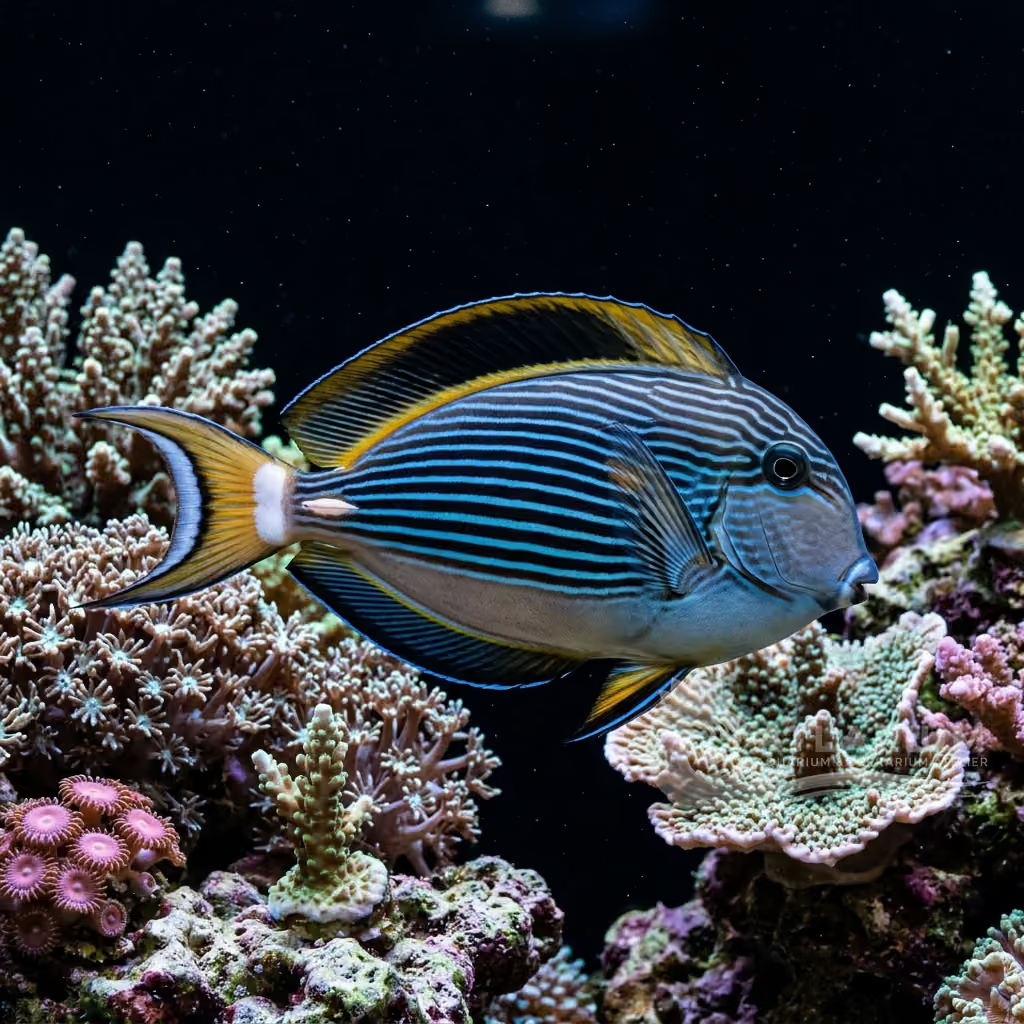
The base body color is grayish-brown to olive-green, but it is covered in numerous brilliant blue spots and vertical lines. Adults display a distinctive bright blue mask over their eyes and long filaments on the lyre-shaped tail. They can intensify or dull their colors in a split second based on mood. Mature males grow much longer caudal filaments and a larger forehead hump than females.

Care, breeding and tankmates
Aquarium Setup:
Due to its rapid growth rate and enormous adult size, this fish requires a massive aquarium, with a minimum recommended volume of 1000 liters for a single adult. The aquascape should be kept minimal and positioned along the back of the tank to provide maximum open water swimming space. Extremely strong water flow and high dissolved oxygen levels are required.
Diet and Feeding:
While juveniles rely on zooplankton, adults are primarily herbivorous, feeding on macroalgae. They must be fed multiple times a day with dried nori sheets, spirulina, and high-quality veggie pellets, supplemented with frozen foods like mysis, krill, and chopped seafood. Providing a varied, nutrient-rich diet is essential to support their fast metabolism and growth.
Water Quality:
Pristine and highly oxygenated water conditions are critical: temperature between 24°C and 26°C, pH from 8.1 to 8.4, specific gravity from 1.021 to 1.025, and carbonate hardness (KH) of 8 to 12 dKH. Strong surface agitation and heavy protein skimming are mandatory to maintain high gas exchange and keep dissolved organic compounds close to zero.
Compatibility and Cohabitation:
It is peaceful toward smaller reef fish and is entirely reef safe, though large specimens can easily knock over unsecured rockwork when swimming quickly. It houses well with other non-aggressive tangs, angelfish, and wrasses. Do not house more than one specimen in the same aquarium to prevent serious territorial conflicts.
Aquarium Breeding:
Captive breeding in home aquariums is considered impossible due to the immense vertical space required for their pelagic spawning rituals. In nature, pairs rise rapidly toward the surface at dusk to release gametes. The pelagic eggs float with the currents and hatch into delicate larvae that feed on microscopic marine plankton.
Risks and Diseases:
Prone to Head and Lateral Line Erosion (HLLE) if fed an inadequate diet or exposed to poor water conditions. They are also highly susceptible to external marine parasites such as Cryptocaryon irritans. A long and careful quarantine process is essential, and the integration of a UV sterilizer in the filtration system is highly recommended.

Geographic origin and distribution
This species is widely distributed throughout the tropical Indo-Pacific region. Its range extends from the Red Sea and East Africa all the way to the Tuamotu Islands, reaching north to southern Japan and south to the Great Barrier Reef in Australia. It primarily inhabits deep outer reef walls, drop-offs, and current-swept channels at depths ranging from 1 to over 50 meters, often seen foraging in open water.
Origin
Tropical oceans and reefsNorth AmericaAfrica and MadagascarEast AsiaAustralia, New Guinea, and Oceania

Fish profile
- Temperament
- Semi-aggressive
- This species is famous for its almost dog-like personality, often interacting directly with its caretaker. They are generally peaceful and confident, ignoring most other tank inhabitants. They can even be trained to accept food directly from their owner's hand.
- Diet
- Herbivore
- Unlike many tangs, they are omnivorous and require a mix of both meaty foods and algae. They readily accept mysis shrimp, chopped seafood, and high-quality sinking pellets. However, daily offerings of marine algae or nori are still necessary for optimal digestion.
- Life expectancy
- 30-45 years
- Adult size
- 60 cm
- Sex ratio
- Solitary
- Adult males develop incredible long streamers on their tail fins and display vibrant blue markings. Due to the astronomical tank size required (often 500+ gallons), keeping only one specimen per tank is the strict rule. Attempting to house a pair almost always ends in disaster.
- Feeding frequency
- 2-3 times daily
- They have incredibly fast metabolisms and require large amounts of food multiple times a day. Feeding them 3 to 4 times daily is necessary to sustain their rapid growth and adult size. Constant access to an algae station is also highly recommended.
- Bioload
- Extreme
- The Vlamingi Tang is a giant among aquarium fish, exerting an immense biological load. They process massive amounts of food and excrete equally massive amounts of waste. Industrial-scale protein skimmers and massive water volumes are absolutely required.
- Flow
- Strong
- They are powerful swimmers that demand massive water turnover in the aquarium. Intense flow encourages their natural swimming behavior and ensures high oxygenation. Gyre pumps and powerful wavemakers should be utilized to simulate oceanic currents.
- Jump risk
- Yes
- Due to their sheer mass and speed, a jumping Vlamingi Tang can easily break glass lids or escape open tanks. A custom-fitted, heavy-duty screen top is vital for keeping them safely enclosed. Care must be taken not to startle them, especially at night.
- Reproduction
- Egg scatterer
- Reproduction in home aquariums is entirely undocumented and considered impossible. In the wild, they are pelagic spawners that rely on vast oceanic conditions. Captive specimens are entirely wild-caught.
- Compatibility & tankmates
- Peaceful
- They are completely reef-safe and generally peaceful with non-tang species. They can safely be housed with smaller, peaceful reef fish or larger predatory fish. However, mixing them with other Naso tangs is not recommended due to territorial aggression.
- Tank level
- All levels
- They are mid-to-top water column swimmers that require completely unobstructed swimming paths. They will constantly patrol the open spaces of the aquarium. Rockwork should be kept minimal and low to provide maximum open water volume.

Scientific Parameters & Models
FishBase
Window to the official scientific data of the species
FishBase v25.04Data synced on: 06/15/2026
- Trophic level
- 2.2 ± 0.11 se
- Resilience
- Very low (more than 14 years)
- Generation time
- 4.2 years
- Phylogenetic uniqueness (PD50)
- 0.5
- Bayesian Length-Weight
- a = 0.03162, b = 2.95
- VulnerabilityModerate vulnerability (38 / 100)

Related species
Recommendations grouped by close relatives, companion choices, and similar care.