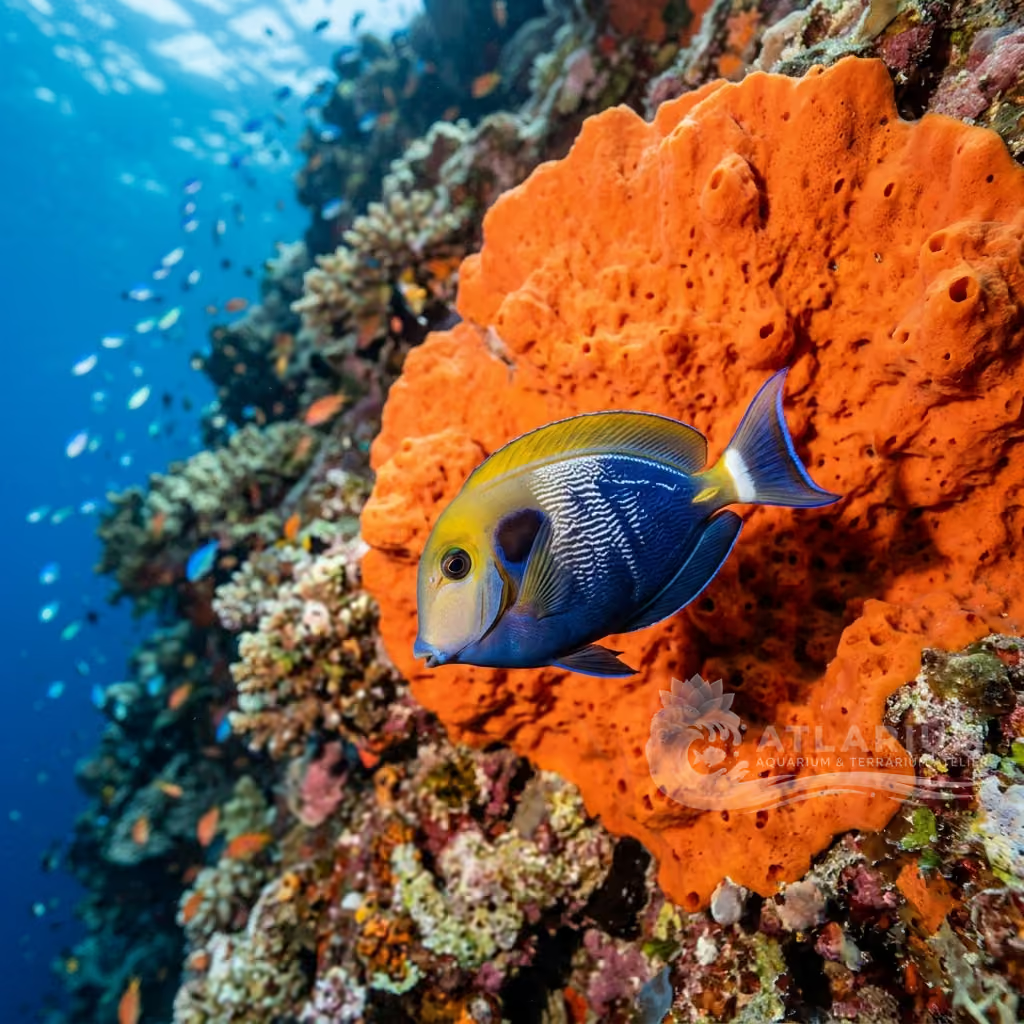
Bluespine unicornfish
Naso unicornis
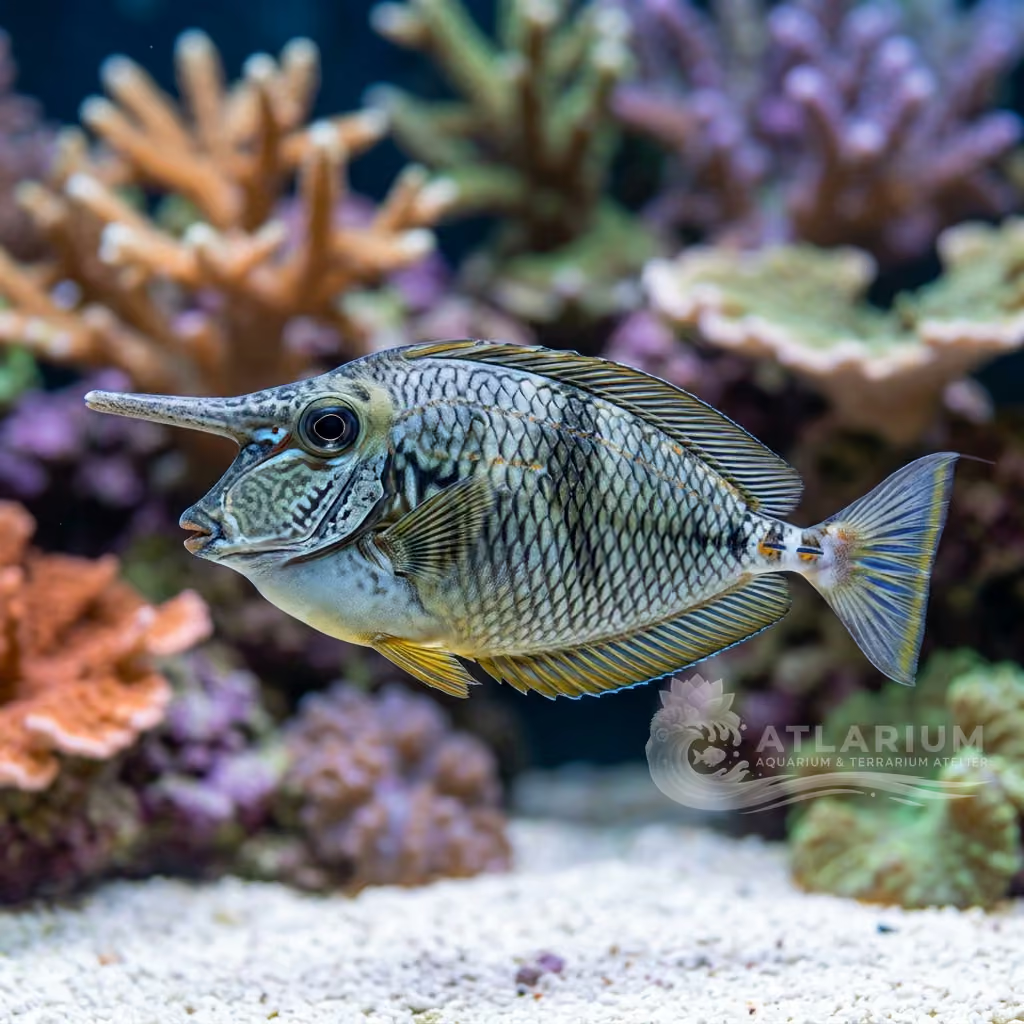
This magnificent tang features a distinctive horn-like extension on its forehead. Exceptionally large and active, it demands a massive tank with vast open swimming areas and vigorous water flow.
Water Temperature
24 - 28 °C
pH Value
8.1 - 8.4
Water type
Marine
Tank level
Middle
Adult size
70 cm
Minimum tank volume
>= 1,500 L
Minimum group
>= 1

Species description
Geographical Origin and Habitat: Naso unicornis is widely distributed across the Indo-Pacific region, from the Red Sea and East Africa to the Hawaiian Islands, French Polynesia, north to southern Japan, and south to Lord Howe Island in Australia. It mainly inhabits surge zones, outer reef flats, and deep channels at depths of 1 to 80 meters, where it favors areas with strong currents and high dissolved oxygen.
Taxonomy and Morphology: Belonging to the family Acanthuridae (surgeonfishes), subfamily Acanthurinae, this species is distinguished by a prominent, bony, horn-like projection on the forehead of adults, located just in front of the eyes. On each side of the caudal peduncle, it possesses two large, fixed, blade-like plates that are razor-sharp. In the wild, they can grow up to 70 cm in length.
Social Behavior: This species is an active, open-water swimmer. Its social habits vary; juveniles gather in large schools in shallow, protected coastal bays and lagoons, whereas adults tend to form small groups or roam in pairs along the outer reef slopes. They are generally peaceful toward other fish species but require vast spaces to prevent stress-induced aggression.
Coloration and Sexual Dimorphism: The base body color ranges from olivaceous grey to light brown. The dorsal and anal fins are marked with yellow-orange and blue longitudinal stripes. The dual caudal peduncle plates are a vibrant electric blue. No major sexual dimorphism exists in juveniles, but adult males typically develop a longer forehead horn and longer caudal fin filaments than females.

Care, breeding and tankmates
Aquarium Setup: Due to its large adult size (70 cm) and active swimming behavior, Naso unicornis requires an exceptionally large aquarium of at least 1000 liters. The tank must feature a massive open area for swimming, with strong filtration to process its significant waste output. Secure live rock firmly along the back wall, keeping the central swimming lanes clear.
Diet and Feeding: A specialized herbivore that feeds primarily on coarse brown macroalgae, such as Sargassum and Dictyota, in the wild. In captivity, feed them a diet rich in seaweed (nori), high-quality spirulina flakes, pellets, and blanched vegetables. Regular vitamin supplementation is critical to prevent lateral line erosion (HLLE). Meaty frozen foods like mysis should be offered as minor supplements.
Water Quality: Demands pristine, highly oxygenated water with strong flow generated by commercial-grade wavemakers. Keep water parameters stable: temperature 23-26 °C, pH 8.1-8.4, and specific gravity 1.021-1.025. A heavy-duty protein skimmer and frequent water changes are essential to keep nitrate levels below 10 mg/L.
Compatibility and Cohabitation: Generally peaceful and well-behaved in reef tanks, as it does not harm corals or mobile invertebrates. It may exhibit territorial behavior toward other Naso species or similarly shaped tangs if the aquarium is cramped. Avoid housing with aggressive, territorial fish like large triggerfish in tight spaces.
Aquarium Breeding: Breeding in home aquariums is considered impossible due to their large size, the requirement of deep water column heights for courtship, and a long pelagic larval phase. In nature, they form large spawning aggregations, releasing pelagic eggs into the open water where they drift with the ocean currents.
Risks and Diseases: Highly susceptible to Head and Lateral Line Erosion (HLLE) and skin parasites like marine ich (Cryptocaryon irritans) if water quality is poor or diet is deficient in macroalgae. Additionally, the sharp blue plates on the tail peduncle present a physical hazard, as they can inflict deep cuts during handling.

Geographic origin and distribution
Naso unicornis is widely distributed across the Indo-Pacific region, from the Red Sea and East Africa to the Hawaiian Islands, French Polynesia, north to southern Japan, and south to Lord Howe Island in Australia. It mainly inhabits surge zones, outer reef flats, and deep channels at depths of 1 to 80 meters, where it favors areas with strong currents and high dissolved oxygen.
Origin
Tropical oceans and reefsAfrica and MadagascarEast AsiaAustralia, New Guinea, and Oceania

Fish profile
- Temperament
- Peaceful
- The Naso unicornis boasts a gentle giant temperament, being largely peaceful and highly personable with its human caretakers. Once acclimated, they often recognize their owners and will readily eat right from the aquarist's hand. They do not bother corals, invertebrates, or smaller fish, making them a centerpiece for giant reef tanks. Aggression is typically only displayed towards other large tangs or if they feel confined in a tank that is too small. Overall, they are majestic, calm, and highly rewarding fish for those with adequately sized systems.
- Diet
- Herbivore
- The Naso unicornis is primarily herbivorous, requiring a diet exceptionally rich in marine algae to thrive long-term. Dried nori or sea veggies should be offered daily, secured to a rock or a veggie clip for continuous grazing. They will also eagerly accept meaty offerings like mysis shrimp and krill, but meat should only make up a small portion of their diet. Providing spirulina-enriched flakes and pellets ensures they receive proper vitamins. A varied, algae-heavy diet prevents nutritional deficiencies and helps maintain their immune system.
- Life expectancy
- 20-30 years
- Adult size
- 70 cm
- Sex ratio
- Solitary
- Sexing the Naso unicornis is possible as they reach maturity, though it depends heavily on the specific species within the genus. Males often develop much larger and more prominent rostral horns or facial features compared to females. Furthermore, adult males may display elongated tail streamers (lyretails) which are absent or much shorter in females. Despite these differences, sexing is largely irrelevant for home aquarists since they are not bred in captivity. Keeping a single specimen or a known pair requires an enormous aquarium either way.
- Feeding frequency
- Twice daily
- Because of their constant grazing habits in the wild, the Naso unicornis needs to be fed multiple times per day. Having nori constantly available on a grazing clip is highly recommended to satisfy their instinct to forage. In addition to constant grazing, they should be offered prepared foods two to three times daily. This heavy feeding schedule is crucial to maintain their body weight and overall health. A well-fed Naso tang is more robust, less aggressive, and more resistant to common parasites like Cryptocaryon irritans.
- Bioload
- Extreme
- The Naso unicornis produces a massive bioload due to its large adult size and voracious herbivorous appetite. They consume massive amounts of plant matter and excrete proportionally large amounts of waste. A heavy-duty protein skimmer, mechanical filtration, and possibly a biological reactor are required to process their waste. Keeping water parameters pristine is essential, as large tangs are susceptible to lateral line disease if water quality degrades. Regular, high-volume water changes are an absolute necessity when housing this majestic fish.
- Flow
- Strong
- The Naso unicornis requires extremely strong, turbulent water flow to simulate the highly oxygenated reef drop-offs they inhabit in nature. They are incredibly strong swimmers and rely on heavy currents for exercise and proper respiration. Utilizing multiple high-capacity wavemakers or gyre pumps is necessary to keep water circulating aggressively. High flow also aids in keeping detritus suspended so the heavy filtration can remove it. Proper oxygenation driven by this flow is critical for their fast metabolism.
- Jump risk
- Yes
- Large and powerful, the Naso unicornis possesses a significant jump risk, especially during their initial acclimation period or if startled at night. Their sheer size and muscle mass mean they can easily launch themselves out of open-top aquariums. A sturdy, tightly fitted mesh cover is absolutely mandatory to prevent these expensive and beautiful fish from ending up on the floor. Heavy glass or acrylic lids can be used, but mesh is preferred to allow for maximum gas exchange. Minimizing sudden movements outside the tank also helps keep them calm.
- Reproduction
- Oviparous
- The Naso unicornis has not been successfully bred and reared in the home aquarium due to the complex requirements of their pelagic larvae. In the ocean, they participate in mass broadcast spawning events, releasing millions of eggs into the water column. The larvae undergo an extended pelagic phase before settling onto the reef as juveniles. Mimicking the physical space and specific dietary needs of the larvae is currently beyond the capabilities of standard captive environments. Therefore, all specimens in the trade are wild-caught.
- Compatibility & tankmates
- Peaceful
- Generally, the Naso unicornis is very peaceful toward completely different species and makes a fantastic addition to a large community reef aquarium. They are entirely reef safe and will actively graze on nuisance algae without bothering corals or motile invertebrates. However, they can show significant aggression toward other tangs, particularly those of the same genus or with a similar body shape. If keeping multiple surgeonfish, it is best to introduce them simultaneously into an oversized aquarium. They ignore smaller fish and peaceful tank mates completely.
- Tank level
- Middle
- An exceptionally large aquarium is absolutely mandatory for the Naso unicornis, with 200 gallons being the bare minimum for juveniles and 300+ gallons for adults. They are incredibly active and require massive, unobstructed swimming lanes spanning the entire length of the tank. The aquascape should be minimalist, utilizing island structures to maximize open water space while still providing large sleeping caves. Keeping them in cramped conditions causes severe stress, stunted growth, and behavioral issues. Providing adequate swimming room is the most critical aspect of their care.

Scientific Parameters & Models
FishBase
Window to the official scientific data of the species
FishBase v25.04Data synced on: 06/15/2026
- Trophic level
- 2.2 ± 0.11 se
- Resilience
- Very low (more than 14 years)
- Phylogenetic uniqueness (PD50)
- 0.5
- Bayesian Length-Weight
- a = 0.02399, b = 2.94
- VulnerabilityLow to moderate vulnerability (32 / 100)

Related species
Recommendations grouped by close relatives, companion choices, and similar care.