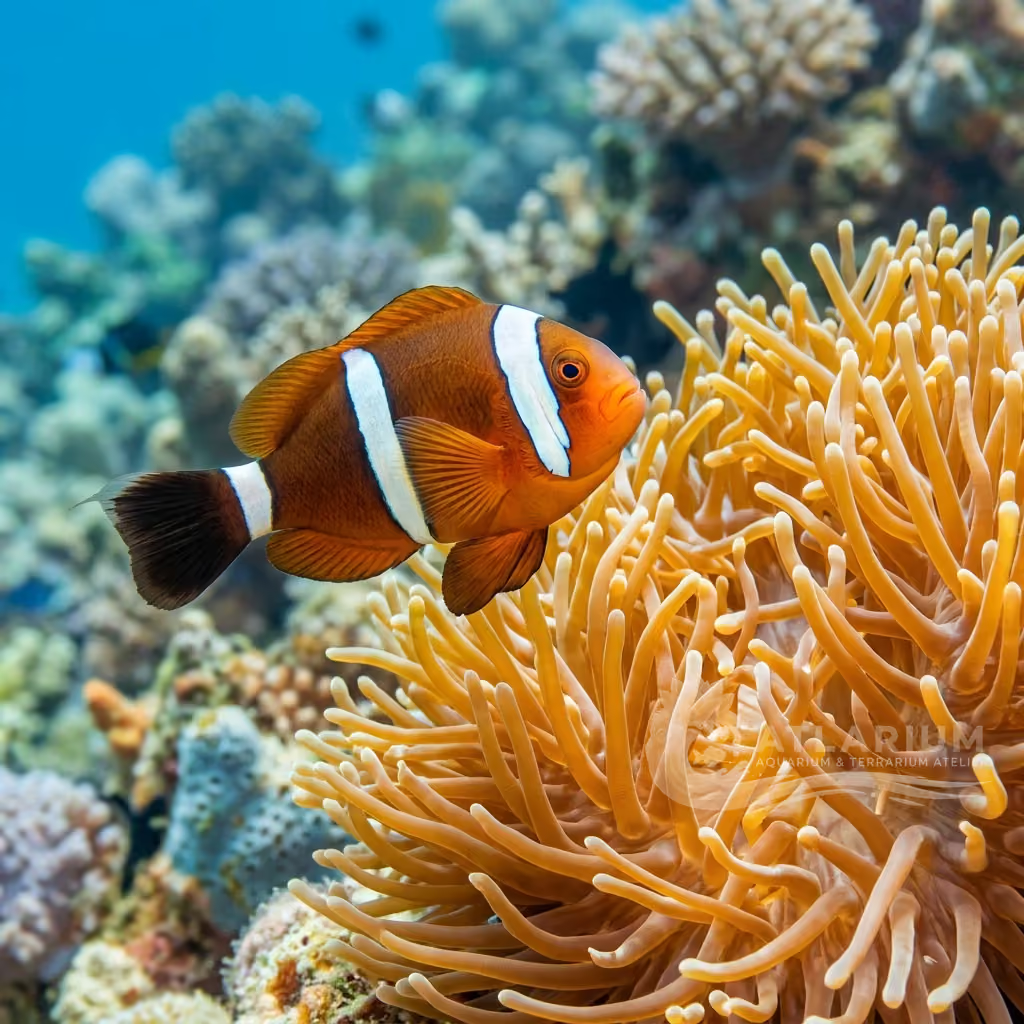
Yellow tang
Zebrasoma flavescens
Yellow tang (Zebrasoma flavescens) is a marine species with an adult-size reference of about 20 cm. It needs at least 350 litres and one individual, with its social and territorial profile taken into account.
Water Temperature
24 - 28 °C
pH Value
8.1 - 8.4
Water type
Marine
Tank level
All levels
Adult size
20 cm
Minimum tank volume
>= 350 L
Minimum group
>= 1

Species description
Geographical Origin and Habitat: A marine species; the enclosure should provide stability, oxygenation, space and shelter consistent with its behaviour without turning one habitat description into a mandatory recipe.
Taxonomy and Morphology: The accepted scientific name is Zebrasoma flavescens; the verified classification records genus Zebrasoma, family Acanthuridae, subfamily Acanthurinae, order Acanthuriformes. Historical names remain searchable as synonyms rather than separate species.
Social Behavior: Yellow tang is normally kept as a single individual and does not require conspecifics. The minimum reference is one individual; sex, maturity and available space can require a more conservative composition. Observe access to food, resting behaviour, chasing and use of shelter. Isolation, persistent competition or aggression means the number, composition or environment needs to be corrected.
Coloration and Sexual Dimorphism: Colour and shape can vary with age, sex, physiological state and environmental conditions. Identification and sexing require recognized species-level characters; one appearance or photograph is not enough.

Care, breeding and tankmates
Aquarium Setup: Yellow tang needs an aquarium of at least 350 litres, sized for adult body size and a minimum group of one individual. Filtration, shelter and swimming room must match the species and the actual number kept. Volume alone does not make an enclosure suitable: tank shape and length, usable area, oxygenation and the ability to separate territories must reflect adult behaviour.
Diet and Feeding: The recorded diet is omnivorous. Offer appropriately sized foods varied within that category, and adjust quantity and frequency from actual intake, body condition and leftovers. One food or a fixed schedule is not suitable for every age and situation.
Water Quality: Maintain stable, well-oxygenated water appropriate to a marine species; the card's reference values are 24–28 °C, pH 8.1–8.4. Verify conditions with reliable tests and size maintenance and filtration to the actual load. Ranges are not automatic thresholds for treatment or rapid chemical correction.
Compatibility and Cohabitation: The cohabitation profile is reef-safe with caution, with a generally territorial temperament. Keep at least one individual; tankmates, stocking density and decor must allow escape, rest and feeding without excessive competition. Watch interactions especially during feeding, maturity and breeding. Persistent chasing, injury or exclusion from food requires a change in stocking or layout, or separation of the animals.
Aquarium Breeding: The recorded reproductive profile is “oviparity”. Breeding should be attempted only with healthy adults, separation capacity and a plan for eggs or young. Do not treat unverified triggers, sex ratios or hatch times as universal for this species.
Risks and Diseases: Caudal-peduncle spines can injure; avoid bare-hand handling. Prevent problems through quarantine of new arrivals, stable water, appropriate feeding and daily observation. Similar signs can have different causes, so check parameters, history and diagnosis before medication. Follow the product label and qualified aquatic-veterinary advice; there is no universal reduced dose for a species or family.

Geographic origin and distribution
A marine species; the enclosure should provide stability, oxygenation, space and shelter consistent with its behaviour without turning one habitat description into a mandatory recipe.
Origin
Tropical oceans and reefsAfrica and Madagascar

Fish profile
- Temperament
- Territorial
- Yellow tang has a generally territorial temperament. Insufficient space, an unsuitable social ratio or incompatible tankmates can substantially change observed behaviour.
- Diet
- Omnivore
- They are quintessential herbivores that require a diet overwhelmingly focused on marine algae and vegetable matter to maintain optimal health. While they will eat meaty frozen foods, their primary diet should consist of high-quality dried seaweed (nori), spirulina flakes, and algae-based pellets. Grazing naturally on live rock throughout the day provides both nutrition and essential behavioral enrichment. Insufficient vegetable matter in their diet can lead to malnutrition, faded coloration, and conditions like Head and Lateral Line Erosion (HLLE).
- Life expectancy
- 10-15 years
- Adult size
- 20 cm
- Sex ratio
- Solitary
- Yellow tang is normally kept as a single individual and does not require conspecifics. The reference minimum is one individual and must not be read as permission to overcrowd the aquarium.
- Feeding frequency
- Twice daily
- Because they are constant grazers in the wild, they should be fed multiple times a day to satisfy their high metabolic rate. Offering dried seaweed on a vegetable clip should be a daily routine, allowing them to graze naturally over several hours. Supplement this with small offerings of prepared foods or frozen mysis and brine shrimp two to three times daily. Ensuring they always have access to algae prevents aggression driven by hunger and keeps their immune system strong.
- Bioload
- High
- This tang produces a significant bioload due to its large adult size and constant grazing habits. They excrete a large volume of waste, necessitating a highly efficient protein skimmer and robust biological filtration in the marine system. Regular, substantial water changes and the use of chemical filtration media like GFO and activated carbon are essential to keep nutrient levels low. Maintaining pristine water quality is critical, as they are susceptible to diseases like marine ich if stressed by poor conditions.
- Flow
- Strong
- They originate from reef environments with strong, dynamic water movement and require similar conditions in captivity. High water flow provides necessary oxygenation and allows them to utilize their powerful swimming abilities. Wavemakers and powerheads should be positioned to create turbulent flow across the reef structure, mimicking the surge zones they inhabit naturally. Adequate flow also helps keep detritus suspended so the mechanical filtration can remove it efficiently.
- Jump risk
- No
- Reproduction
- Oviparous
- They are pelagic spawners, releasing their gametes into the water column during synchronized mass spawning events in the open ocean. Captive breeding in standard home aquariums is exceptionally rare and virtually impossible due to the spatial requirements for their spawning ascent. The microscopic larvae undergo a complex pelagic phase before settling onto the reef, requiring specialized commercial aquaculture facilities to rear successfully. Consequently, most specimens available are either wild-caught or commercially bred by large-scale institutions.
- Compatibility & tankmates
- Reef safe with caution
- The cohabitation profile is reef-safe with caution, with a generally territorial temperament. Keep at least one individual; tankmates, stocking density and decor must allow escape, rest and feeding without excessive competition. Watch interactions especially during feeding, maturity and breeding. Persistent chasing, injury or exclusion from food requires a change in stocking or layout, or separation of the animals.
- Tank level
- All levels
- They are active, open-water swimmers that utilize every level of the aquarium, from the bottom substrate to the water's surface. They spend the vast majority of their time navigating the rockwork, constantly picking and grazing at algae in the middle and lower zones. However, they need significant unobstructed horizontal space to swim rapidly across the upper levels of the tank. A mature tank with intricate rock structures combined with open swimming lanes is essential for their well-being.

Scientific Parameters & Models
FishBase
Window to the official scientific data of the species
FishBase Catalog curation 2026-05-09Data synced on: 06/15/2026
- Trophic level
- 2 ± 0 se
- Resilience
- Medium (1.4 - 4.4 years)
- Phylogenetic uniqueness (PD50)
- 0.5078
- Bayesian Length-Weight
- a = 0.01905, b = 2.98
- VulnerabilityHigh vulnerability (57 / 100)

Image gallery
Licensed images linked to the species or, when marked, to the closest representative taxon.

Related species
Recommendations grouped by close relatives, companion choices, and similar care.